The Theft of the Treasure of Villena
During the night of Wednesday 24th August 2026, thieves broke into the Archaeological Museum at Villena in Valencia and stole the priceless ‘Treasure of Villena’. The theft was reported by the BBC: Priceless 'Treasure of Villena' stolen from Spanish museum.
Julie and I visited Villena earlier this year to see the treasure and we are both devastated by this heinous crime. The treasure may be lost but the story of the treasure will survive in perpetuity.
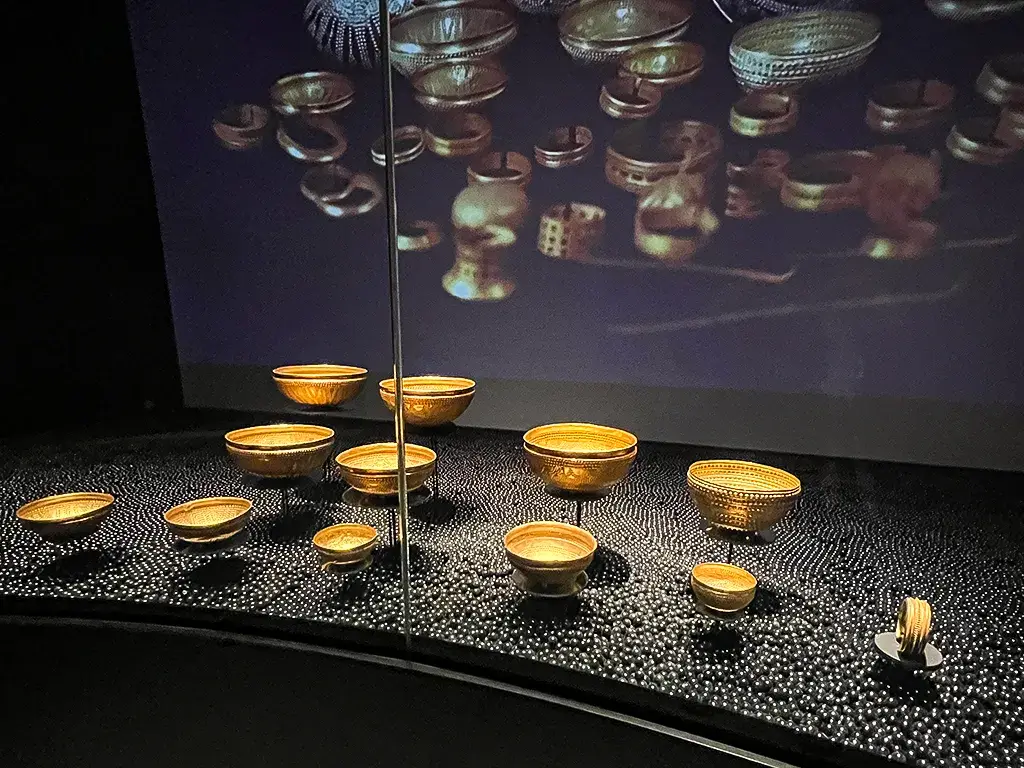
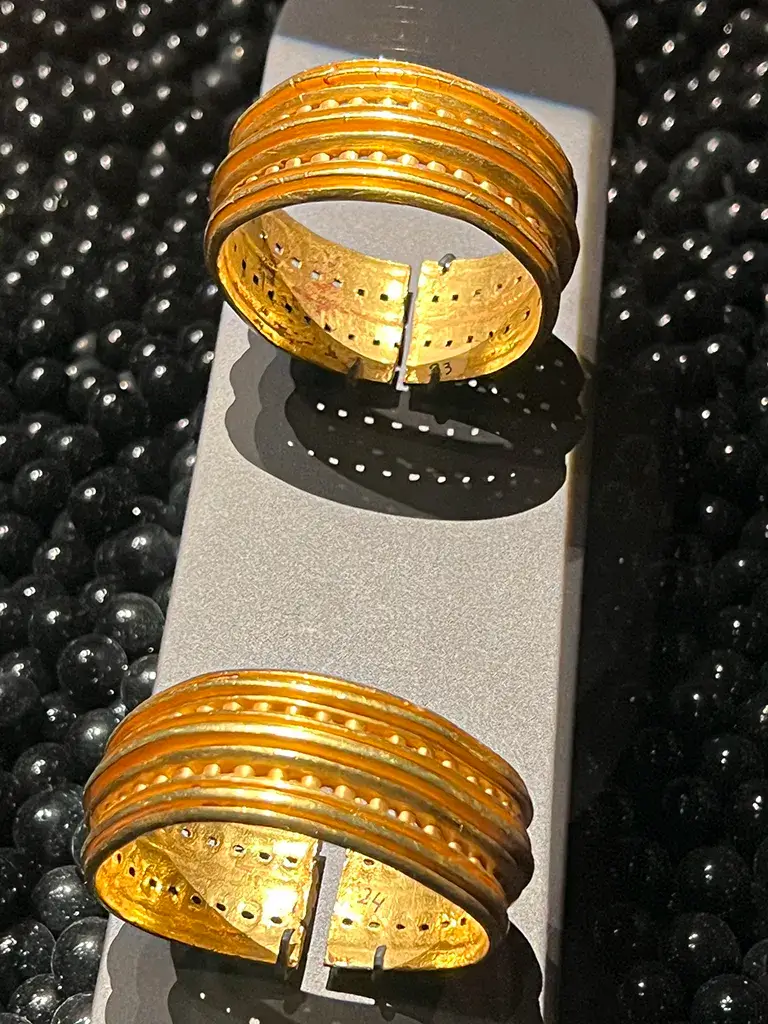
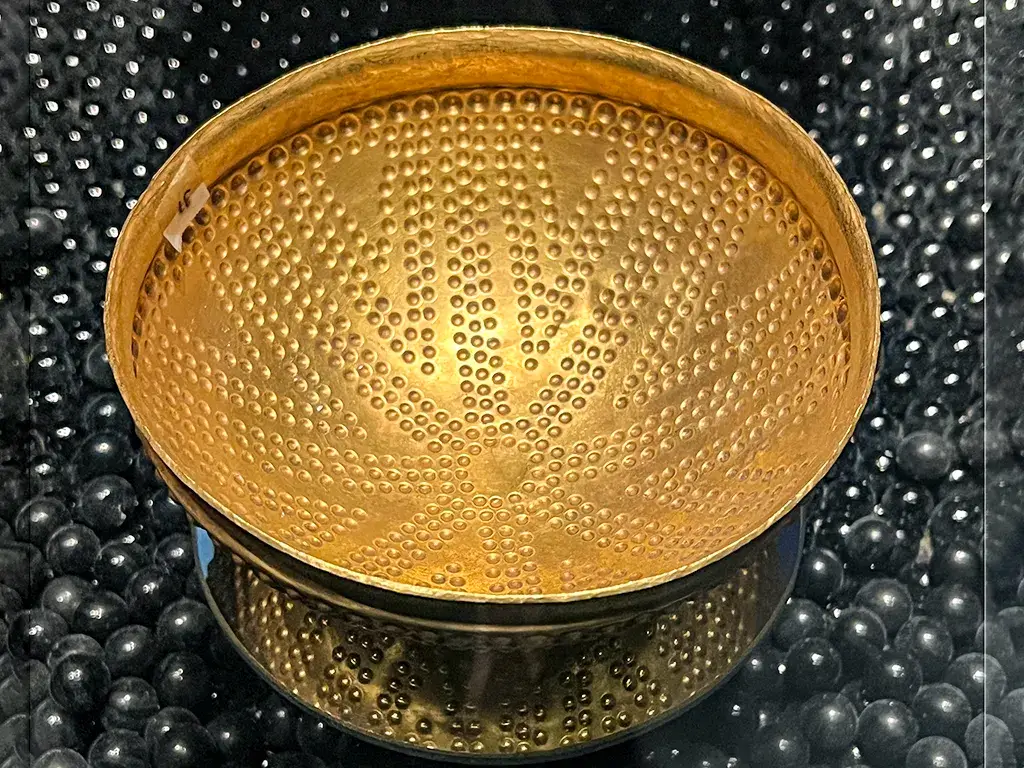
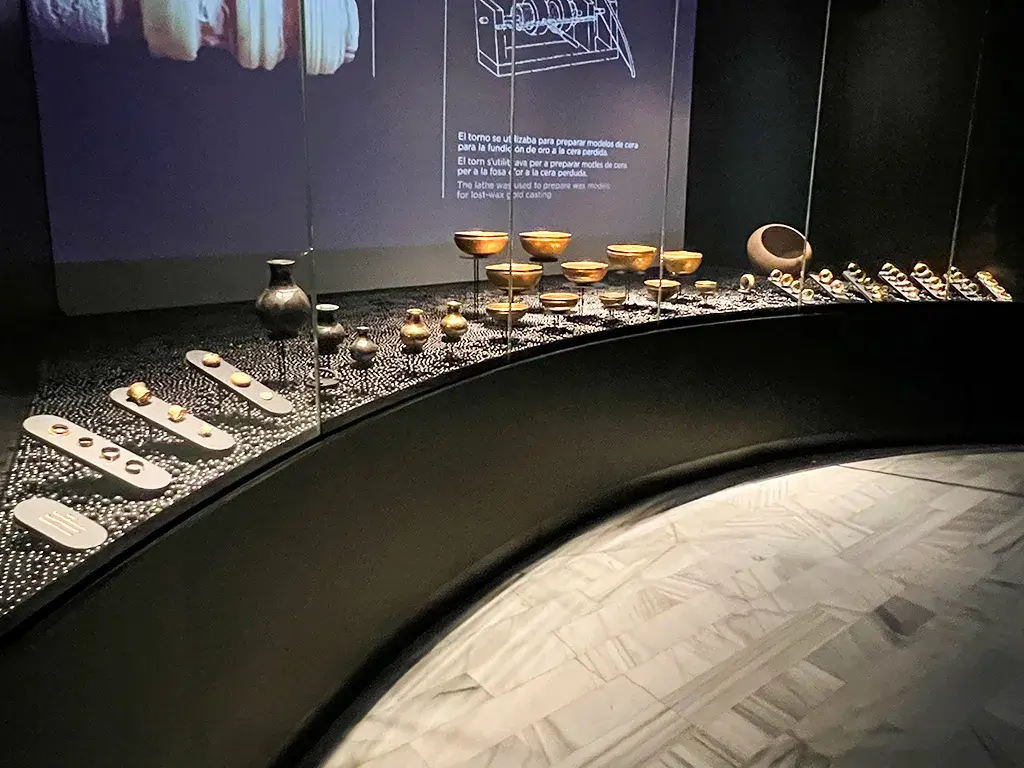
Oh, and if any of these detailed images help identify the treasure and you come across a piece, the police at Villena would be delighted to hear from you (+34 965 34 60 44).
Decoding the Treasure of Villena
In December 1963, a gravel pit in south-eastern Spain yielded an impossible paradox. Archaeologist José María Soler unearthed an ancient ceramic vessel packed with nearly ten kilograms of precious metal. We now call it the Treasure of Villena. It remains the most important hoard of prehistoric gold in the Iberian Peninsula. But the gold was not the real mystery.
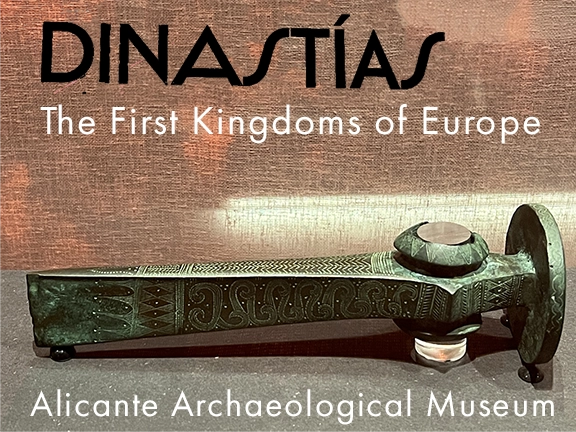
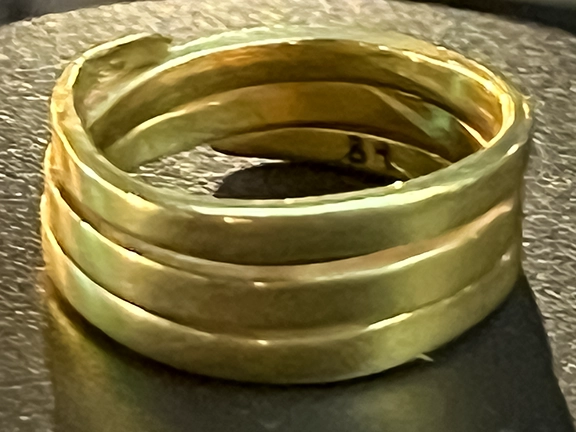
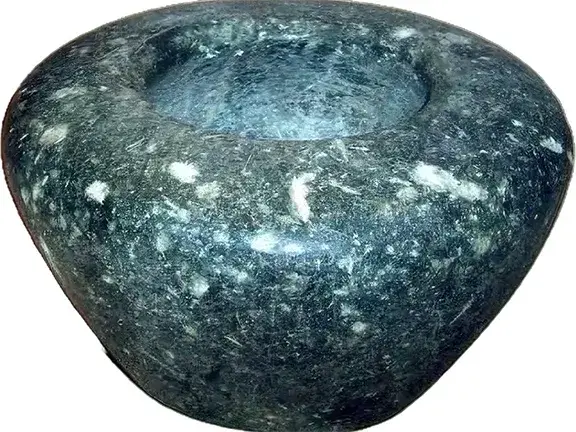
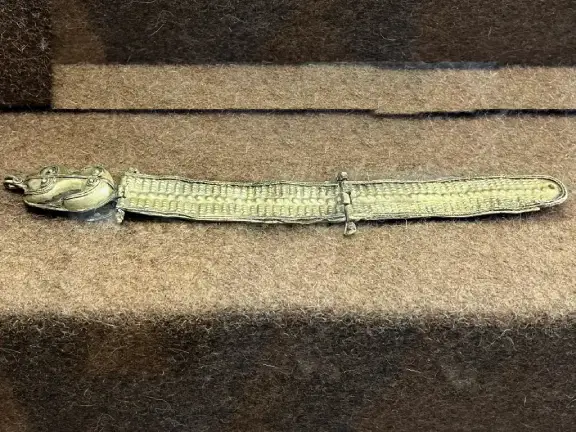
The hoard contained 66 objects, including shimmering bowls, ornate bottles, and heavy bracelets. Yet in amongst the 23.5-carat gold lay two dull, heavily corroded artefacts. One was a hollow hemisphere, perhaps a sword pommel. The other was an open, C-shaped bracelet. Both looked decidedly like iron.
This created a massive chronological headache for archaeologists.
The Iron Anomaly
Why did this ferrous appearance (the visual signature of iron oxidation) cause such an uproar? It all comes down to timing.
The exquisite goldwork clearly belonged to the Late Bronze Age, around 1400 to 1200 BCE. But terrestrial iron-smelting (extracting usable iron metal from earthly ore) did not reach the Iberian Peninsula until the Iron Age, around 850 BCE. We were looking at iron objects forged nearly five centuries before local smiths knew how to make iron.
Historians faced a classic archaeological puzzle. Were the gold items actually much younger than they looked? Did an Iron Age community accidentally bury new iron with ancient gold heirlooms?
The answer lay not in the earth, but among the stars.
Space Metal in the Bronze Age
For decades, the dark metal remained an enigma. Recently, researchers turned to advanced mass spectrometry (a technique that measures the precise mass and chemical makeup of molecules) to solve the mystery. They sampled the two strange artefacts to see exactly what they were made of (Rovira-Llorens et al., 2023).
The results were spectacular. The iron contained high levels of nickel and trace amounts of cobalt. This specific chemical signature does not match terrestrial iron ores. Instead, it perfectly matches meteoritic iron (metal harvested from fallen space debris).
Before humanity mastered the extreme heat required to smelt earthly iron, resourceful Bronze Age smiths scavenged metal from the sky. Because it requires no smelting, meteoritic iron could be cold-forged directly into high-status objects. It was incredibly rare. It was literally otherworldly.
The implications are interesting.
- The presence of meteoritic iron confirms the hoard genuinely belongs to the Late Bronze Age (1400–1200 BCE).
- To ancient Iberians, space iron was just as precious, if not more so, than the gold it accompanied.
- These are the first and oldest meteoritic iron artefacts ever discovered in the Iberian Peninsula.
A Broader Mediterranean Network
We know that eastern Mediterranean elites prized sky-metal. The famous meteoritic dagger found in the tomb of the Egyptian Pharaoh Tutankhamun is a prime example. But finding such materials in Bronze Age Spain raises another question.
Did local Iberian smiths discover a fallen meteorite and innovate new forging techniques on their own? Or did these precious iron objects travel across the Mediterranean via cabotage (short-range coastal trade) from the Near East?
We still do not know who owned the Treasure of Villena. It was likely the communal wealth of a powerful Late Bronze Age chiefdom rather than a single individual's private stash. But we do know this: the people who buried it possessed a sophisticated understanding of metallurgy. They valued a rock that fell from heaven enough to crown it in gold. It is a stunning reminder that Bronze Age societies were far more complex and connected than we ever imagined.