The Mystery of the Green Stone: Laconia’s Forgotten Luxury Trade
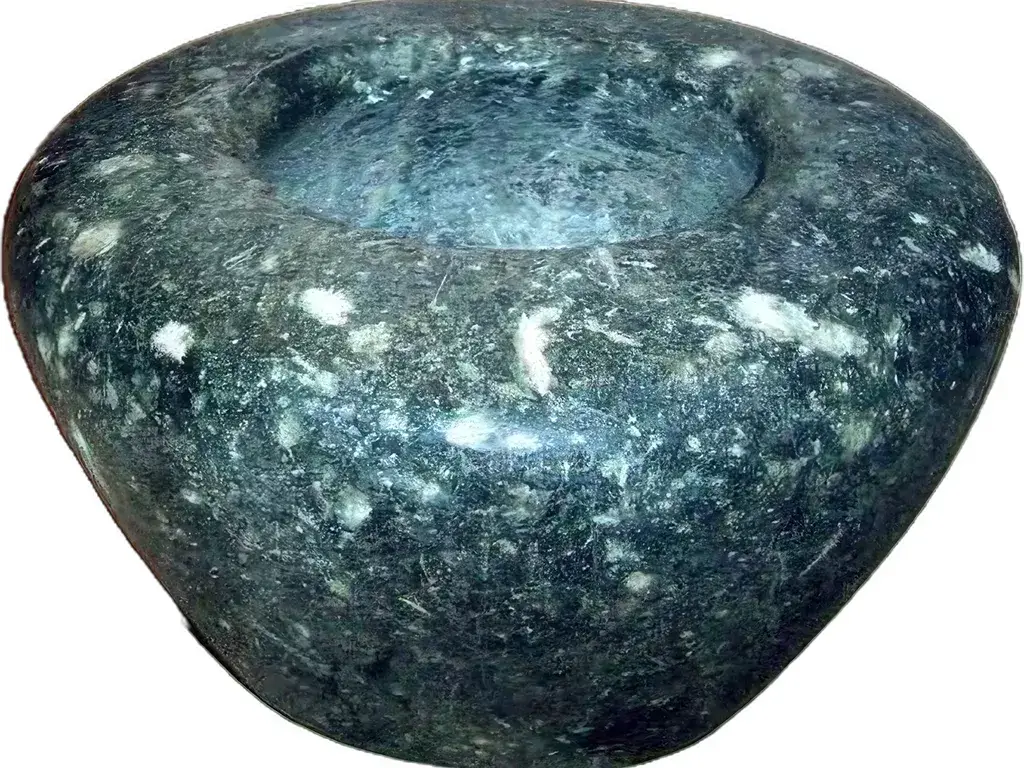
In the summer of 1900 CE, Arthur Evans uncovered something extraordinary in the ruins of Knossos on Crete. Deep within the Minoan palace, alongside clay tablets and painted frescoes, lay small, beautifully carved seal stones. They were not made of local Cretan clay or standard limestone. Instead, they were fashioned from an exquisite, dark olive-green rock studded with pale, star-like crystals.
How did this peculiar material reach Bronze Age Crete across open water? The answer leads back to a single, isolated corner of the Peloponnese. It represents an ancient mystery of trade, prestige, and imperial ambition.
Its history falls into three main phases: Bronze Age exchange, Roman imperial display, and Byzantine and medieval reuse. Across each phase, the stone’s scarcity and distinctive appearance made it a material symbol of wealth, authority, and access to far-reaching networks.
A Geological Anomaly at Psifia
Among the ornamental stones of the ancient Mediterranean, few match the appeal of Krokeatis Lithos. Known to the Romans as Lapis Lacedaemonius, or “Spartan stone,” it is a metabasalt: volcanic lava transformed over immense periods by heat and chemically active fluids. This process altered its plagioclase feldspar into pale epidote-group minerals, producing the stone’s distinctive star-like spots.
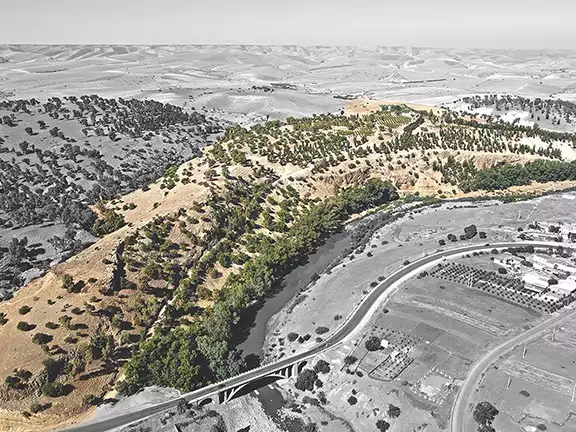
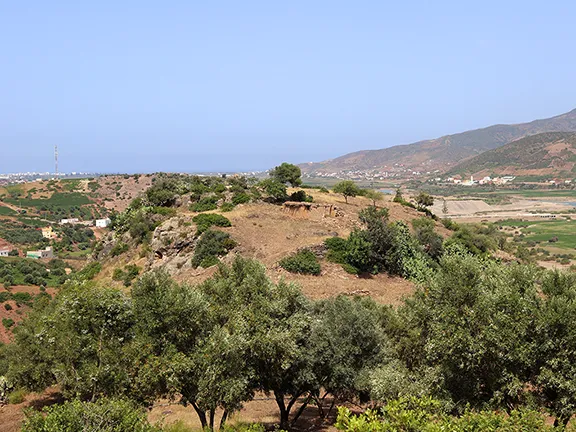
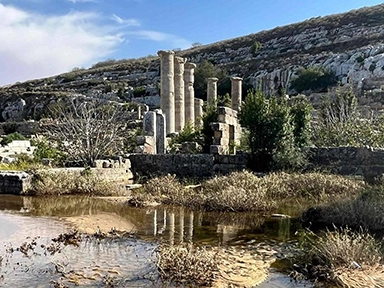
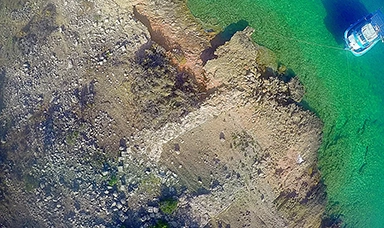
The source of this rare material is astonishingly localised. It occurs almost exclusively around modern Krokees, stretching toward the site of Psifia (or Psephi) in Laconia.
Ancient stoneworkers did not cut this rock from vertical cliff faces. Instead, they harvested naturally weathered boulders embedded in the soil. Writing in the second century CE, the travel writer Pausanias observed this phenomenon:
"Croceae [Krokees] is a village in Laconia... The stone they quarry here is not a continuous vein, but lies in separate nodules beneath the earth." (Pausanias, 3.21.4)
Extracting isolated nodules demanded heavy labour and exceptional care. Because the stone did not occur in a continuous quarry face, workers first had to locate and excavate individual boulders before artisans could shape them. This slow, unpredictable process restricted supply and helped make the finished material exceptionally valuable.
The Bronze Age Trade Network
The story of Krokeatis Lithos begins around 1700 BCE. During the Aegean Bronze Age, elite consumers sought exotic objects that displayed wealth and status. Minoan artisans probably obtained Laconian nodules through cabotage: short coastal voyages in which traders moved goods from one harbour to the next rather than crossing the open sea directly.
The stone travelled along prehistoric maritime routes, moving from the Laconian coast to Crete and the Argolid.
From Psifia and Krokees in Laconia, workers carried the raw stone to palace workshops like Mycenea, and ports, such as Tiryns, in the Peloponnese. Coastal traders then transported it through the Aegean to Knossos.
In palace workshops, master craftsmen turned the dense rock into luxury objects: intricate seal stones used in royal administration, polished ritual vessels, and decorative inlays for elite residences.
Ownership of Krokeatis Lithos signalled direct access to exclusive long-distance exchange networks. When the Mycenaean wanax (king) held a seal carved from Spartan metabasalt, he displayed authority over both land and sea (Boardman, 1970).
Roman Imperial Authority and Opus Sectile
Centuries after the Collapse of the Bronze Age, the stone experienced a dramatic resurgence. As Rome expanded across the Mediterranean, its imperial elite developed an insatiable appetite for exotic provincial stone. The Romans renamed the Laconian rock Lapis Lacedaemonius. It became one of the most expensive architectural materials in the empire.
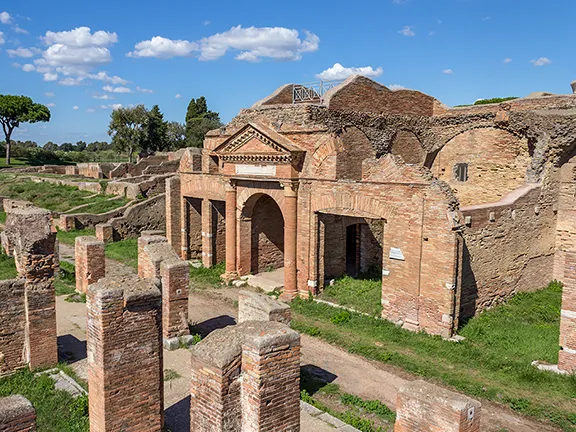
Pliny the Elder highlighted the stone’s prestige in his Natural History, noting its high status among Roman aristocrats (Pliny the Elder, Natural History, 37.55). Architects used it chiefly in opus sectile, a decorative technique in which precisely cut pieces of coloured stone were fitted together to form geometric or figurative wall and floor designs.
In Roman times, the stone followed a more direct route to market. Workers transported the raw material from Psifia to Rome, where master craftsmen cut it into thin slabs and shaped those slabs into the pieces required for opus sectile floors.
The rich green matrix provided a striking contrast to red porphyry from Egypt and yellow giallo antico from Numidia [modern Algeria]. Today, archaeologists still trace its presence in the empire's grandest halls:
- The pavement of the Pantheon in Rome
- The imperial residence at Hadrian’s Villa in Tivoli
- Public bath complexes across Roman Italy (Lazzarini, 2004)
Displaying Laconian stone in Rome was a subtle political statement. It demonstrated total control over distant Greek provinces.
From Hagia Sophia to Medieval Cosmati Pavements
Following the division of the empire, the stone retained its elite status in the East. Byzantine builders saw the deep green hue as an emblem of imperial majesty and religious devotion.
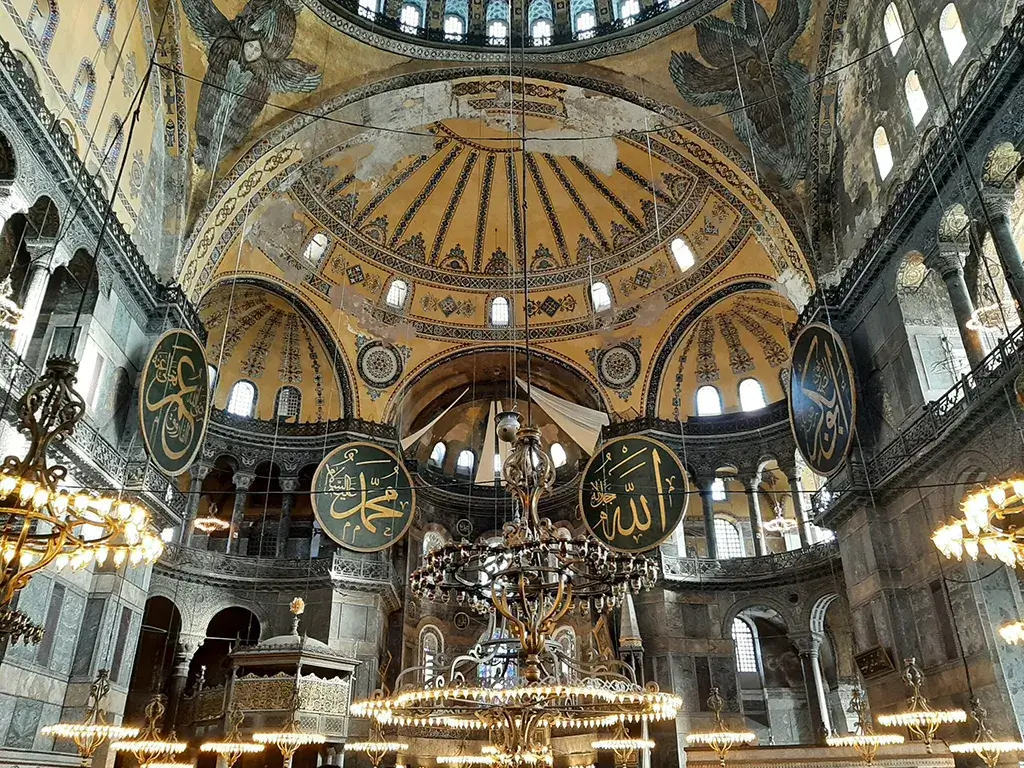
During the sixth century CE, Emperor Justinian imported vast quantities of salvaged and newly quarried Laconian metabasalt to Constantinople [modern Istanbul]. Artisans placed it within Hagia Sophia, using it in floor panelling and liturgical furnishings to elevate the sacred space.
As centuries passed, the original quarries at Psifia fell silent. Yet the stone's journey was far from over.
In the Middle Ages, Italian stonemasons known as the Cosmati began harvesting ancient Roman ruins. They salvaged fragments of Lapis Lacedaemonius from abandoned classical structures, re-cutting the ancient slabs into delicate geometric roundels.
These recycled fragments became key elements of Cosmati pavements, polychrome floors made from inlaid stone, in medieval basilicas across Western Europe (Gnoli, 1988). Material first extracted in antiquity and used in Roman buildings was thus given a new setting in twelfth-century Christian churches.
Why the Green Stone Matters Today
The biography of Krokeatis Lithos offers a powerful lesson in economic history. A single geological anomaly in Laconia managed to connect the Minoan world, the Roman Empire, and the Byzantine realm across nearly three millennia.
The stone was never meant just for decoration. It carried evidence of trade, political power, and specialised craftsmanship. From Minoan seal stones to the monumental floors of Rome and Constantinople [modern Istanbul], its changing uses show how materials, skills, and symbols travelled across the ancient Mediterranean.
Author's Note
Although this Laconian metabasalt is historically renowned, its ancient quarrying zone is a protected archaeological landscape. To protect the site from illicit removal and disturbance, I have omitted the precise coordinates of the fields I visited in June 2026. Visitors can instead encounter this geological and cultural legacy in regional museum displays and in surviving monuments such as the Pantheon in Rome and Hagia Sophia in Istanbul.