Contents
In the Valley of the Kings
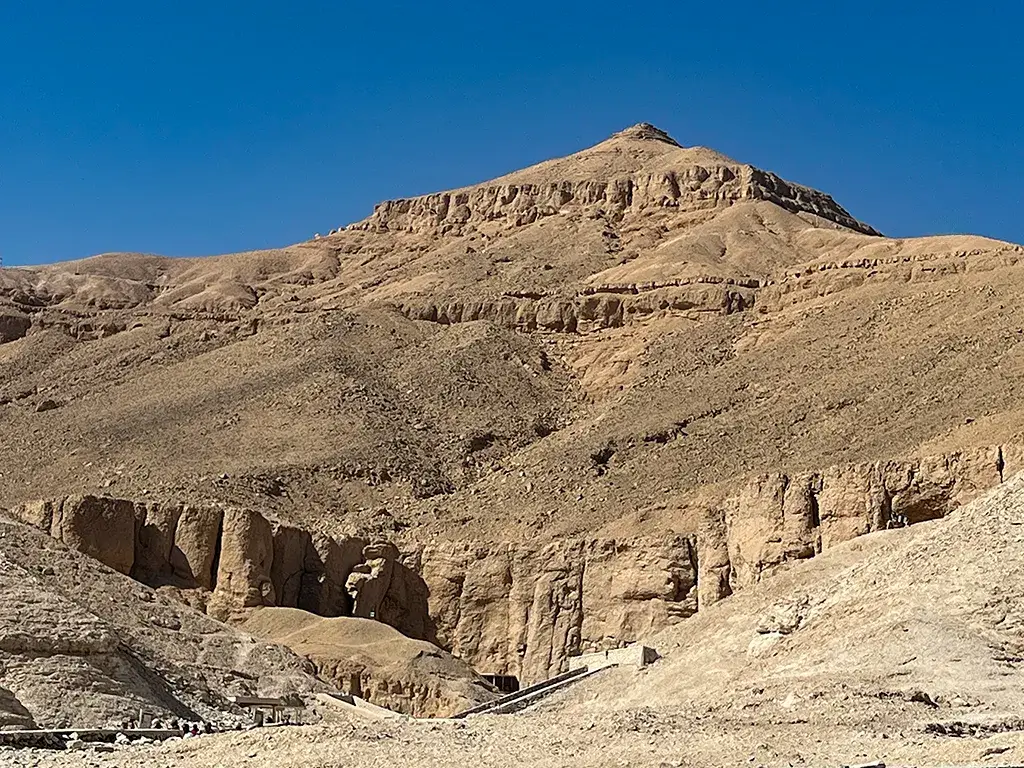
The bowl of the wadi that is called the Valley of the Kings acts as a furnace for a blazing sun high overhead; its rays beat down from every side, increasing the temperature exponentially. Every breath is painful. To date, 65 tombs of varying length, depth, and elaboration have been found within the valley, including that of Tutankhamun himself.
Standing in the incinerating heat (and it was only mid March), I wondered just how, over 3,500 years ago, ancient artisans from a nearby workers' village called Deir el-Medina not only managed to excavate the chambers and tombs, but how they managed to do so without invading neighbouring galleries. Why choose this brutal environment at all? The answer lies in the skyline. Towering above the wadi is a natural, pyramid-shaped mountain peak known as Al-Qurn (The Horn). The pharaohs of the New Kingdom had abandoned the colossal, easily robbed pyramids of their ancestors in favour of secrecy, in a place where nature had provided a magnificent geological pyramid to watch over them all.
Starting with Thutmose I, widely believed to be the first pharaoh buried here, over 30 rulers of Egypt were laid to rest in this hidden necropolis alongside favoured nobles and royal family members and even favoured pets. Some tombs, like that of Seti I, plunge hundreds of feet into the bedrock, their walls adorned with mesmerising art. Others, like Ramesses VI’s tomb, boast spectacular astronomical ceilings.
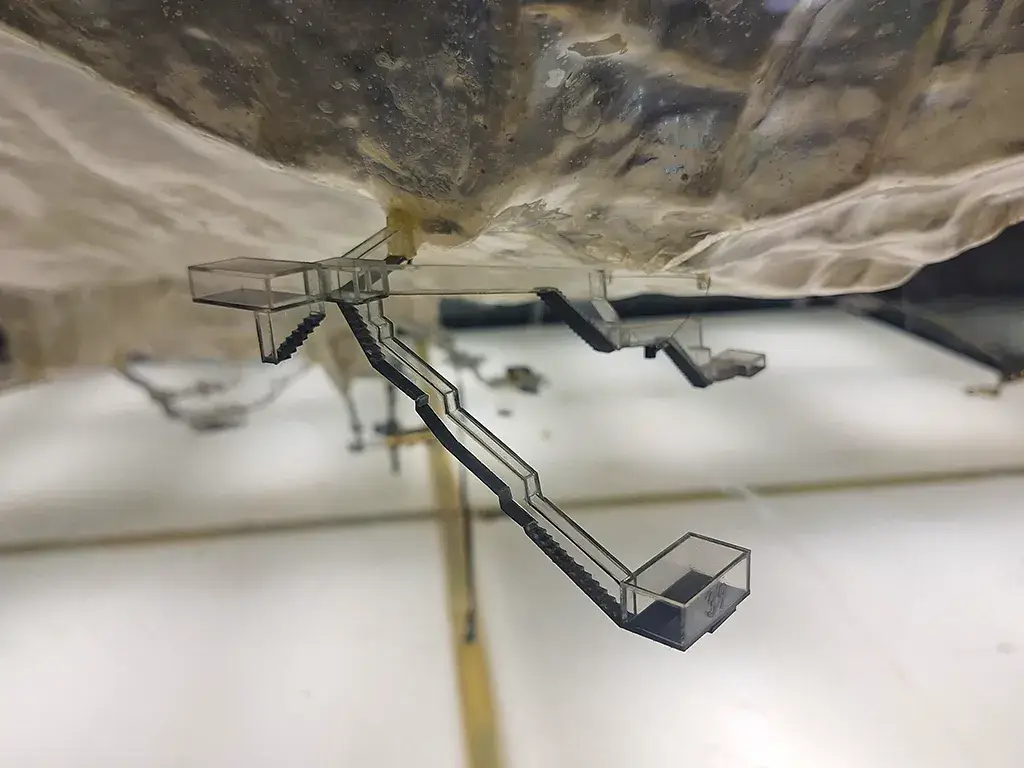
In the cool of the air-conditioned visitor’s centre, there is an impressive 3D illuminated glass and perspex model. It is a detailed, large-scale map of the entire topography of the wadi. Beneath the surface of the "mountains," the perspex model lights up to reveal the subterranean shafts, corridors, and burial chambers of the 63 tombs known at the time the model was made, showing exactly how they intersect and dive deep into the limestone rock. It is a breathtaking work of art, visually highlighting the complexity beneath the surface. But three millennia ago, perspex and 3D models did not exist, nor did air-con. Did those long-dead craftsmen have their own masterplan?
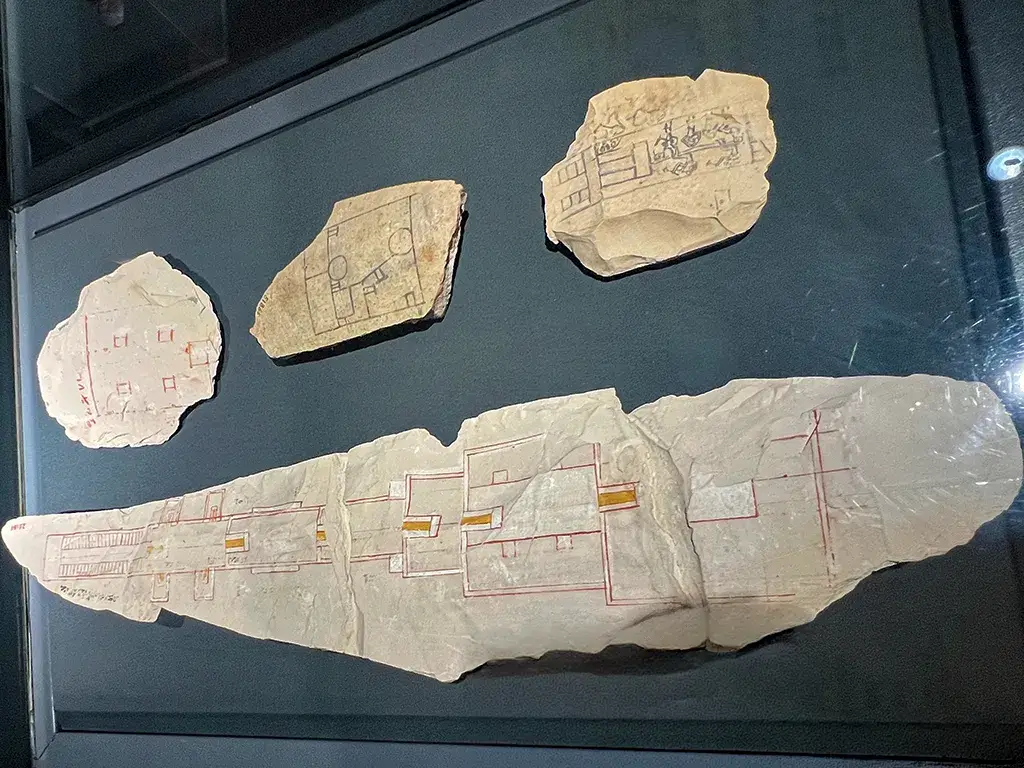
The short answer is a resounding yes. In fact, I had already unwittingly seen an artefact, a piece of the puzzle, in a museum in Cairo. To carve intersecting corridors deep into solid limestone without catastrophic collapses or accidental break-ins required meticulous, mathematical planning. They did not rely on guesswork or instinct; they relied on something far more durable than papyrus. They used the ostraca.
In the dusty, unforgiving environment of an active quarry and construction site, papyrus was far too expensive, rare, and fragile to be used as a daily workbook. Instead, the master architects, surveyors, and scribes of Deir el-Medina turned to the offcuts of their own labour. An ostracon (plural: ostraca) was simply a smooth flake of limestone or a discarded piece of pottery. These ubiquitous, free scraps of stone became the ancient world's equivalent of the modern architect's tablet.
Armed with reed brushes and palettes of natural red and black ink, the master draftsmen would sketch out the subterranean future of the valley. These were not mere doodles or rough concepts. Surviving ostraca reveal highly sophisticated, scaled floor plans of the royal tombs. Plunging corridors, pillared vestibules, and grand burial chambers were meticulously drawn out, complete with specific measurements recorded in royal cubits (approximately 52 centimetres per cubit).
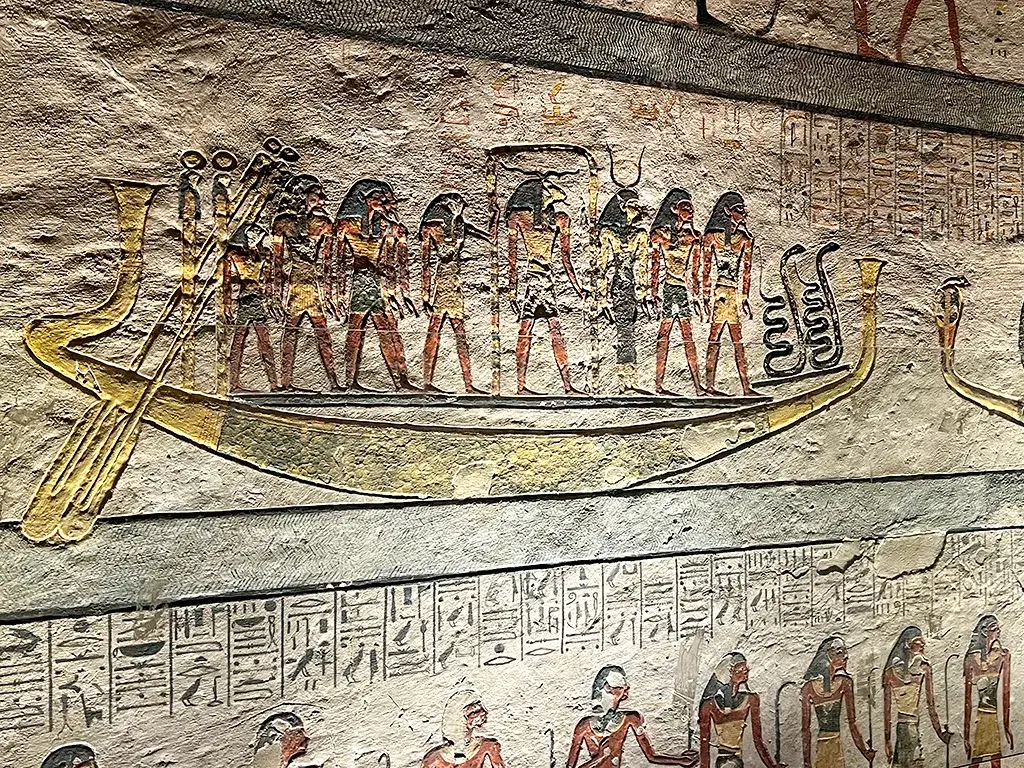
To ensure that the grand murals and wall reliefs were perfectly proportioned in the dim, suffocating light of flickering oil lamps, the artisans utilised a strict grid system. This system was mapped out on ostraca before being transferred directly to the plastered walls of the tomb. By following these stone blueprints and maintaining precise central axes, the quarrymen knew exactly what angle to cut, how deep to dig, and precisely where to halt their chisels to avoid breaching a neighbouring pharaoh’s eternal resting place.
Perhaps the most famous surviving piece of this puzzle is the Ramesses IX tomb-plan ostracon. Discovered within the Valley of the Kings itself, this remarkable artefact details the layout of his tomb (KV6) with straight-edge precision, featuring hieratic labels for each room and exact architectural dimensions. It is a literal blueprint, created from the very mountain it sought to conquer. This ostracon is now housed in the Egyptian Museum in Cairo (often referred to as the Museum of Egyptian Antiquities in Tahrir Square).
These craftsmen were not mere labourers; they were highly respected professionals. In fact, it was these very men who staged the first recorded labour strike in human history during the reign of Ramesses III, dropping their chisels and ostraca when their rations of grain and beer failed to arrive.
Yet, despite all their meticulous planning, the valley's history is steeped in irony. Occasional but violent flash floods would sweep through the wadi, dumping tons of rubble over the tomb entrances. It was this natural debris, not just clever engineering, that ultimately hid Tutankhamun from grave robbers for centuries. Furthermore, despite the immense effort to keep the tombs secure, rampant tomb raiding by the end of the New Kingdom forced the High Priests of Amun to quietly remove the royal mummies from the valley, hiding them away in secret mass caches to protect them from further desecration.
So, as you stand in that sweltering wadi, looking at the seemingly disorganised entrances dotted along the rock face, realise that nothing beneath your feet was left to chance. The masterplans of ancient Egypt were not rolled up in pristine libraries; they were passed from calloused hand to calloused hand on humble, indestructible shards of stone.