By Nick Nutter |
Published: 2024-09-27 |
Updated: 2025-05-20
Visited 4,633 times
The archaeological site of Oued Beht in Morocco is helping archaeologists demonstrate the social, cultural and material connections between north Africa and southern Iberia during the copper age and the advanced Neolithic practices in the Maghreb during that time.
Contents
Oued Beht: Unveiling Morocco's Ancient Farming Society
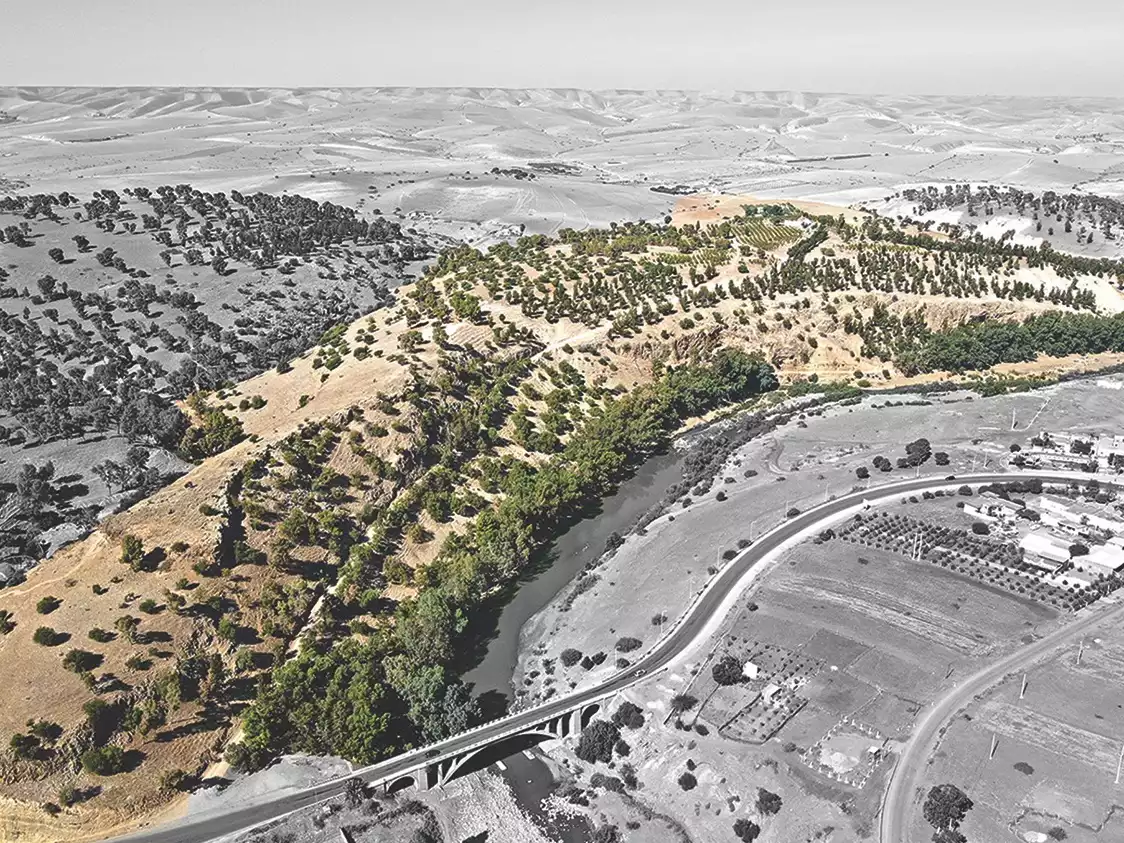
Oued Beht archaeological site in Morocco
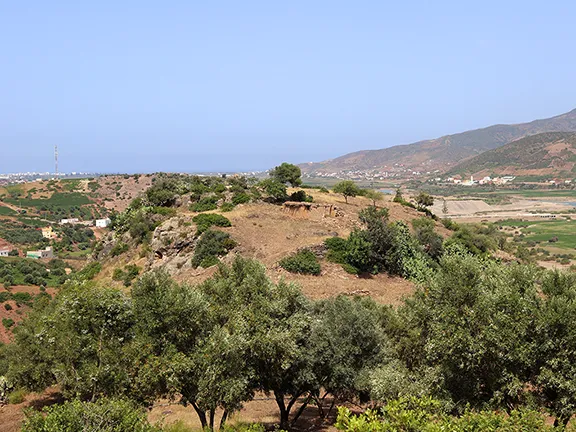
In the semi-arid Zemmour plateau of Morocco, the site of Oued Beht has recently emerged as a significant archaeological site proving early agricultural development in North-West Africa. This site, dating back to around 3400 to 2900 BC, sheds light on a complex farming society that thrived in the region, bridging a significant gap in our understanding of Maghrebian prehistory.
A Glimpse into the Past
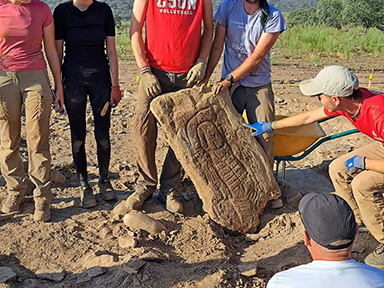
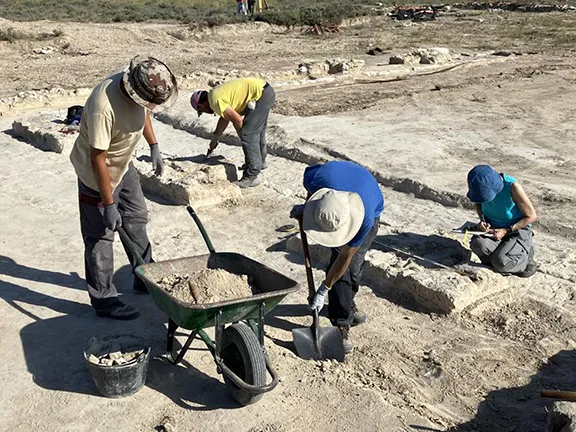
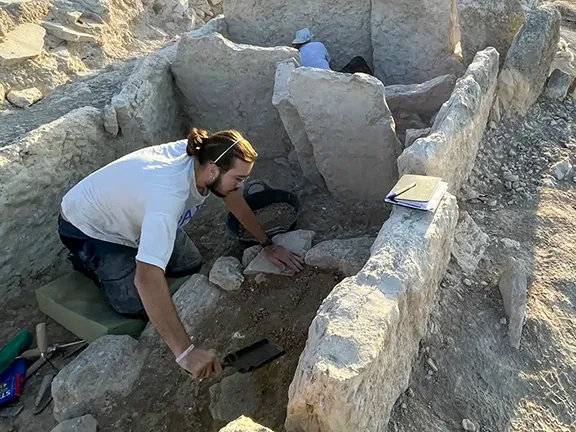
Oued Beht, about 100 kilometres northeast and inland of the capital, Rabat, occupies a strategic position on a limestone ridge overlooking the perennial Oued Beht river. This site first caught the attention of archaeologists in the 1930s when colonial French building work unearthed a mass of polished stone axes, adzes, and grinding tools. However, it wasn't until recent excavations by the British-Italian-Moroccan Oued Beht Archaeological Project (OBAP) that the true significance of this site began to unfold.
Unearthing a Farming Society
The OBAP team has uncovered a wealth of artifacts, including pottery, lithics, and numerous pits, pointing to a well-established farming community. Radiocarbon dating of charcoal and seeds from these pits consistently indicates a timeframe of 3400 to 2900 BC, making Oued Beht the earliest and largest agricultural complex in Africa outside the Nile corridor.
The Agricultural Hub
The site reveals a fascinating picture of early agricultural practices. Charred seeds of domesticated barley, wheat, and peas, along with wild olive and pistachio, were found in the pits, suggesting advanced food processing techniques for the time. The presence of domestic animals such as goats, sheep, cattle, and pigs demonstrates the community's reliance on farming and animal husbandry. The menagerie is interesting, almost identical with the animal species husbanded in southern Iberia, indicating some early Neolithic connection between the two land masses or, less likely, a Neolithic expansion with the full package of plants and animals along the north African coast from the Sinai all the way through to the Atlantic.
Material Culture and Connectivity
Oued Beht's material culture is equally impressive. The pottery, characterized by round-based jars, bowls, and cooking plates, shows a high degree of technological sophistication. Notably, some pottery is decorated with dark-on-light painted designs, a style that finds parallels in southern Iberia, hinting at long-range connectivity and cultural exchange across the Mediterranean.
Agricultural Activity
The site spans an area of at least 9 or 10 hectares, with a dense concentration of artifacts in the northern part. The numerous pits, some of which may have served as storage silos, suggest a community engaged in large-scale food production and storage. The abundance of grinding stones and polished stone axes indicates on-site manufacturing and extensive agricultural activities.
Broader Implications
Oued Beht's discovery challenges previous assumptions about the region's prehistory. It highlights the Maghreb's role in the broader narrative of Mediterranean and African history, emphasizing the region's connectivity and cultural exchanges with contemporaneous societies in southern Iberia and beyond.
Why is Oued Beht so significant?
Oued Beht holds significant importance in Maghrebian prehistory for several reasons:
Earliest and Largest Agricultural Complex: Dated to around 3400 to 2900 BC, Oued Beht is currently the earliest and largest known agricultural complex in Africa outside the Nile corridor. This discovery provides crucial evidence of early farming practices in the Maghreb region. Filling a Historical Gap: The site helps bridge a substantial gap in our understanding of Maghrebian prehistory, particularly between 4000 and 1000 BC. Prior to this discovery, there was limited knowledge about the region's activities during this period. Complex Farming Society: The findings at Oued Beht, including pottery, lithics, and numerous pits, point to a well-established and complex farming society. This challenges previous assumptions about the simplicity of early Maghrebian communities. Cultural Connectivity: The presence of dark-on-light painted pottery, similar to styles found in southern Iberia, suggests long-range connectivity and cultural exchanges across the Mediterranean. This highlights the Maghreb's role in broader Mediterranean interactions during later prehistory. Advanced Agricultural Practices: The discovery of charred seeds of domesticated barley, wheat, and peas, along with evidence of domestic animals, indicates advanced agricultural and food processing techniques. This underscores the community's reliance on farming and animal husbandry. Material Culture: The sophisticated pottery and extensive use of grinding stones and polished stone axes reflect a high degree of technological advancement. This material culture provides valuable insights into the daily life and economic activities of the community.
Comparing Oued Beht with contemporaneous sites in Iberia
Oued Beht spans at least 9 or 10 hectares, making it a significant site in the context of early farming societies in the Maghreb.
Valencina de la Concepcion
However, when compared to Valencina de la Concepcion, Oued Beht is considerably smaller. Valencina de la Concepcion, located near Seville in southern Spain, is an extraordinary Iberian Copper Age mega-site that covers approximately 200 hectares during its third-millennium BC floruit. It was occupied between about 3000 BC and 1500 BC.
Los Millares
Los Millares, in Almeria southern Spain is a copper age site inhabited between 3200 and 2200 BC. With a total size of about 20 hectares it is more directly comparable with Oued Beht. The physical situation of Los Millares and Oued Beht are also similar, both on a ridge overlooking a river in a now semi-arid zone that was a little wetter during the copper age.
Material Similarities and Connections
One of the reasons Oued Beht is so exciting is that it helps to prove a direct connection between North Africa and southern Spain via the Strait of Gibraltar. Ostrich eggs and African ivory have been found in both Valencina de la Concepcion and Los Millares, clearly from Africa. Now we are seeing signs of reciprocity with similar designs of pottery found at Oued Beht and sites in southern Iberia, notably a dark on light painted style, common in southern Iberia but so far only found in North Africa at Ghar Cahal in northwest Morocco and now at Oued Beht.
The presumed storage pits at Oued Beht have striking technological similarities with the 'silos' of the so-called 'silo culture' that extended from Portugal to western Andalucia. It is even possible that in this instance the technology transfer was south to north.
Two other copper age settlement sites in southern Iberia of comparable age to Oued Beht, Perdigoes (southern Portugal) and La Loma (near Granada), also have numerous pits and painted pottery.
Genetic Evidence of a Connection
Over the last few years, genetic analysis has revealed a southern Iberian population of local hunter-gatherers, Neolithic Iberian farmers and, crucially, Saharan pastoralists. Reinforcing this research, an individual of African descent was buried at the late copper age site of Camino de las Yeseras in the central Iberian massif about 500 kilometres from the sea.
Conclusion
Oued Beht fills a significant gap in our understanding of Maghrebian prehistory but also underscores the region's importance in the broader context of Mediterranean and African history. As research continues, Oued Beht promises to reveal even more about the complex and interconnected world of our ancient ancestors.
References
Broodbank C, Lucarini G, Bokbot Y, et al. Oued Beht, Morocco: a complex early farming society in north-west Africa and its implications for western Mediterranean interaction during later prehistory. Antiquity. Published online 2024:1-20. doi:10.15184/aqy.2024.101
Location Map
Enjoying this clean, uncluttered read?
You are currently browsing the result of a massive technical overhaul. My new book, Legacy Reloaded: A dev, an AI, and the relentless pursuit of 100, chronicles the journey of transforming an aging legacy website into a modern, lightning-fast platform that hits the perfect 90+, 100, 100, 100, 3/3 Lighthouse metrics. It’s a story of collaboration between developer and AI, and the stubborn pursuit of technical perfection.