A Road-Trip Discovery
Julie and I love road trips. This one began with a plan to explore the megalithic monuments of northern Spain. Our route took us from Almería to Gijón, via Alcalá de Henares and Burgos, then on to A Coruña and Vigo before we returned home through Zamora and Talavera de la Reina.
We usually visit the museums in the towns we pass through, and our efforts are often rewarded. This trip was no exception. A highlight was encountering the Arrabalde Treasure in the museum at Zamora. The treasure has nothing to do with dolmens, tumuli or stone circles, or any other megalithic phenomenon but I am easily sidetracked.
By “discovery”, I mean that we had never heard of this particular hoard, despite knowing of more than a few. It may be better known than I realise, but precious little appears to have been written about it. This is the fascinating story of the Arrabalde Treasure.
Las Labradas and the Two Hoards
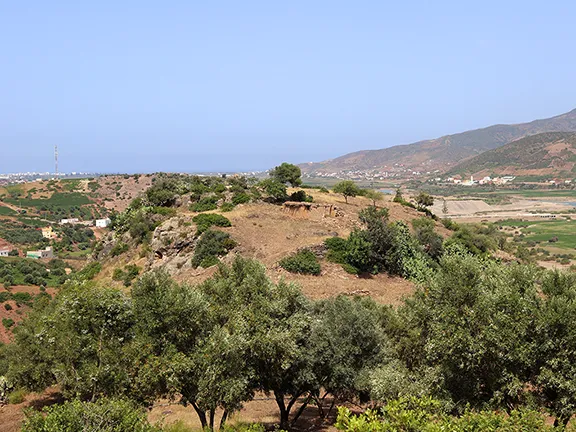
The treasure displayed in Zamora is actually made up of two hoards discovered seven years apart. Arrabalde is a municipality in the province of Zamora, and both caches were found at the edge of an Iron Age hill fort, or castro, called Las Labradas. The fort stands on a ridge between Arrabalde and Villaferrueña.
We discovered dozens of these pre-Roman fortified settlements across Galicia, Asturias, Cantabria, the north-western Meseta Central and northern Portugal. Another road trip beckons, but first, back to the treasure.
Arrabalde I: The 1980 Discovery
The first hoard was discovered in August 1980 just outside the castro’s main residential area by a Victorino Llordén Vega, a lawyer from the nearby town of Benavente who was also known as an antiquities expert. While it was officially recorded as a "chance" or fortuitous find, his background in antiquities led to persistent local rumours that he hadn't just stumbled upon it, but was actually actively searching the castro of Las Labradas with a metal detector at the time. In any case, Vega found an intact, dark-grey, wheel-turned storage jar known as a tinaja. Imagine his surprise when he upended the jar, and watched its contents spill onto the ground.
Jewellery and Silverware
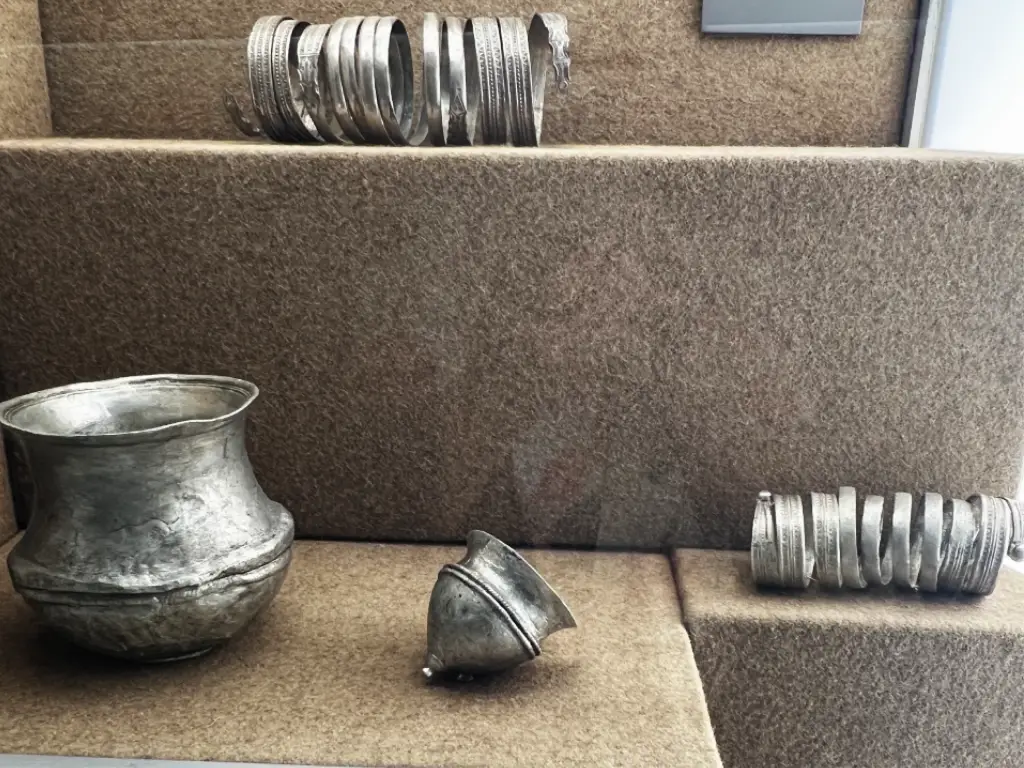
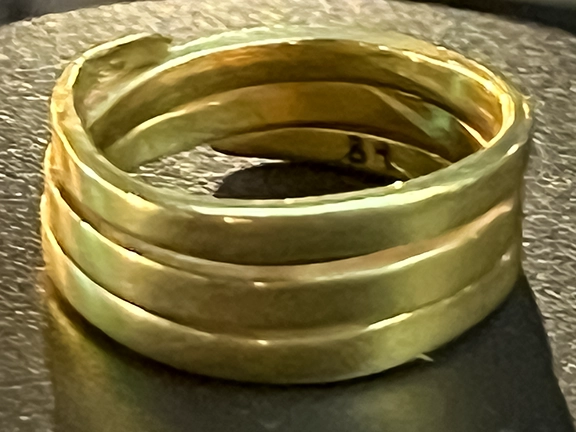
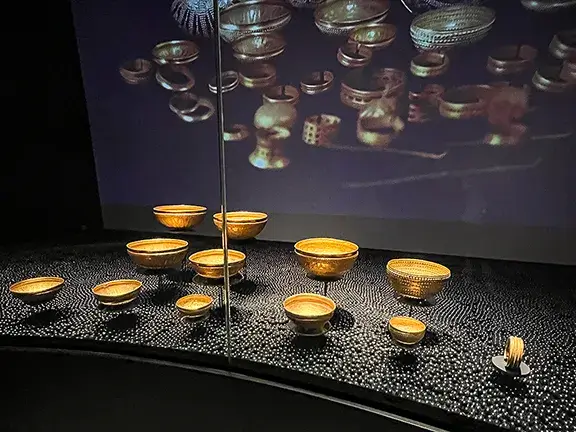
At his feet lay an extraordinary collection of four heavy spiral bracelets with elaborate decoration, together with others ending in snake-head terminals, several gold and silver torques (neck rings), tulip-shaped silver cups and bowls, and assorted rings, arracadas (crescent-shaped earrings), pendants, hoops and fibulae (brooches).
Altogether, the hoard contained 678 grams of gold and 4.3 kilograms of silver.
The Coins and Their Date
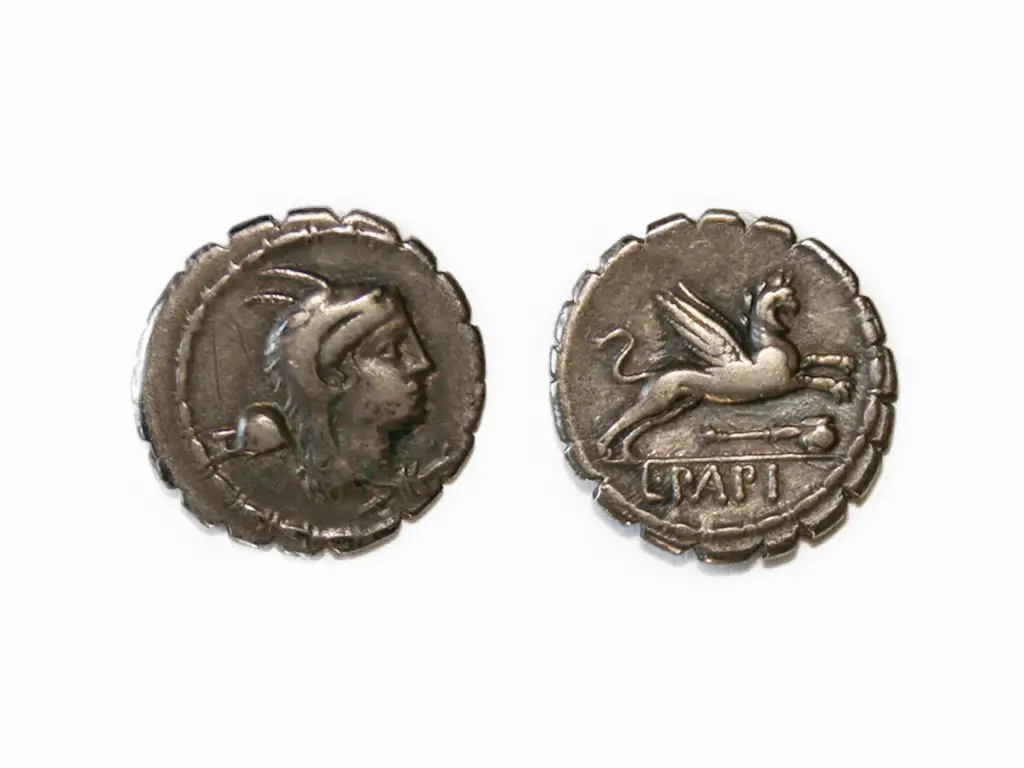
What made the find especially significant, however, were its 20 silver denarii.
16 Iberian coins from indigenous mints, including Turiazu (modern day Tarazona) and Bolskan (modern day Huesca), and four Roman coins, the latest dating to 32 – 31 BCE.
The Spanish State moved quickly to acquire the treasure, and a brief follow-up survey of the disturbed earth yielded a few more silver objects. Tragically, however, word of the discovery soon spread. The site was swarmed by illegal metal detectorists who vandalised the area, completely destroying the immediate archaeological context and preventing a proper emergency excavation. The looters managed to extract at least two more Iberian silver coins from the dirt before they were stopped.
Picking Up the Pieces: The First Excavations
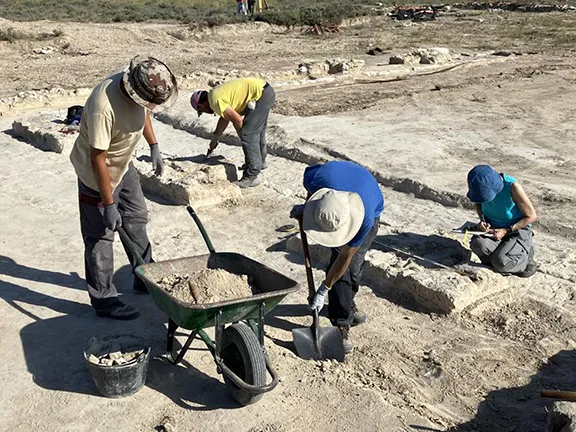
Because of the heavy looting, it wasn't until 1982 that archaeologist Ángel Esparza could conduct the first scientific excavation. With the discovery site thoroughly destroyed, he found only some ceramics dating to around 60 BCE, though he was able to deduce that the treasure had been buried outside any residential dwellings.
A second campaign in 1986 aimed to locate the actual dwellings within the hill fort. This proved more fruitful, uncovering a fragment of a Roman officer's breastplate and five coins, including an as from Emerita Augusta (modern day Mérida) dating to 23 BCE.
Arrabalde II: The 1987 Discovery
In April 1987, a second cache appeared under similarly murky circumstances about a kilometre west of the first find, rather than during a controlled archaeological dig. This hoard contained roughly two kilograms of gold and only a small amount of silver.
Prestige Objects
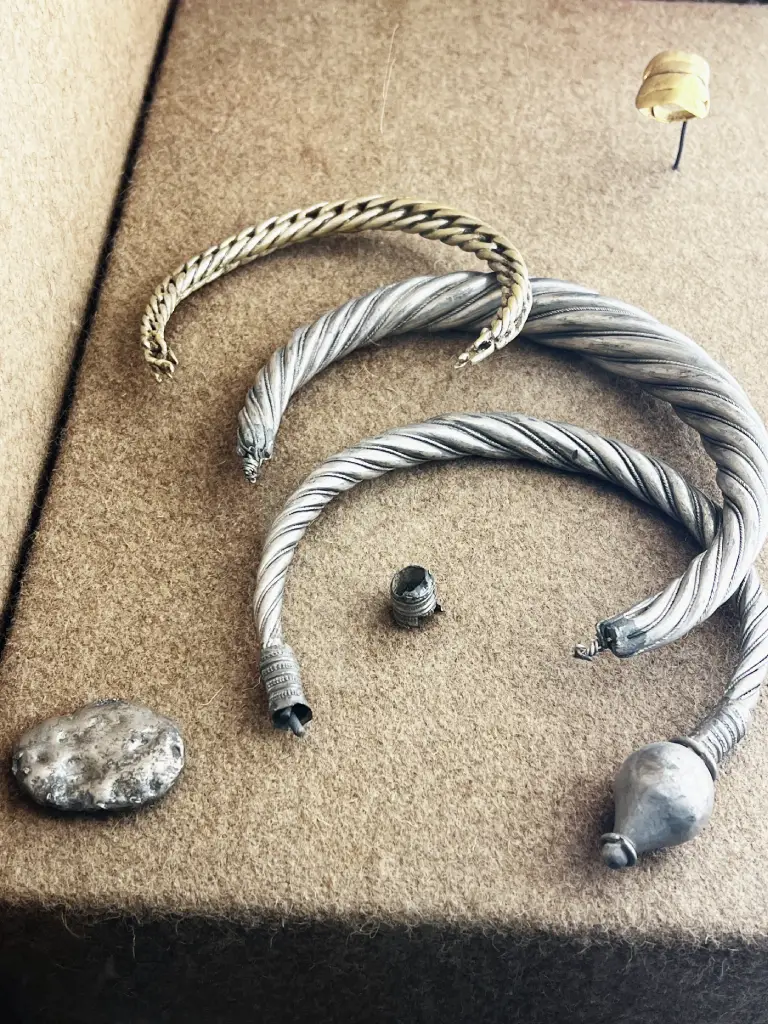
The principal pieces included four gold torques - two with a twisted, rope-like design (sogueado), one formed as a breathtakingly complex woven chain mesh, and one made from a simple rod, three double-foot fibulae, one large spiral bracelet, several gold rings, earrings and miscellaneous jewellery fragments, and a “cake”, or ingot, of unworked silver.
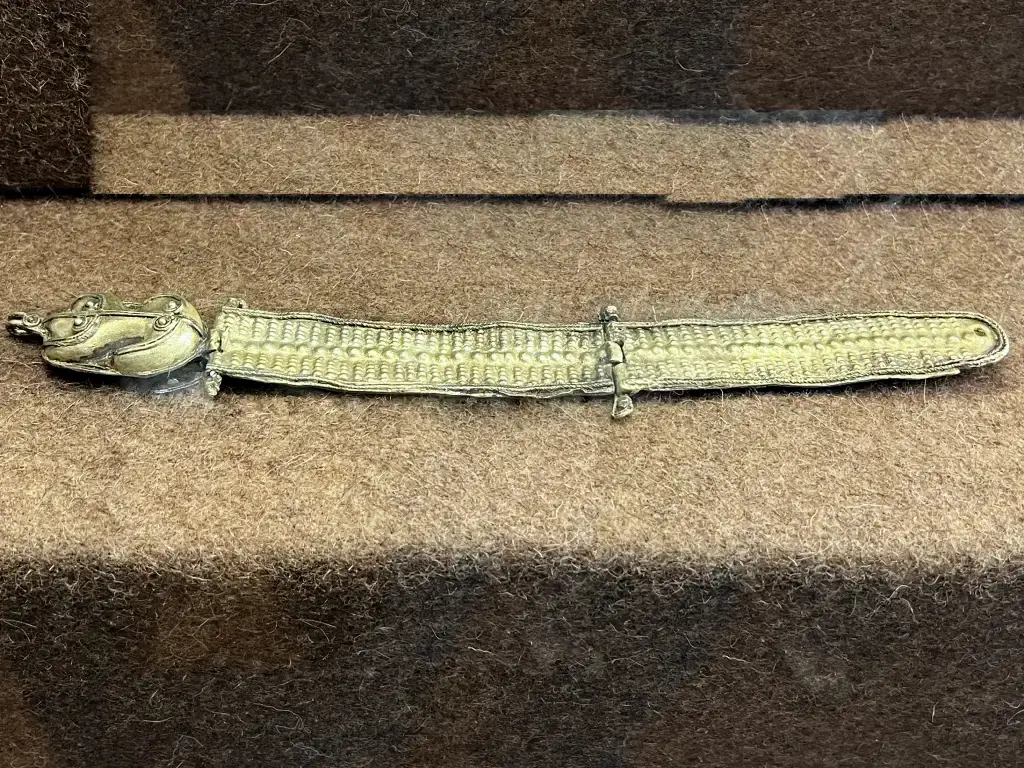
The outstanding object is an articulated gold belt buckle made from decorated plates. Such complex articulation in pure gold is exceptionally rare.
Following this second fortuitous appearance, archaeologists conducted further excavations in 1988. Digging exactly where the second hoard was found yielded no signs of dwellings, reinforcing the idea that these treasures were intentionally hidden away from homes. However, a separate dig at the highest part of the castro uncovered a rectangular cabin containing late Iron Age ceramics and two more Iberian silver coins from the Sekobirikes (modern day Pinilla, Trasmonte (Burgos)) mint.
Two Hoards, Two Purposes
The first deposit has been interpreted as a mixed metal “savings vault”, combining wearable wealth with practical currency in the form of coins and silver vessels.
Arrabalde II, by contrast, consisted principally of high-status gold adornments, the articulated belt buckle and intricate torques among them. It may therefore have represented the personal possessions of a prominent individual or family.
Buried in a Time of War
The latest coin from the first hoard was minted only a few years before the outbreak of the Cantabrian and Asturian Wars (29 – 19 BCE), the brutal campaigns in which the Roman emperor Augustus sent his legions to conquer the last independent tribes of northern Spain.
It is easy to imagine Roman armies advancing through the region and laying siege to local strongholds while the wealthy inhabitants of Las Labradas frantically buried their most precious possessions to protect them from looting.
The fact that the treasure remained underground for more than two millennia suggests that its owners were killed, enslaved or forced to flee, and never returned to recover their wealth.
Craftsmanship and Style
Both hoards display characteristic Celtiberian workmanship: massive, weighty metal forms combined with intricate geometric stamping and punchwork, all intended to proclaim the wealth and social status of tribal leaders. It is thought that the objects from both treasures were produced in the same regional workshops.
Where to see the Arrabalde Treaures
The Arrabalde hoards can be seen at the archaeological museum in Zamora, Pl. Sta. Lucía, 2, 49002 Zamora. Where to see the Arrabalde Treaures