The Golden Hat of Schifferstadt weighs just 350 grams and is 29.6cms high. The cone has a diameter of 18cms where it joins the 4.5cm wide brim.
Contents
The Golden Hat of Schifferstadt: A Glimpse into the Bronze Age
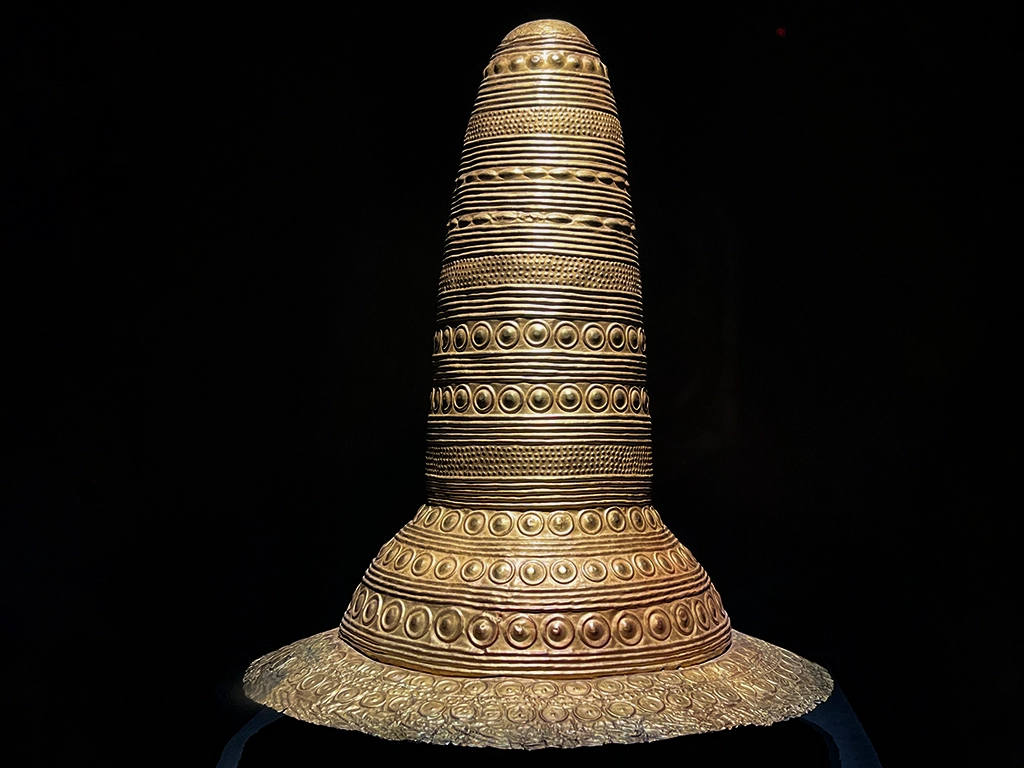
The first golden hat to be discovered was the Schifferstadt Hat in 1835. Unearthed in a field near the town of Schifferstadt in southwestern Germany, this remarkable piece was found upright on a slab of burnt clay.
Three Bronze Axes
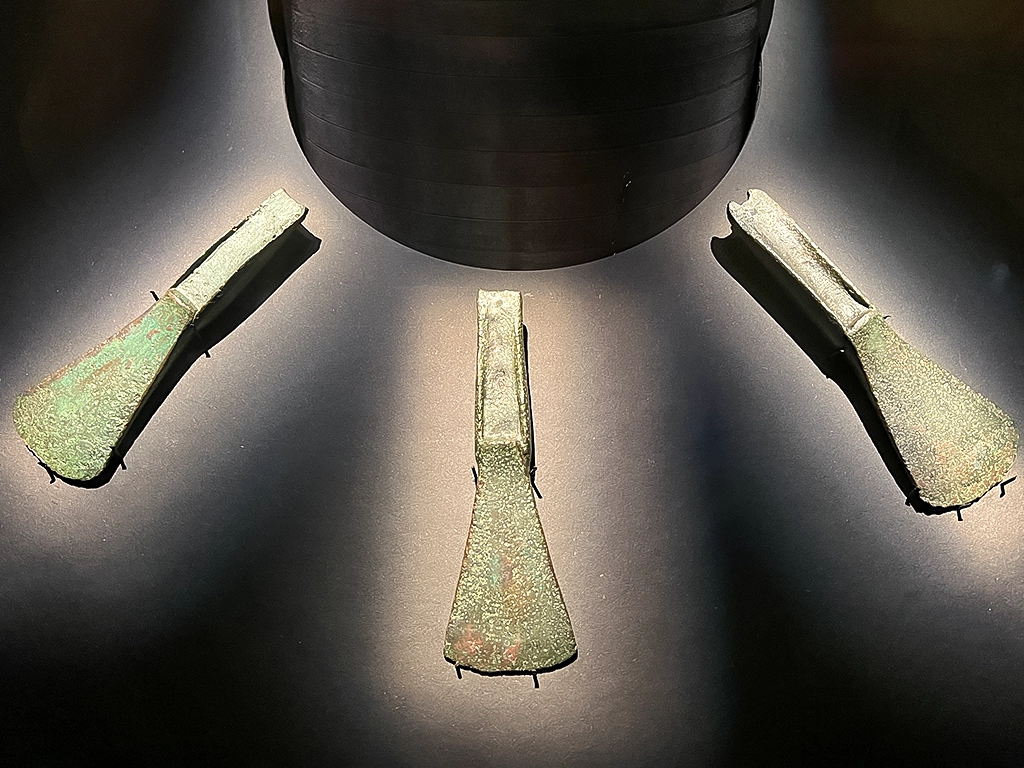
When found, the Schifferstadt Hat was upright with the top of the crown just a few centimetres beneath the surface of the earth. Placed on the brim, vertically inclined and supported by the cone of the hat, were three bronze axes, hinting at a possible ritualistic use.
A Family of Golden Headwear
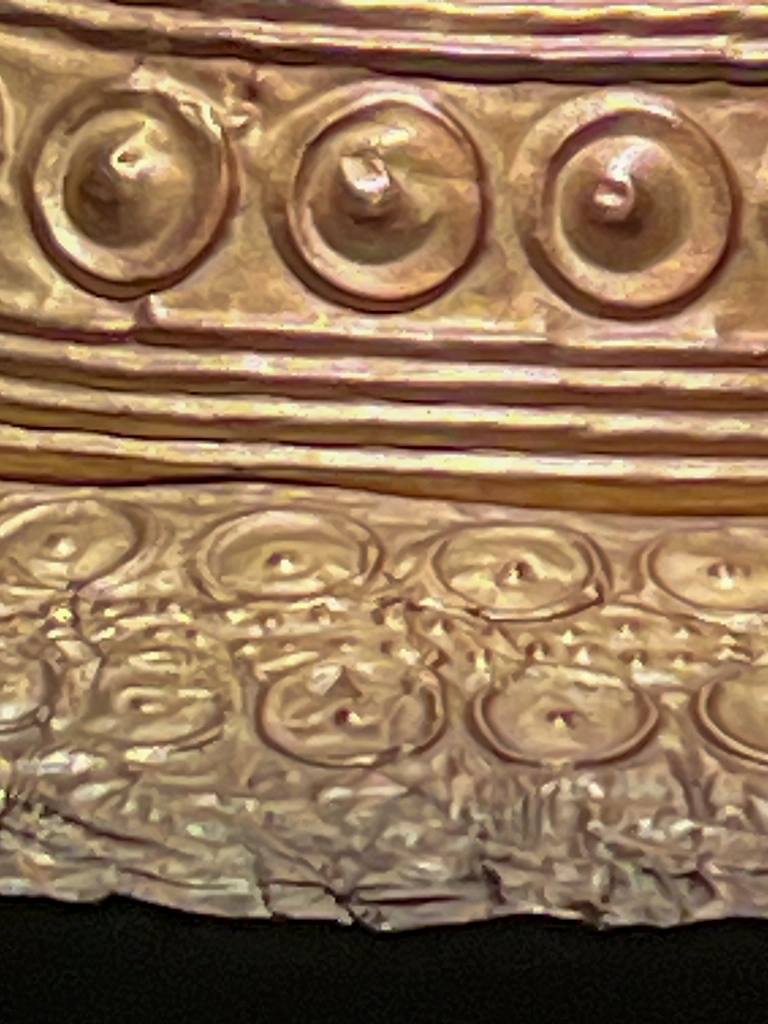
The Schifferstadt Hat is not alone. Three other golden hats have been discovered across central Europe:
The Avanton Gold Cone found incomplete near Poitiers, France, in 1844, dates to around 1400 BC.
The Golden Cone of Ezelsdorf-Buch, unearthed near Nuremberg, Germany, in 1953, stands as the tallest known specimen at roughly 90 cm and dates to between 1000 and 900 BC.
The Berlin Gold Hat, whose exact origin remains unknown, is believed to have come from Swabia or Switzerland and likely dates to the same period as the others.
Masterful Techniques: From Solid Gold to Delicate Headwear
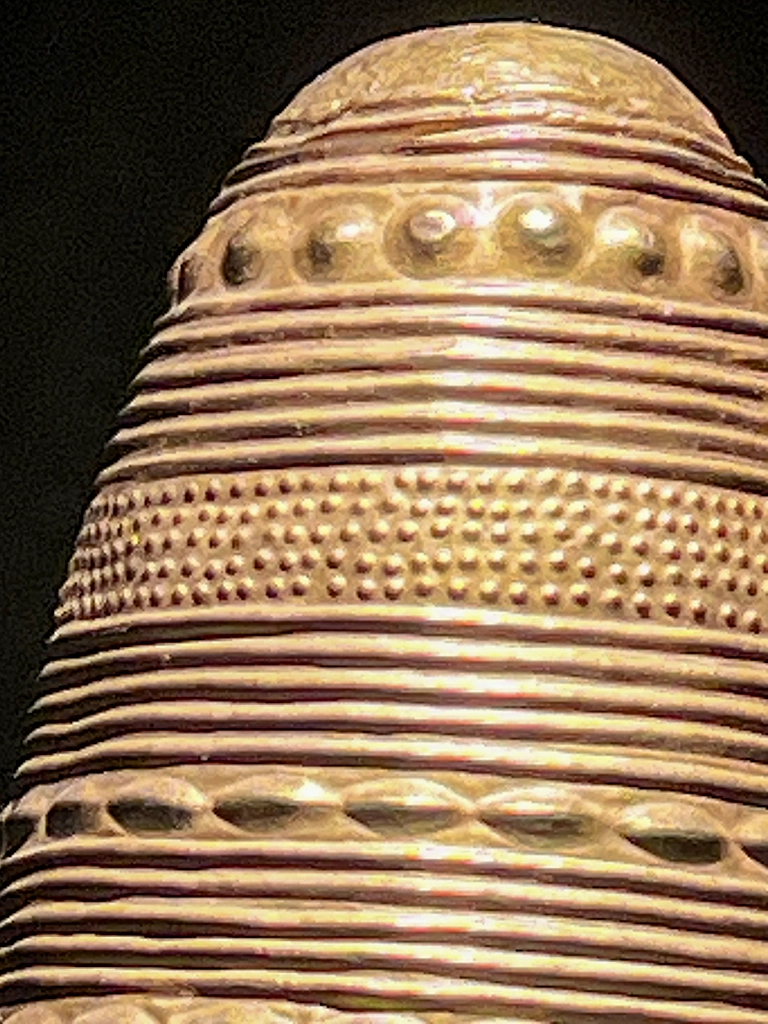
The golden hats were crafted with impressive skill. Each began as a solid piece of gold, painstakingly hammered into a thin sheet no thicker than paper. To create the intricate decorations, the artisans employed a technique called chasing. This involved filling the gold sheet with a mouldable substance like putty, or tree resin and wax, traces of which can still be seen in the hat, then hammering designs from the outside using specialized tools. The resulting raised patterns adorned the exterior of the hat. Finally, the shaped gold was placed over a form to provide structure and stability.
The Enigma of Purpose: Ceremonial Attire or Something More?

The exact function of the golden hats remains a subject of debate. Given the lack of clear evidence, archaeologists believe they were most likely used in ceremonial contexts. Theories suggesting a connection to tall headdresses depicted in ancient Egyptian or Assyrian art have yet to gain traction.
The golden hats stand as testaments to the advanced metalworking skills and artistic vision of Bronze Age Europe. While their precise purpose eludes us, they continue to spark the imagination and inspire further exploration into this fascinating period of human history.