For centuries, we’ve admired the stark beauty of unpainted classical statues, leading us to believe that this was their original, intended state. The truth, however, is far more vibrant and, frankly, much more accurate to the aesthetics of the time. Ancient Greek and Roman statues were boldly, beautifully, and often shockingly, painted.
Contents
Beyond the Marble: Unearthing the Vibrant Truth of Ancient Statues
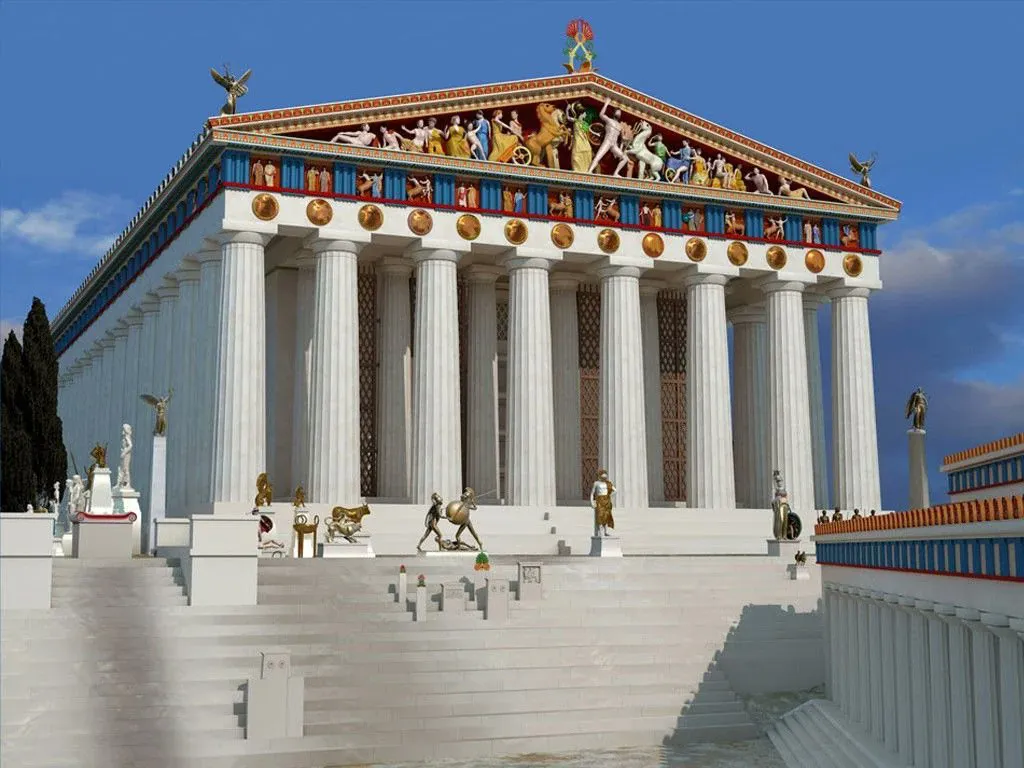
When you picture a classical Greek or Roman statue, what comes to mind? Most likely, it's the pristine, unblemished white marble we see in museums today. But what if I told you that this iconic image is, in fact, a modern misconception? Prepare to have your perceptions shattered, because the ancient world was a riot of colour, and its sculptures were no exception!
Colours in Ancient Life
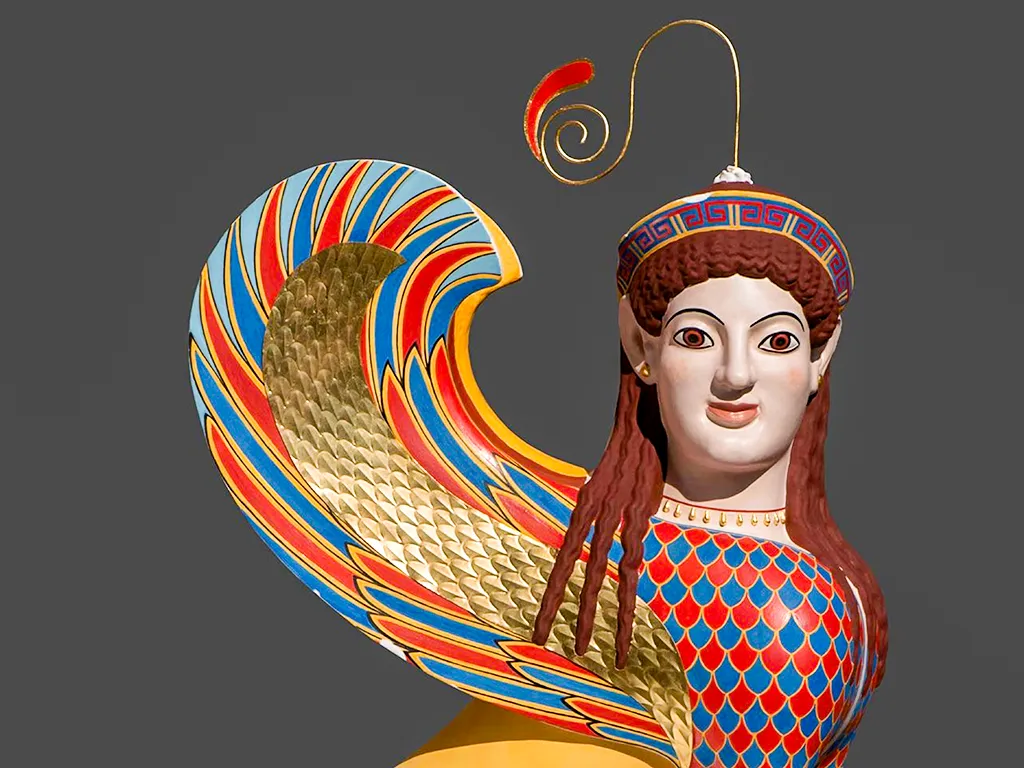
The Pythagoreans held that the four basic colours of the ancients, black, white, red and ochre, were associated with the four elements of life, water, air, fire and earth, respectively.
Empedocles (c. 494 – c. 434 BC) was a Greek philosopher and poet from Acragas (modern Agrigento, Sicily). He is considered one of the most important of the "Presocratic" philosophers, meaning he lived and worked before Socrates.
He is best known for his cosmogonic theory of the four classical elements: earth, air, fire, and water. He called these "roots" and believed that all matter was composed of different combinations of these elements. To explain how these elements mixed and separated, he introduced two opposing cosmic forces: Love (or Philia), which brings elements together, and Strife (or Neikos), which separates them. He envisioned a cosmic cycle of eternal change, growth, and decay driven by the continuous battle for supremacy between Love and Strife.
Empedocles developed a theory that colours were perceived through the eye via suitable receptors that detected the ‘particles’ that colours emit - a remarkably perceptive theory that was only improved in the early 19th century AD.
Diogenes of Apollonia defined diseases by using the basic colours to divide people into colour categories.
The ancient Greeks also used colour to characterize various attributes. The blonde hair of the gods projected their power, the brown skin of warriors and athletes signified virtue and valour while the white skin of the korai (sculptures of young, draped females), expressed the grace and radiance of youth.
The Persian Fury and a Fortunate Burial
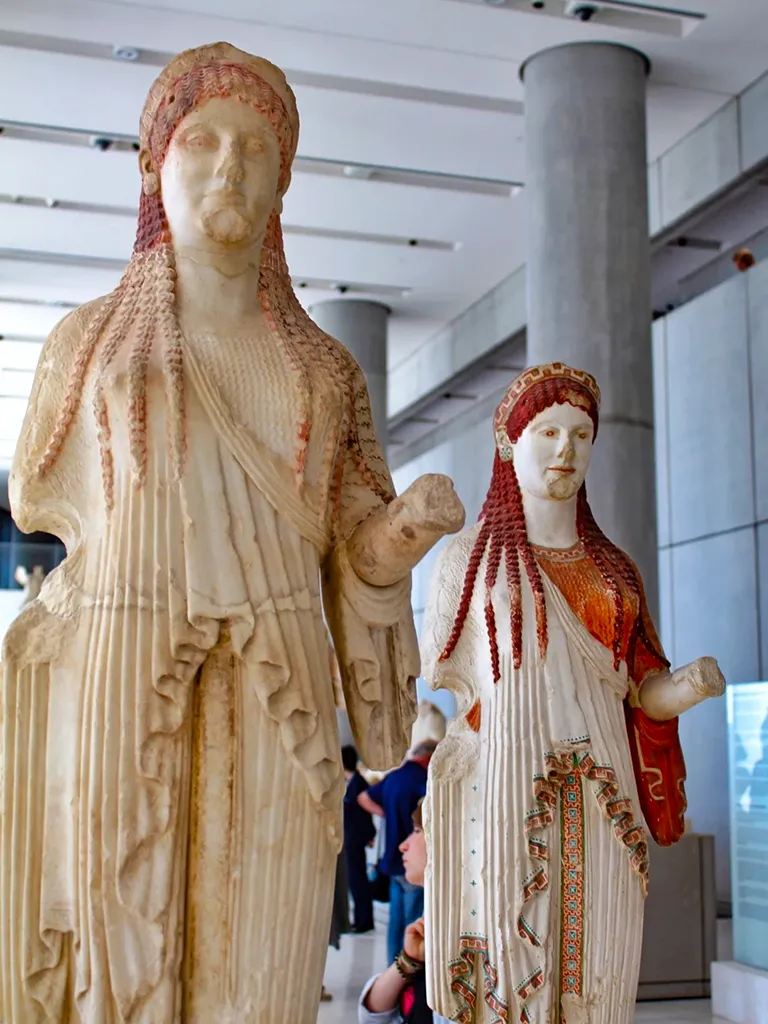
So, why did we lose sight of this colourful past? Part of the answer lies in a devastating historical event: the Persian invasion of Greece in 488 BCE. As the Persians sacked Athens, they toppled and buried countless Greek statues, particularly those on the Acropolis. This act of destruction, ironically, became an act of preservation. Buried beneath the earth, these fragmented statues were protected from the elements and, crucially, from the later Roman and Renaissance-era penchant for stripping away polychromy to reveal the "pure" marble beneath.
A Most Fortuitous Discovery: 1885 AD
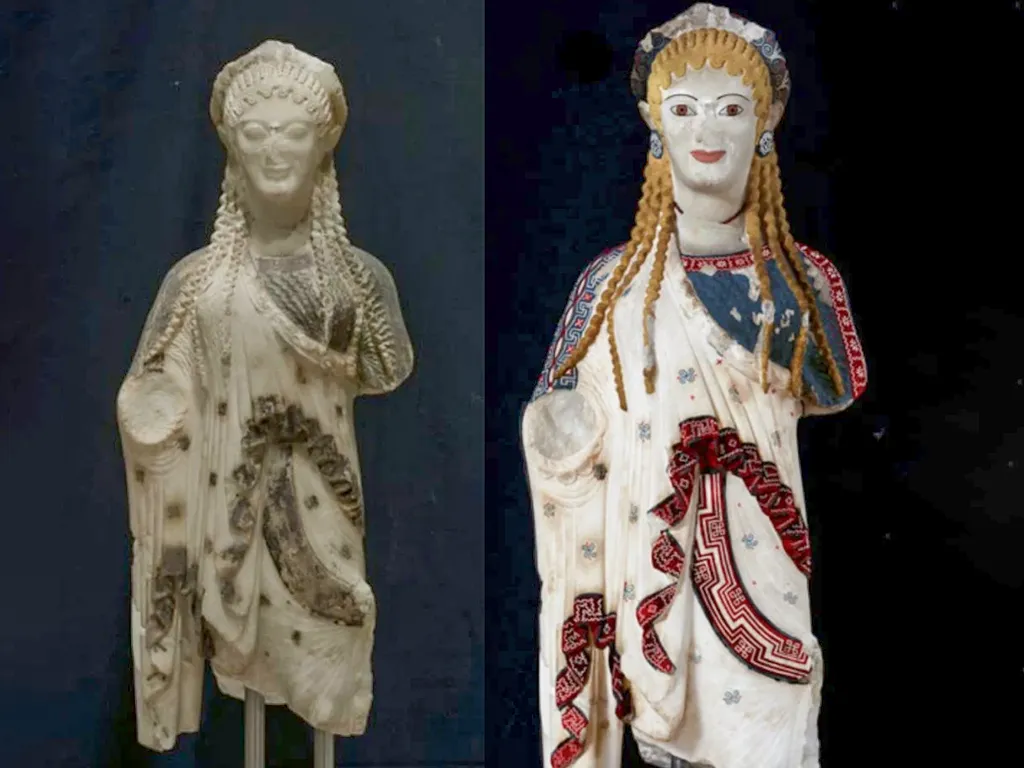
Fast forward to 1885 AD, and the archaeological excavations on the Athenian Acropolis began to unearth these buried treasures. What emerged from the earth was not the stark white marble we expected, but fragments bearing tantalizing traces of colour. These discoveries sparked a new understanding, challenging the long-held belief in the monochromatic nature of classical sculpture.
The Dawn of Polychromy Research: Pioneering Efforts
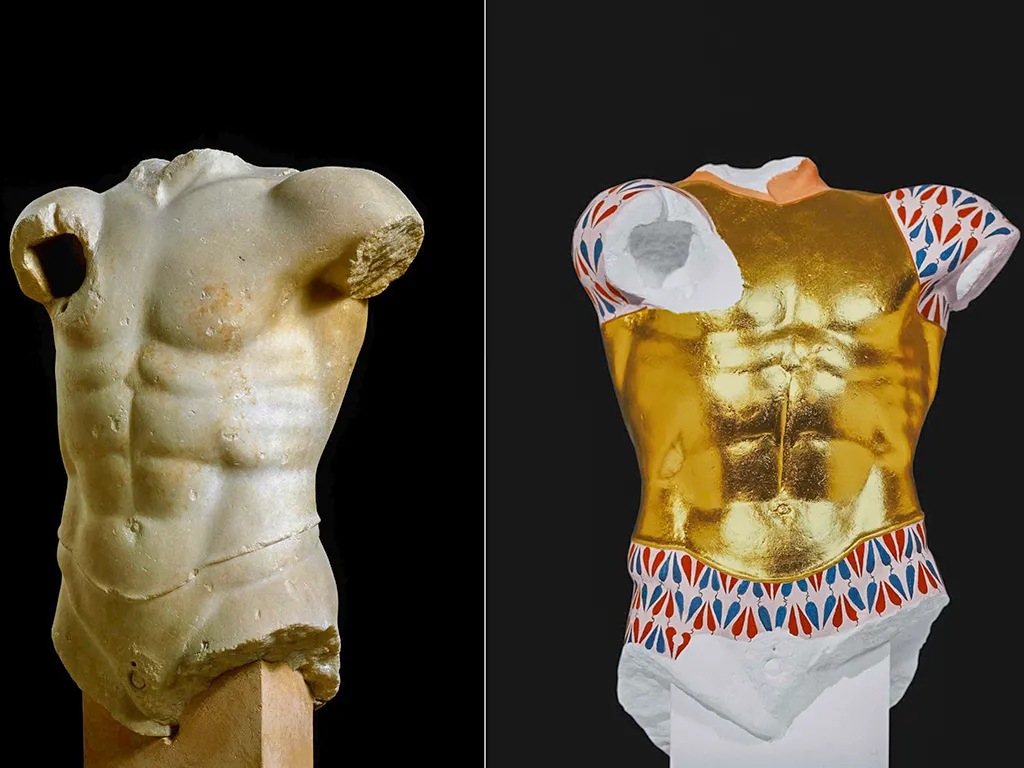
The initial revelation was just the beginning. Early pioneers began the painstaking work of documenting and understanding these faint remnants of paint. L.E. Gillieron and W. Lermann were among the first to meticulously record the surviving pigments, producing valuable early reproductions and analyses that demonstrated the extent of the original coloration. Their work, though limited by the technology of the time, laid the groundwork for future research.
A Modern Renaissance: Bringing Colour Back to Life
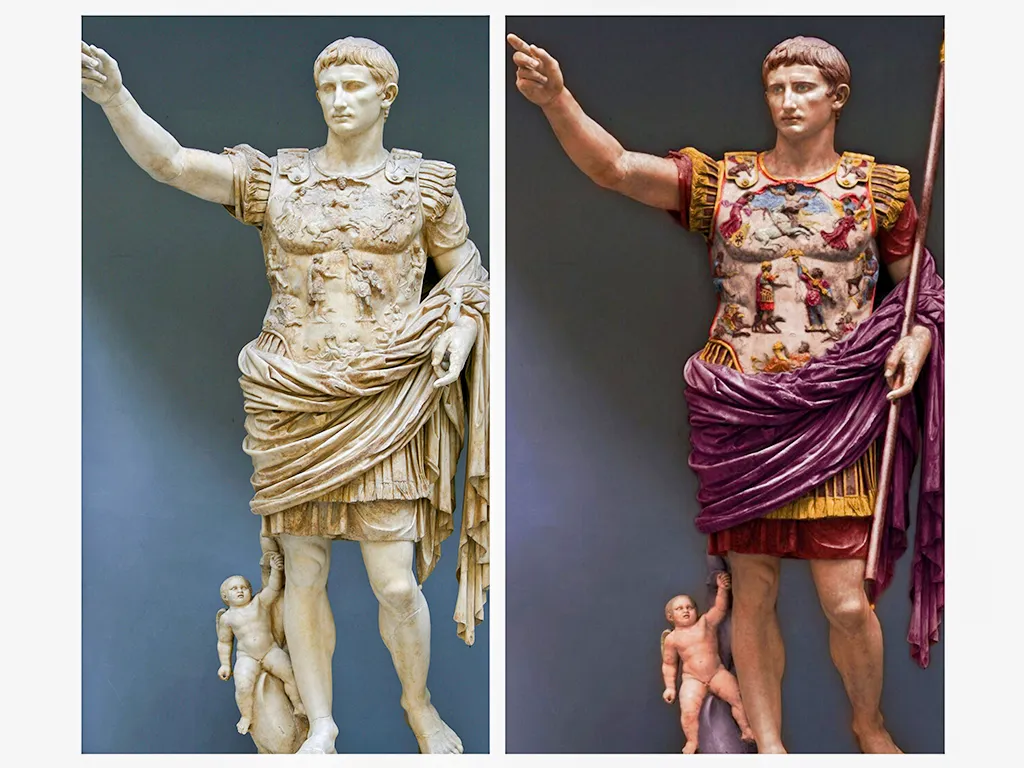
In recent decades, advancements in scientific analysis have revolutionized our understanding of ancient polychromy. Researchers like V. Brinkmann and J. Stubbe Ostergaard have been at the forefront of this modern "colour revolution." Utilizing sophisticated techniques such as UV-Vis spectrometry, X-ray fluorescence, and raking light photography, they can identify microscopic traces of pigment that are invisible to the naked eye.
This innovative work has allowed for incredibly accurate reproductions of what these statues would have looked like in their prime. The results are often startling: goddesses with vibrant red lips and blue eyes, heroes with patterned cloaks, and architectural elements adorned with intricate geometric designs. Imagine the Parthenon not as a gleaming white temple, but as a dazzling spectacle of reds, blues, and golds!
Why Does It Matter?
Understanding the painted nature of ancient statues is more than just a historical curiosity. It fundamentally changes our perception of ancient aesthetics, craftsmanship, and even their worldview. It reminds us that:
Ancient art was not minimalist: It was vibrant, dynamic, and often surprisingly gaudy by modern standards.
Context is key: The colours served not just decorative purposes but also helped to tell stories, differentiate figures, and convey meaning.
Our understanding is constantly evolving: History is not static. New discoveries and technological advancements continue to reshape our knowledge of the past.
So, the next time you encounter a seemingly pristine white marble statue, take a moment to imagine it in its original glory – a vibrant, polychromatic masterpiece, bursting with the colours of the ancient world. The true beauty of these works lies not just in their form, but in the rich, colourful stories they have yet to fully tell.