Let's dismantle some long-standing myths right away. No single fire obliterated the Library of Alexandria, nor did it vanish overnight. Its decline spanned centuries, a slow fade rather than an abrupt inferno. Moreover, the notion that the destruction of the Library (implying a single, monolithic institution) set civilization back a thousand years overlooks the dynamic nature of ancient scholarship and the existence of other significant intellectual centres.
Contents
The Myth of the Library at Alexandria
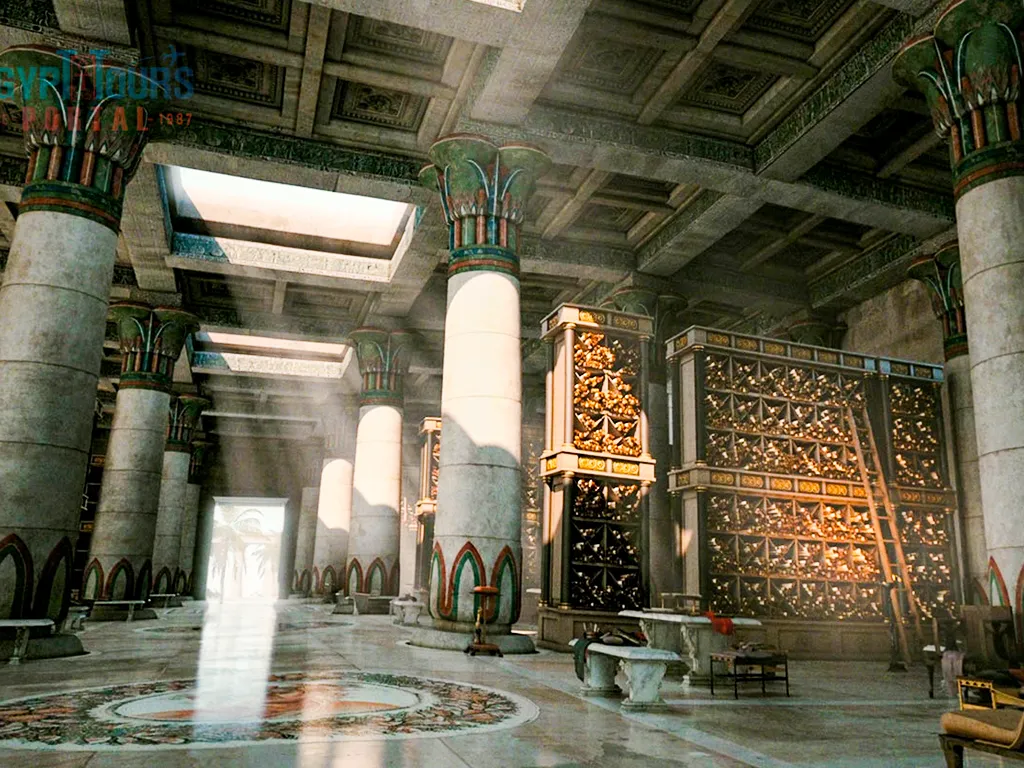
The very name "Library of Alexandria" conjures images of an immense repository of ancient wisdom, a beacon of knowledge tragically engulfed in a single, devastating conflagration. Popular accounts often depict a dramatic, singular event – Julius Caesar's accidental blaze, a zealous Christian mob, or the conquering Caliph Omar's decree – as the culprit for this catastrophic loss. Yet, the true story of the Library's demise is far more complex, the product of centuries of political unease, intellectual shifts, and, yes, some destructive acts.
What was the Library at Alexandria?
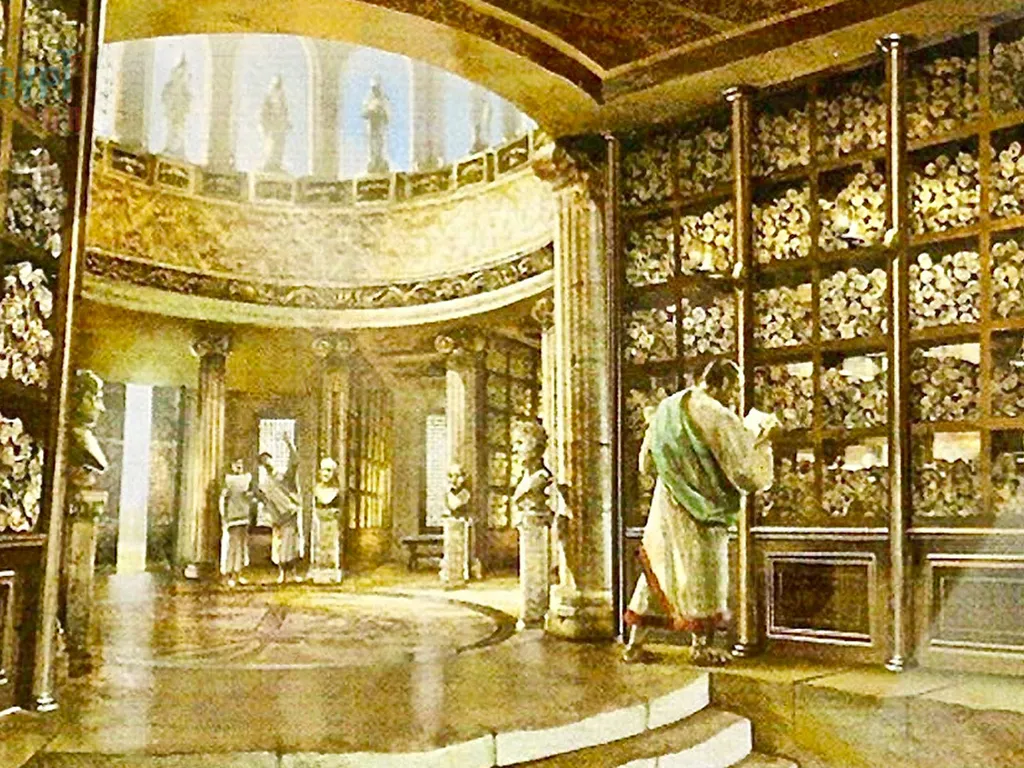
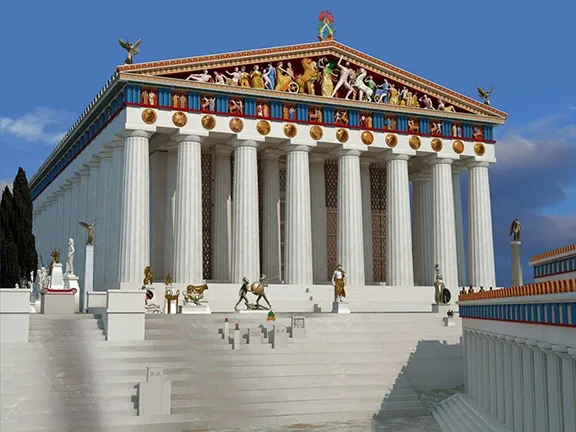
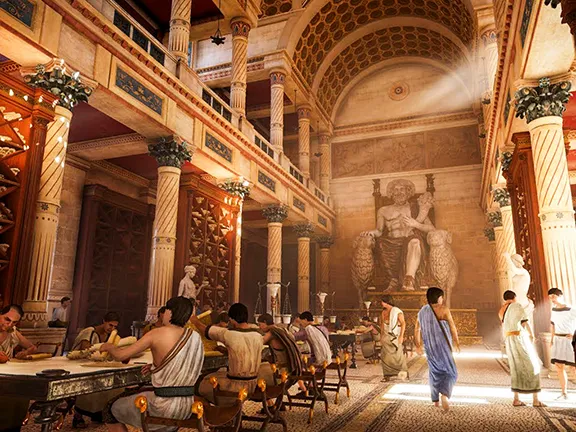
The Library of Alexandria was not merely a building but an institution, part of the larger Mouseion (Temple of the Muses), a sprawling complex that included research facilities, lecture halls, and botanical gardens. Founded in the 3rd century BC under Ptolemy I Soter, one of Alexander the Great's generals and an ancestor of Cleopatra VII, its ambition was unparalleled, to collect all the world's knowledge.
Gathering the Knowledge of the World for the Library
Agents scoured the known world for manuscripts, often with explicit instructions to acquire the oldest and most original copies. One lesser-known anecdote claims that Ptolemy III Euergetes (ruled 246 to 222 BC) even demanded that all ships entering Alexandria's harbour surrender any scrolls they carried, which scribes then copied for the Library before returning the originals. Imagine the sheer dedication, the intellectual hunger! I always wonder how many of the ‘originals’ went missing.
The Golden Age of Alexandria's Knowledge
The first significant blow to the Library is often cited is Julius Caesar's involvement in Alexandria in 48 BC. As we shall see, this marked the end of the ‘Golden Age’ for the Library at Alexandria, although by no means, the end of the Library. The ‘Golden Age’ lasted for about two hundred years after its inception.
Why did Julius Caesar burn down the Alexandria library?
During his civil war, besieged by Ptolemaic forces, Caesar ordered his troops to ignite enemy ships in the harbour. The wind, however, carried the flames beyond the docks. As Plutarch, writing centuries later, notes, "Caesar was forced to repel the danger by using fire, which spread from the dockyards and destroyed the Great Library."
While Caesar himself remained notably silent about this specific consequence in his own accounts, other sources like Seneca indicate a loss of "forty thousand books" from Alexandria. It seems clear some scrolls perished, likely those stored in nearby warehouses or within parts of the broader complex. However, scholars widely agree that this fire did not utterly destroy the main Library.
Evidence suggests it continued to function, albeit perhaps with a diminished collection. Mark Antony, for instance, reportedly gifted Cleopatra 200,000 scrolls for the Library, well after Caesar's incident, implying its continued existence and value.
The Aurelian Blow and Christian Transformations
The 3rd century AD brought further devastations to Alexandria. The city became a battleground, particularly during the reign of Emperor Aurelian. In 272 AD, Aurelian recaptured Alexandria from Queen Zenobia of Palmyra, and intense fighting led to widespread destruction, especially in the royal quarter where the Mouseion stood. While not a direct assault on the Library, this conflict likely inflicted severe damage on its remaining collections and infrastructure.
The Christian Era: Shifting Intellectual Landscapes
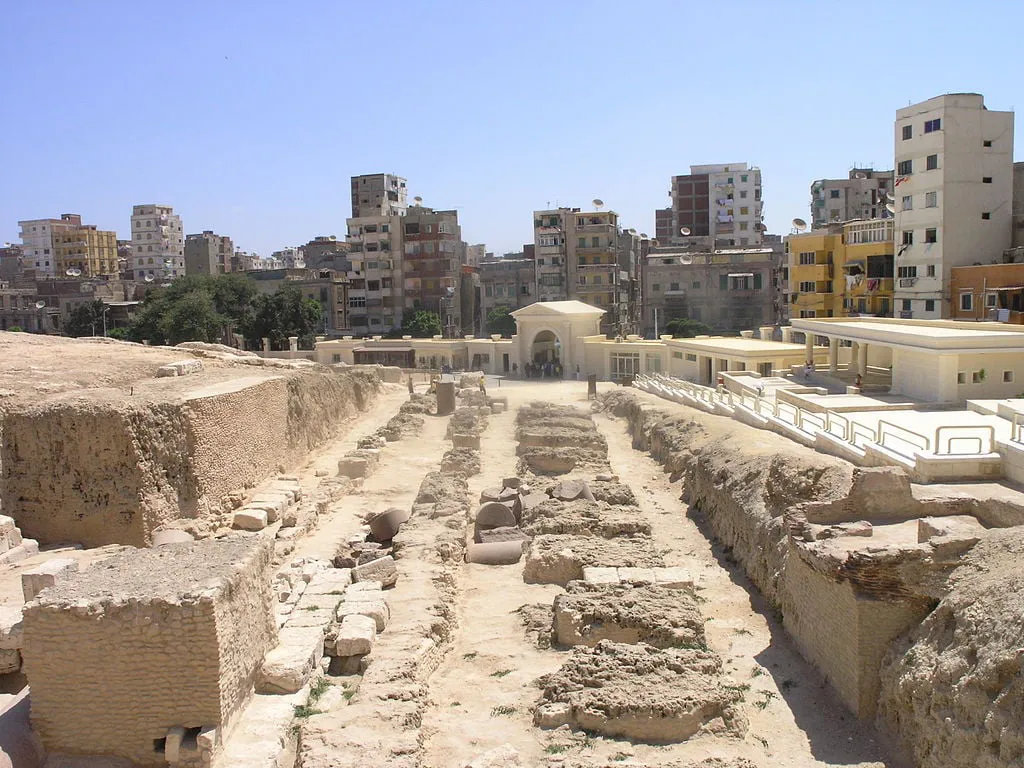
Then came the rise of Christianity. This period saw a shift in intellectual priorities and a growing antagonism towards pagan traditions. In 391 AD, Emperor Theodosius I issued a decree sanctioning the destruction of pagan temples. In Alexandria, Theophilus, the city's patriarch, led an assault on the Serapeum, a "daughter library" and a prominent pagan temple.
Accounts from contemporaries like Eunapius of Sardis, a pagan scholar, describe the thorough destruction and plundering of the temple. While the main Library (Mouseion) had likely ceased to exist in any recognizable form by this time, the Serapeum's destruction certainly eliminated a significant collection of scrolls. It was a clear symbolic act, asserting Christian dominance over pagan learning.
The Myth of the ‘Last Librarian’
Hypatia (c. 350-370 AD – March 415 AD) was a brilliant Neoplatonist philosopher, mathematician, and astronomer who taught in Alexandria in the late 4th and early 5th centuries AD. She was a prominent intellectual figure and advisor to the city's prefect. She was brutally murdered by a Christian mob in 415 AD; a highly politicized event often (and somewhat inaccurately) framed as a clash between pagan knowledge and Christian zealotry.
Hypatia is now popularly, though inaccurately, known as 'the last librarian' primarily due to modern artistic interpretations and popular culture, rather than historical fact.
This idea gained significant traction from works like Carl Sagan's "Cosmos" (1980) and especially the 2009 film "Agora," which dramatically depicted her as connected to the Great Library and its supposed final destruction at the hands of Christian zealots. These portrayals romanticized her role, transforming her into a symbol of intellectual freedom and the supposed last guardian of ancient knowledge, tragically extinguished by religious intolerance. However, historical evidence indicates that the Great Library as a functional institution had already long faded by her lifetime.
The Myth of Omar and the Slow Decay
The most persistent, yet demonstrably false, legend blames the Muslim conquest of Egypt in 642 AD under Caliph Omar. This story, which emerged centuries after the fact in the 13th century, claims that Omar ordered the burning of the Library's contents, reasoning that if the books "contradicted the Quran, they were heresy; if they agreed with it, they were superfluous." This account, popularized by figures like Edward Gibbon, has been widely debunked by modern historians. Early Arab, Coptic, and Byzantine historical sources covering the conquest make no mention of such an event. The Caliph Omar, a pragmatic leader, would more likely have sought to preserve valuable knowledge. Moreover, by the 7th century, any significant collection in Alexandria would have been a shadow of its former glory.
So, What Really Happened to the Ancient Library in Alexandria?
The Library's true decline began only a century or so after its creation. Political instability played a significant role. After Ptolemy VIII Physcon expelled foreign scholars in 145 BC due to dynastic quarrels, many dispersed, taking their expertise and texts with them. This diaspora, while spreading Alexandrian scholarship, weakened the Library's core. Later Ptolemies, facing growing unrest, simply devoted less attention and funding to the institution, and the position of chief librarian, once a pinnacle of scholarly achievement, became a political appointment.
The Library suffered from a slow, agonizing death by neglect, dwindling patronage, and the inherent fragility of its medium. Papyrus scrolls, the primary form of documentation, were susceptible to decay, moisture, and insects. Maintaining a collection of hundreds of thousands of scrolls required an army of scribes to constantly re-copy deteriorating texts, a costly and labour-intensive endeavour. As political support waned and the intellectual landscape shifted, this vital process ground to a halt. Important texts, if not copied and disseminated elsewhere, simply crumbled into dust.
How much knowledge was actually lost in the Library of Alexandria?
So, the fate of the Library at Alexandria was not a singular cataclysm but a prolonged demise. It fell victim to a series of blows, the accidental collateral damage of war, the shifting priorities of rulers, the dismantling of pagan institutions, the relentless march of time and the corrosive effects of neglect.
A Legacy Endures: More Than Just Books
On the positive side, not much actual knowledge was lost since the most important works had been copied and disseminated elsewhere. The scrolls lost were lesser-known works of literature and philosophy and the critical works of scholars. What we lost was not just a collection of minor scrolls, but the vibrant intellectual ecosystem that nurtured a sophisticated literary culture.
The Library at Alexandria Reborn
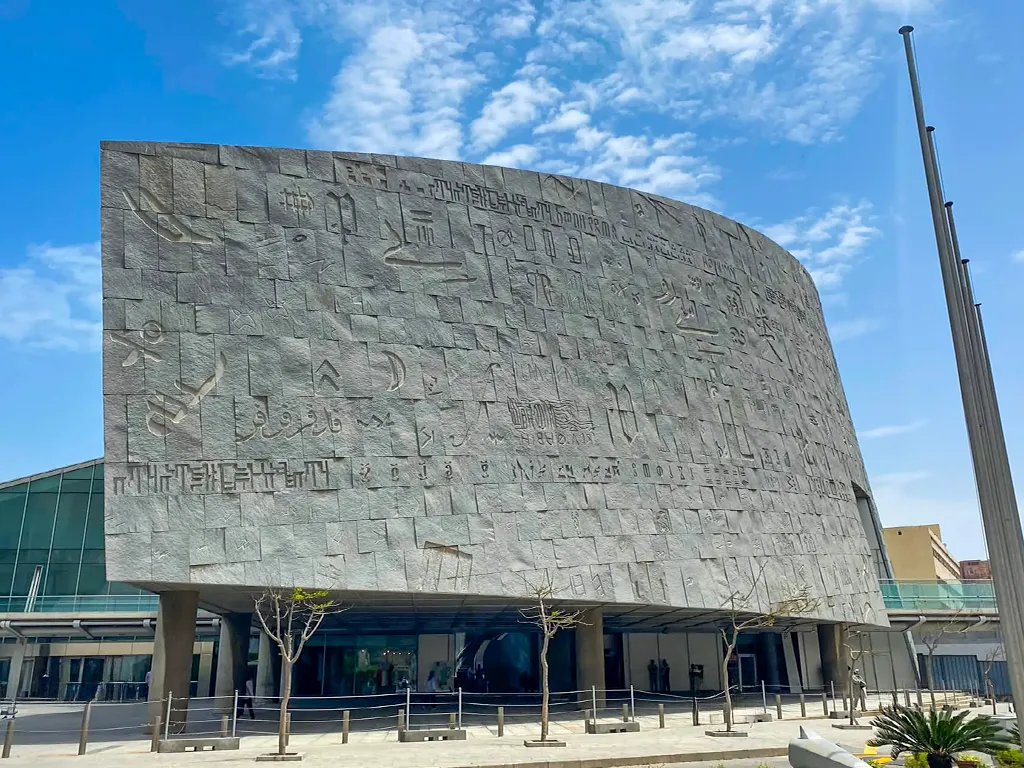
But the story of Alexandria's intellectual heart does not end in tragedy. From the ashes of the ruins, a new vision emerged. On October 16, 2002, after decades of planning and an unprecedented international effort, the Bibliotheca Alexandrina opened its doors. This striking modern edifice, rising like a colossal, tilted sun disc from the city's waterfront, brings to life a powerful dream, to rekindle the spirit of universal knowledge that once defined its ancient namesake.
Far more than a mere collection of books, it is a sprawling cultural complex – housing specialized libraries, museums, a planetarium, and research centres – an intellectual hub dedicated to fostering dialogue and understanding across cultures.
While it cannot literally replace the lost scrolls of the ancient world, the Bibliotheca Alexandrina serves as a powerful symbol of Egypt's commitment to knowledge, culture, and dialogue, acting as "the world's window on Egypt and Egypt's window on the world," ensuring Alexandria remains, once more, a beacon of intellect in the modern world.