Contents
When was Naukratis founded?
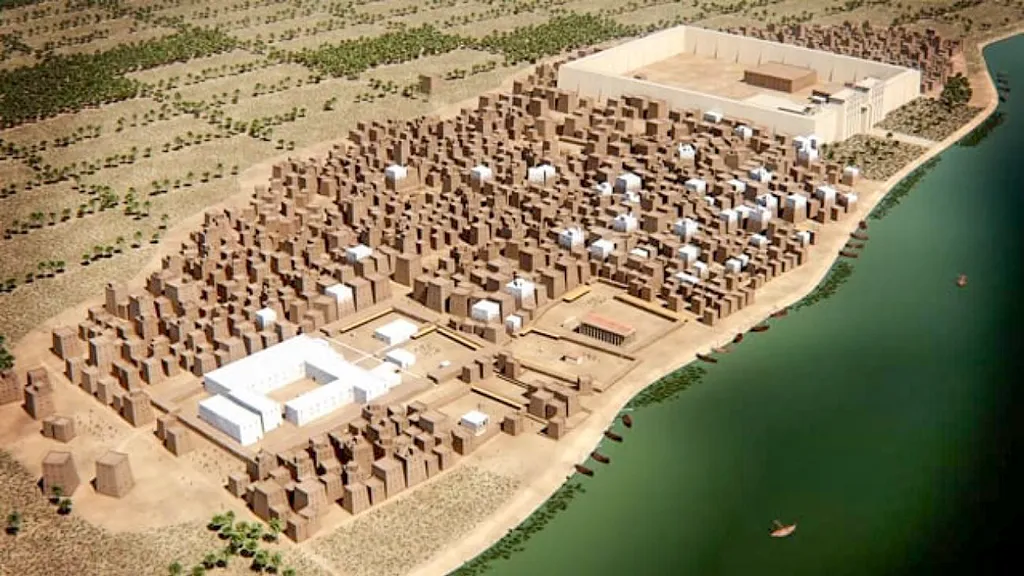
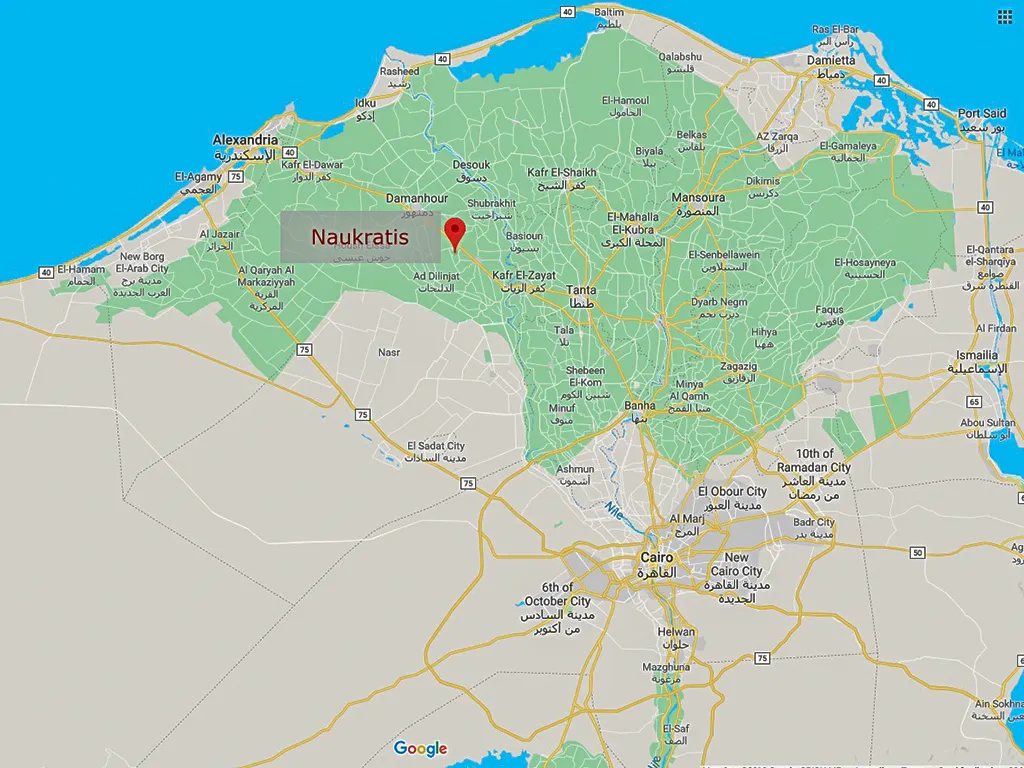
Where was Naukratis located?
Why was Naukratis founded?
Continuous underwater excavations at Thonis-Heracleion since 2000 have revealed a city of some magnificence and a large, thriving port that functioned as a hub of international trade.
It is difficult, given the prior existence of Thonis-Heracleion to rationalise a second colony devoted to trading, 72 kilometres south, i.e., further from the delta, and on the same tributary of the Nile. Naukratis is however only 16 kilometres from Sais, the capital city of Egypt at this time.
It is probable then that, as Herodotus reported, the initial function of Naukratis was a garrison town to supply Greek mercenaries for the Saite Pharaohs who ruled between 664 and 525 BC. It is recorded that Psamtik I used Greek mercenaries to help him unify Egypt. Greek mercenaries were also employed by Pharoah Apries (589 to 570 BC) to hold back the advance of Babylonians intent on conquering Egypt. The Greeks had superior hoplite armour and tactics and possessed invaluable naval expertise.
The Hellenion of Naukratis
The Hellenion was a joint sanctuary for the nine founding polis. Dedications were made to specific gods, Apollo, the Dioscuri and Artenmis and to the 'Hellenic Gods'. The Hellenion appears to have been a sanctuary for all Greeks, no matter of their specific cult-affiliation or citizen-status with a particular polis. It was a place where Greeks could go and sacrifice generally to the gods of their pantheon.
Although only trading partners and not part of the founding group, Aegina, Samos, and Miletus all had their own temples (possibly pre-dating the Hellenion).
The Prostatai of Naukratis
It is likely that the Hellenion was the administrative centre for the prostatai, a sort of city hall.
Who did the Naukratite trade with?
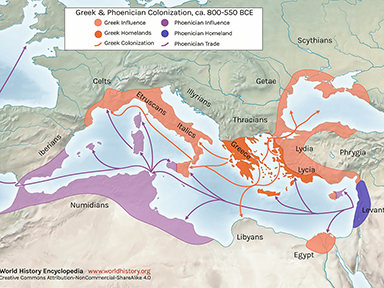
Archaeological records indicate that strong trading links existed between Naukratis and Italy, Cyrenaica, Phoenicia, Cyprus, and the Levant.
What was traded in Naukratis?
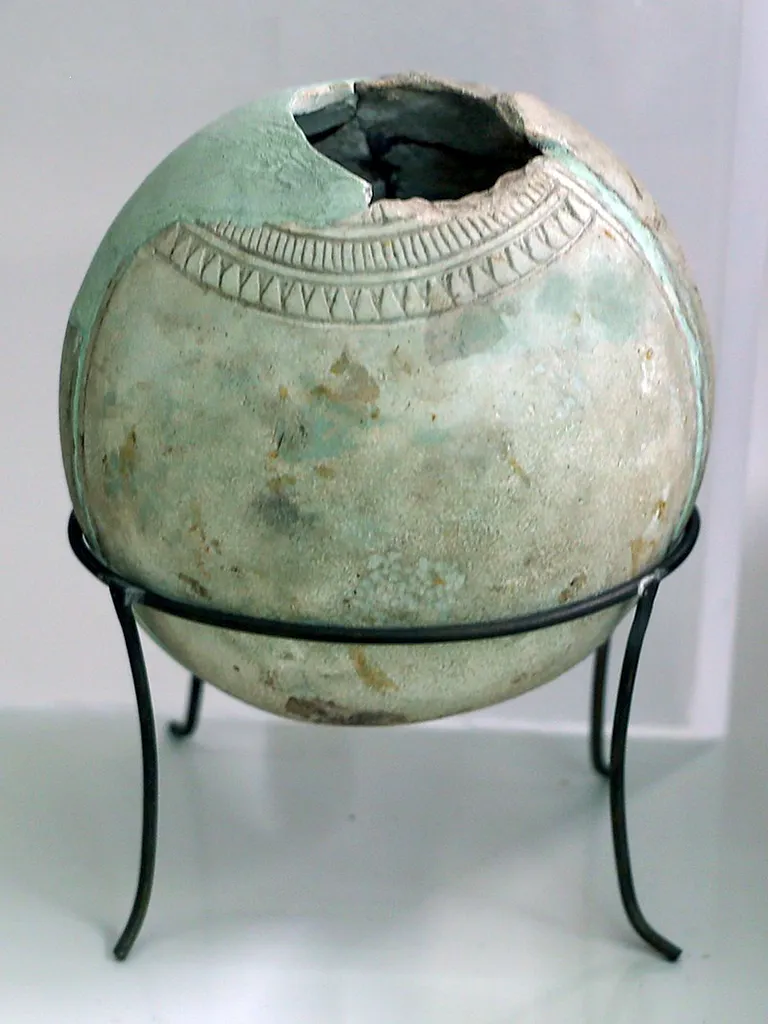
Naukratis also had various manufacturing areas, producing goods for export.
A faience factory that was found next to the temple of Aphrodite in the southern part of the town. What has struck many archaeologists is the close resemblance of the faience figures found here to those found on Rhodes (where faience objects were also manufactured). The island of Rhodes was one of the participants in the Hellenion, so had a strong link to Naukratis.
Ancient Egyptian faience is made of common materials, quartz, alkaline salts, lime, and mineral-based colourants. It may have been developed to simulate highly prized and rare semi-precious blue stones like turquoise. This man-made substance allowed the Egyptians to make a wide variety of objects covered in shiny, bright blue glaze, a colour that was closely linked with fertility, life, and the gleaming qualities of the sun. For Egyptians, the sculptures, vessels, jewellery, and ritual objects made of faience glimmered with the brilliance of eternity.
The word faience is a misnomer in this case. Egyptian faience should not be confused with the tin glazed pottery originating from Faenza and other towns in northern Italy in the late fifteenth century AD. The faience produced in Egypt has been found distributed across the western Greek world, especially on Samos and (not surprisingly) Rhodes.
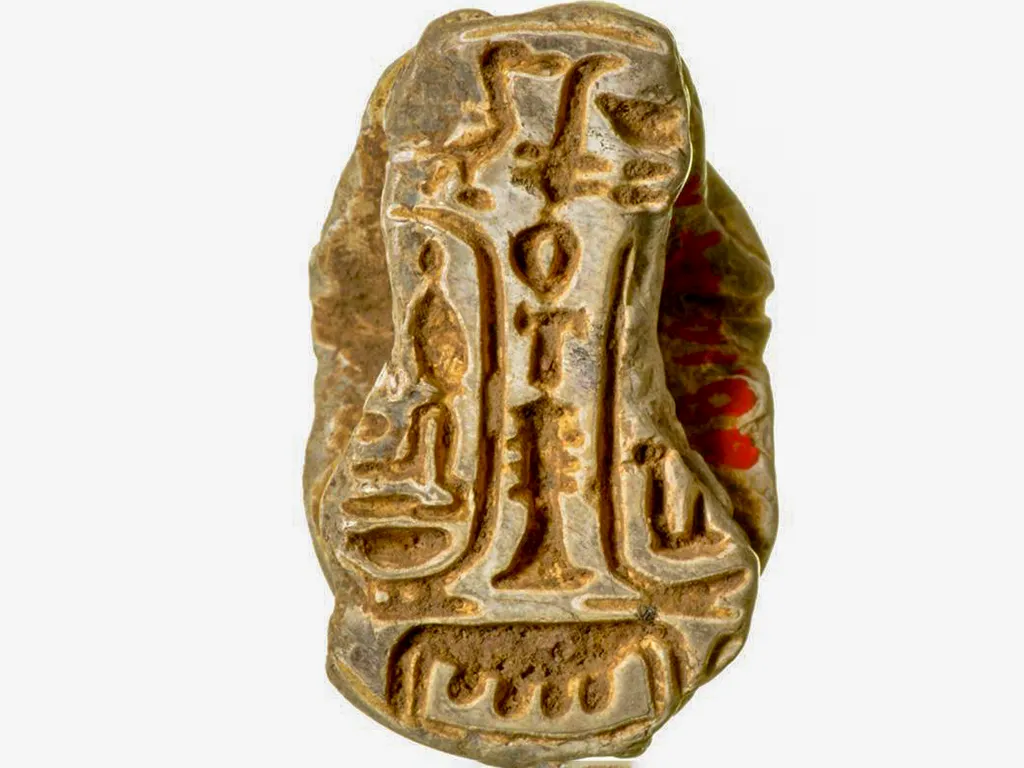
Scarabs were also made in Naukratis (and on Rhodes). These small objects are found all over the Mediterranean basin from Spain in the west to the Levant in the east.
Ethnicity and Acculturation in Naukratis - Greek identity in Egypt
If Naukratis was originally a garrison town for Greek mercenaries, then, faced with common enemies, a bond must have been forged between Greeks from different polis, somewhat like the French Foreign Legion. These Greeks lived in a country whose language and culture was very different from their own, and so probably felt that being Greeks together, and not divided by the identity of a polis, would make them stronger and safer.
Naukratites
Multiculturalism in Naukratis
How the Greeks saw the Egyptians
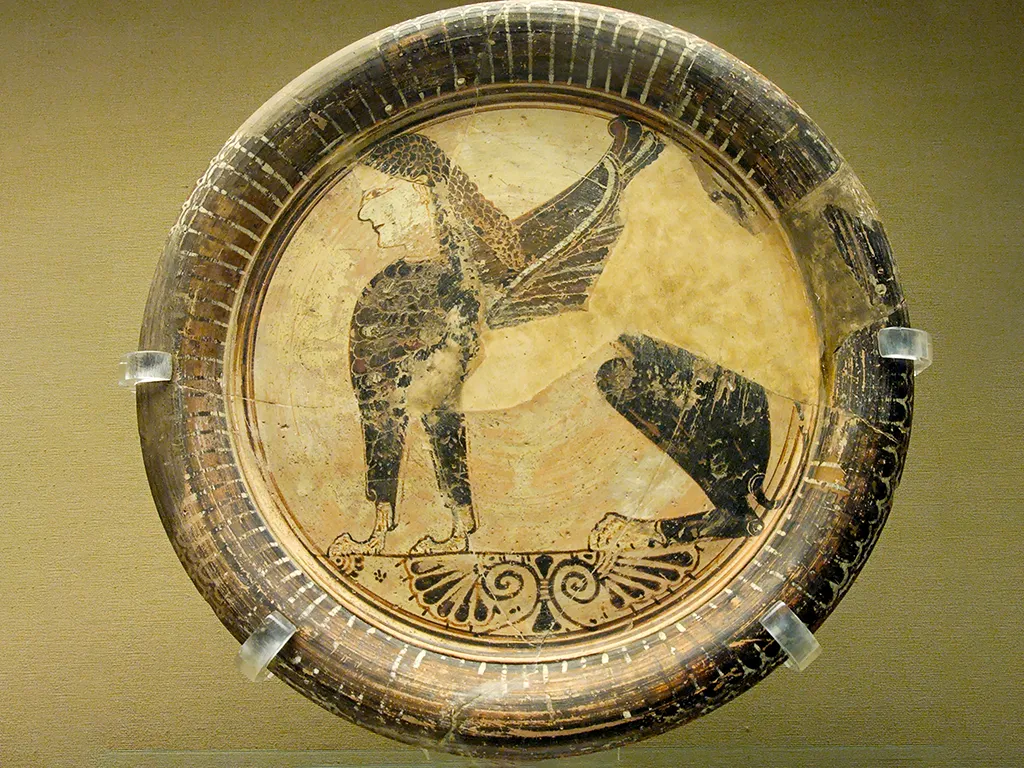
The Greeks had mixed views on the Egyptians. On the one hand they were a foreign nation, 'barbarians' as were all the other peoples that did not speak Greek, so not too much emphasis should be placed on the modern connotation of the word 'barbarian'. Egyptian practises were very different and alien to the Greeks, as was their religion. On the other hand, Egypt was an ancient civilisation and was portrayed in the ancient sources (i.e., Herodotus, Diodorus and Strabo) as a great old and wise nation that, to the Greeks, was the cradle of civilisation.
What happened to Naukratis?
References
Johansson, N., Life in Naukratis https://www.academia.edu/1052192/Life_in_Naukratis
Muller, A., 2000, Naukratis: Trade in Archaic Greece, Oxford UniversityPress, Oxford.
Roebuck, C., 1950, 'The Grain Trade between Greece and Egypt',Classical Philology, Volume 45, No. 4, pp. 236-247.
Roebuck, C., 1951, 'The Organisation of Naukratis', Classical Philology,Volume 46, No. 4, pp. 212-220.
Strabo, 1932,The Geography of Strabo, Volume VIII, translated byHorace L. Jones, The Loeb Classical Library, William Heinemann Ltd.,London
Tsetskladze, G.R. and de Angelis, F. (eds.), 2003,The Archaeology of Greek Colonisation, The Oxford Committee for Archaeology, Oxford.