Contents
When was Thonis-Heracleion founded?
Where was Thonis-Heracleion located?
Discovering Thonis-Heracleion
Why was Thonis-Heracleion founded?
In about 730 B.C., the Egyptian rulers Namlot and Tefnakht joined forces to extend their control farther into Upper Egypt. The Nubian king, Piankhy Piye perceived this as a threat to his independence and moved against the Egyptian coalition. His invasion proved successful, and the various Egyptian rulers known from the later eighth century submitted to his leadership at Memphis about a year later.
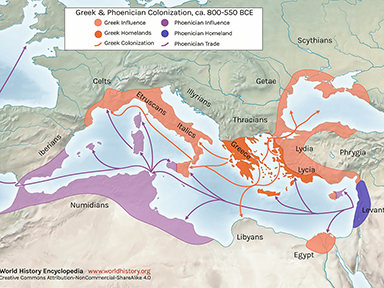
It seems likely that the Greeks stepped in about this time to trade with the new Nubian leadership. Egypt was not the only target for the Greeks during the 8th century BC. They also established colonies on the south and west coasts of Italy (Magna Graecia) and around the Black Sea.
What did Thonis-Heracleion look like?
The city developed into a Greek emporium and by the Late Period (commencing 713 BC) it was the country's main port for international trade and collection of taxes and the main port of entry to Egypt for all ships coming from the Greek world. Thonis-Heracleion was also an important religious centre. It was home to the temple of Amun-Ra, one of the most important gods in the Egyptian pantheon and had a sanctuary dedicated to the Greek goddess Aphrodite. The existence of the Aphrodite sanctuary temple suggests that Greeks were allowed to relocate, live, and worship in the ancient city.
Who did Thonis-Heracleion trade with?
What was traded in Thonis-Heracleion?
What has been found at Thonis-Heracleion?
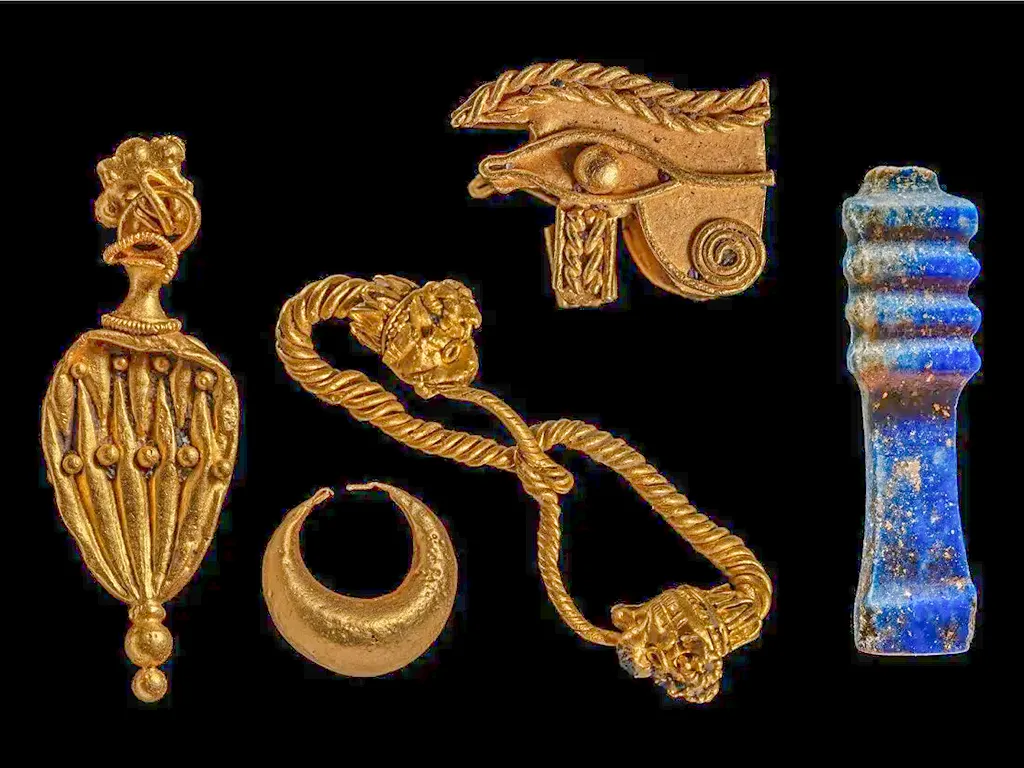
The archaeologists also discovered artifacts from the temple's treasury, including gold jewellery and a "Djed pillar," a symbol of stability, made of a blue semi-precious stone called lapis lazuli. They also found silver platers and an alabaster container that were probably used to contain perfumes and unguents during ritual ceremonies.
In the anchorage and alongside the quays were 700 anchors and 79 ships dating from the 6th to the 2nd centuries BC, including a very rare find, a Ptolemaic fast galley.
The galley was about 25 metres in length and built using long mortise and tenon joints. It was a ship designed to be both rowed and sailed and had a flat bottom and flat keel, a typical Egyptian feature that made the boat suitable for navigating the river Nile.
The available data on local boat-building techniques during the Late (664- 332 BC) and Ptolemaic Periods (332 to 30 BC) of Ancient Egypt received a considerable boost from the ancient Egyptian ships that were found on the site of Thonis-Heracleion in 2000. Many of these ships seem to belong to the baris-type as described in Herodotus in his Historia. The excavations of Ship 17 from Thonis-Heracleion helped to clarify several references from Herodotus' description that had previously been incomprehensible.
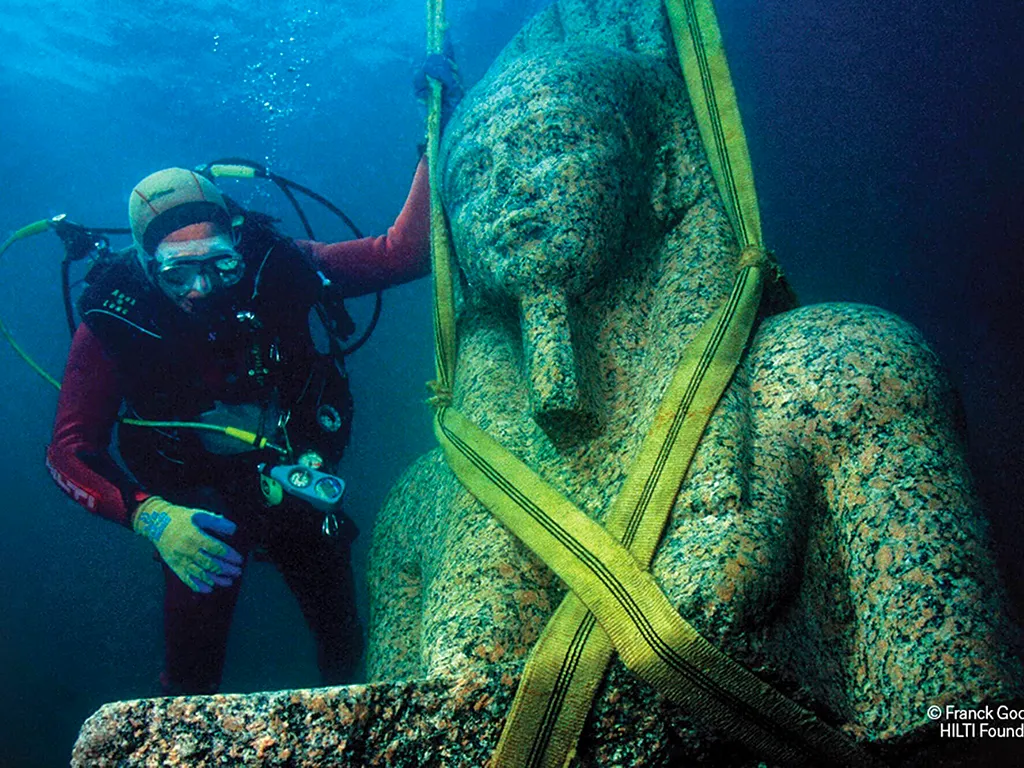
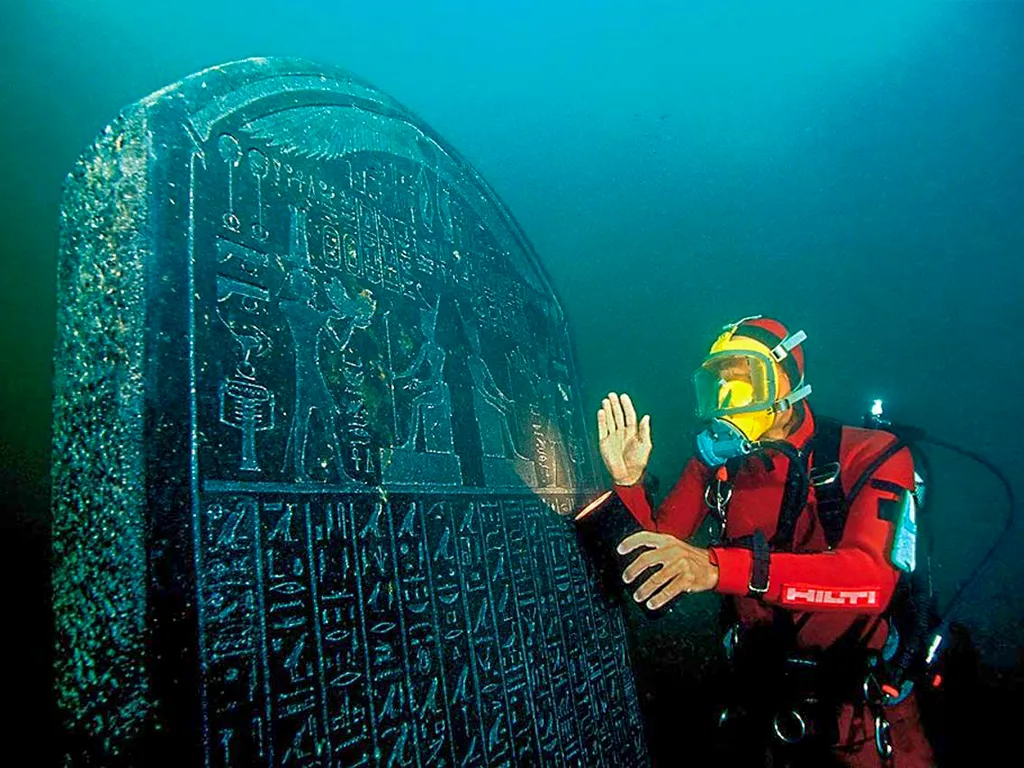
An inscribed stele found on the site indicates that late in its history the city was known by both its Egyptian (Thonis) and Greek (Heracleion) names, thus solving a problem that has beset researchers for many years since, until the discovery of the stele, Thonis and Heracleion were thought to be two separate cities. The intact stele, almost 2 metres high, is inscribed with the decree of Sais. It was commissioned by Nectanebos I (380-362 BC). The place where Pharaoh ordered it to be set up is clearly named: Thonis-Heracleion.
How did Thonis-Heracleion operate?
What happened to Thonis-Heracleion?
Geoarchaeological analysis of the sites also showed marks characteristic of the liquefaction of the soil in Aboukir Bay. These localized phenomena can be triggered by the action of great pressure on soil with a high clay and water content. The pressure from large buildings, combined with an overload of weight due to an unusually high flood or a tidal wave, can dramatically compress the soil and force the expulsion of water contained within the structure of the clay. The clay quickly loses volume, which creates sudden subsidence. An earthquake can also cause such a phenomenon (ancient texts mention the disappearance of cities here through both earth tremors and tidal waves). These factors, whether occurring together or independently, may have caused significant destruction and explain the submergence of Thonis-Heracleion in the 8th century AD.
References
Herodotus, 2003 (latest revision),Histories, translated by Aubrey de Salincourt, Penguin Books, London.
https://www.ox.ac.uk/news/2013-03-15-maritime-trading-thrived-egypt-even-alexandria
https://www.franckgoddio.org/projects/sunken-civilizations/heracleion/#:~:text=Thonis%2DHeracleion%3A%20From%20Legend%20to%20Reality&text=The%20city%20was%20founded%20probably,in%20the%208th%20century%20AD. https://es.wikipedia.org/wiki/Heracleion