For decades, the Neolithic and Bronze Age in North Africa west of Egypt remained a puzzling void in the archaeological record, often overshadowed by the well-documented developments across the Mediterranean in Europe. However, meticulous excavations at two key sites are now filling this crucial gap and showcasing a vibrant, interconnected past.
Contents
North Africa's Overlooked Neolithic and Bronze Age Past
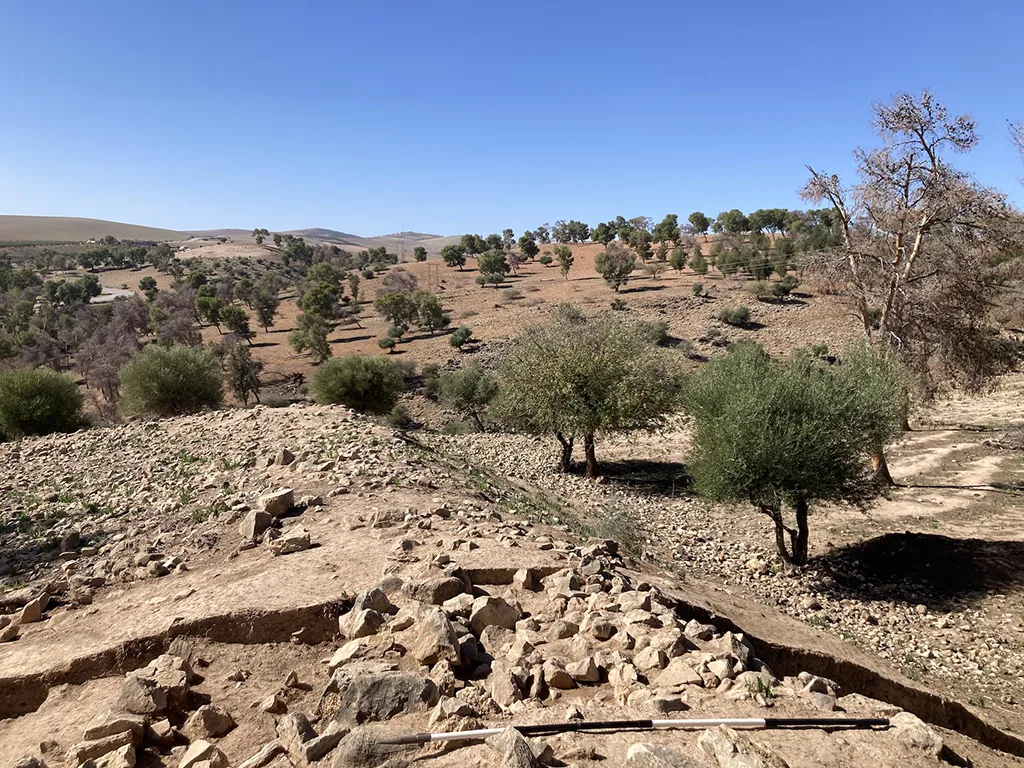
Archaeological breakthroughs at the Neolithic period settlement of Oued Baht and the Bronze Age settlement of Kach Kouch in Morocco are dramatically re-writing the narrative of North African prehistory, revealing complex, settled societies with profound maritime connections to the Iberian Peninsula long before the arrival of the Phoenicians. These discoveries challenge long-held assumptions of the Maghreb as an "empty land" and highlight its active participation in the broader Mediterranean networks of the Neolithic period and the Bronze Age.
Oued Beht: A Hub of Ancient Farming and Cross-Strait Interaction in the Zemmour Plateau
In the semi-arid Zemmour plateau, the site of Oued Beht offers the first piece of the puzzle. Dating to the Final Neolithic and Copper Age (3400-2900 BC), Oued Beht was a thriving farming economy that was among the earliest and largest agricultural complexes in Africa outside the Nile Valley.
Evidence of Large-Scale Agricultural Production at Oued Beht
Archaeologists have uncovered extensive evidence of sophisticated agricultural practices, including domesticated barley, wheat, peas and goats, sheep, pigs and cattle, as well as wild olive and pistachio. The presence of numerous large pits, possibly used for storage, suggests a community engaged in substantial food production and surplus management. The scale of the settlement, with an estimated area of at least 9 to 10 hectares, hints at a significant population.
Iberian copper age connections
At the copper age sites of Valencina de la Concepción, near Seville in Spain, and Los Millares near Almeria, north African ivory and ostrich shell artefacts have been identified. These had first reached Iberia during the 3rd Millennium BC. From the same period, a lone menhir near Tangier, and slightly later dolmens in the Maghreb, remind us of megalithic burial practices on the Iberian Peninsula.
The Oued Beht pottery style is also remarkably similar to that of the Perdigoes (southern Portugal) and La Loma (near Granada) copper age sites in Iberia, as was the silo technology they used to store grain.
Genetic connection
Finally, over the last few years, genetic analysis has revealed a southern Iberian population of local hunter-gatherers, Neolithic Iberian farmers, and, crucially, Saharan pastoralists. Reinforcing this research, an individual of African descent was buried at the late copper age site of Camino de las Yeseras in the central Iberian massif about 500 kilometres from the sea.
Kach Kouch: A Groundbreaking Bronze Age Settlement in the Oued Laou Valley
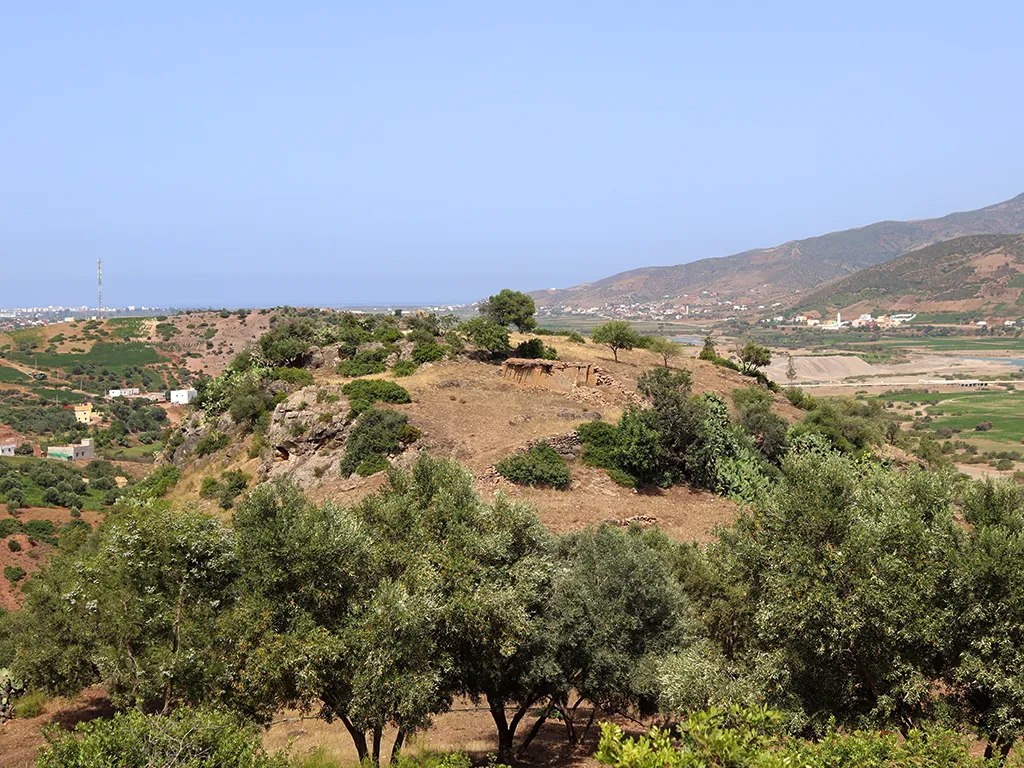
In 1982, a joint Moroccan - Spanish team discovered a settlement in the Maghreb. Kach Kouch is located in north-west Morocco, in Tetuan Province. It sits on top of a limestone outcrop overlooking the lower Oued Laou Valley. The site is situated on the Mediterranean flank of the Strait of Gibraltar, approximately 10km west from the current coastline. Kach Kouch has emerged as the earliest known Bronze Age settlement of its kind in Mediterranean Africa, outside of Egypt. Led by a team including researchers from the University of Barcelona, excavations have uncovered evidence of human occupation dating as far back as 2200 BC, extending through to 600 BC.
Early Occupation and Agricultural Innovation at Kach Kouch
The site has three occupation phases, 2200 BC to 2000 BC (KK1), 1300 to 900 BC (KK2) and the 8th and 7th centuries BC (KK3). The earliest, between 2200 and 2000 BC, provides tantalizing hints of human presence, though a permanent settlement is difficult to definitively confirm for this period.
A more established agricultural community thrived from 1300 to 900 BC, with archaeologists unearthing wood-and-mud-brick buildings, rock-cut silos, and stone-grinding tools, indicative of a sedentary farming lifestyle. The inhabitants cultivated barley, wheat, beans, and peas, alongside rearing cattle, sheep, and goats.
Phoenician Influences at Kach Kouch
The later phases, from 800 to 600 BC, demonstrate a dynamic interaction with external influences. While the Phoenicians did not replace existing populations, their arrival led to cultural exchange, evidenced by the introduction of wheel-thrown pottery, including amphorae and red-slipped pottery types with established chronologies and parallels in southern Iberia.The Phoenician influence is also seen with the introduction of iron tools, and new architectural methods incorporating stone foundations alongside traditional wattle-and-daub.
The Undeniable Maritime Bridge: Connecting Morocco and Iberia in the Bronze Age
Both Oued Beht and Kach Kouch provide compelling evidence for sustained contact and cultural exchange across the Strait of Gibraltar with the Iberian Peninsula. The geographical proximity of these sites to the Strait, a natural gateway between the Mediterranean and the Atlantic, facilitated maritime interactions.
Shared Cultures and Economic Exchange Across the Strait of Gibraltar
At Kach Kouch, the earliest phase of occupation coincides with the Copper/Bronze Age transition in neighbouring Iberia. The discovery of a tin bronze fragment from the Late Bronze Age (1110–920 BC) is particularly significant, representing the earliest radiocarbon-dated example of such an artifact in northwest Africa.
More broadly, the material culture at Oued Beht, including pottery decorated with dark-on-light painted designs, finds striking parallels in southern Iberia, strongly suggesting long-range connectivity. The commonality of domesticated animal species and the presence of similar storage pit features in both Morocco and Iberia further underscore a shared cultural and economic sphere that spanned the strait.
Rewriting North African Prehistory: Challenging Old Assumptions
These findings dismantle the outdated notion of North Africa being isolated and uninhabited until external forces "civilized" it. Instead, they paint a picture of resilient, innovative local communities actively engaged in agriculture, architecture, and extensive trade networks that connected them deeply with their Iberian neighbours and the wider Mediterranean world.
Future Implications: Expanding Our Understanding of Ancient Mediterranean Maritime Networks
The ongoing research at Kach Kouch and Oued Beht promises to continue unravelling the rich and complex story of the Neolithic and Bronze Age in the Maghreb and revealing early maritime trade/exchange mechanisms between Africa and Iberia, giving this historically overlooked region the recognition it deserves.
Timeline Iberian and Moroccan Societies
| Period (Approximate Dates) | Iberian Peninsula (Key Developments) | Moroccan Settlements (Key Developments) |
|---|---|---|
| Late Neolithic |
|
— |
| Copper Age (Chalcolithic) |
|
|
| Early Bronze Age |
|
|
| Middle & Late Bronze Age |
|
|
| Final Bronze / Early Iron Age |
|
|