Malta's Earliest Seafarers: Mesolithic Hunter-Gatherer Site Reveals Surprising Long-Distance Mediterranean Sea Travel 8500 Years Ago
By Nick Nutter |
Published: 2025-04-11 |
Updated: 2025-04-11
Visited 2,670 times
New archaeological findings in Malta reveal a Mesolithic hunter-gatherer site dating back 8500 years, demonstrating surprisingly early long-distance seafaring capabilities in the Mediterranean Sea and a unique island ecosystem.
Contents
Groundbreaking Discovery of a Mesolithic Hunter-Gatherer Site in Remote Malta Reshapes Understanding of Early Mediterranean Seafaring
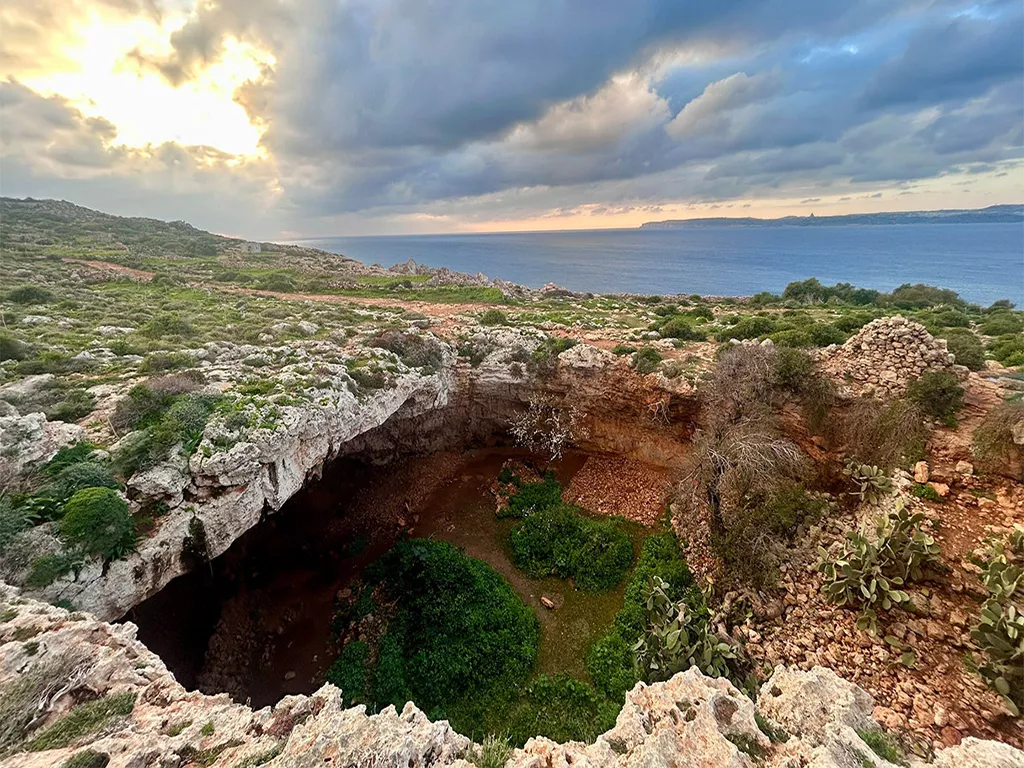
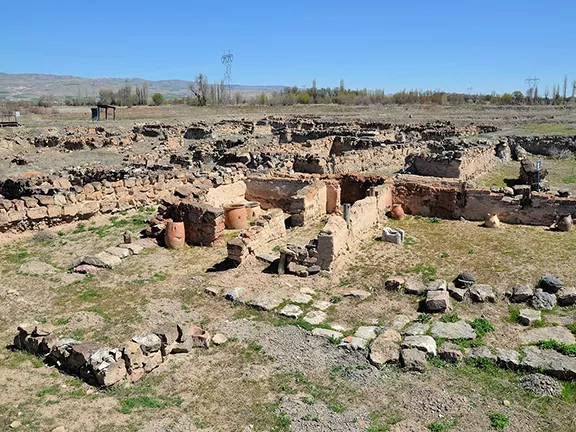
Latnija, Malta - Mesolithic site. Nature Journal
A significant archaeological discovery in 2019 on Malta, a remote island in the heart of the Mediterranean Sea, has dramatically enhanced our understanding of early seafaring in the region. The findings, published in the journal Nature on April 9th, 2025, detail the unearthing of a Mesolithic hunter-gatherer site dating back approximately 8,500 years. This discovery at Latnija challenges previous assumptions about the timing and capabilities of early human travel across the Mediterranean.
The Latnija Site: Location and Chronological Evidence of Holocene Hunter-Gatherers in Malta
The archaeological site of Latnija is situated in the Mellie?a area of northern Malta, specifically within a large doline. Its location is notable for its proximity to several freshwater sources and a coastline featuring both sandy beaches and rocky shores, providing access to diverse resources. Archaeological and chronological data firmly establish the presence of Holocene hunter-gatherer populations on the Maltese islands from around 8.5 thousand years ago (ka) to approximately 7.7 ka. This early occupation predates previously known Neolithic settlements by a significant margin.
Evidence of Early Long-Distance Seafaring: Reaching Malta 100 Kilometres from Sicily
The presence of a Mesolithic hunter-gatherer community on Malta around 8,500 years ago provides compelling evidence for surprisingly early long-distance seafaring in the Mediterranean. Given Malta's island configuration and the sea levels of the time, reaching the archipelago would have necessitated sea voyages of approximately 100 kilometres from Sicily. This remarkable feat highlights the advanced seafaring capabilities of these late European hunter-gatherers.
Distinct Mesolithic Lithic Technology at Latnija: Simple Tools for Immediate Needs
The Latnija site has yielded a total of 64 lithics, or knapped stone tools, from the Mesolithic Horizon deposits. With the exception of a single chert artefact, all the stone tools were crafted from locally sourced limestone, primarily obtained as beach cobbles or pebbles, with some material from terrestrial outcrops. The Mesolithic lithic assemblage is characterized by a focus on simple flakes produced using hard hammer percussion. These were predominantly squat and often cortical flakes with unidirectional dorsal scar patterns. Notably, cores, blades, bladelets, and retouched tools are rare within this assemblage.
Comparison of Lithic Technology: Contrasts with Sicily and Similarities with Sardinia
The lithic material from Latnija exhibits distinct characteristics when compared to other regions:
Sicily and Adjacent Areas: Penecontemporaneous Mesolithic assemblages from Sicily and nearby areas typically display complex technologies and geometric forms, such as trapezes. The simple flake-based technology of the Latnija assemblage stands in stark contrast to this sophisticated approach.
Sardinia:Interestingly, the lithic material from Latnija shows the closest resemblance to relatively expedient Mesolithic lithic technology found in Sardinia.
Several factors might explain the simplicity of the Latnija lithic assemblage, including the poor quality of the locally available limestone, an emphasis on expediency for quickly produced tools for immediate tasks, and potentially demographic factors such as a small and isolated population. The reliance on local limestone and simple flaking techniques distinguishes the Latnija Mesolithic tool technology from later Neolithic assemblages in Malta, which are characterized by the use of chert (both local and imported) and small amounts of imported obsidian.
Subsistence Strategies of Malta's Earliest Inhabitants: Exploiting Diverse Land and Marine Resources
The Latnija site offers significant insights into the diet and subsistence strategies of Malta's Mesolithic inhabitants, revealing a strong reliance on both terrestrial and marine resources.
Exploitation of Land Animals: Red deer ( Cervus elaphus) formed a dominant part of their diet, alongside smaller numbers of reptiles (turtles and tortoises) and potentially suid (pig-like animals) and foxes.
Use of Marine Resources: These hunter-gatherers extensively utilized a variety of marine resources, evidenced by the large quantities of marine gastropods, particularly Phorcus turbinatus (a type of sea snail, around 10,000 shells), as well as limpets, fish (like groupers), crustaceans (crabs), echinoderms (sea urchins), and even marine mammals like seals. This significant engagement with marine resources is unparalleled in later periods in Malta.
Avifauna Exploitation: Bird remains indicate that avifauna also contributed to their sustenance on the small island.
Evidence of Food Processing: Approximately 25% of the studied faunal remains showed signs of burning or charring, indicating the use of fire in food preparation. Other anthropogenic traces, such as probable percussion notches and green fracturing on bones, suggest butchery practices.
Plant Use: Archaeobotanical analyses revealed the presence of various wild flora, including abundant C3 grasses (grasses that are particularly nutritious), pollen suggesting open shrub vegetation, and macrobotanical remains of small wild herbaceous plants. Charcoal analysis indicates the use of shrubby vegetation for fuel. The presence of Mediterranean fan palm phytoliths suggests its potential use as fuel.
Implications of the Discovery: Challenging Existing Notions and Suggesting Broader Mediterranean Con
The findings at the Latnija site significantly challenge existing notions about the limitations of hunter-gatherer sea travel and indicate a human-influenced island ecosystem predating the Neolithic period in Malta. The demonstrated seafaring capabilities of these early inhabitants, necessary to reach Malta from Sicily, suggest the possibility of broader and earlier connections across the Mediterranean region than currently recognized. The unique subsistence practices, with a strong emphasis on marine resources, further differentiate this Mesolithic community from later agricultural societies in Malta. This discovery underscores the ingenuity and adaptability of early human populations in navigating and exploiting island environments.
References
Eleanor M. L. Scerri et al., Hunter-gatherer sea voyages extended to remotest Mediterranean islands, Nature (Published online: 09/04/2015. Downloaded 11/04/2025), https://doi.org/10.1038/s41586-025-08780-y
Location Map
Enjoying this clean, uncluttered read?
You are currently browsing the result of a massive technical overhaul. My new book, Legacy Reloaded: A dev, an AI, and the relentless pursuit of 100, chronicles the journey of transforming an aging legacy website into a modern, lightning-fast platform that hits the perfect 90+, 100, 100, 100, 3/3 Lighthouse metrics. It’s a story of collaboration between developer and AI, and the stubborn pursuit of technical perfection.