Contents
The Gateway to the World: El Hornillo Ore Loading Pier (1903)
From Baskets to Brute Force
The GSSR had long foreseen this bottleneck. In 1899, it created a new entity, The Hornillo Company Ltd., specifically to build a modern, high-capacity loading pier. The two companies were essentially joined at the hip, sharing offices, directors, and the visionary leadership of Gustave Gillman himself.
An Engineering Masterpiece
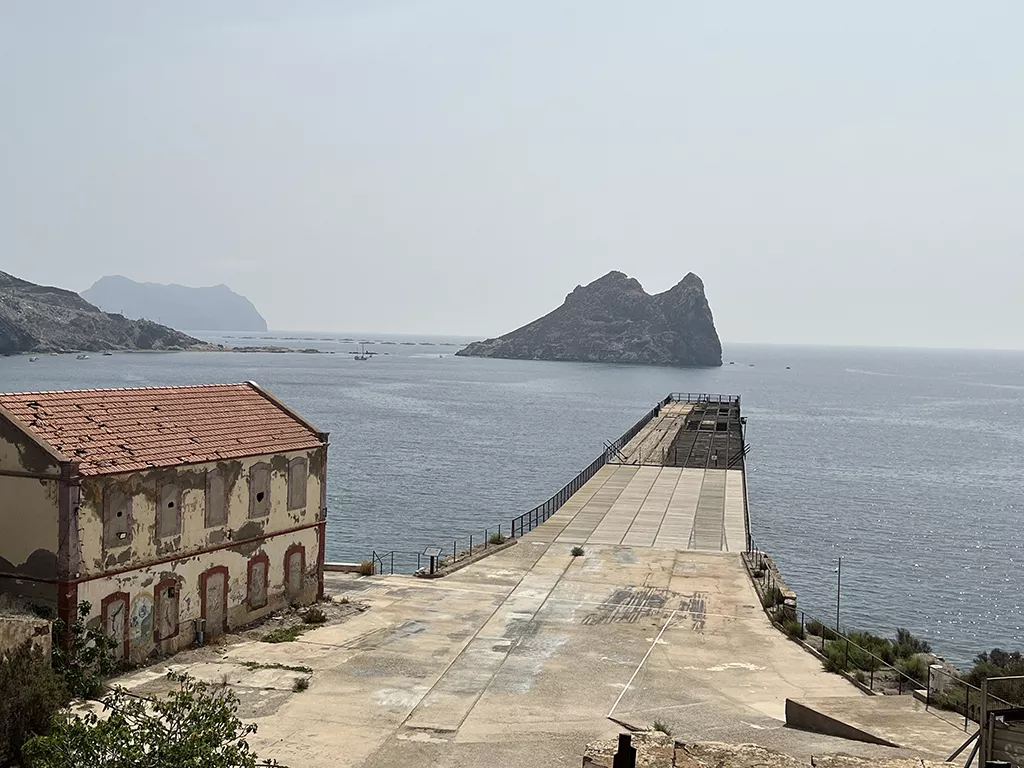
The massive structure stretched 175 metres long and stood 14 metres high, supported by solid concrete plinths. Its innovative design allowed the GSSR to finally match the scale of its ambition:
Storage and Loading: The pier featured two tracks on different levels, allowing the GSSR to store up to 50,000 tonnes of ore in hoppers until a ship arrived. It could load two ships simultaneously.
Ingenious Trackwork: The heavy ore trains, split into segments of six wagons and weighing over 350 tonnes each, were pushed by powerful locomotives up the steep ramp to the pier. The locomotive often required several "run-ups" just to make it up the incline, much to the amusement of onlookers.
Shifting Wagons: Once at the top, an ingenious feature at the pier's far end allowed a section of track to move horizontally, shuttling empty wagons sideways to clear them from the main path. A third track was later added to efficiently return the empties.
The chutes were also cleverly designed to load a ship on the right side of the pier from a train on the left track, and vice versa. It was a model of turn-of-the-century efficiency.
The True Culmination
Its inauguration on August 18, 1903, was a major turning point. Two days later, the first shipment—4,000 tons of iron ore—was dispatched to Glasgow on the SS Gwentland. By 1906, the pier had loaded nearly 285,000 tonnes of ore onto waiting ships, firmly cementing the GSSR’s position as a vital industrial artery linking the Spanish interior to the broader international market.
The railway's private era came to an abrupt end with the Spanish Civil War. On July 17, 1936, the line was seized by the Railway Workers Council. This led to a final dramatic story: John Gillman, Gustave's son and the GSSR’s new managing director, was imprisoned and faced execution. Fortunately, influential friends secured his release and arranged his escape to Gibraltar, marking a stark and dramatic end to the British administration.
The next chapters will follow the remaining route of the original concession: the final, difficult push from Baza to Granada.
Enjoying This Article – FREE to read on Kindle Unlimited?