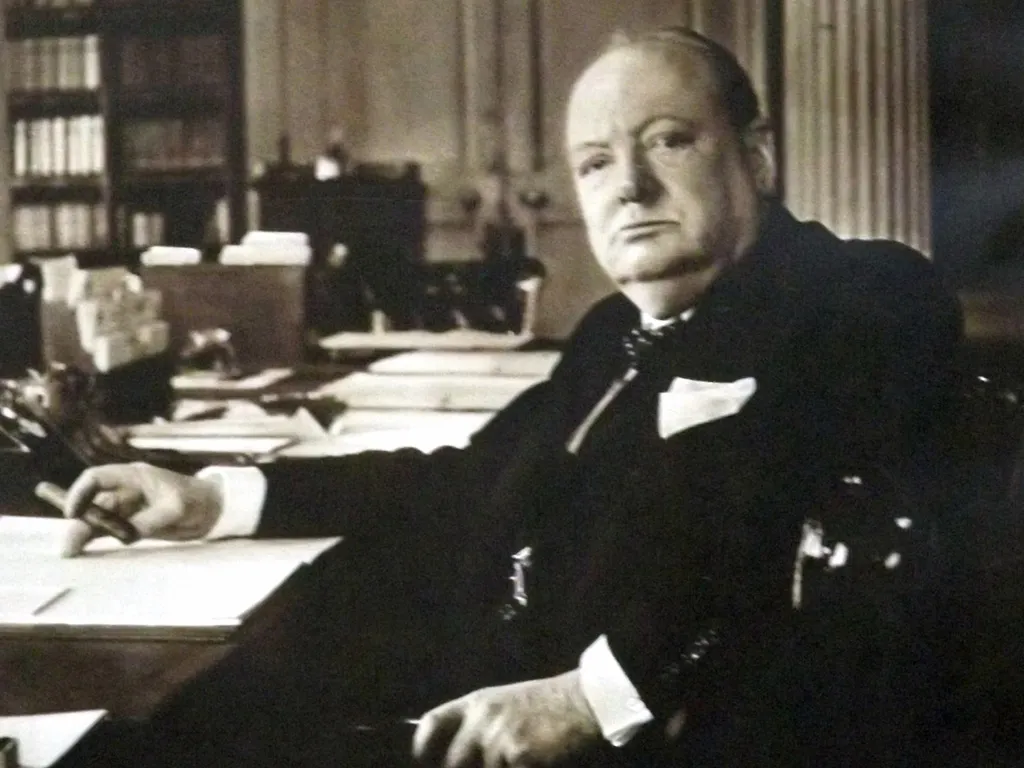
Winston Churchill became Prime Minister in May 1940. Soon after, Sir Samuel Hoare arrived in Madrid as the new British Ambassador to Spain. His primary mission was to secure Spanish neutrality in World War II.
Contents
In March 1940, the Spanish Army Council declared neutrality in the Second World War. Britain, recognizing the strategic importance of Spanish neutrality, signed a trade agreement with Spain that same month. This agreement provided Spain with £5.5 million in credits in exchange for a pledge not to re-export vital supplies to Germany. British policymakers believed that economic support was essential to keeping Spain out of the Axis. As the soon to be British Ambassador to Spain, Sir Samuel Hoare stated, "If we were to keep Spain out of the Axis...it was necessary for us to show that Spain would benefit by keeping out, and that we alone were in a position to support her independence." Additionally, a strong and neutral Spain was seen as a deterrent to German invasion. As Hoare further argued, "If we can carry through the programme of economic help...we should have a good chance of preventing the invasion of Spain." Britain's goal, therefore, was to cultivate favourable relations with Spain through economic incentives, using British grain and petroleum as rewards, a policy often referred to as "carrot and stick."
Securing Spanish Neutrality
Hoare enjoyed a productive relationship with Spanish Foreign Minister Juan Luis Beigbeder, known for his Anglophilia (a strong affinity for Britain). Beigbeder's insights proved invaluable in shaping British economic policy towards Spain. For instance, he recommended a "steady and consistent campaign" highlighting British economic aid on Spanish radio to garner public support.
Another key suggestion from Beigbeder involved using Spain's limited oil reserves as leverage. He urged Britain to utilize oil supplies as an economic weapon to influence Spain's position. This tactic, combined with Spain's limited options, led to negotiations with Britain and the US. The Anglo-Spanish Oil Agreement, signed on September 7, 1940, reflected the outcome of these discussions.
Throughout 1941, Britain continued to manage its diplomatic and economic ties with Spain. A new Supplementary Loan Agreement on April 7th provided Spain with additional import credits, further solidifying the relationship.
Britain's Economic Policy
Britain's economic policy towards Spain during the Second World War remains a subject of debate.
Historians like Thomas Hamilton argue that a more hardline approach would have benefitted democracies. Hamilton suggests Britain should have demanded the removal of the Falange party as a condition for any agreement with Spain.
This view is echoed in contemporary sources. Sir Samuel Hoare, the British ambassador to Spain, faced criticism for his perceived appeasement of Franco's regime. He clarified his position, stating his primary goal was to keep Spain out of the Axis camp. This sentiment was particularly strong among those who had supported the Republican side in the Spanish Civil War. In a letter to the Foreign Office Hoare says, '...I do wish that you would keep ... people quiet when they harp upon the mistake that we made in not sending help to the Reds in the Civil War.'
Concerns existed regarding materials supplied to Spain potentially reaching Germany. Britain countered by providing only enough for basic consumption, preventing stockpiling. However, Spain's neutrality was questioned by Charles Burdick, who pointed to German submarines stationed in Spanish ports as evidence of their non-neutral stance. However, Hoare argued it was crucial for Spain to maintain a facade of hostility towards Britain.
Opposition arose to maintaining cordial relations with a fascist-leaning regime sympathetic to the enemy. Hoare emphasized that British policy did not signify approval of Franco or his methods, but rather aimed to keep Spain out of the war. MP David Eccles concurred, Spain's pro-Axis sympathies were acknowledged, but economic necessity trumped ideology. He later remarked on the importance of the protracted economic negotiations.
The effectiveness of this strategy was even recognized by Adolf Hitler. His Operation Felix, designed to capture Gibraltar with Franco's help, was reportedly delayed due to British promises of food supplies. This exemplifies Britain's use of economic warfare to achieve its goals.
Following the war, Hoare reflected on the success of Britain's economic policy in Spain. He credited it with opening previously closed political doors: "armed with our economic programme, we were first able to bring the Embassy into close friendly and personal contact with an important Spanish Department of State." This highlights the significance of economic policy in establishing commercial and later, political relations with Spain.
The Mediterranean in World War II
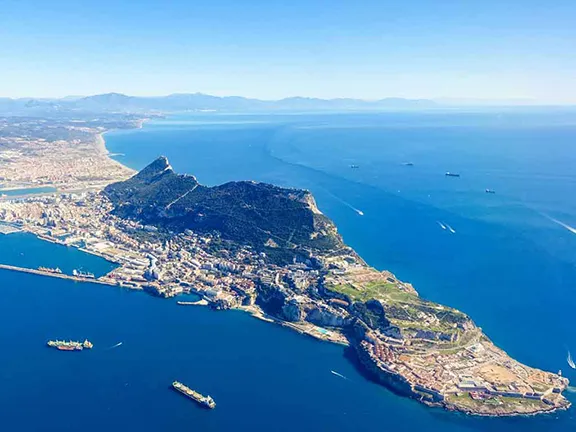
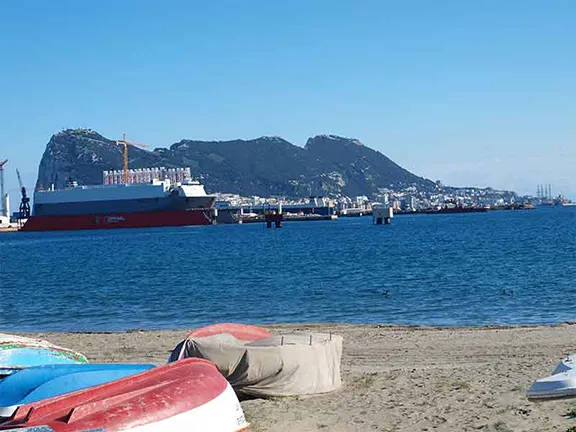
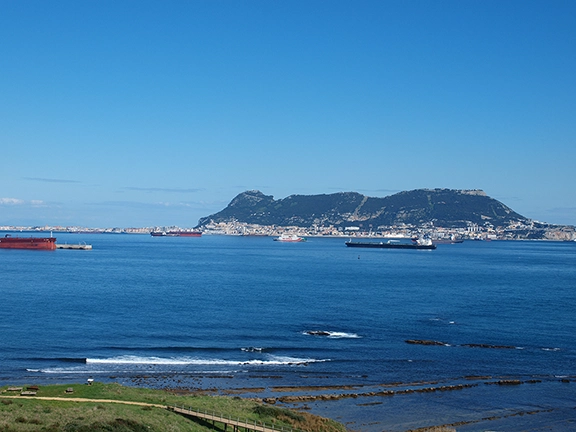
Italy's entry into the war significantly impacted the Mediterranean region. Hitler recognized Gibraltar's strategic importance and aimed for its capture to control the western Mediterranean stating, 'Spain must be persuaded to enter the war ... If we encompass the fall of Gibraltar, we shall bolt the western door of the Mediterranean.' Franco, the Spanish leader, acknowledged that Italy's involvement changed Spain's position.
British officials, including Sir Samuel Hoare, explored options to foster better relations with Spain. One strategy involved significant financial incentives for high-ranking Spanish generals. While specific names have not been publicly revealed, documents show a $14 million deposit in the Swiss Bank Corporations in New York. This sum was to be distributed by businessman Juan March to influential Spanish Generals.
Juan March: A Controversial Figure
Influential businessman Juan March played a key role in this operation. During World War I, he provided the British Admiralty with information on German submarines. He proposed a similar arrangement in World War II, leveraging his control of refineries in the Canary Islands and Morocco to gather intelligence on fuel distribution and enemy ship locations. Given the German submarine presence in Vigo, Galicia, March's intel on their movements was valuable.
March's involvement with British intelligence was not new. He funded Franco's flight to Morocco, sparking the Spanish Civil War. He also had a history of playing "el doble juego" (the double game), potentially offering services to both Britain and Germany during World War I. Captain Alan Hillgarth, the British naval attache in Madrid, emphasized the need for caution, stating "It would be a mistake to trust him an inch."
Deaspite Hillgarth's reservations, a £2 million transfer from the Bank of England to "nuestro amigo" ("our friend") March suggests a deal was struck. Even Prime Minister Churchill recognized March's potential to influence Spanish neutrality.
A Delicate Operation
The plan involved using March to bribe Spanish generals and cultivate opposition to Spain's entry into the war. This strategy aimed to bolster pro-neutrality elements within Spain.The plan involved using March to bribe Spanish generals and cultivate opposition to Spain's entry into the war. This strategy aimed to bolster pro-neutrality elements within Spain.The plan involved using March to bribe Spanish generals and cultivate opposition to Spain's entry into the war. This strategy aimed to bolster pro-neutrality elements within Spain.
Despite the concerns, the operation's importance outweighed the risks. Foreign Office documents detail the challenges encountered, including the Swiss Bank Corporations freezing the funds due to suspicious activity. Unblocking the funds became crucial for British objectives, as highlighted by Sir Samuel Hoare.
The solution involved a personal request from the Prime Minister to President Roosevelt. Roosevelt agreed to release the funds without informing the US Treasury or the Swiss bank, citing "political services" rendered by unnamed individuals. Hoare confirmed the successful resolution of the entire transaction on December 6th, 1941.
Payne downplays the impact of the bribery, but evidence suggests otherwise. Within a week of the initial payment, Hoare reported progress with the dismissal of pro-Axis General Juan Yague. Further confirmation came in October with a secret letter from Hoare detailing the bribing of six influential Generals, advisors to Franco, using a hidden "secret fund." This message emphasized the scheme's effectiveness: "I send you personally these further details...so that you may know the money is not being used in vain."
The most dramatic outcome occurred in May 1941. General Juan Vigon, believed to be a recipient of British funds, threatened Franco with mass resignations from his military advisors if he did not limit the power of Ramon Serrano Suner. Suner, replacing the pro-British Beigbeder as Foreign Minister, was seen as a setback due to his pro-Axis leanings. Franco's subsequent cabinet reshuffle strongly suggested the bribes' success. Appointments of Suner's critics, Luis Orgaz and Alfredo Kindelan, to key positions, along with a new anti-Falange Interior Minister, signaled Suner's diminished influence. Minister of Economic Warfare Hugh Dalton observed: "the Knights of St George have charged: it is thanks to them that certain recent changes have been brought about," referencing the British codename for the bribery operation. Similarly, Hoare informed the Foreign Office: "No doubt you have realised that the political changes here are directly due to the secret plan..."
Spain and the SIS:
The expansion of the Secret Intelligence Service (SIS) in Spain during World War II brought them into conflict with the British Embassy in Madrid. Hamilton Stokes, head of SIS, aimed to build a robust intelligence network and explore potential allies within the Confederacion Nacional de Trabajo (CNT). However, Sir Samuel Hoare, the Ambassador, and his advisor Hillgarth, strongly opposed these covert operations. They feared jeopardizing overt diplomatic relations with Spain if such contacts were exposed, causing public embarrassment.
The Claire and Clarke Incidents:
Two events bolstered Hoare and Hillgarth's position. In 1941, French naval officer Paul Lewis Claire, recently transferred to the Royal Navy, was arrested attempting to enter France from Spain. During his arrest, he reportedly revealed "many secrets of British SIS in Spain." The SIS arranged his drugged transport to Gibraltar, but he regained consciousness and was killed en route. Hoare deemed it "a most unfortunate affair." He further declared, "once again we have had to save SIS from a catastrophe," when, that same year, Lieutenant Colonel Dudley Clarke was apprehended. Clarke, on a mission to establish SIS contacts to assist his deception work in Cairo, was "arrested on a main street dressed as a woman." Though the German Gestapo suspected him of espionage, the British Embassy secured his release and transport to Gibraltar.
SIS Role and Disagreement:
These incidents led Hoare to advocate for a complete halt to SIS operations in Spain, stating, "after the Claire and Clarke episodes, I have ceased to have any faith in SIS." Despite this, the value of SIS intelligence cannot be entirely dismissed. From May 1942 onwards, Ambassador Hoare leveraged SIS information on Germany's "Bodden" surveillance system, aimed at detecting Allied shipping in the Straits of Gibraltar, to pressure Franco into abandoning it. This success would later prove significant in concealing Allied plans for the North African invasion.
Britain's Secret Plans for a "Free Spain Movement"
Newly released Foreign Office files reveal Britain's clandestine efforts to prepare for a possible German occupation of Spain during World War II. These documents detail a "Free Spain Movement" whose goals included supplying weapons to anti-Franco groups and planning sabotage operations against German invaders.
Britain pledged support to figures like Pedro Sainz Rodriguez and General Aranda. The plan involved transporting them to the Canary Islands to establish a rival Spanish government in exile if Germany invaded. Spanish diplomat Francois Beigbeder encouraged the possibility of Spanish resistance, highlighting the importance of covert operations alongside official diplomacy.
While Britain publicly maintained a hands-off approach to Spanish internal affairs, internal documents acknowledge the potential benefits of connections with opposition elements, particularly monarchists. Social unrest and failed government reforms had led to King Alfonso XIII's abdication in 1931. Growing resentment towards the Falange party and Franco's alignment with the Axis powers fuelled a desire among many Spaniards to overthrow Franco and restore the monarchy.
British Foreign Secretary Samuel Hoare expressed his views to Prime Minister Winston Churchill, believing a "monarchist restoration would be just the kind of explosion that is needed." Dispatches from Hoare and Foreign Secretary Anthony Eden shed light on Britain's position regarding a potential monarchist revival. The documents state that "in the event of an invasion of Spain by the Germans or of the Spanish Government throwing in their lot with the enemy, it would be in our interests that a Free Spanish Movement should be formed, capable and willing to continue the fight from overseas."
Britain saw an opportunity to capitalize on the growing monarchist sentiment, especially after King Alfonso's death. Additionally, the heir to the throne, Infante Don Juan, was seen as potentially favourable due to the political leanings of his British-born mother, Queen Victoria Eugenie, a known supporter of the Allied cause.
While a monarchist restoration under a pro-British regime was desirable, the documents acknowledge that "an immediate movement is ... unlikely as responsible leaders are all waiting to see how the war is going on." Britain's planning for this contingency demonstrates their willingness to explore all options to achieve their objectives, even if it meant potentially undermining a supposedly friendly regime.
Achieving Neutrality
Britain's primary goal by the end of 1942 was to ensure Spain's neutrality, and this objective appeared achievable. Although Franco's sympathies leaned towards Germany, Spain remained reliant on British economic aid. British Ambassador Hoare believed diplomatic efforts played a crucial role: "The more I analyse these critical years, the more convinced I am that the British Embassy's work... was a key factor in preventing Spain from joining the Axis." Similarly, the Foreign Office acknowledged progress: "The current Spanish government, despite permitting numerous unfriendly acts within its territory and not being ideal from our perspective, has so far maintained a reasonably independent policy regarding our primary interests." Spain's willingness to cooperate with British requests, such as halting German submarine refuelling in its ports and expelling German intelligence officers, further underscored the effectiveness of Anglo-Spanish relations.
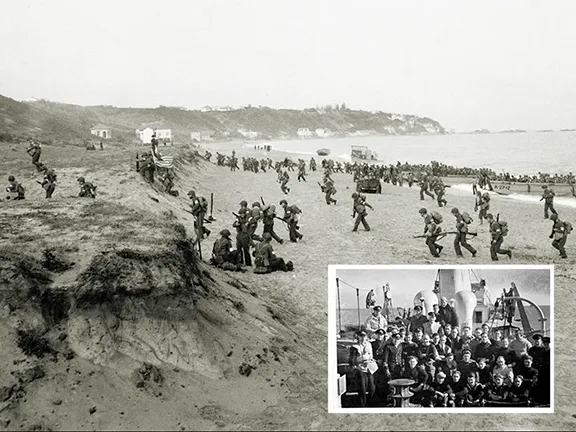
Operation Torch, the Allied invasion of North Africa in November 1942, marked a turning point in relations. Hoare emphasized the invasion's significance in his memoirs: "The Allies... were undertaking grave risks unless Spanish neutrality could be guaranteed." A failed landing could have triggered a German attack on North Africa, Spain, and Spanish Morocco, with or without Spanish consent. While Spain might have reacted negatively to the invasion, it demonstrably did not, despite German demands for action. Lieutenant Commander Harry Butcher, Naval Aide to General Dwight D. Eisenhower, in a diary entry from a few days after the landing confirms this: "Hitler had demanded... free passage for his forces through Spain." The US Ambassador to Spain, Carlton Hayes, corroborates this, stating that Germany made this request twice but was rejected. This highlights Spain's desire to avoid antagonizing Britain and validates the success of the preceding years' economic and diplomatic efforts. As Hoare summarized: "we might well have faced a sudden crisis in Spain. However, we had built up a valuable reserve of goodwill in the country through our economic program." Furthermore, Torch's political ramifications were substantial, as Spain's renewed vulnerability to attack from both sides effectively ended Franco's imperialist aspirations.
Franco's Neutrality: A Balancing Act or Necessity?
Historians debate the reasons behind Spain's neutrality during World War II. Some, like Sheelagh Ellwood, argue Franco exploited both sides for gain. They point to Franco's turn to Britain for economic aid after failing to secure similar support from Hitler. Wigg reinforces this view, suggesting Franco sought to strengthen his regime with German arms while manipulating the Allies for economic help. He downplays the influence of British policy, attributing Spain's neutrality to its economic limitations rather than British actions.
However, Peter Day argues that Spain's reliance on British markets was a major factor in its neutrality, especially during the Axis' peak years. He suggests the war's devastation combined with this economic dependence made joining the Axis unrealistic.
While Spain's post-war economic hardship likely played a role, Day emphasizes Britain's skilful exploitation of this situation. Britain's resourcefulness, he argues, was key. They used economic incentives, diplomatic connections (including the Foreign Minister), and even bribery to influence Spanish officials and achieve their goals of keeping Spain neutral.
The Best Guide to Gibraltar
First published in 2016, The Rock from Bottom to Top was due for an overhaul. We are pleased to publish a second edition on the 320th anniversary of Britain's capture of Gibraltar in 1704.
Completely updated with new images, stories, and anecdotes, Exploring Gibraltar is like no other travelogue or guidebook.
Exploring Gibraltar: The Rock from Bottom to Top is for anybody interested in the history, attractions, and culture of Gibraltar.

FREE to read on Kindle Unlimited, available as an Ebook download and full colour paperback.
References
'A Free Spanish Organisation', July 26th 1941, Special Operations Executive records (HS) 6/921, TNA.
Admiralty Records, (ADM) 223/490, TNA, FO 1093/233, TNA, Hoare to FO, September 12th 1941, FO 1093/233, TNA, PM to FO, September 13th 1941, FO 1093/233, TNA.
Archivo General de Asuntos Exteriores, Madrid (AMAE)
'Madrid: Secret Intelligence Services (SIS) reporting', FO 1093/233, TNA.
Prime Minister's Papers and Correspondence (PREM) 4/32/7, TNA, Hoare to Cadogan. December 6th 1941, FO 1093/233, TNA, Payne, The Franco Regime, 275, Hoare to FO, June 28th 1940, FO 1093/233, TNA, Cadogan to Hoare, October 17th 1940, FO 1093/233, TNA, Hoare to Edward, October 30th 1940, FO 1093/233, TNA.
Burns, Jimmy. Papa Spy: A True Story of Love, Wartime Espionage in Madrid, and the Treachery of the Cambridge Spies. London: Bloomsbury Publishing, 2011.
Caruana, Leonard and Hugh Rockoff. 'A Wolfram in Sheep's Clothing: Economic Warfare in Spain, 1940-1944. The Journal of Economic History 63 (2003): 100-126.
Churchill, Winston. Secret Session Speeches. London: Cassell & Company, 1946.
Cokely, Megan E. 'British counter-intelligence in Gibraltar: Deciphering Spanish 'neutrality' during the Second World War.' International Journal of Iberian Studies, 20 (2007): 129-153.
Day, Peter. Franco's Friends: How British Intelligence helped bring Franco to Power in Spain. London: Biteback Publishing Ltd, 2011.
Ellwood, Sheelagh M. Franco. London: Longman, 1994.
Feis, Herbert. The Spanish Story: Franco and the Nations at War. New York: A. A. Knopf, 1948.
Ferrer, Pere, trans. Juan March: El hombre mas misterioso del mundo. Barcelona: Liberduplex, 2008.
Hoare, Sir Samuel. Ambassador on a Special Mission. London: Collins, 1946.
Moradiellos, Enrique. Franco Frente a Churchill. Barcelona: Ediciones Peninsula, 2005.
Payne, Stanley G. The Franco Regime, 1936-1975. Wisconsin: University of Wisconsin Press, 1987.
Wigg, Richard. Churchill and Spain. Brighton: Sussex Academic Press, 2008.
Admiralty Records, (ADM) 223/490, TNA, FO 1093/233, TNA, Hoare to FO, September 12th 1941, FO 1093/233, TNA, PM to FO, September 13th 1941, FO 1093/233, TNA.
Archivo General de Asuntos Exteriores, Madrid (AMAE)
'Madrid: Secret Intelligence Services (SIS) reporting', FO 1093/233, TNA.
Prime Minister's Papers and Correspondence (PREM) 4/32/7, TNA, Hoare to Cadogan. December 6th 1941, FO 1093/233, TNA, Payne, The Franco Regime, 275, Hoare to FO, June 28th 1940, FO 1093/233, TNA, Cadogan to Hoare, October 17th 1940, FO 1093/233, TNA, Hoare to Edward, October 30th 1940, FO 1093/233, TNA.
Burns, Jimmy. Papa Spy: A True Story of Love, Wartime Espionage in Madrid, and the Treachery of the Cambridge Spies. London: Bloomsbury Publishing, 2011.
Caruana, Leonard and Hugh Rockoff. 'A Wolfram in Sheep's Clothing: Economic Warfare in Spain, 1940-1944. The Journal of Economic History 63 (2003): 100-126.
Churchill, Winston. Secret Session Speeches. London: Cassell & Company, 1946.
Cokely, Megan E. 'British counter-intelligence in Gibraltar: Deciphering Spanish 'neutrality' during the Second World War.' International Journal of Iberian Studies, 20 (2007): 129-153.
Day, Peter. Franco's Friends: How British Intelligence helped bring Franco to Power in Spain. London: Biteback Publishing Ltd, 2011.
Ellwood, Sheelagh M. Franco. London: Longman, 1994.
Feis, Herbert. The Spanish Story: Franco and the Nations at War. New York: A. A. Knopf, 1948.
Ferrer, Pere, trans. Juan March: El hombre mas misterioso del mundo. Barcelona: Liberduplex, 2008.
Hoare, Sir Samuel. Ambassador on a Special Mission. London: Collins, 1946.
Moradiellos, Enrique. Franco Frente a Churchill. Barcelona: Ediciones Peninsula, 2005.
Payne, Stanley G. The Franco Regime, 1936-1975. Wisconsin: University of Wisconsin Press, 1987.
Wigg, Richard. Churchill and Spain. Brighton: Sussex Academic Press, 2008.