Contents
A Lone Outpost
The Comet Line
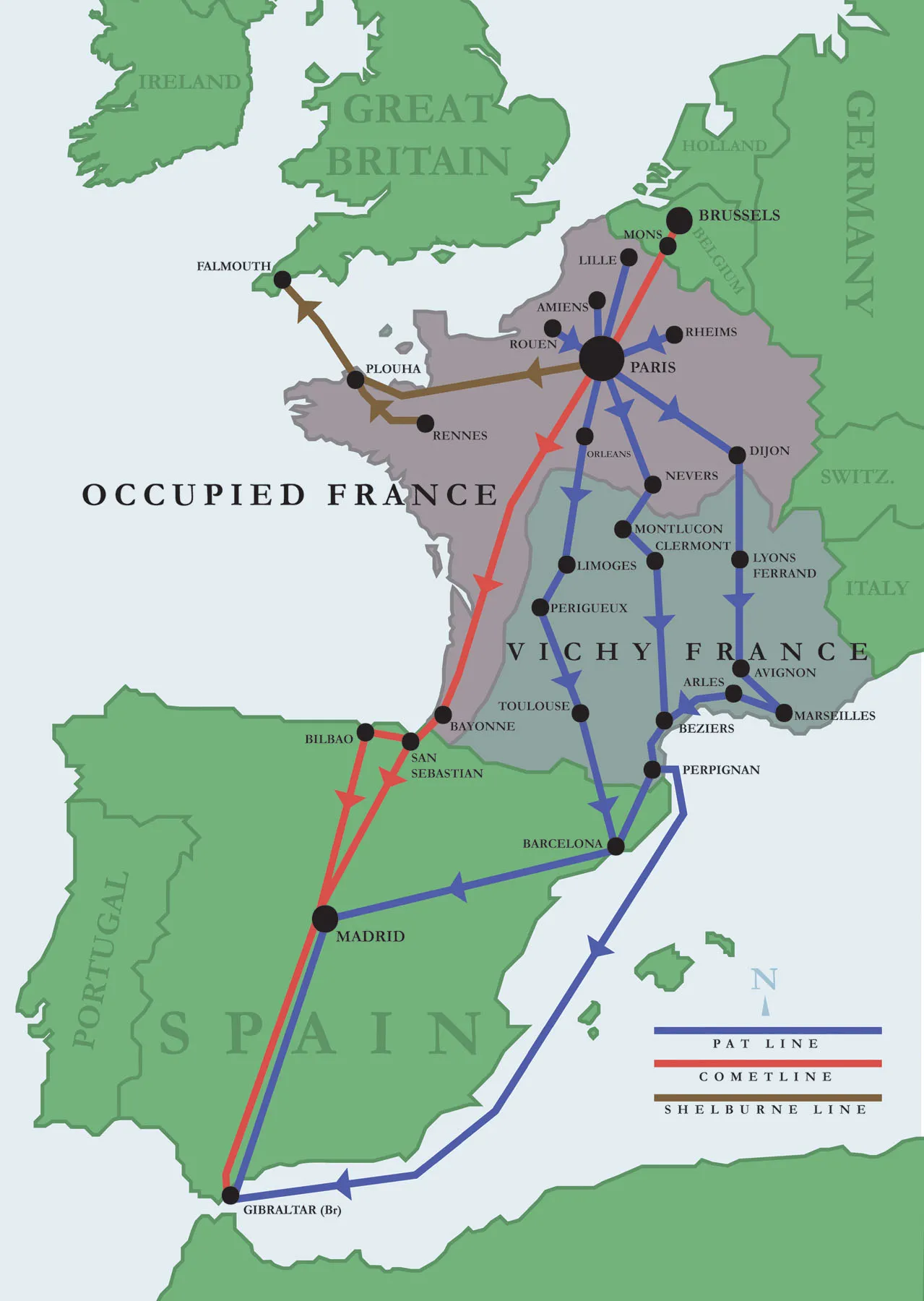
The Pat O'Leary Line
Vichy France
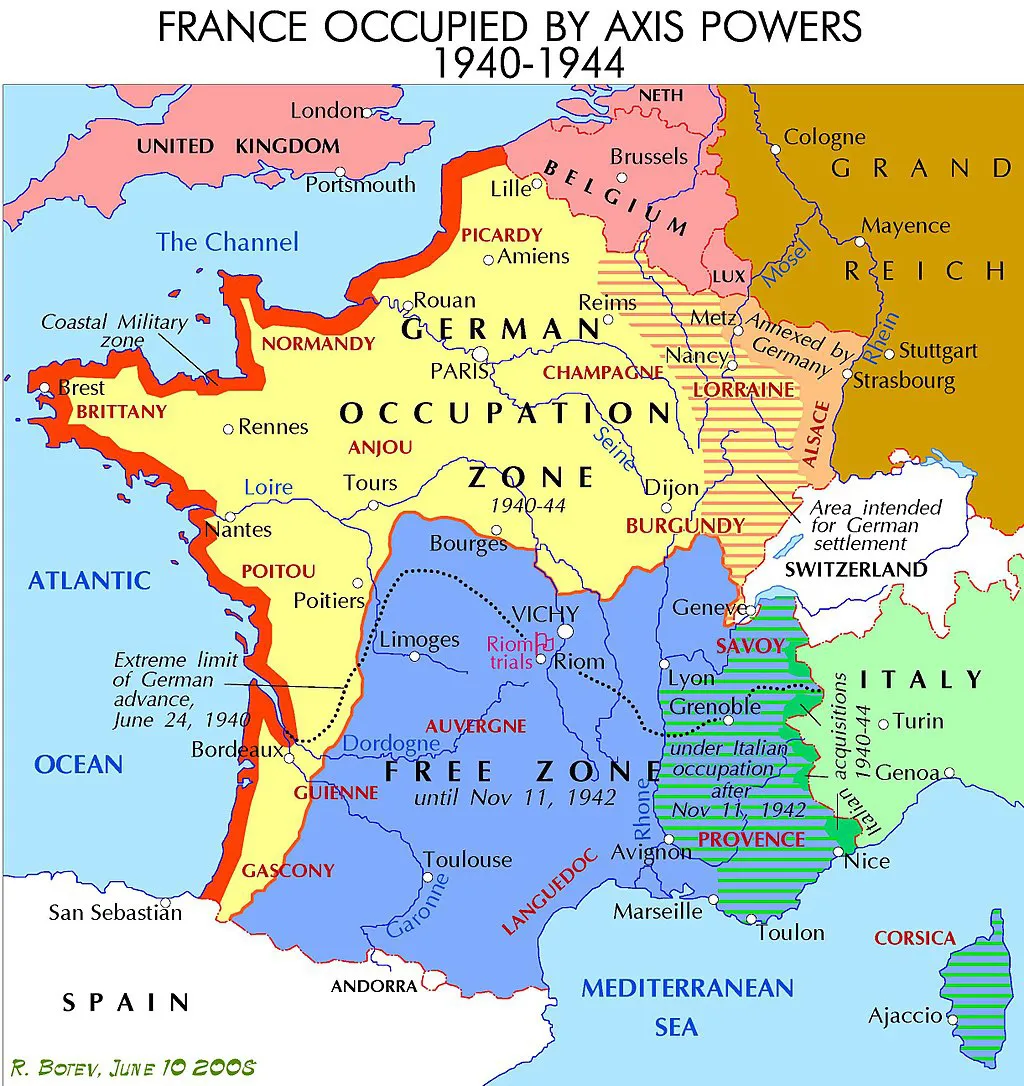
A significant portion of the population actively supported this collaborationist regime, becoming known as Petainistes. For those evading capture or escaping POW camps, the "free zone" offered no sanctuary.
Adding another layer of danger, the Milice, a Fascist paramilitary group, patrolled the zone. Allied escapers, spies, radio operators, and members of the underground resistance faced constant threats of capture and imprisonment, just as they did in the occupied north. The dream of reaching safety through Vichy France quickly turned into a desperate scramble for survival, with every corner potentially harbouring betrayal. This "free zone" proved a treacherous landscape for those seeking escape, offering a false hope amidst a web of collaboration and lurking danger.
The end of the war in France didn't mark the end of the line for its leaders. After the war, Philippe Petain, the man who had led France into collaboration, faced trial for treason. Despite his advanced age, a staggering 88 years old, and his past service in World War I, he was found guilty. Initially condemned to death, his sentence was ultimately commuted to life imprisonment, a stark contrast to the fate that awaited Pierre Laval, premier of Vichy France after 1942. Laval, lacking the shield of wartime heroism, was tried and executed on October 15th, 1945. Their fates became a grim reminder of the consequences of collaboration, even for those who wielded immense power.
The Seaman's Mission Marseilles
This unlikely safe house, located at 46 Rue de Forbin, was spearheaded by the courageous Reverend Donald Caskie. Having fled Paris ahead of the Nazi stormtroopers, who were not impressed by his anti-Nazi sermons, Caskie took over the Mission under the pretence of aiding civilian refugees. However, his true mission was far more daring, to orchestrate the largest safe house in all of France.
By mid-July 1940, the unassuming Seaman's Mission in Marseilles had undergone a quiet transformation. A sign hanging outside declared it "NOW OPEN TO BRITISH CIVILIANS AND SEAMEN ONLY", a blatant lie, yet a necessary one. Behind that facade, Reverend Donald Caskie, a man of unwavering spirit, had turned the Mission into a sanctuary. News of this safe house spread like wildfire through the occupied territories and Vichy France.
Caskie wasn't interested in following the letter or spirit of Vichy law. His door swung open for any Allied soldier, airman, or secret agent fleeing persecution. He offered refuge not just to military personnel, but also to civilians deemed a threat by the Germans or their Vichy collaborators. The facade of a simple seaman's haven masked a daring operation, a glimmer of light amidst the growing darkness of occupied Europe.
Caskie's operation could not survive without anonymity. Food materialized on doorsteps at night, whispers of approaching police checks arrived through cryptic phone calls. Evaders, stripped of their uniforms, found a clandestine disposal service, their clothes, weighted down with rocks, vanished into the depths of Marseille harbour under the cover of darkness. The Mission became a vital cog in the Pat O'Leary escape line, a lifeline for hundreds yearning for freedom.
In total Caskie, also known as the 'Tartan Pimpernel', saved more than 2000 men during World War II.
Escaping Occupied France by Land
Until April 1941, when formal escape lines solidified, and sea evacuations became an option, escapers and evaders faced a perilous existence. Shelter and sustenance came from the kindness of strangers, French and Spanish civilians.
Three men from the 51st Division (Highlanders), tramped through France to Spain. On the journey, they only spoke Gaelic. They were stopped in France by a German patrol who could not understand a word they spoke. The Germans produced a world map and indicated the Highlanders should point to where they came from. They pointed to Russia, then an ally of Germany, and were allowed to proceed. Two men from Yorkshire, with not a word of French or German between them, managed to walk through France and Spain being passed on from household to household. 'People were very kind', reported one during his debrief.
But, the enemy were not the only hazard on the journey from France to Gibraltar. There was a mountain range to cross.
Crossing the Pyrenees
Spanish Concentration Camps
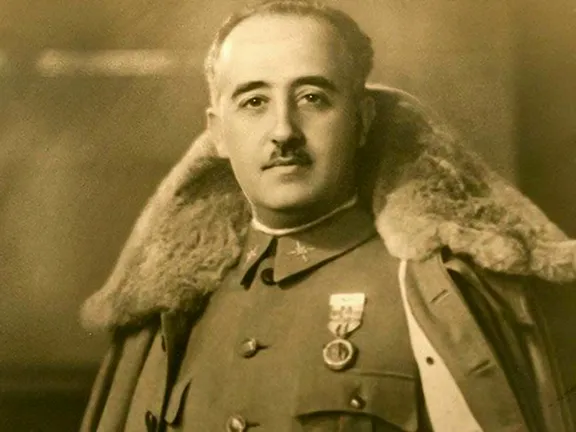
Whilst many of the early evaders were arrested in Marseilles and taken off to prisoner of war camps in the occupied territories, those that managed to make it into Spain had to evade the Spanish police. The Guardia Civil arrested many evaders who were then held in one of Franco's notorious camps.
Figueras prison was in northeast Spain. British prisoners unlucky enough to find themselves there were crammed thirty to a cell with one latrine bucket and a six-inch square window providing their only light.
The prisoners were treated brutally, Sergeant Jack Horsman of the Durham Light Infantry was almost blinded by the beatings he received. One prisoner managed to smuggle a note out of the prison that eventually landed on the desk of Samuel Hoare, the British ambassador in Madrid. The note briefly told of the inhuman treatment of the inmates at the camp. Eventually, after considerable diplomatic protest, some prisoners were repatriated.
At a prison in Burgos, men were beaten with rifle butts for refusing to give the fascist salute.
About fifty British soldiers ended up in the most infamous concentration camp in Spain, Miranda de Ebro, originally built for Republican prisoners of war. The camp also held Polish, Belgian, French and Yugoslav inmates and twenty German deserters.
Diplomatic negotiations eventually secured the release of the British troops, but not before they were starved to the point of emaciation, infested with lice and suffering from dysentery. They were taken to the embassy chapel in Madrid and then hidden in the back of a food supply wagon to be transported to Gibraltar.
Driver W. Gaze, who had driven an ambulance helping the wounded left behind at Dunkirk, and Private Gordon Instone, who had lost 50lbs in weight whilst at Miranda de Ebro, were just two of the men that made the journey. Finally arriving in Gibraltar, they found themselves in paradise with unlimited food and mugs of tea.
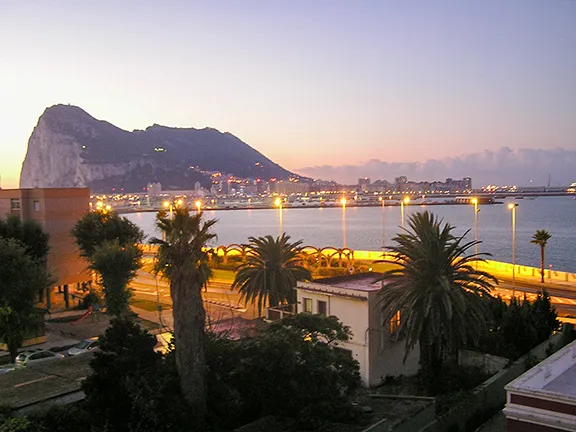
Crossing the Frontier to Gibraltar at La Linea de la Concepcion
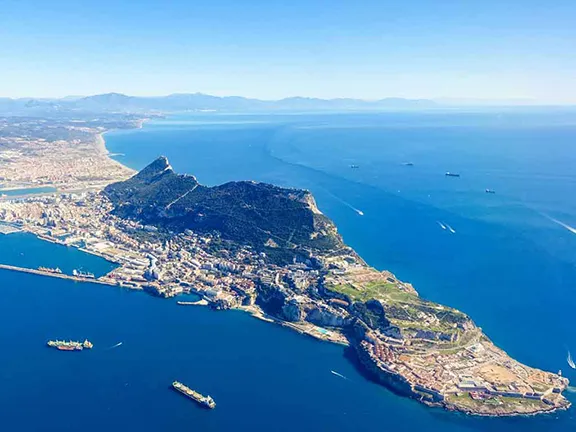
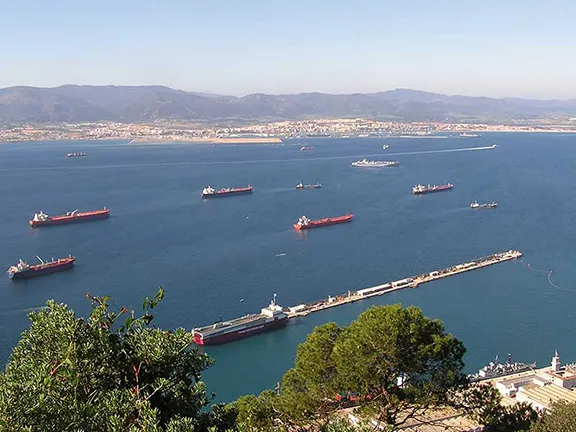
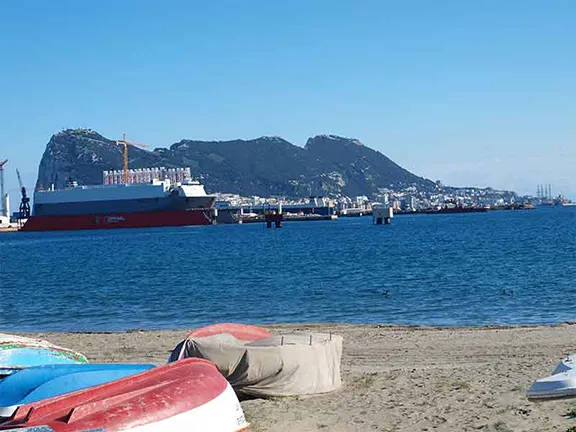
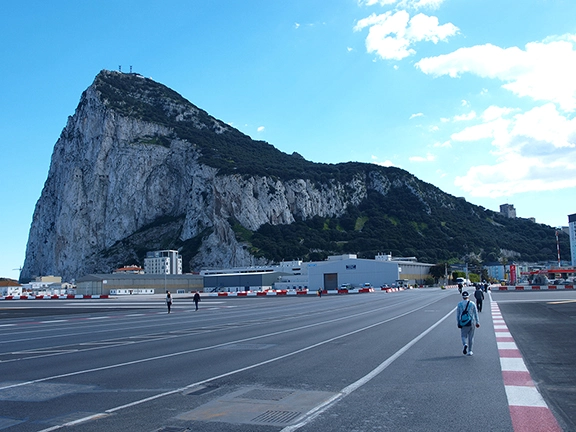
Once in Gibraltar, the aircrew were billeted at the RAF Coastal Command depot, SOE and, after January 1942, senior escape line organisers were accommodated in Darling's flat on Main Street, whilst other evaders who arrived by sea, usually by HMS Tarana, one of the flotilla of small boats operating out of Gibraltar, were met at the Mole in the harbour and taken to hotels or flats on Main Street.
From Gibraltar, the way home varied. Some escapers were billeted on merchant ships returning to the UK, some were flown out. A few were smuggled to Lisbon to be flown home from there.
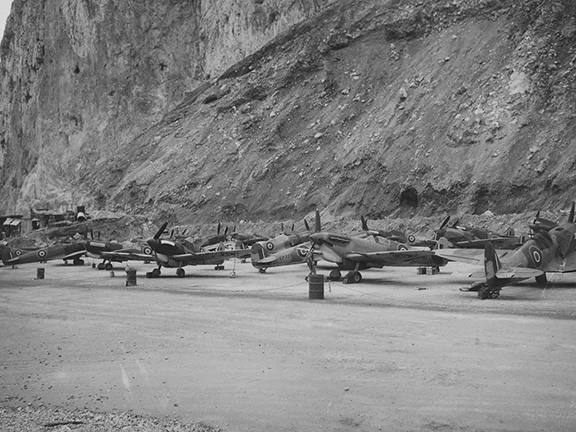
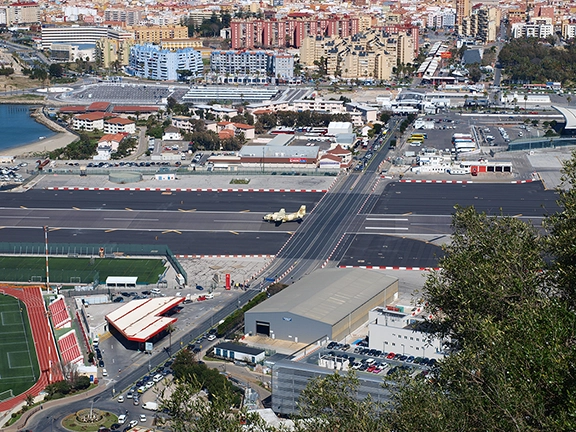
Within two days of his arrival in Gibraltar in January 1942, Darling had his first customers, among them Sergeant Jack Newton, a rear gunner in a Wellingon bomber shot down over Aachen. Newton was fortunate to make contact with the new Comet line and had successfully made it to Gibraltar. He and two companions were kept isolated on the airstrip because Darling did not want any information regarding their escape to feed back through one of the many German and Spanish Fascist agents that infiltrated themselves into Gibraltar, who would pass the information on to the Abwehr agents in Algeciras.
Jack Newton worked his passage home in the rear gun turret of a Short Sunderland flying boat after the previous gunner had been shot up.
Military Intelligence Section 9 on Gibraltar
MI9's representative on Gibraltar after January 1942, was Donald Darling (codenamed 'Sunday'). All the officers working for MI9 had codenames. 'Monday' was a man working in the Embassy in Madrid, 'Horse' worked at the British Consulate in Barcelona. 'Saturday' was Airey Neave, the first British escapee from Colditz and later an MP until he was assassinated in 1975 by the Irish National Liberation Army.
Lieutenant Airey Neave of the Royal Artillery, was the first British Officer to make a 'home run'. On his return to London in 1942, he was interviewed over lunch at Rules restaurant in Convent Garden by Jimmy Langley and Major Norman Crockatt, the commander of MI9, and recruited into MI9 with the codename 'Saturday'.
After his recruitment into MI9, Neave's role was supporting underground escape organizations, such as the Pat O'Leary Line and Comet Line in occupied Europe, with equipment, agents, and money, and helping downed Allied airmen and other Allied military personnel evade and escape capture by the Germans. In Western Europe before D-Day, about 5,000 British and American military personnel were rescued by the escape organizations and repatriated to the United Kingdom, mostly through neutral Spain.
The use of code names sometimes caused embarrassment. On one occasion, 'Saturday' signed a message to the field using the false name 'Albert Hall'. An airman, debriefed in Gibraltar by Sunday, reported that he had been told to report to the Albert Hall when he arrived back in Britain. Saturday was told to stick to the procedure.
Donald Darling
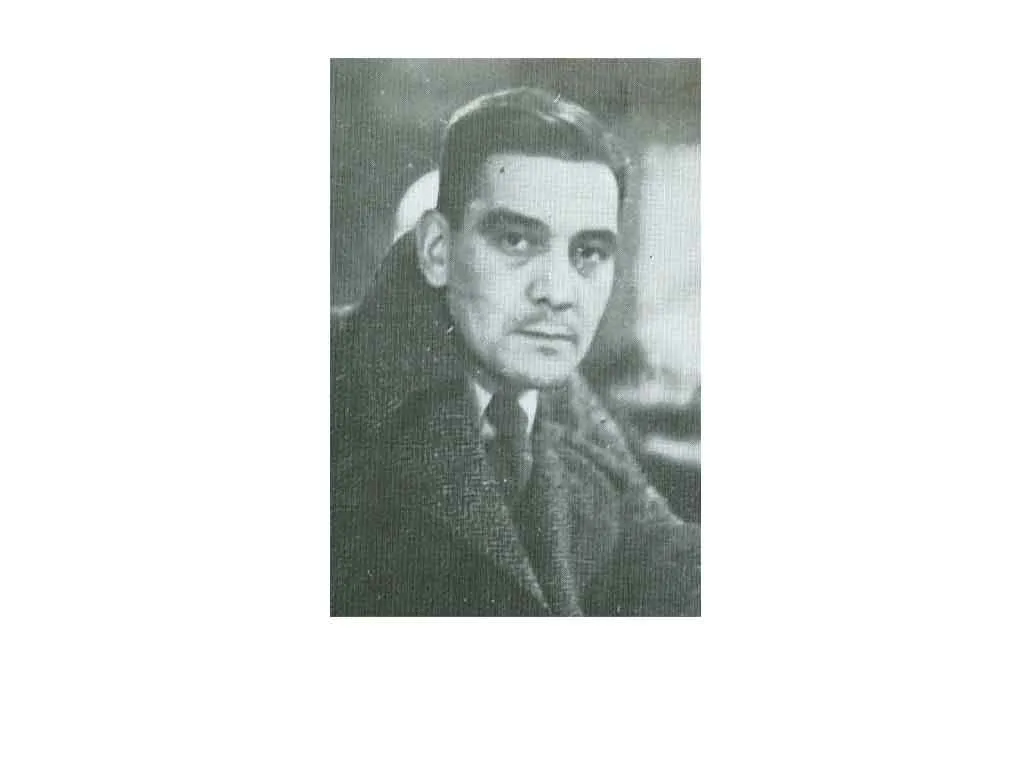
Hoare refused to allow Darling to work in Spain or to deal with, 'any enemies of the regime'. Darling was forced to set up shop in Lisbon, in neutral Portugal, where the ambassador, Sir Walford Selby, welcomed him and said he 'would ask no questions'. By the end of 1941, the numbers of escapers and evaders arriving in Gibraltar made it operationally essential that Darling be closer to the action. Donald Darling arrived in Gibraltar on the 5th of January 1942 and took a flat in Main Street, Gibraltar.
Donald Darling was appointed the civilian assistant to the Governor on intelligence matters working under Colonel John Codrington, the head of station for SIS - the Secret Intelligence Service which covered MI6 and MI9. Darling's main role was in the reception, supervision, and interrogation of escaping allied personnel who arrived in Gibraltar as well as organising the infiltration of agents into Spain. He and his sidekick, Brian Morrison, were basically in charge of all MI9 activity on the Rock.
Darling and Morrison, debriefed every returning escaper and evader after 1942 and it is from those debriefs that much of the detail in this article, some of it verbatim from the reports, is gleaned.
At the end of the war, Donald Darling estimated that over 3000 escaping or evading allied airmen passed through Gibraltar on their way home. That number did not include the hundreds of allied troops that also used Gibraltar as a 'Gateway to Freedom'.
The Best Guide to Gibraltar
Completely updated with new images, stories, and anecdotes, Exploring Gibraltar is like no other travelogue or guidebook.
Exploring Gibraltar: The Rock from Bottom to Top is for anybody interested in the history, attractions, and culture of Gibraltar.

FREE to read on Kindle Unlimited, available as an Ebook download and full colour paperback.