Contents
Where was the Mazarron II shipwreck found?
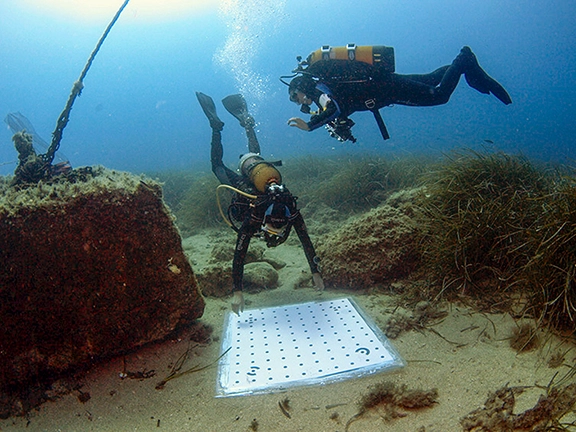
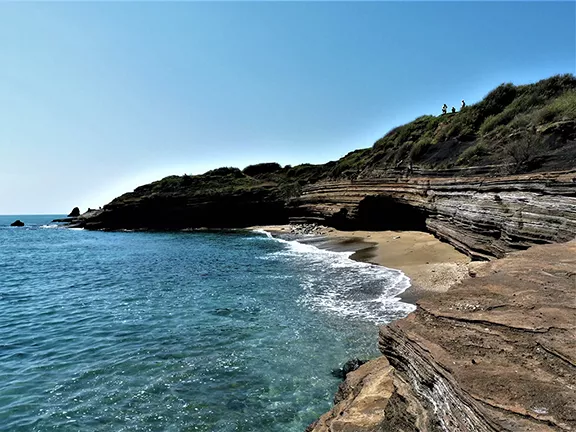
About the Mazarron II wreck site
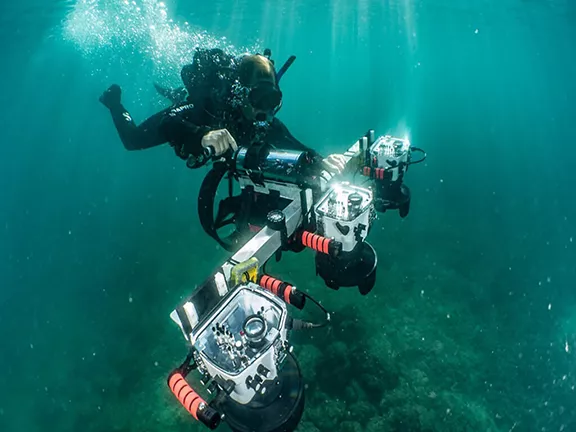
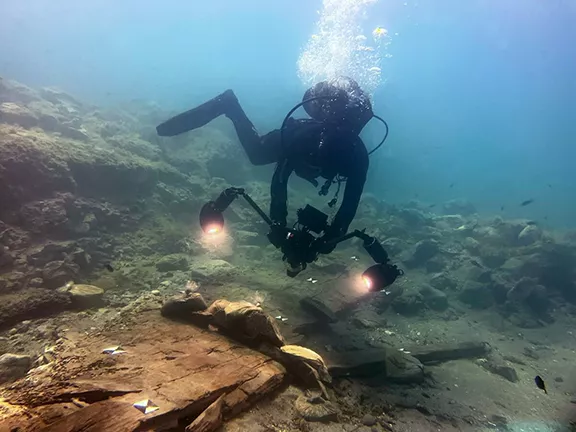
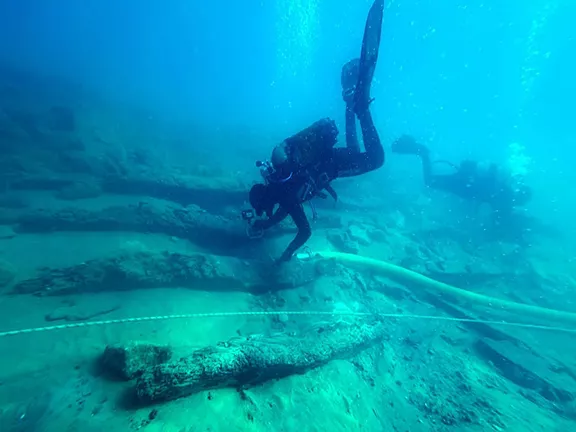
In November 2024, the last section of the boat was removed from the seabed and taken to the Underwater Archaeology Museum in Cartagena for further study. It should be on public view within five years either at Cartagena or a purpose built museum at Mazarron.
Who excavated the Mazarron II shipwreck?
When did the Mazarron II wreck sink?
How was Mazarron II built and what were its dimensions?
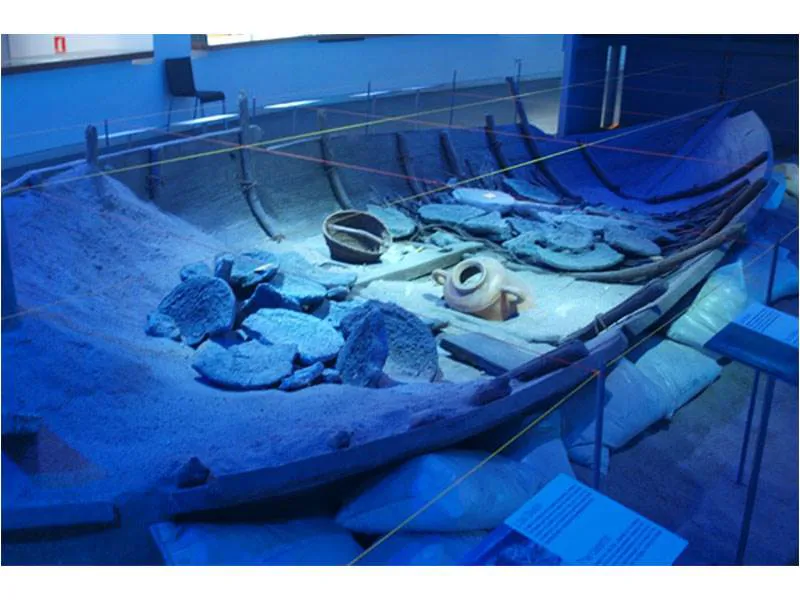
A method of construction called carvel build was used. The planks are fitted edge to edge and secured using mortise and tenon joints with olive tree wood pegs driven through the joint to secure it. This method of construction was used in a minor way on the 14th century BC Uluburun wreck and obviously developed in the intervening 700 years. Previous methods involved sewing the strakes together.
At the eighth row of strakes supports for seven beams were attached. Beams give the boat more rigidity. There also appear to be fittings for five thwarts. Finally, the fig tree wood frames were inserted inside the hull and attached with esparto cord sewn through the strakes. The Phoenician boat builder of this period could not quite escape from the traditional sewn joint methods. The whole of the inside of the hull was given a good coat of resin to make it water-resistant. Mazarron II is the best-preserved example of such a boat from this period.
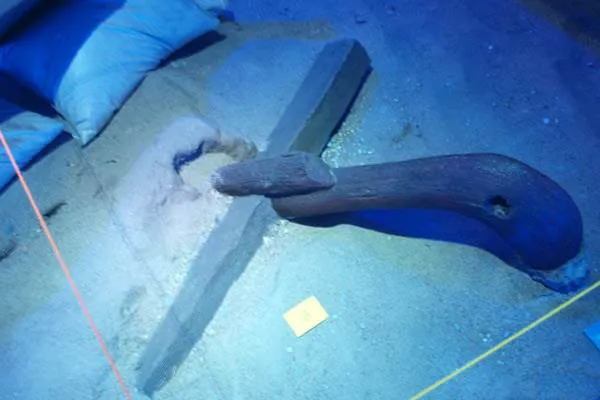
The anchor was found intact near the starboard bow of the vessel. Only part of it was recovered, the remainder lies with the vessel in its original position. It is made of wood and lead. It has two palms, and a wooden shank with a wooden stock filled with lead. A ring attached the anchor to esparto rope. This is the earliest true anchor to be found. All other previous anchors found were simply large stones with holes in them.
Where did the crew of the Mazarron II shipwreck originate?
What was the Mazarron II ship's cargo?
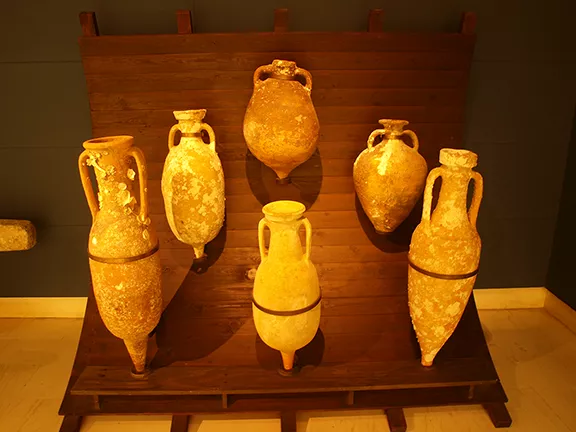
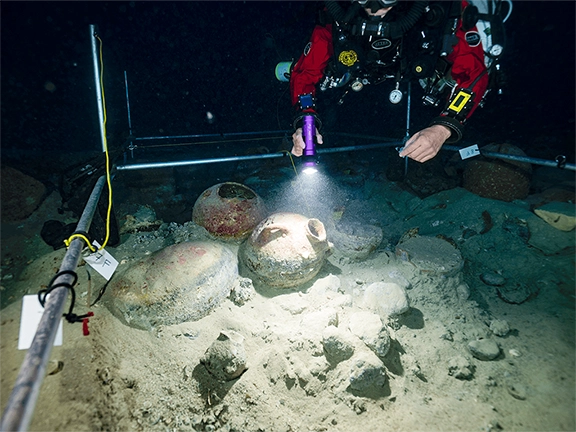
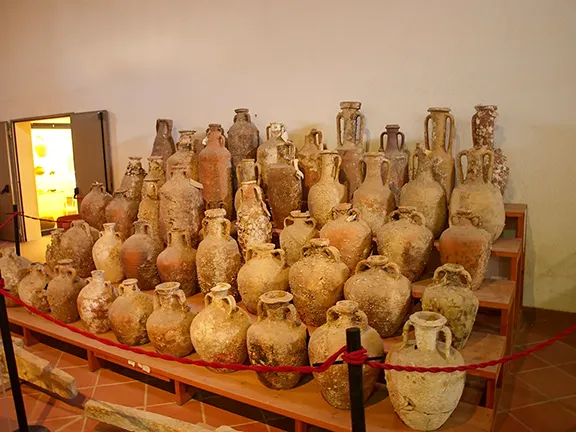
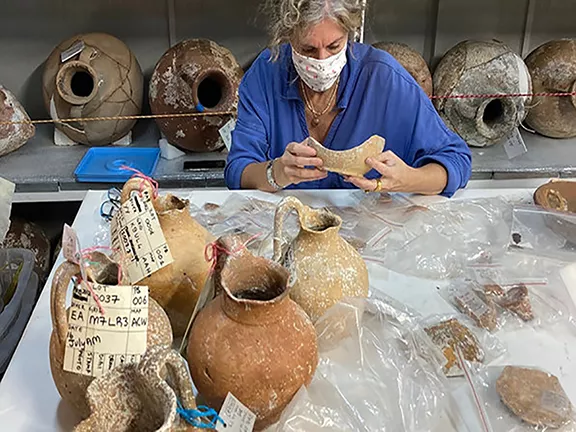
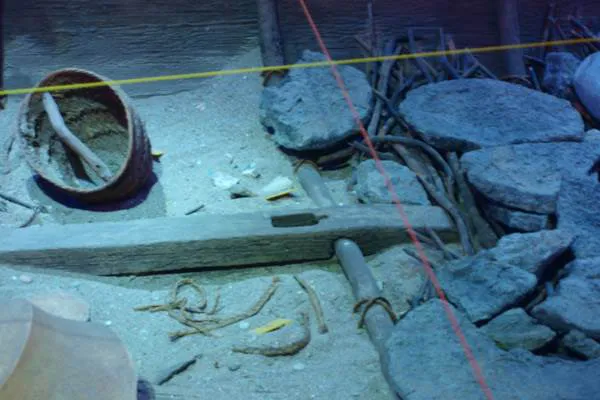
Over 7,000 ceramic fragments of amphorae, cooking pots, bowls, plates and cups have been recovered from the wreck (but also see note in Mazarron I article). The fragments have all been identified as Phoenician and many must relate to the crew's personal gear that give us a snapshot of the crew's last meal.
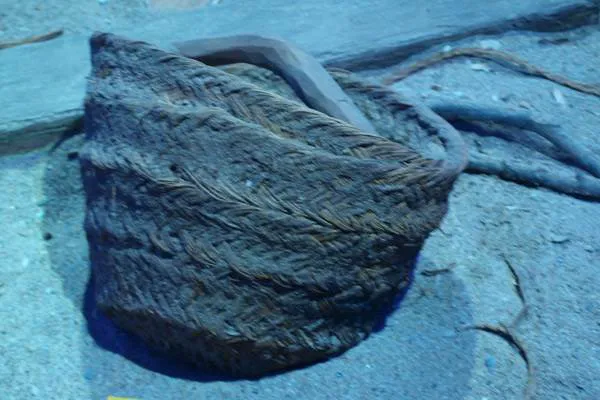
Sometime just prior to their craft sinking the crew had enjoyed a meal of lamb. Bones from that animal were found near the mast step and indicate the meat was salted to preserve it. Towards the bow of the boat was a grinding stone complete with a hand grinder. Clearly, the crew ground their own grain for porridge or bread. Whole grain was less likely to be spoiled at sea than pre-milled grain. An amphora of the Trayamar pattern, typical of Phoenician amphora from the seventh and sixth centuries BC was the only such container found on board. It probably held water for the crew. Alongside was a wicker basket with a wooden handle. It possibly held the grain.
In addition, some metal artifacts have been recovered including a silver scarab and a spearhead that is being compared with similar spearheads found along the so-called Atlantic Bronze Age trade routes.
What was the purpose of theMazarron II cargo?
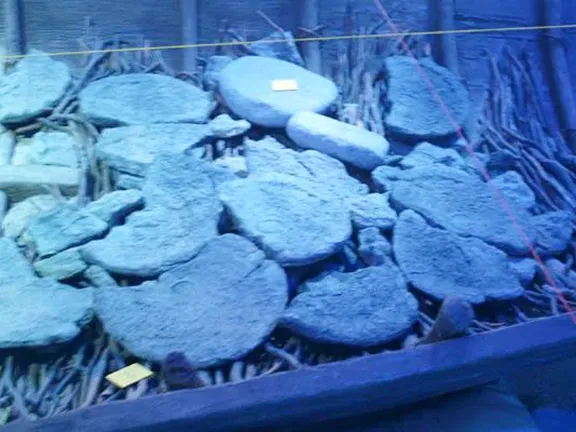
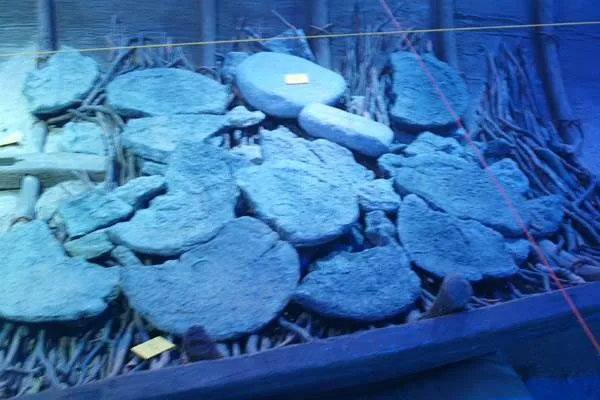
Why litharge was being transported instead of being refined on the spot is something of a mystery. Although pure lead can be refined from litharge, the process is more expensive in terms of fuel used and loss of lead through volatilization, than extracting lead from the native ore, galena, lead sulphide. It can only be assumed that the value of the silver extracted from the galena, on average about 5,000 parts per million or 0.5%, was so great at this time that it was worth using all the galena to produce silver and then going to the increased expense of transporting and refining the litharge for the far less valuable lead.
More analysis of the lead ingot cargo may reveal that the litharge cargo is simply lead that has oxidised beneath the seawater over a period of three thousand years or it is a product of the first cupellation process, in other words lead with a high silver content.
Where did the Mazarron II come from and where was it going?
From the very accomplished construction and the presence of a mast, it could be inferred that this 'lighter' would also have been used for short journeys up and down the coast. Some of the personal equipment belonging to the crew supports this supposition.
The presence of the 'Trayamar' amphora may give a clue as to the ship's origin. Trayamar was an important Phoenician settlement situated near Malaga. If so the vessel would have either passed or called in at Sexi, now known as Alumunecar, and Baria, the Phoenician settlement near present-day Villaricos, and may have been on its way to Ibiza.
Who Built Mazarron II?
An interesting study of the plant fibres used for stitching on Mazarron I (dealt with in more detail in the Mazarron I article) indicates that both boats may have been built locally.
Why did Mazarron II sink?
Political situation at the time
Where is the Mazarron II shipwreck and its cargo be seen now?
In November 2024, the last section of the boat was removed from the seabed and taken to the Underwater Archaeology Museum in Cartagena for further study. It should be on public view within five years at Cartagena or a purpose-built museum at Mazarron.
References
Ayuntamiento de Mazarron (2004). "Barcos Fenicios" [Phoenician ships]. Ayutamiento de Mazarron (in Spanish).
Ayuntamiento de Mazarron. Concejalia de Turismo. (2015). "Barco Fenicio de Mazarron". Visit Mazarron.
Lopez-Ruiz, Carolina; Doak, Brian R. (2022). The Oxford Handbook of the Phoenician and Punic Mediterranean. Oxford University Press. ISBN 978-0-19-765442-2.
Nutter N. (2018). Phoenicians in Andalucia | The Phoenician wreck of Mazarron II. https://www.visit-andalucia.com/phoenician-wreck-mazarron/