Contents
Where was the Gela 2 wreck found?
Who excavated the shipwreck?
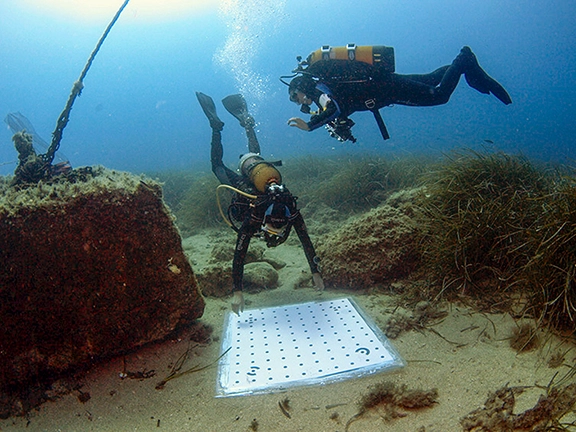
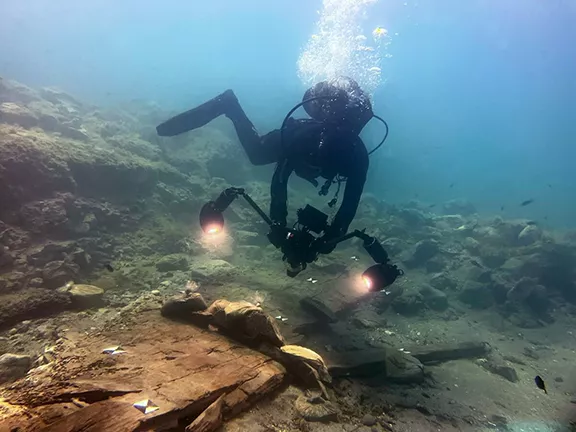
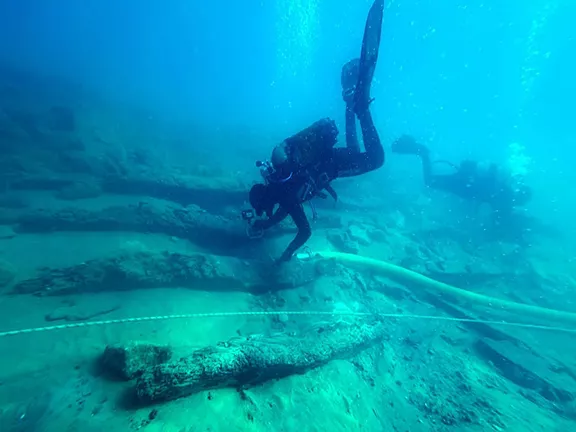
Systematic investigations began in the 1990s and continued with major recovery campaigns in 2015 and 2017, led by the Soprintendenza del Mare (Superintendency of the Sea of the Sicilian Region), formerly headed by the late Sebastiano Tusa. Recovery of the ship's entire wooden hull began in 2024 to facilitate its restoration and display.
When did Gela 2 sink?
How was the ship built and what were its dimensions?
The planking in the central portion of the hull is assembled by mortise-and-tenon joints, fixed with vertical wooden pegs set at regular intervals of about 20 cm. This type of spacing is considered characteristic of early examples of mortise joining.
A small tract of planking was held together not only with mortise joints but also with sewing, featuring the typical triangular recesses and remains of rope. The source suggests this sewn section might represent a repair. The use of two different techniques in the same ship is noted in other wrecks.
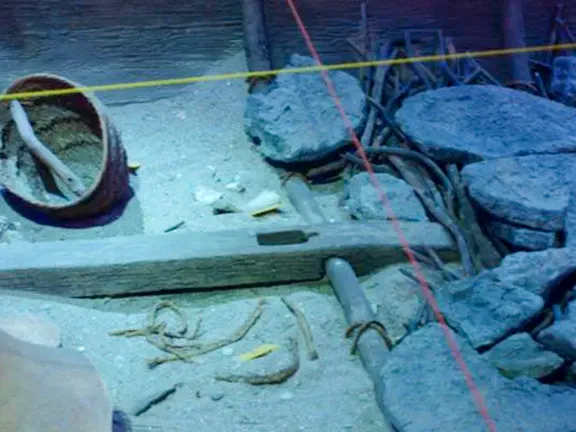
The ship rested flat on the bottom. The keel was likely torn off upon impact. A wooden element found (possibly a false keel) consisted of two pieces joined by mortise-and-tenon joints but lacked rabbets for plank assembly. It was excessively thick for a false keel compared to other wrecks.
A keelson has not been recovered, and the observed structure doesn't clearly indicate its presence or form. A wooden block with a recess for superstructure struts, similar to one found on the Gela 1 wreck, suggests a possible approach to keelson construction.
The skeleton of the ship had a wide frame space (60-70 cm). All floor timbers were complete with futtocks.
Floor timbers had a trapezoidal section with a rounded upper side. They were crossed by eight limbers. Floor timbers and futtocks were joined with hook timber scarf. Bronze nails with a square section held the floor timbers, futtocks, and planking together.
Along the deepest longitudinal axis, the floor timbers reached a height of about one-half metre, achieved by inserting two wooden planks below them, fixed with horizontal pegs.
Metal sheets (possibly lead) were found on the interior of the planking, fixed with small nails, and are thought to be internal reinforcement, perhaps from a repair.
A wooden palette, likely used to clean the limbers, was found still in position.
Wood analysis identified maple wood for the strut, holm-oak for the beam, tenon, and other fragments, and black pine for the planking. This shows the use of different wood species in construction.
The double curved bottom is seen as belonging to an advanced state of evolution in ship construction.
The co-existence of the two main techniques (mortise-and-tenon and sewing) in this wreck, located close to the first wreck built primarily by sewing, highlights that geographical and cultural factors, not just chronology, influenced construction methods.
Dimensions
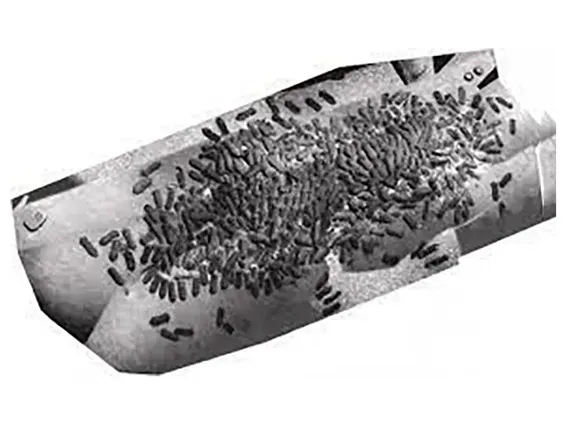
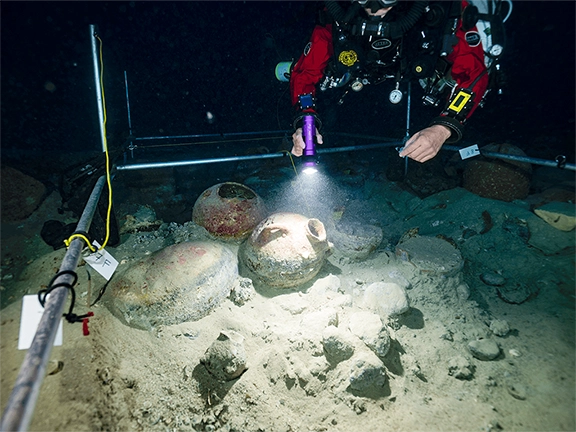
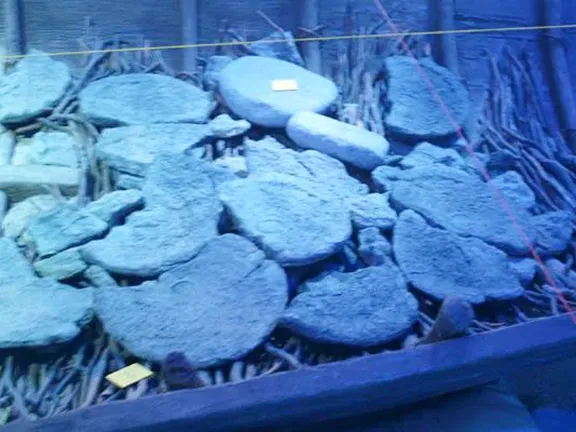
The area of the wreck covered by stones is roughly 7.5 x 9.5 metres with a maximum height of 1.5 metres. The stones themselves varied in size up to 60-70 centimetres in breadth.
The wide frame space was 60-70 cm.
Floor timbers reached a height of about one-half metre along the deepest axis.
Planking strakes are between 25 and 30 cm wide and 4.5 cm thick where measurable.
Vertical wooden pegs were set at intervals of about 20 cm.
The third floor timber brought to light was preserved for 3.80 metres.
The wooden block found had a recess measuring 13 x 5 cm.
The wooden palette for cleaning limbers had a central circular section with a diameter of 7 cm.
Based on the length of the floor timber investigated, the dimensions of the Gela 2 wreck were likely not much different from the Gela 1 wreck, which is estimated to be 17 metres long.
What was the ship’s cargo?
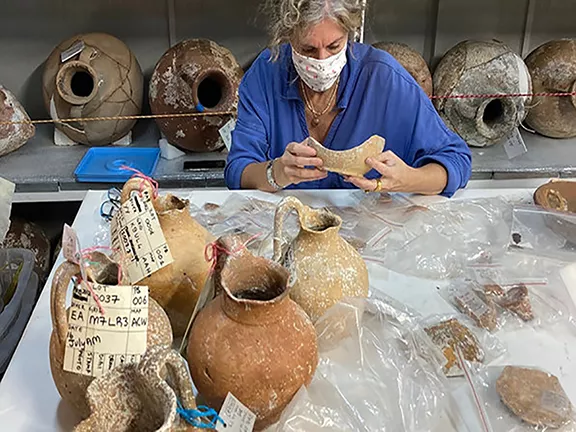
The cargo recovered from this wreck, found in and among/below the ballast stones, included:
Ceramic Materials: A variety of types, though largely fragmentary. These included fragments of Corinthian Type A and more numerous Corinthian Type B amphora handles. Imported materials included the base of an Attic black figure skyphos (datable between 490-480 B.C.), a small black glaze jar (fifth century B.C.), two rim fragments from Laconian kraters, the base of an Attic black glaze skyphos (comparable to types dated to 450 B.C.), and a fragment from the belly of an Attic red figure krater (datable to 450 B.C.). The presence of some items dating to the Archaic period or the fourth century B.C. on a wreck from the third quarter of the fifth century B.C. is noted as potentially reflecting heirlooms or the persistence of types in circulation.
Military Gear: Several remarkably well-preserved Corinthian helmets.
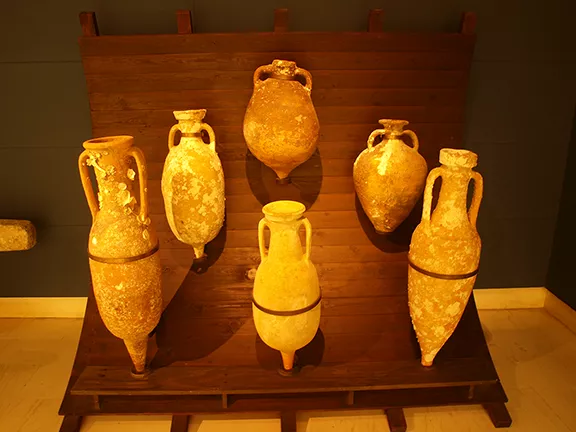
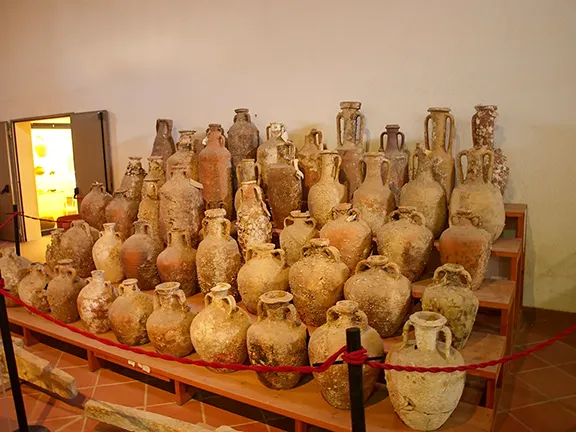
Transport Containers: Amphorae of various types, separated by packing branches.
Containers and Foodstuffs: At least one basket woven from plant-fibre, similar to those on the first wreck, likely containing foodstuffs.
Bones of cattle and chickens that had been butchered and brought on board as food for the crew.
Peach and plum pits, and grains of wheat found scattered. Some wheat grains, along with pinenuts, beans, and grape pits, were found in a small olpe. The scattered wheat suggests grain supplies may have been carried for baking bread for the crew.
Ship's Supplies and Furnishings: Two globular jars, several pitchers, undecorated olpai, undecorated lekanai, and various two-handled cups (some slipped).
Three lamps, one with a support comparable to fourth-century B.C. types.
A wooden stylus, indicating the presence of a merchant. A lead ring.
A loom-weight.
A wooden palette, likely used to clean the limbers, found still in position.
The findings on Gela 2, including the mix of ceramic dates, highlight ongoing questions about the circulation and longevity of ceramic types.
The Phenomenal Cargo: Orichalcum Ingots
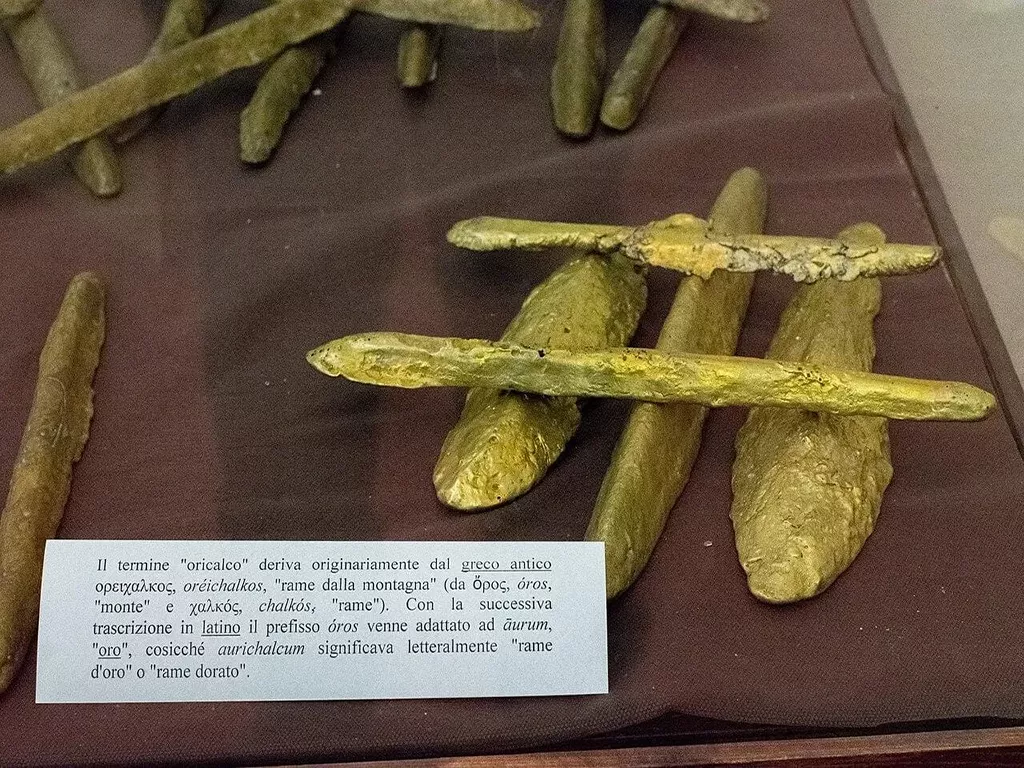
The Metal: Divers recovered a total of 86 ingots of a brass-like alloy, which archaeologists identified as orichalcum (or oreikhalkos).
Composition: Analysis (using X-ray fluorescence) showed the ingots were composed of about 75–80% copper and 15–20% zinc, with traces of other elements like lead and nickel. This composition is consistent with a brass alloy made using the cementation process (a technique known in antiquity).
The Legend: Orichalcum is the metal mentioned by Plato in his dialogue Critias, where he describes it as being second only to gold in value and used to clad the walls of temples in the mythical city of Atlantis. The discovery of such a large quantity of this metal in ingot form is considered unique and significant.
Purpose: The ingots were likely transported from Greece or Asia Minor and were destined for the wealthy workshops and trade of Gela to be crafted into high-quality decorative and luxury items.