Contents
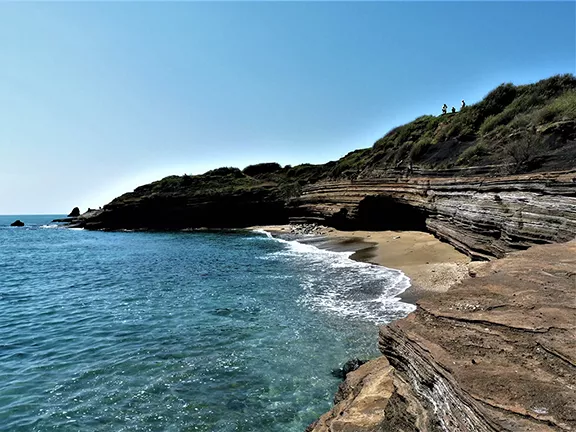
Where was the wreck found?
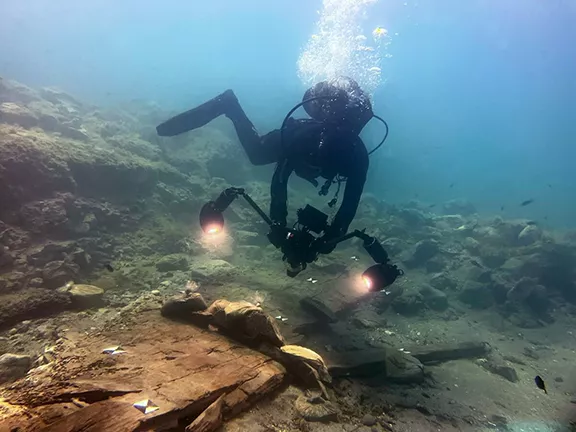
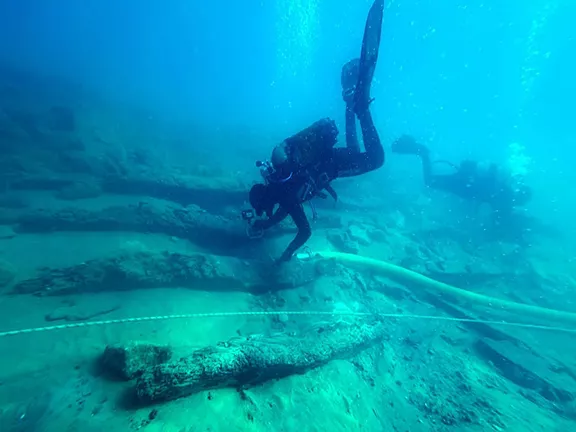
About the wreck site
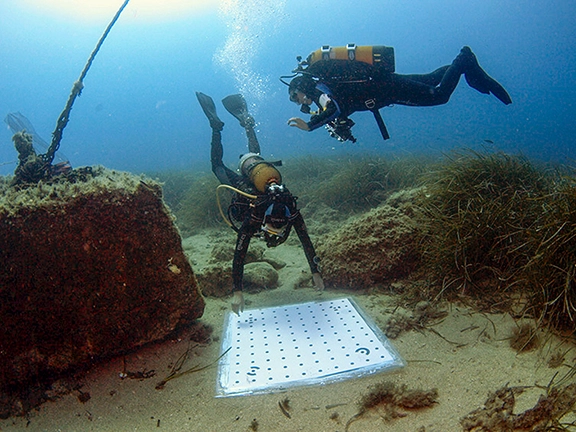
Who excavated the shipwreck?
Mostly working in the field of marine archaeology, Galili, E. (Ehud Galili) is an underwater archaeologist, researcher, and lecturer at the University of Haifa's Department of Maritime Civilisations and the Leon Recanati Institute for Maritime Studies, Research Associate at the University of Haifa's Zinman Institute of Archaeology. He is an Emeritus Senior Marine Archaeologist and Researcher with the Israel Antiquities Authority, where he founded and served as the first director of the marine unit from 1990 to 2004.From 2004 to 2021, a member of the National Committee for the Protection of the Coastal Environment.
When did the wreck sink?
How was the ship built and what were its dimensions?
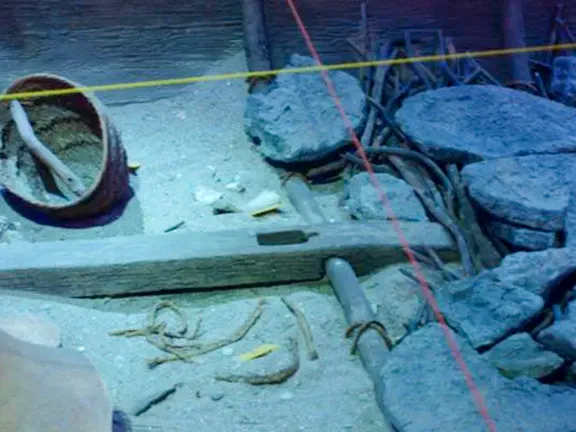
Wood-and-Lead Anchor: A large, composite anchor with a wooden shank and a lead stock was recovered, which is characteristic of Levantine (including Phoenician) technology from this era.
Hull Design: The analysis of the remains and related materials helped define the characteristics of the Phoenician merchant ship, generally thought to be a broad, rounded hull design built to maximise cargo capacity over speed.
What was the ship’s cargo?
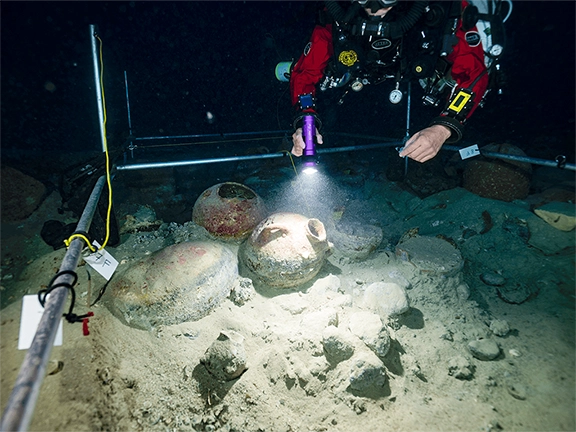
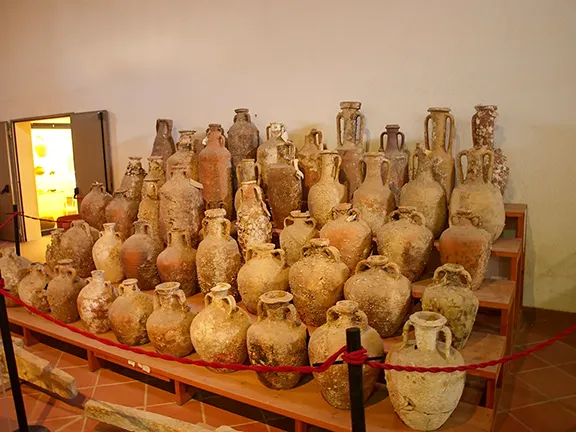
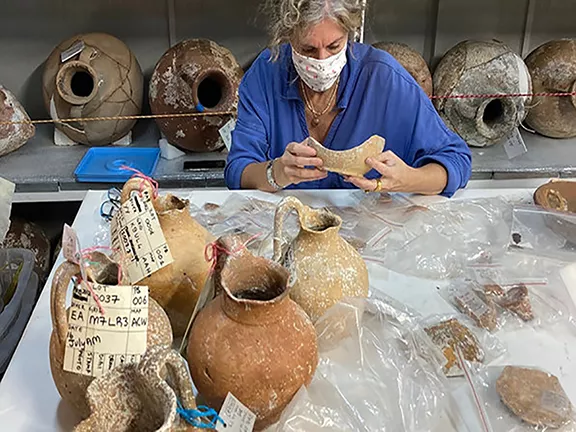
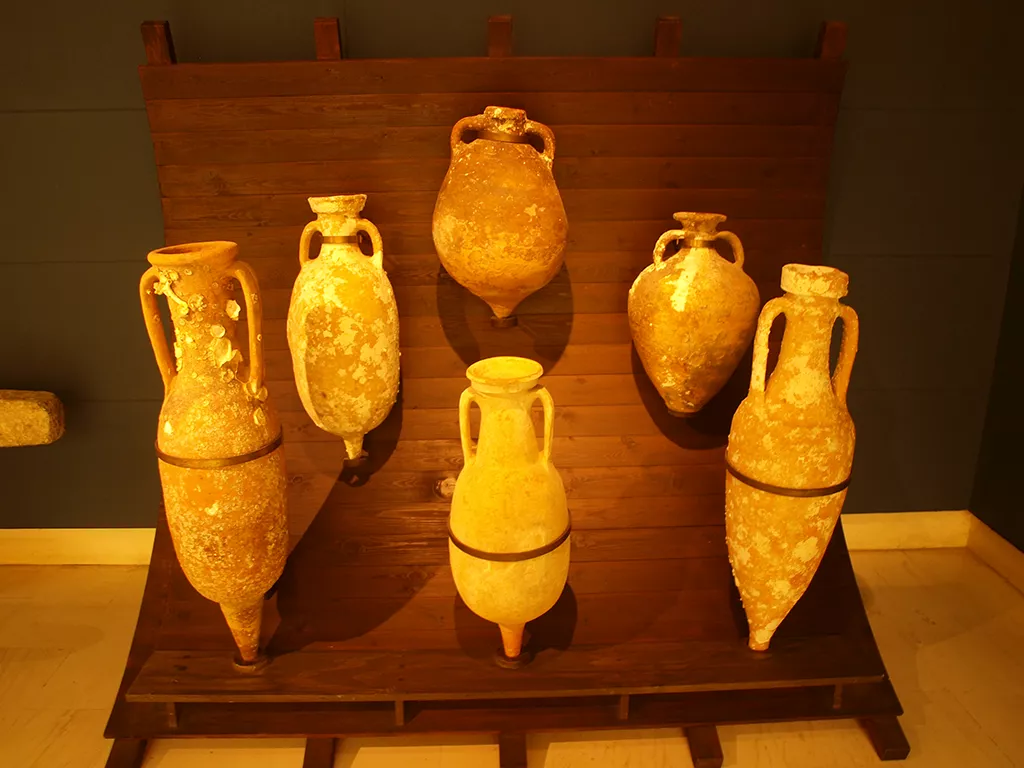
Storage Jars (Amphorae): A major component of the cargo consisted of various types of Phoenician amphorae. These large ceramic containers were used to transport bulk commodities like wine, oil, or resin.
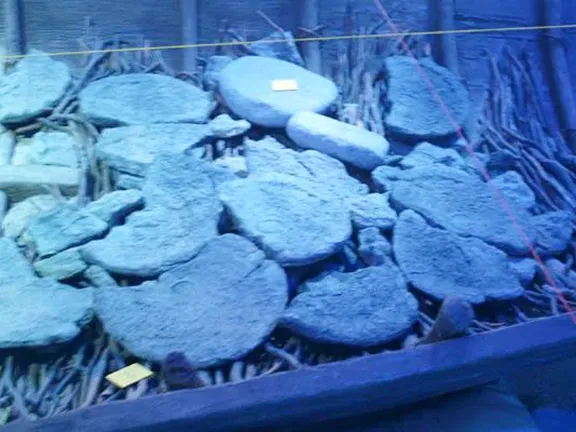
Stone Anchors: The ship carried at least five large stone anchors, which are typical of the period and represent the ship's anchoring gear.
Ballast Stones: Numerous small, rounded ballast stones were found.
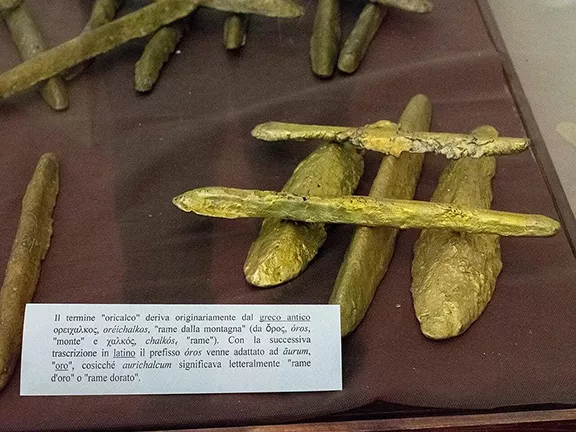
Copper Ingots: Although the primary cargo was amphorae, the presence of copper ingots hints at the trade in raw metals, which was a fundamental part of the Phoenician economy, linking the metal-rich West with the eastern Mediterranean.
The well-dated and mixed cargo provides a snapshot of the goods being moved by the Phoenicians, who were the foremost maritime traders and colonisers of the Mediterranean during the Iron Age.
Ongoing Research
Where can the wreck and its cargo be seen?
Galili, E., & Rosenfeld, A. (1985). The Carmel Atlit shipwreck: A Phoenician merchant vessel of the 8th century B.C. International Journal of Nautical Archaeology and Underwater Exploration, 14(4), 299-322.
Gubel, E. (2004). The Phoenician ships of the Carmel Atlit shipwreck. In S. Gibson & J. Morrison (Eds.), Ancient Mariners: Seafarers and Seafaring in Pre-Classical Mediterranean (pp. 177-186). BAR British Archaeological Reports International Series, 1254.