Contents
6th Century BC Shipwreck Discovered off the Shores of Sicily
A Volunteer's Crucial Role
Unearthing the Ispica
Ancient Naval Architecture and Rare Finds
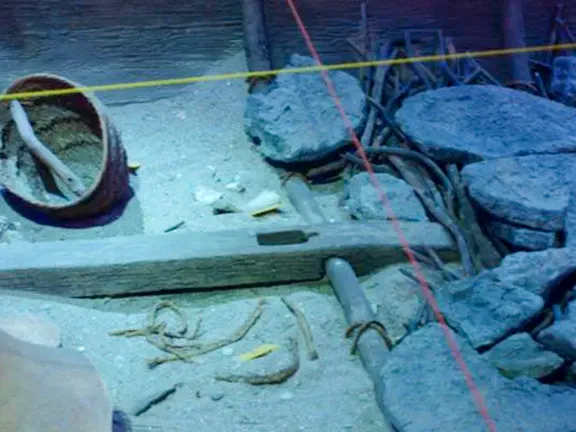
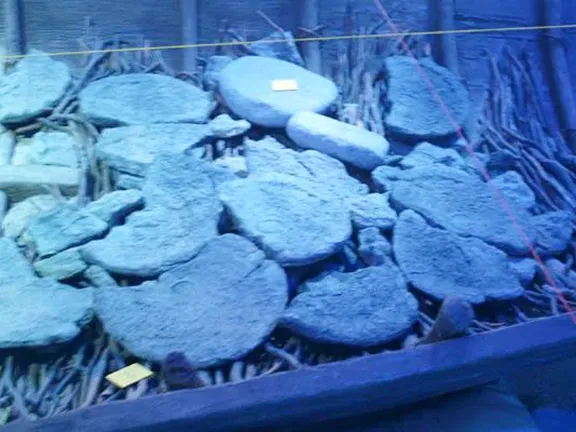
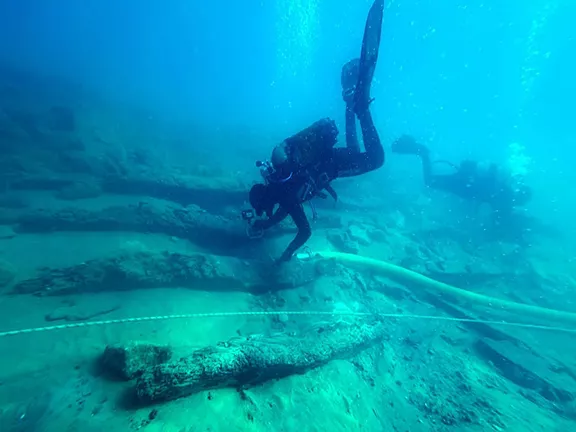
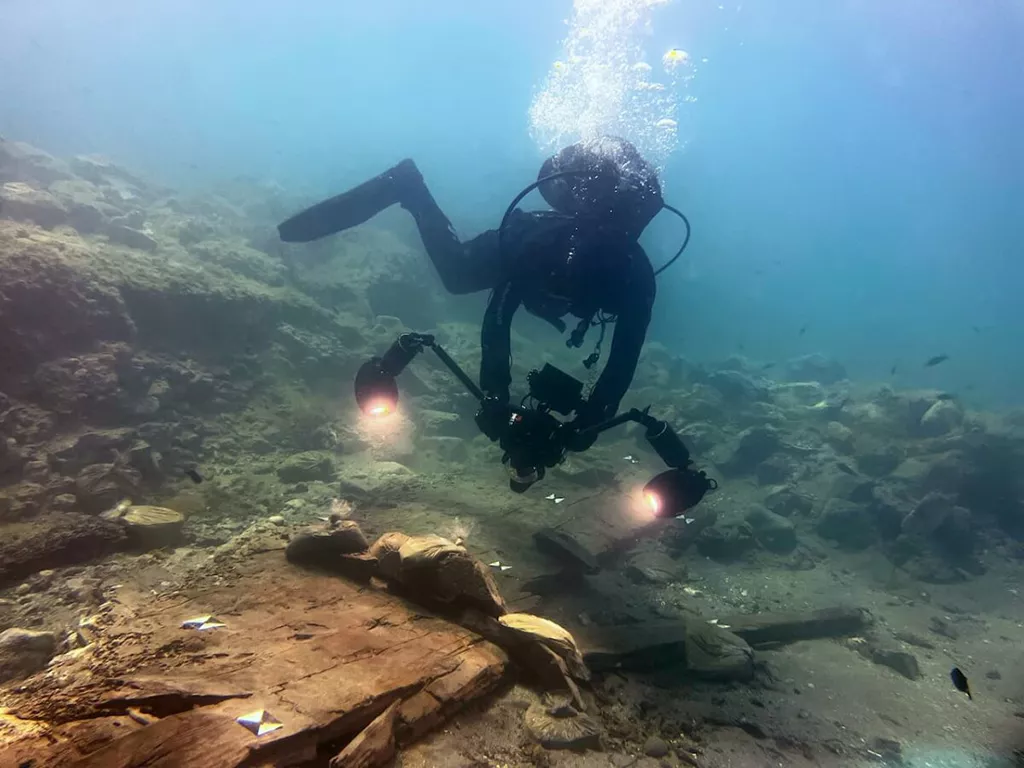
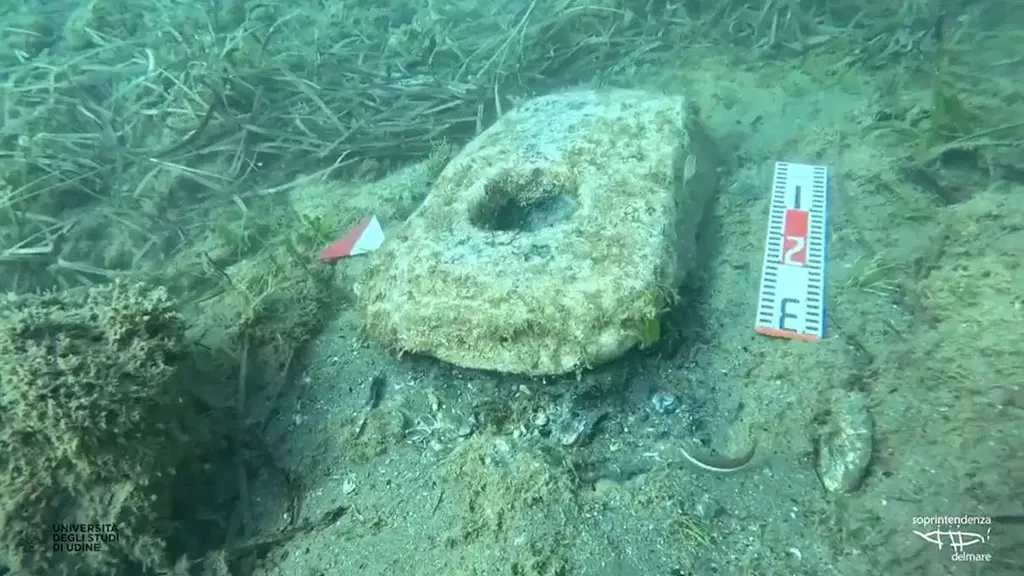
This sophisticated early engineering provides invaluable insights into the nautical skills of the era. Among the most astonishing discoveries from the 2025 campaign were a mast—a component rarely found preserved in ancient shipwrecks—and a section of rope in excellent condition. "With a careful approach, we managed to document new and significant parts of the wreck, such as the mast—which is extremely rare to find preserved," Professor Capulli remarked.
While some reports also mention the discovery of a "ship's wheel" alongside the keelson, it is important to clarify that ancient Greek ships did not use steering wheels as we know them today. Steering wheels became common only in the 18th century AD. Ancient vessels relied on large steering oars, or quarter-rudders, mounted on the stern. The "wheel" found likely refers to another circular component of the ship's internal structure, its precise function still under investigation.
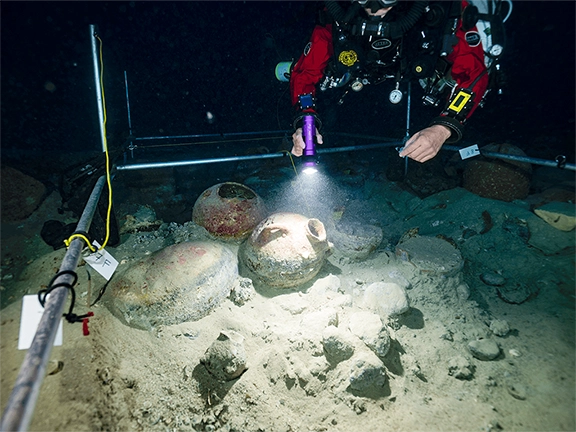
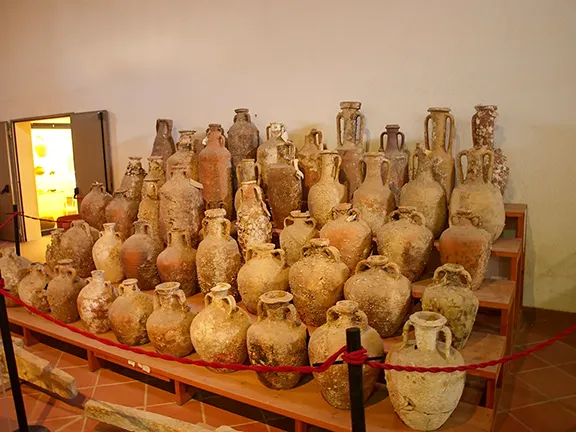
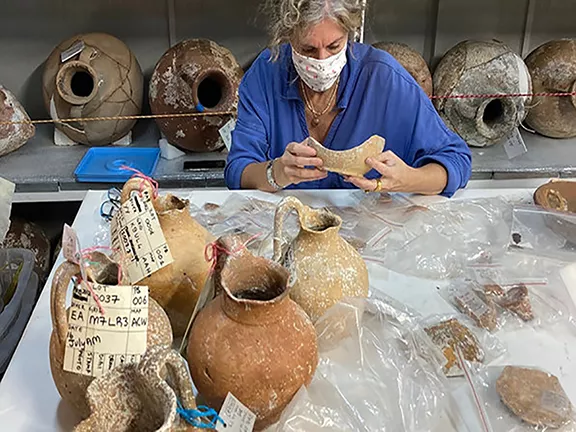
Artifacts from the Ispica wreck
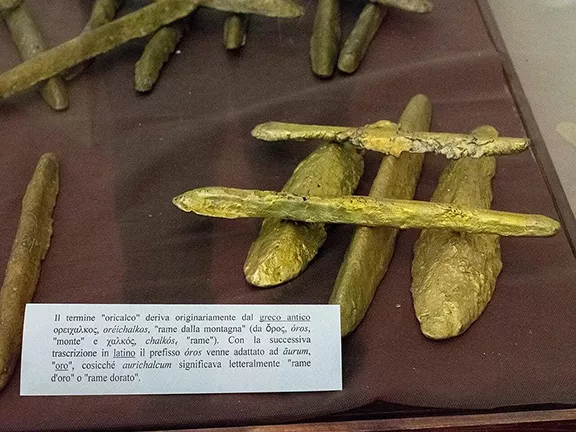
Anchors Across Millennia
Sicily: A Crossroads of Ancient Civilizations
This period saw a fierce, often violent, competition for control of lucrative trade routes and resource-rich territories among three formidable maritime powers: the Etruscans, the Greeks, and the Carthaginians.
The Etruscans, based in central Italy, built their wealth on abundant metal resources, particularly iron from Elba, and exported agricultural goods like grain, olive oil, and wine, alongside their distinctive bucchero pottery across the Mediterranean. Their trade network, though decentralized among independent city-states, reached as far as Egypt, the Baltic, and even inland Europe via Massalia.
Meanwhile, Greek colonization exploded across the Mediterranean. By 500 BC, Greeks had established some 500 colonies, accounting for an astonishing 40% of all Hellenes in the ancient world. They strategically founded settlements like Syracuse and Gela in Sicily, transforming southern Italy and Sicily into "Magna Graecia" or "Greater Greece." These colonies served as vital trade centres, exporting fine pottery, wine, and olive oil, while importing essential raw materials such as timber and metals. This aggressive expansion, driven by economic opportunity, inevitably brought them into direct conflict with established powers.
Carthage, a powerful Phoenician offshoot in North Africa, emerged as the dominant maritime force in the western Mediterranean during the 6th century BC, controlling vast territories from Tripolitania to southern Spain, including western Sicily and Sardinia. Their strategic location and superior harbour allowed them to fiercely guard a lucrative trade monopoly, extending even to the Trans-Saharan routes that brought gold, ivory, and slaves from tropical Africa. Carthaginian merchants exported manufactured goods and salt fish, reaching markets as distant as Corinth in Greece, the Levant and Egypt. Unlike the more decentralized Greek or Etruscan trade, Carthage's commerce was a centrally managed and strategically enforced component of its state power, making them a formidable and often aggressive competitor.
These overlapping interests and ambitions frequently escalated into open conflict. Recognizing the growing Greek threat, Carthage forged an anti-Greek alliance with the Etruscans, who at the time held significant influence over Rome. This alliance directly countered the westward push of Greek colonies like Massalia. Conflict was inevitable and the two forces met at the Battle of Alalia, fought around 540-535 BC off Corsica. Here, a combined Etruscan and Carthaginian fleet of 120 ships clashed with 60 Greek Phocaean vessels. Though the Greeks achieved a tactical victory, driving off the allied fleet, they suffered devastating losses, with nearly two-thirds of their ships destroyed. The historian Herodotus famously called it a "Pyrrhic victory."
This costly engagement forced the Greeks to abandon Corsica, which then fell under Etruscan control, while Carthage solidified its hold on Sardinia and parts of southern Spain. Such conflicts, including earlier clashes like the one near Lilybaeum in Sicily in 580 BC where Phoenician cities allied to defeat Greek forces, underscore the pervasive nature of this ancient competition, where economic rivalries constantly reshaped the balance of power across the Mediterranean.
Sicily remained a consistent battleground. For centuries, Greeks and Carthaginians fought intermittently for control of the island's territory and the allegiance of its indigenous populations. While the 6th century BC saw these rivalries simmer, the stage was set for larger conflicts, such as the Battle of Himera in 480 BC, where a great Carthaginian army suffered a significant defeat at the hands of the western Greeks. Interestingly, this battle was allegedly fought on the same day as the naval Battle of Salamis between Greek city states and Persia.
The comprehensive study of the Santa Maria del Focallo shipwreck will thus contribute substantially to a more granular understanding of the broader economic and political landscape of the Archaic and Classical Mediterranean. It illustrates how maritime commerce functioned and adapted amidst significant political and military tensions, offering insights into the resilience and strategies of ancient seafaring communities in a contested region long before Rome's rise to dominance.
Francesco Paolo Scarpinato, Sicily's regional councillor for cultural heritage, aptly described the discovery as an "extraordinary contribution to the knowledge of the maritime history of Sicily and the Mediterranean". He added that the wreck is a "precious piece of the submerged Sicilian cultural heritage," highlighting the island's central role in ancient traffic and cultural exchanges.
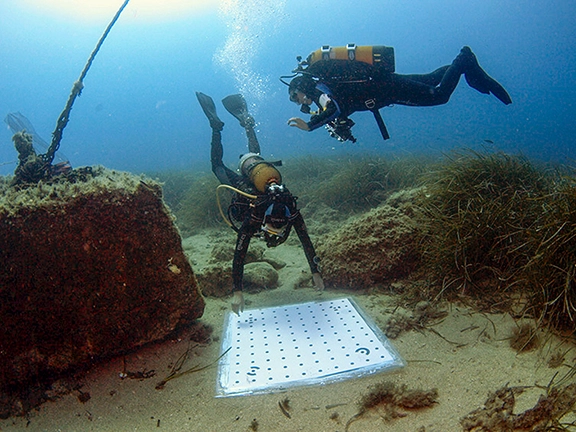
The Kaukana Project: Searching for Sicily’s Submerged Heritage
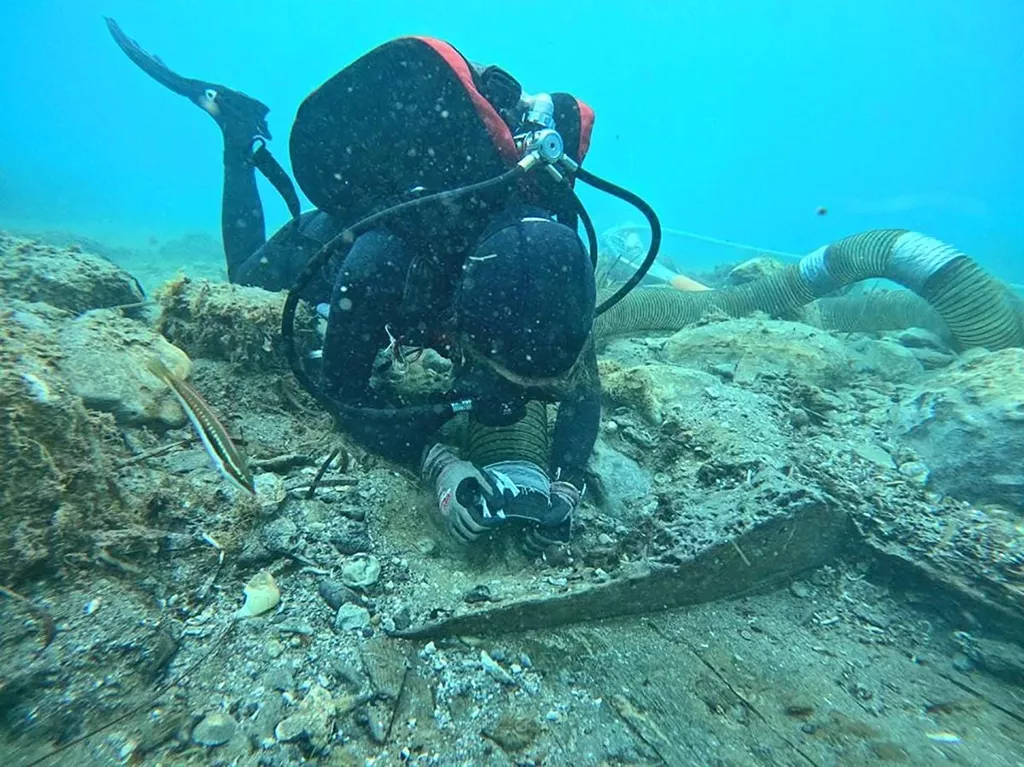
The project even extends to public engagement, with the University of Udine collaborating with Martin Scorsese's Sikelia Productions on a docufilm titled "Shipwreck of Sicily," which includes footage from the Ispica excavation.