Contents
Kepçe Burnu Shipwreck 650 – 600 BC
Site Context and Discovery
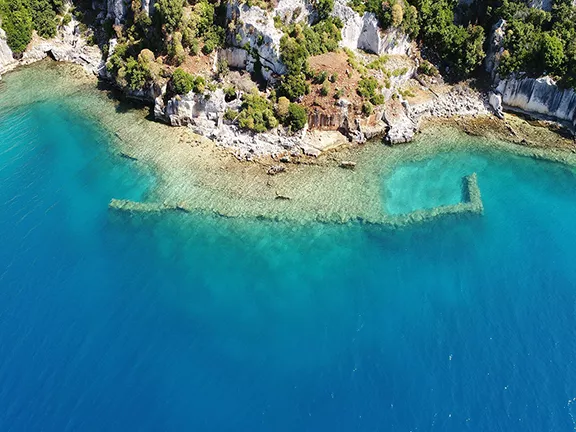
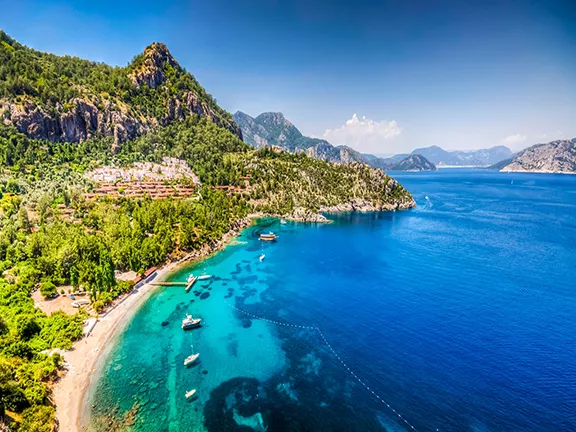
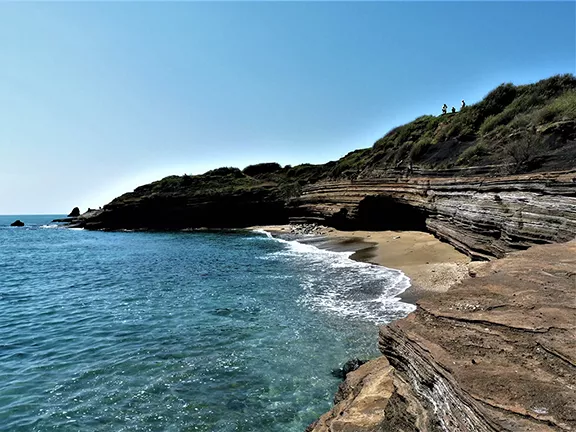
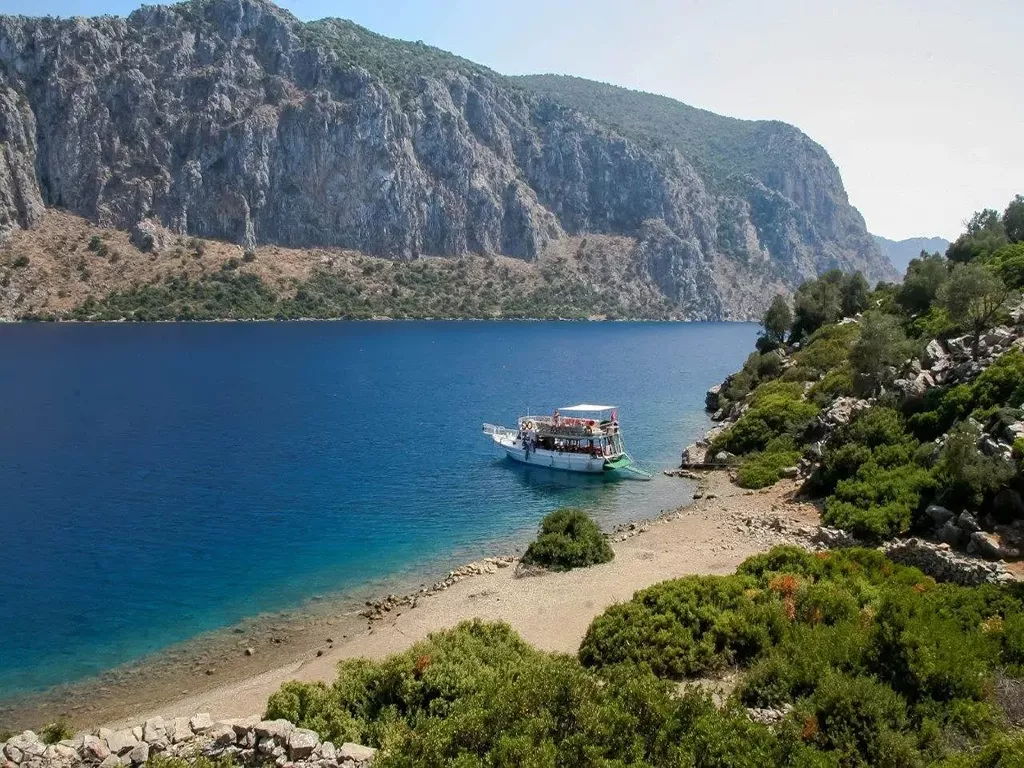
The site is located along the northern shore of the Gulf of Gökova. Like the other two vessels, this wreck highlights the importance of the Turkish coast in the developing long-distance economic network of the Early Archaic period.
Dating and Site Condition
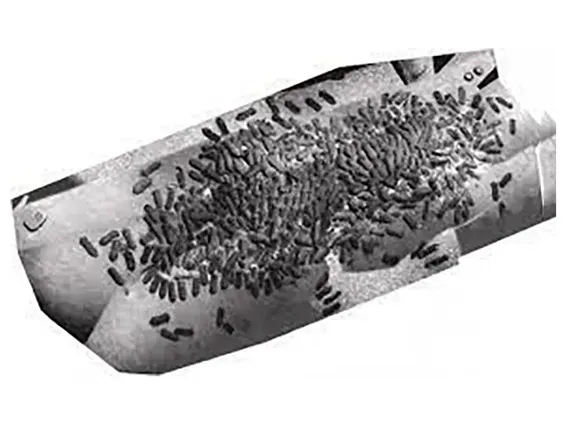
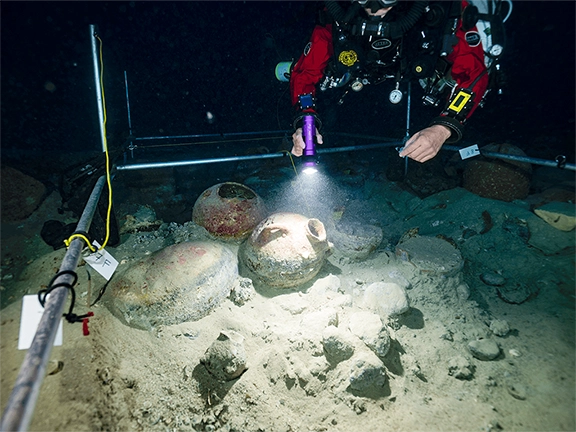
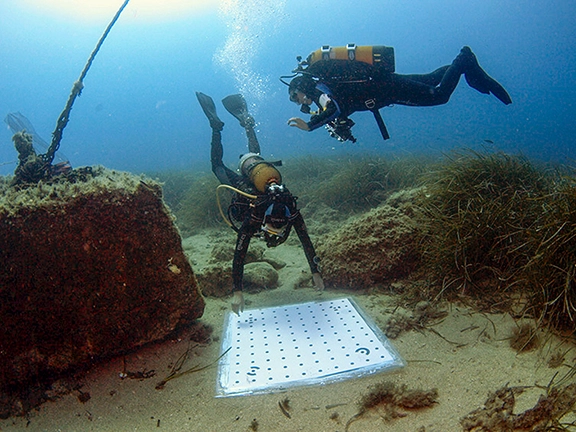
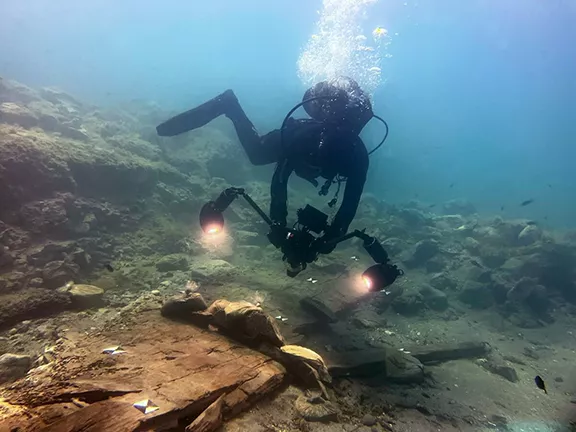
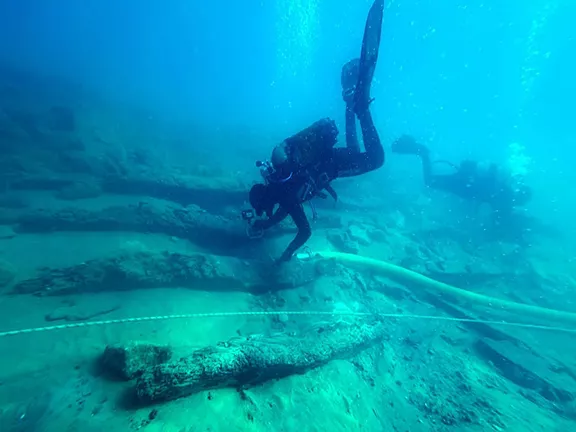
The site itself is shallow, which has negatively impacted preservation. The 2010 survey observed a scatter of heavily broken material extending from a depth of approximately 5 metres down the slope into the sea grass beyond 10 metres. The ceramics are consequently very poorly preserved due to the dynamic nature of the shallow site.
Cargo on the Kepçe Burnu
The composition of the visible cargo includes:
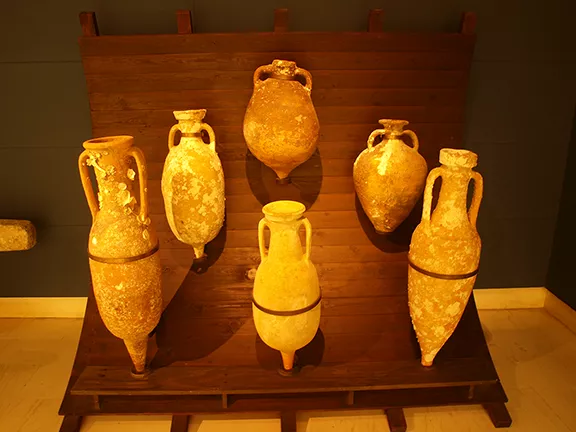
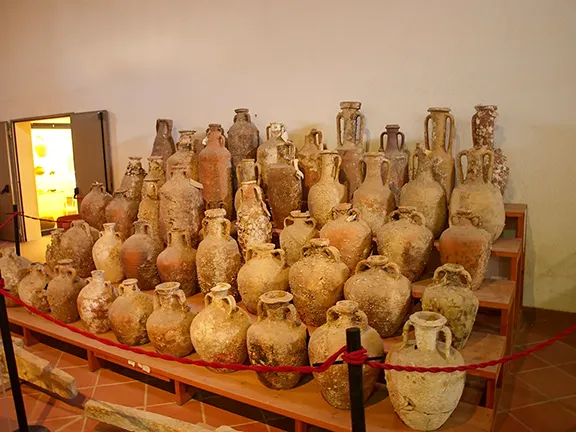
Cypro-Levantine Basket-Handle Amphoras: This is the primary cargo.
Southeast Aegean Amphora: Fragments of at least one were counted among the remains.
Mortarium: At least one shallow bowl (used for food preparation and dry goods measurement) was counted among the remains.
Petrographic Analysis of Cargo Samples
Cypro-Levantine Basket-Handle Amphoras
Sampling: Nine basket-handle amphoras were sampled during the 2010 survey.
Manufacture and Appearance: The jars show unevenness in their manufacture and diversity in colour, ranging from red brown to light yellowish-green in plane polarized light. The yellowish-green colour is indicative of a high-fired calcareous fabric.
Mineralogy: On the whole, the mineralogy is generally similar to the amphoras analysed from Kekova Adası and, despite having a somewhat finer fabric, to those from the necropolis of Salamis on Cyprus.
Inclusions: The samples are characterized by textural concentration features and poorly sorted inclusions. The primary inclusions are micritic limestone, monocrystalline quartz, microfauna, and a variety of small and often altered igneous rock fragments. Lesser quantities of serpentine, small opaques (iron oxides?), amphibole, chert, and some feldspar are also present.
Sourcing: Based on the available geological and archaeological evidence, as well as typological comparanda from early Archaic tombs in the necropolis of Salamis, Cyprus (and perhaps eastern Cyprus more specifically) appears to be the most likely source for this group.
Mortarium
Sampling: The single mortarium discovered was sampled.
Fabric: The mortarium appears very similar to the fabric group defined by the basket-handle amphoras, falling within the broad spectrum. However, it is somewhat coarser and features rather densely packed inclusions, particularly medium quartz, micritic limestone, and microfossils. It is unclear whether this coarser variant resulted from additional temper or simply less levigation (the process of refining the clay).
Sourcing: Like the amphoras, Cyprus (likely eastern Cyprus) is the most probable source for the mortarium. The fact that the mortaria appear in fabrics identical or obviously related to the basket-handle amphoras underscores that related economic mechanisms were at work in the transport of both the bowls and the processed agricultural goods carried in the amphoras.
Southeast Aegean Amphora
Condition: Only a single southeast Aegean amphora was discovered; it was fragmentary and could not be fully documented.
Fabric: The sample raised reveals a fabric with distinct similarities to one of the southeast Aegean amphoras analyzed from Kekova Adası (Sur.008).
Mineralogy: It is medium grain, red brown to light greyish tan, optically inactive, with few vughs and poorly sorted inclusions. The primary inclusions include monocrystalline quartz, micritic limestone, and some plagioclase. Also visible are some amphibole and mica (mostly biotite), as well as small bits of phyllite.
Sourcing: This specific fabric is not particularly close to Whitbread’s “Samian” amphora. Based on petrography and typology, the origin for this form is suggested to be generally in the southeast Aegean region, though a more specific location cannot currently be proposed.
Route taken by the Kepçe Burnu ship
References
Authors:
Dr. Justin LEIDWANGER: Affiliated with the Institute for the Study of the Ancient World, New York University, located at 15 East 84th St., New York, NY 10028/USA.
Asst. Prof. Dr. Harun ÖZDAŞ: Affiliated with the Institute of Marine Sciences and Technology, Dokuz Eylül University, located at Baku Boulevard Nr.100, İnciraltı 35340, İzmir/TURKEY.
Assoc. Prof. Dr. Elizabeth S. GREENE: Affiliated with the Department of Classics, Brock University, located at 500 Glenridge Avenue, St Catharines, Ontario L2S 3A1/CANADA.