Contents
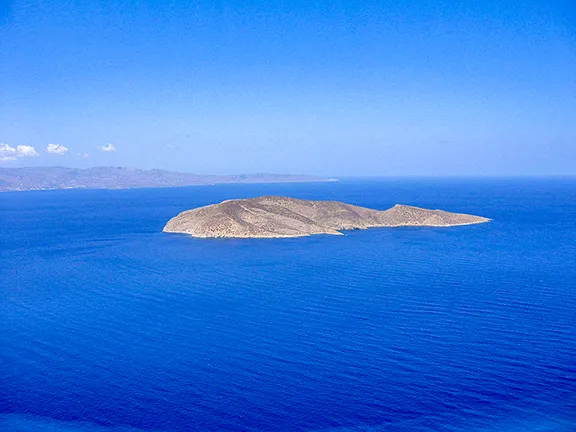
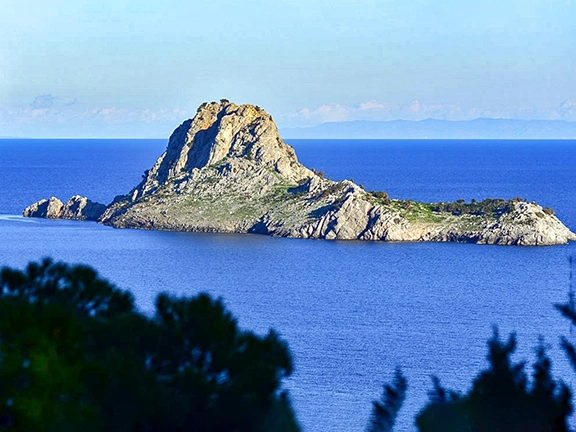
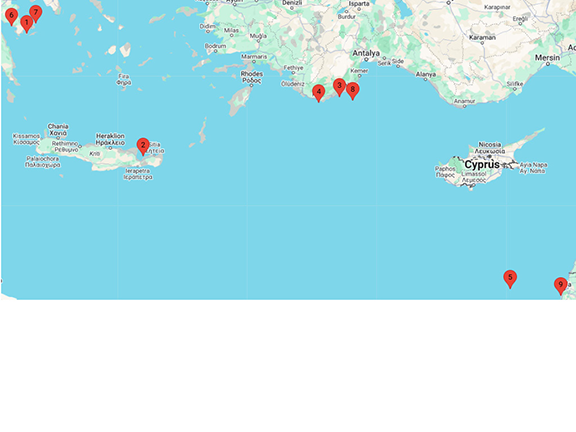
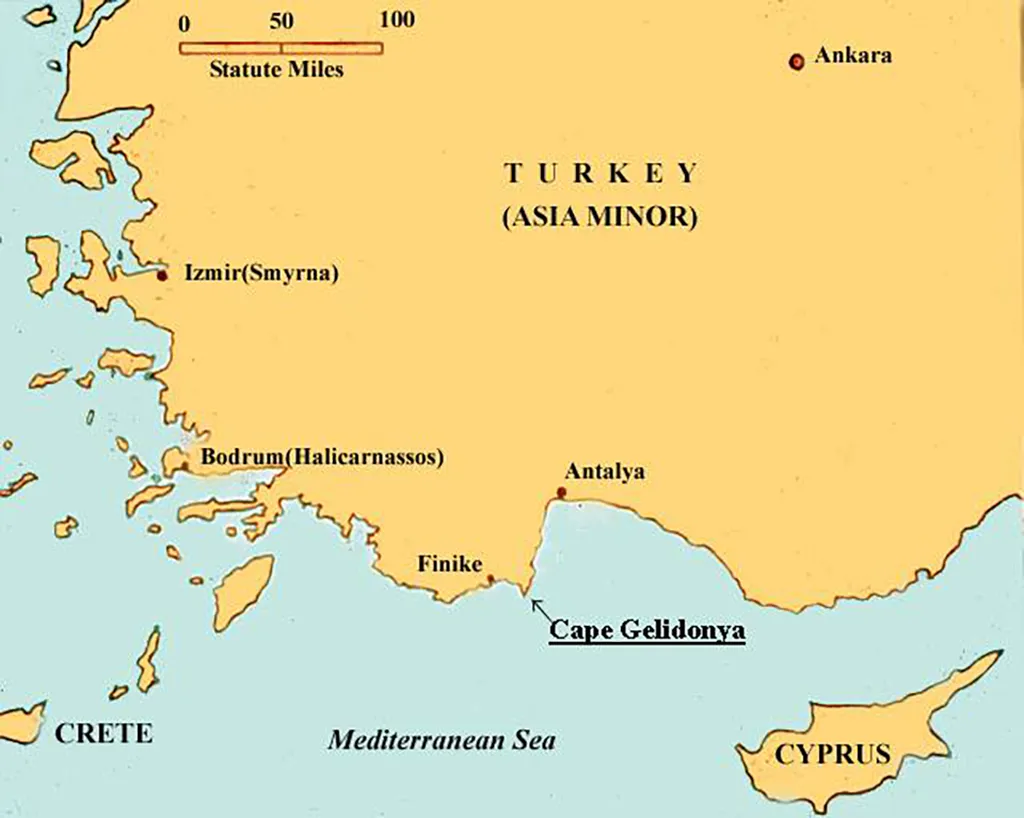
Where was the Cape Gelidonya shipwreck found?
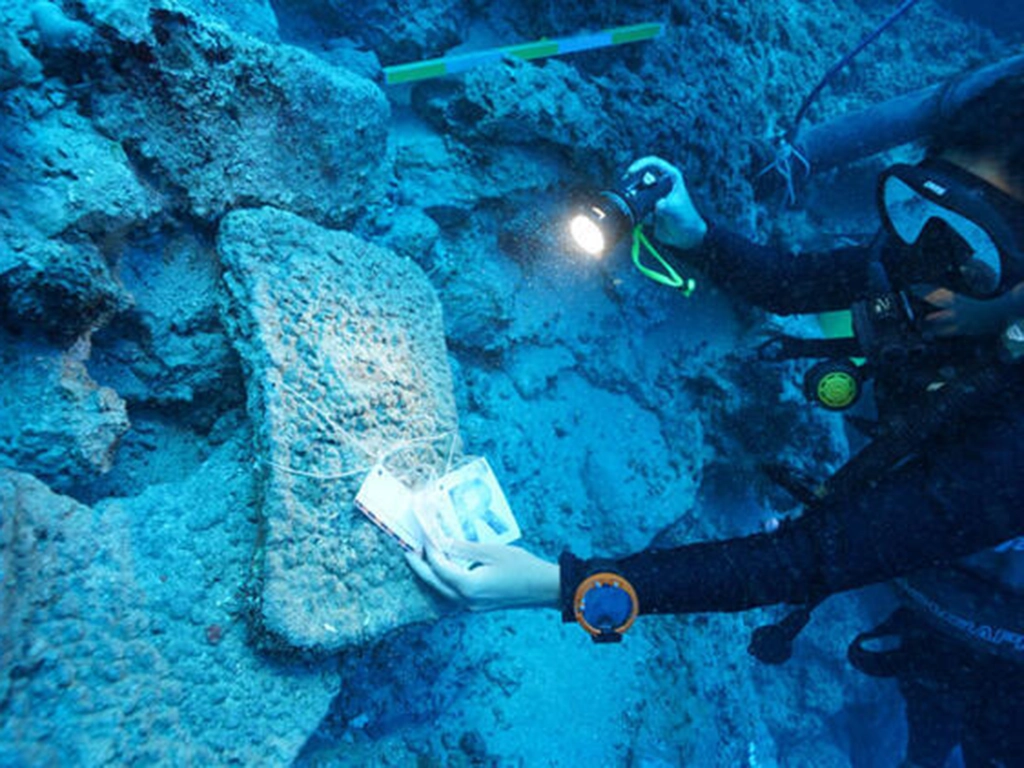
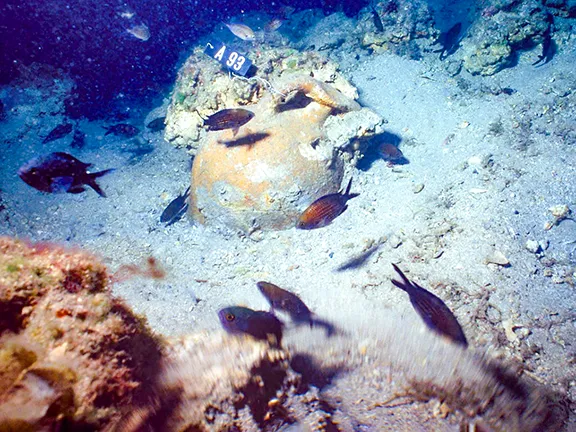
About the Cape Gelidonya wreck site
Who found the Cape Gelidonya shipwreck?
Aras was diving for sponges when he spotted a large pile of metal ingots on the seabed. He realized that he had discovered an ancient shipwreck, and he reported his find to American journalist and amateur archaeologist Peter Throckmorton.
Throckmorton was cataloguing ancient wrecks along the southwest Turkish coast at the time. He was able to locate the site in 1959 and, recognizing its great age, asked the University Museum of the University of Pennsylvania if it would organize its excavation.
Who excavated the Cape Gelidonya shipwreck?
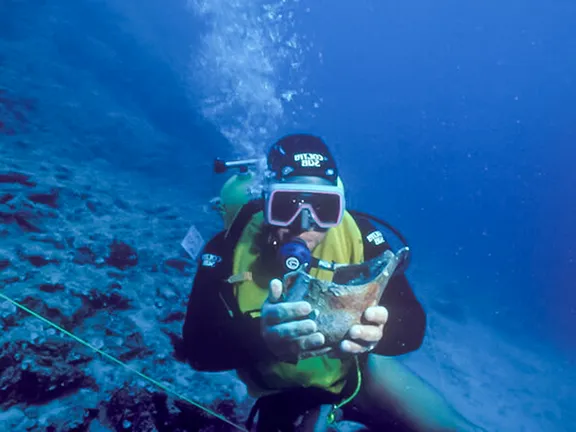
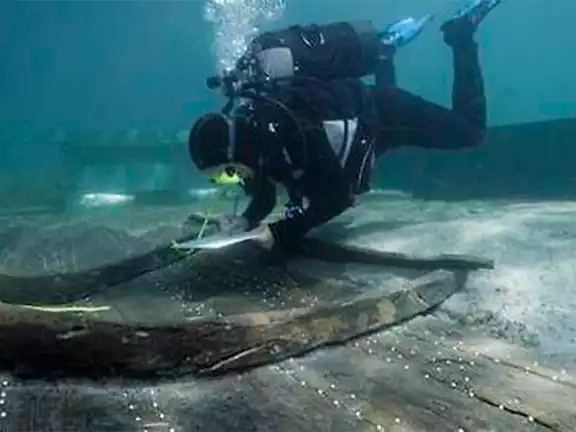
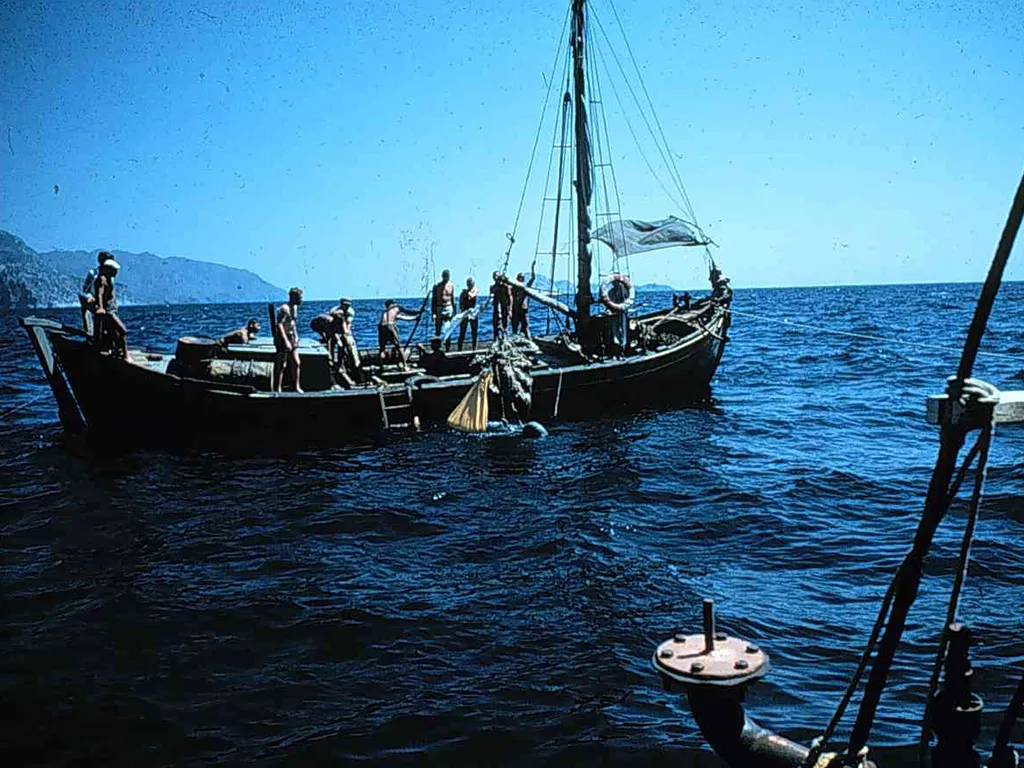
In addition to the 1960 excavation, there have been several other surveys and excavations at the Cape Gelidonya shipwreck site. In the 1980s and 1990s, teams of archaeologists conducted surveys of the site, and in 2010, a team from the Institute of Nautical Archaeology conducted another excavation.
When did the Cape Gelidonya wreck sink?
How was the Cape Gelidonya ship built and what were its dimensions?
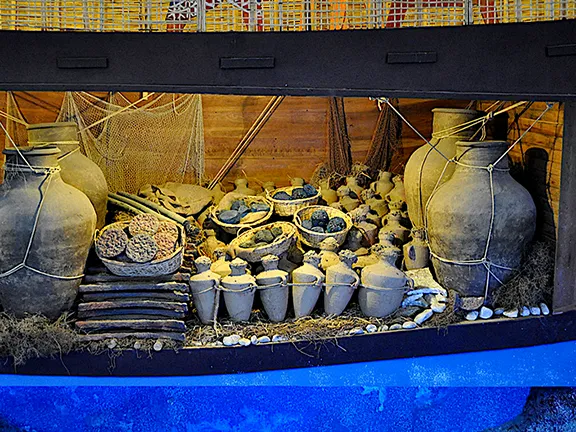
Furthermore, its brushwood dunnage gave for the first time meaning to the 'wattle fencing' Odysseus placed in a vessel he had built in the Odyssey. Dunnage is material such as straw or in this case brushwood placed around a cargo to prevent damage. It should be noted how well our ship fits the description of the small boat (not, it would seem, a raft) built by Odysseus with the aid of Calypso.
The ship's hull was made of pine wood, and the deck was made of cypress wood.
The ship was also equipped with a mast and a sail.
The Cape Gelidonya ship was approximately 15 meters long and 4 meters wide. It had a capacity of about 10 tons.
Who were the people who owned and operated the ship?
Where did the crew of the Cape Gelidonya shipwreck originate?
What was the cargo on the Cape Gelidonya shipwreck?
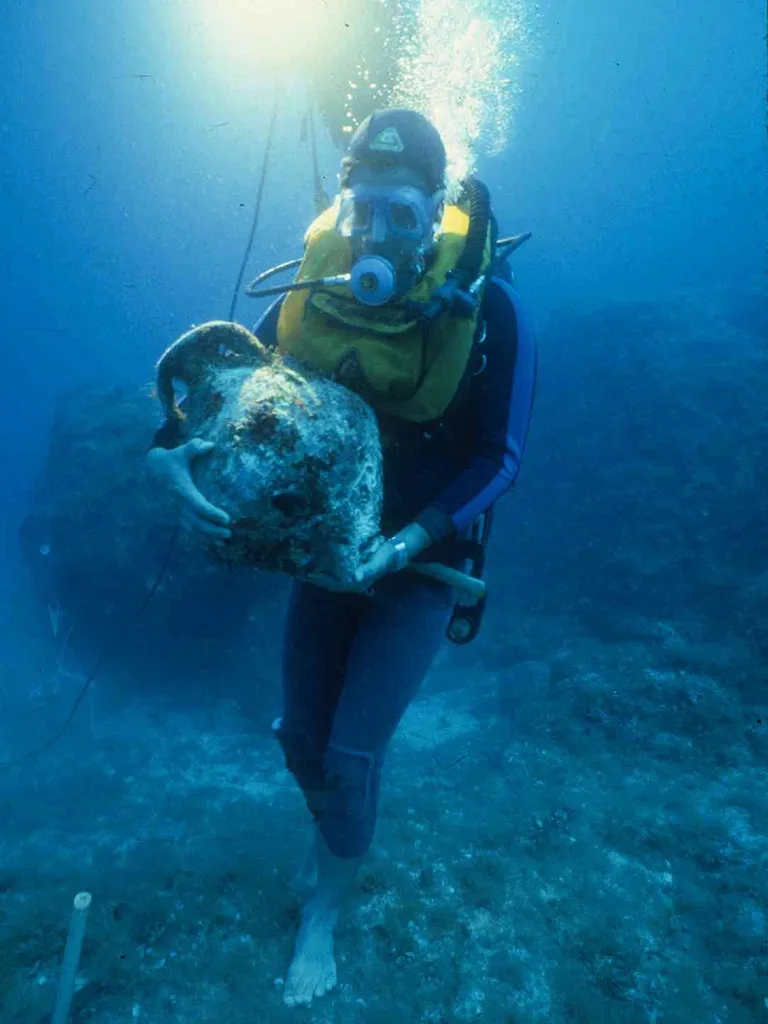
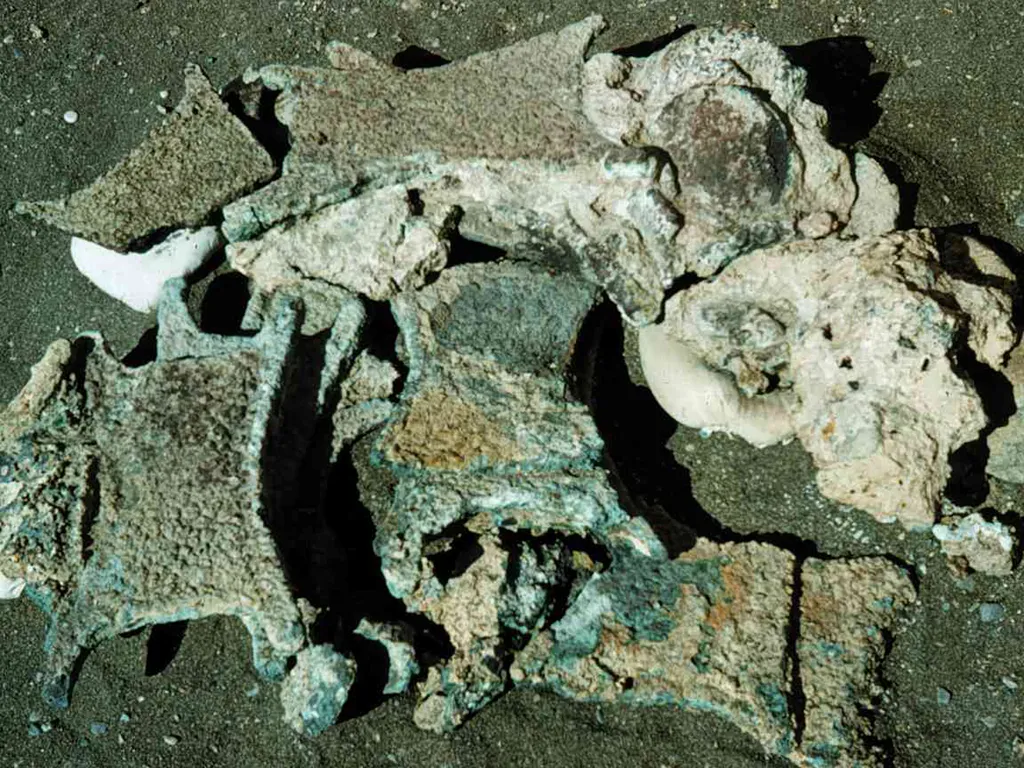
The whole ingots were stacked in piles, but ingot fragments were found in small groups that were probably held together in bags or baskets; bits of matting were found running over some ingots, and part of a basket, which contained several tools, was well-preserved.
With the copper ingots was found several piles of white, powdery material, identified by Turyag Laboratories of Izmir as tin oxide. Thus, the merchant ship was carrying the raw materials for making bronze: copper, almost certainly from Cyprus, and tin perhaps from Turkey or even Afghanistan (a la the Uluburun wreck).
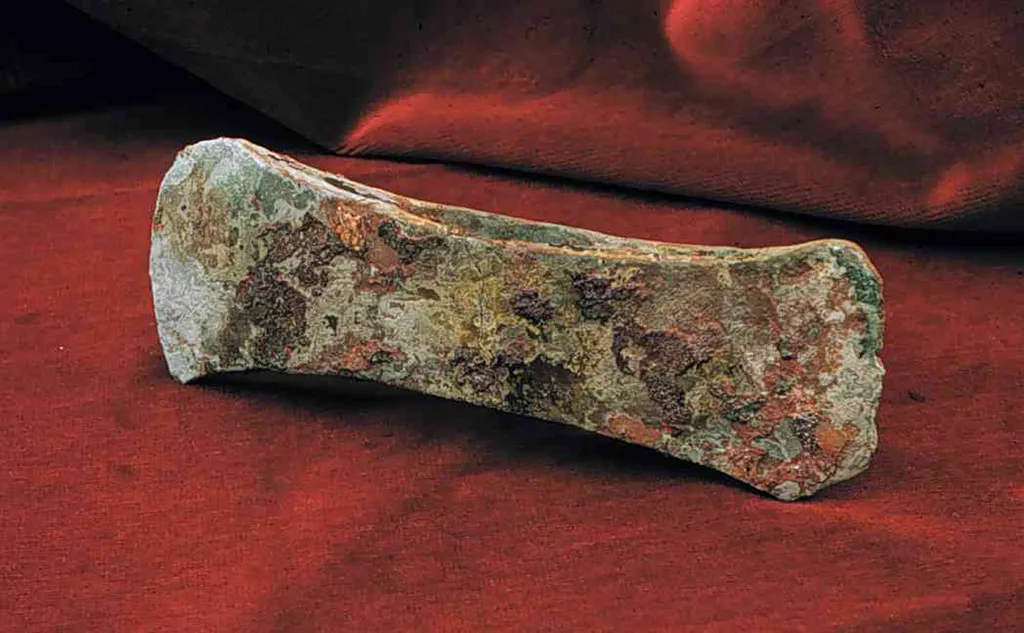
Bronze implements were abundant: chisels, knives, hoes, flat and double - axes, axe-adzes, picks, hoes or plough shares, spear- heads, bracelets, awls, bowl rims and handles, and a bronze mirror, hammer, spade, and a kebab spit; several of the tools bore marks which seem to be Cypro-Minoan. Some of these objects were intact, but many were broken and found in groups with ingot fragments, indicating that they were being transported not for their functional use but for the metal of which they were made.
A number of whetstones were found with some of the tools.
Weapons included spearheads, one with rounded midrib and flat, triangular tang with two rivet holes, and two tiny halberds or billhooks, with pointed ends and rectangular blades.
A cabin or some living quarters seems to have been in the eastern end of the wreck sometimes called the "captain's quarters" because of the quantity of personal possessions. Here were found traces of the crew's food (olive pits, an astragal, fish bones, and a possible bird bone) near what may have been firewood.
This was also the area that contained almost all of the personal objects: two polished stone mace-heads, one with a metal lining in its perforation and the other with a collar carved around the perforation on one side. It is interesting to note that similar perforated stone hammers were sometimes used for metal working in the Bronze Age. There were also pieces of crystal, and a pottery lamp.
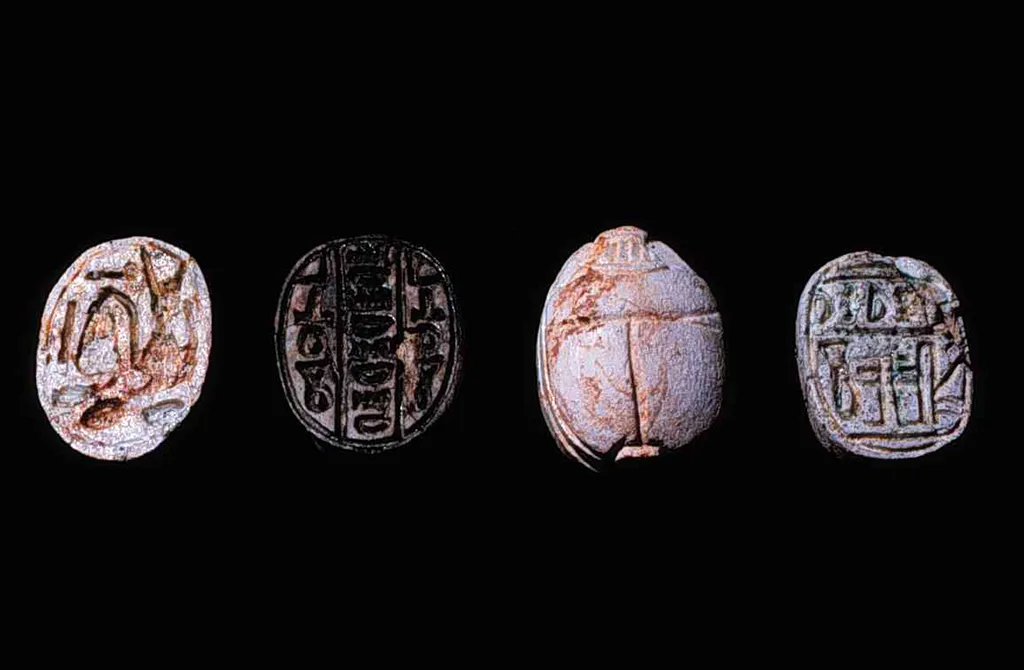
Amongst these personal items were three complete scarabs, one fragment of a scarab, and a scarab-shaped plaque which was inscribed on both faces. The latter had a length of 8 cms and depicted the god Re with falcon's head and a human's body, the left arm of which terminates in an uraeus-serpent and can be dated with almost complete certainty to the Ramessid Egyptian Dynasty (1292 to 1189 BC); the greater number of those scarabs with parallel motifs and iconography seem to come from Levantine sites.
A merchant must have weights, and 48 of these were found in the 'captain's quarters', forming three sets. Those of the ovoidal, or sphenoidal, class are approximate multiples of nine and a fraction gram and the smallest of these, marked with a unit sign on its top, is exactly 9.3 grams, an Egyptian qedet. This is a standard also used in Cyprus and Syria. Other weights were cylindrical and domed, but their standards have not yet been determined. Most were made of hematite.
Probably from the same area, was a finely carved cylinder seal, showing two worshippers facing a deity wearing the atef crown. It seems to have been made in North Syria sometime during the 18th or 17h century BC. That it was still in use some centuries later is not unusual.
At the western end of the wreck a jar of glass beads of three types was found.
Pottery was scattered throughout the wreck; some sherds having drifted quite some distance away. The pottery is still under study, but some seems certainly Cypriot. Several distinctive pieces, however, including two Mycenaean type IIIB stirrup jars, a base-ring jug, and large storage jars, are best placed in the 13th century, BC some of these tend to be of a design used late in that century. In addition to its cargo, the ship was carrying approximately 116 kgs. Of ballast stones.
Where did the Cape Gelidonya cargo come from?
The shapes of the tools seem also to be Cypriot, although some of their closest parallels come from the Acropolis hoard in Athens.
The tin could be from a few places including Turkey and Afghanistan.
What was the purpose of the cargo?
The cargo suggests that the ship was involved in the long-distance trade of metals. The metal-working tools suggest that the ship may have carried a metalsmith on board.
Where was the Cape Gelidonya cargo going?
Where did the Cape Gelidonya ship come from and where was it going?
The ship was carrying a cargo of copper and tin ingots, scrap bronze tools, weapons, and other objects, as well as metal-working tools. Analysis of the copper ingots showed it came from Cyprus, and the tin likely came from Turkey or Afghanistan via a Levantine port.
The ship also had several personal belongings that were likely of Levantine origin, such as a lamp and a pair of stone mortars.
A later find included two Mycenaean stirrup jars that would have been manufactured at Mycenae in modern day Greece.
Why did the Cape Gelidonya ship sink?
Political situation at the time
Along with a cultural collapse, the whole region was affected by attacks from the so called 'Sea People' between 1200 and 1150 BC and some of the cities in the Middle East were destroyed during this period, although nowhere near as many as was first thought. The 'Sea People' made sporadic raids until about 800 BC. This is the period of the fall of Troy (1180 BC) and the collapse of the Mycenaean palaces.
A few powerful states survived the collapse or were able to recover quickly including the Assyrians, the New Kingdom of Egypt, the Phoenician city states, and Elam. Elam was an ancient civilization centred in the far west and southwest of modern-day Iran.
In addition to the invasions of the Sea Peoples, various explanations for the collapse have been proposed, including climatic changes causing a period of prolonged droughts or the effects of volcanic eruptions, a lack of copper and tin such that the elites were not able to maintain their lifestyles, effects of the spread of iron metallurgy, developments in military weapons and tactics, and a variety of failures of political, social and economic systems, but none has achieved consensus. More than one of these factors probably played a part.
There is no doubt that the uncertainty of the times was reflected in the amount and value of goods being transported around the eastern mediterranean and by whom those goods were carried.
Ongoing Research
The project is expected to take several years to complete, and it will involve a wide range of experts, including archaeologists, scientists, and conservators. The goal of the project is to produce a comprehensive and definitive publication of the wreck and its cargo.
Another ongoing research project on the Cape Gelidonya shipwreck is focused on the use of lead isotope analysis to determine the source of the metal ingots found on the ship. Lead isotope analysis is a technique that can be used to identify the source of metal objects based on the unique isotopic signature of the lead in the metal.
This research project is being led by Dr Ozlem Dogan, a researcher at the University of Tubingen in Germany. The goal of the project is to better understand the trade networks of the Late Bronze Age Mediterranean by determining the source of the metal ingots on the Cape Gelidonya shipwreck.
In addition to these two major research projects, there are other ongoing research projects on the Cape Gelidonya shipwreck. These projects are focused on a variety of topics, including the ship's construction, its cargo, and its crew.
Where is the Cape Gelidonya shipwreck now?
However, there are a couple of museums in Turkey that have exhibits on the Cape Gelidonya shipwreck, including the Bodrum Museum of Underwater Archaeology and the Istanbul Archaeological Museums.
These museums have a variety of artifacts from the shipwreck on display, including copper and tin ingots, scrap bronze tools, weapons, and other objects. The museums also have exhibits that explain the history of the shipwreck and its significance to our understanding of the Late Bronze Age Mediterranean.
References
Bass, G. F. 'Cape Gelidonya and Bronze Age Maritime Trade.' In Orient and Occident, Festschrift Cyprus Gordon, edited by Harry A. Hoffner, pp. 29-38. Kevelaer, 1973.
Bass, G. F. Archaeology Beneath the Sea, pp. l-59. New York, 1975.
Bass, G. F. 'Evidence of Trade from Bronze Age Shipwrecks.' In Bronze Age Trade in the Mediterranean, edited by N.H. Gale, pp. 69-82. Studies in Mediterranean Archaeology 90, Jonsered, 1991.
Bass, G. F. 'Return to Cape Gelidonya.' INA Newsletter 15.2 (June 1988): 2-5.
Hirschfeld, N. 'Cape Gelidonya Shipwreck: A Closer Look at the Ceramics.' INA Quarterly 45.3/4:22-27.
Throckmorton, Peter. 'Oldest Known Shipwreck Yields Bronze Age Cargo.'
National Geographic 121.5 (May 1962): 696-71 l.
Throckmorton, Peter. The Lost Ships: An Adventure in Underwater Archaeology. Boston and Toronto, 1964.
Late Bronze Age Collapse: https://en.wikipedia.org/wiki/Late_Bronze_Age_collapse
https://nauticalarch.org/projects/cape-gelidonya-late-bronze-age-shipwreck-excavation/#:~:text=That%20archaeologist%20was%20George%20Bass,of%20both%20copper%20and%20tin.