The Palomares Incident
Project Indalo: The Post-Palomares Nuclear Monitoring Programme
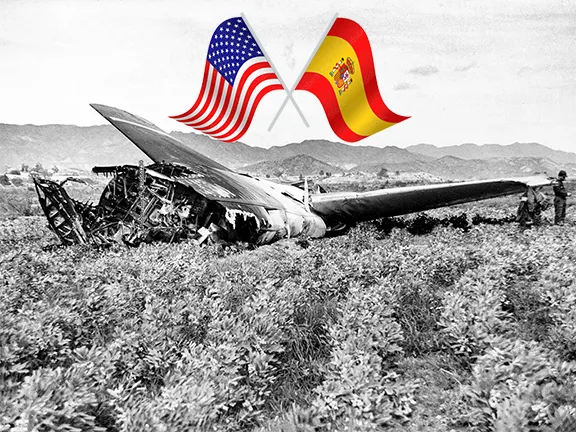
Sixty years ago today, as a result of a fatal collision between a United States bomber and a refuelling aircraft, four hydrogen bombs fell in the vicinity of the village of Palomares in Almeria province, Andalucia, Spain. A legacy of this incident was the Top Secret Indalo Project and the subsequent findings. The controversy rumbles on.
By Nick Nutter on 2026-01-17 | Last Updated 2026-01-17 | The Palomares Incident
This article has been visited 1,146 times

Indalo Man
Project Indalo
Project Indalo (known in Spanish as Proyecto Indalo) was a classified, long-term research and monitoring programme established in 1966. A bi-national effort, it was jointly administered by the United States Atomic Energy Commission (AEC), a precursor to the Department of Energy, and the Spanish Junta de Energía Nuclear (JEN), now CIEMAT. The project emerged as a direct response to the Palomares nuclear accident, serving for decades as the primary mechanism for tracking residual radioactive contamination in the region’s environment and population.
Do you enjoy my articles? For your reading pleasure, this website does not carry third party ads. You could help me write more articles by buying me a cup of coffee.
Background: The 1966 Palomares Incident
On 17 January 1966, a United States Air Force B-52 strategic bomber collided with a KC-135 aerial tanker during a refuelling operation over the coastal village of Palomares in Almería, Spain. The catastrophic failure resulted in the release of four MK28 hydrogen bombs. While none of the weapons triggered a nuclear detonation, the conventional high explosives in two of the bombs detonated upon impact with the ground. This scattered approximately three kilograms of plutonium-239 and americium across hundreds of hectares of farmland and scrubland.
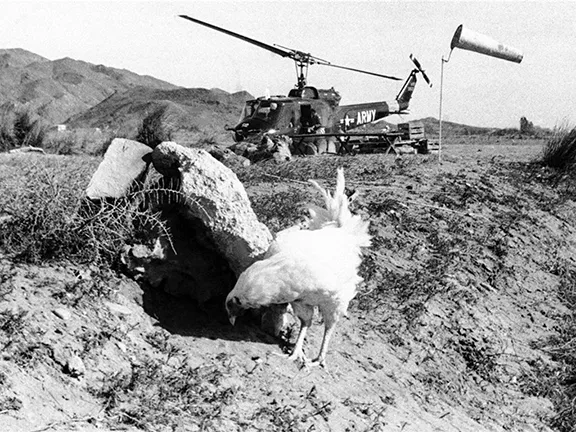
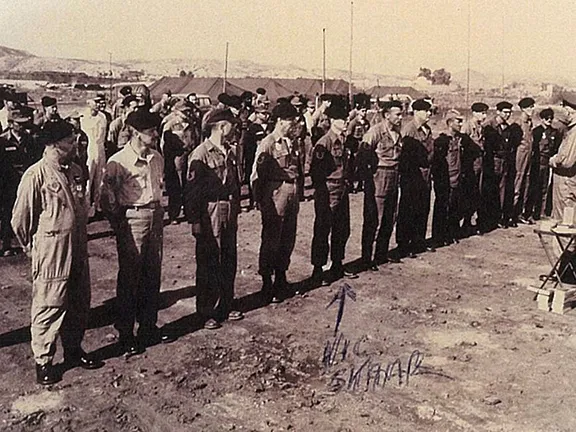
Initial US emergency response teams conducted a rapid cleanup operation, scraping the most heavily contaminated topsoil, placing it into barrels, and shipping it to the United States for disposal. However, significant amounts of fine plutonium dust remained embedded in the environment.
Establishment and Objectives of Project Indalo
Following the initial remediation phase, US and Spanish authorities recognised both a safety necessity and a unique scientific opportunity. They subsequently signed a secret agreement creating Project Indalo. The initiative had two primary objectives:
Public Health Assurance: To monitor levels of radiation in the local area to ensure they remained within limits deemed acceptable at the time.
Scientific Research: To utilise the site as a "living laboratory" to study the long-term environmental behaviour of plutonium in an arid, agricultural setting, and to track its potential absorption by humans.
Operational Methodology
Project Indalo established permanent monitoring facilities near Palomares. The programme operated on two distinct tracks: environmental monitoring and human surveillance.
Scientists regularly collected and analysed soil samples, crops (such as tomatoes and beans grown in the area), local vegetation, and air filters. This data helped researchers understand how weather patterns, particularly wind, moved radioactive particles through the ecosystem.
Simultaneously, medical teams enrolled over 1,000 local residents in a long-term health monitoring scheme. This involved annual medical examinations, the collection of urine samples to test for plutonium excretion, and checks using "whole-body counters" designed to detect gamma radiation emitted by internally deposited radionuclides.
Findings and Evolution
Over several decades, Project Indalo generated vast amounts of data regarding transuranic elements in the environment. Initially, scientists operated under the assumption that the dense plutonium particles would sink into the soil and remain relatively stable.
However, Indalo research eventually demonstrated that wind and agricultural activities—specifically ploughing—readily resuspended the radioactive dust back into the atmosphere, creating an inhalation hazard years after the initial crash. The data showed that concentrations in the air increased significantly during dry, windy conditions or farming periods.
Scrutiny and Controversy
The existence and scope of Project Indalo remained largely unknown to the general public for decades. The eventual declassification of project documents in both the US and Spain prompted significant retrospective scrutiny.
Investigative researchers and journalists questioned the ethical dimensions of the programme. Critics argue that Project Indalo operated without securing genuine informed consent from the participating population. Documentation suggests that while authorities subjected residents to regular testing, they did not always fully disclose the extent of the contamination or the potential health risks. Furthermore, reviews of historical reports suggest that scientific teams occasionally dismissed high readings in human samples as external contamination errors, rather than acknowledging them as evidence of internal absorption.
Legacy and Current Status
The United States ceased financial funding for Project Indalo in 2009, effectively ending the joint programme. Its legacy is complex; it provided invaluable radio-ecological data that shaped understanding of nuclear contamination events. However, because the project prioritised monitoring over complete remediation, the environmental issue remains unresolved.
Today, an estimated 50,000 cubic metres of plutonium-contaminated soil remain sequestered in several fenced-off areas around Palomares. Diplomatic negotiations between Madrid and Washington regarding the final cleanup and transportation of this soil remain ongoing.
Modern Independent Findings vs The Official Version
The discrepancy between the "official" scientific consensus (established largely by the Iranzo et al. reports) and later independent findings centres on the interpretation of biological data and the physical behaviour of the plutonium particles.
The "Contamination" vs. "Absorption" Dispute
Official Finding (Iranzo et al., 1987): When urine samples from locals showed high levels of plutonium, Project Indalo scientists frequently discarded the data. They classified these results as "cross-contamination" from the sample collection process (e.g., dust falling into the sample) rather than evidence of internal absorption. Consequently, the official reports concluded that systemic uptake by the population was negligible.
Independent Finding (Place et al., 2019; Moreno-Aroca, 2023): Modern reviews of the raw data suggest that many of these "discarded" high readings were likely valid. Retrospective analysis indicates that the early metabolic models used by the US Air Force and Spanish JEN were flawed; they assumed plutonium would be excreted much slower than it actually was. By dismissing the high readings, the official studies artificially lowered the estimated internal radiation dose received by the population.
The Behaviour of "Hot Particles"
Official Finding: The initial safety protocols were based on the assumption that plutonium particles would be dense and heavy, causing them to sink into the soil over time and become less likely to be inhaled.
Independent Finding (Jiménez-Ramos et al., 2006; Aragon, 2008): Independent researchers from the University of Seville and CIEMAT's later teams found that the plutonium remains on the surface in the form of "hot particles" (microscopic, highly radioactive fragments). These particles are not stable; they are easily resuspended by wind or agricultural ploughing, creating an ongoing inhalation hazard that the official reports claimed had diminished.
The Definition of "Safe"
Official Finding: The Iranzo reports focused heavily on average body burdens across the population, which allowed them to claim that the "average" resident was well within International Commission on Radiological Protection (ICRP) limits.
Independent Finding: Critics argue that averaging the data masked the specific danger to high-risk groups, such as farmers working directly in the contaminated zones. Independent findings suggest that while the average dose might be low, specific individuals likely received lung and bone doses significantly higher than the "official" maximums.
Exhibition
To mark the 60th anniversary of the Palomares nuclear accident, a commemorative event will be held on January 26, 2026, in the auditorium of the Villaespesa Library in Almería. The event will include a screening of the documentary 'January 1966', a discussion on urban development in Quitapellejos and the environmental value of the Villaricos coastline, and a roundtable discussion to analyse this historical event and its impact today.
"Palomares – 60 Years of Government Failure” at the Villaespesa Library
References
Do you enjoy my articles? For your reading pleasure, this website does not carry third party ads. You could help me write more articles by buying me a cup of coffee.
 1: Chrome Dome
 2: A Nuclear Wake-Up Call
 3: Diplomatic Relations
 4: Operation Broken Arrow
 5: Mediterranean Bomb
 6: The Clean Up