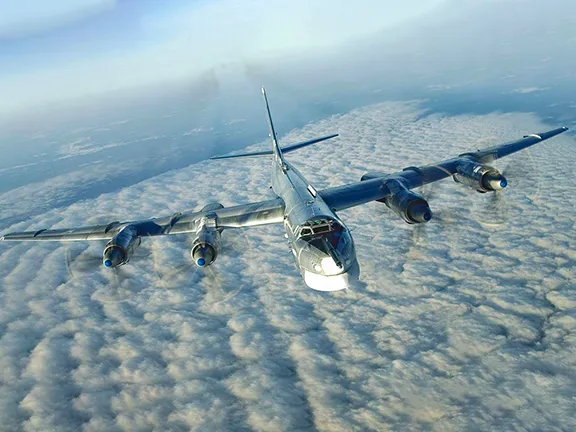
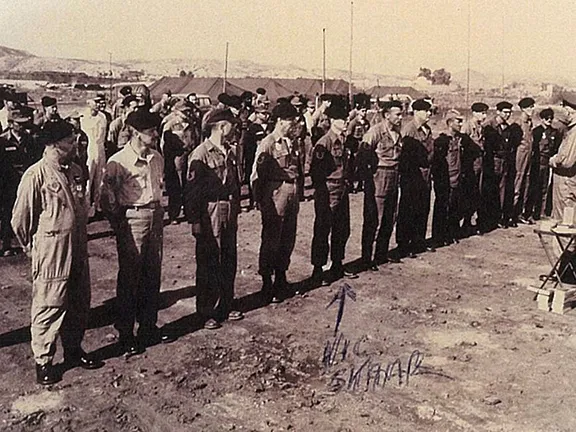
Seymour Johnson Air Force Base, located in Goldsboro, North Carolina was, and still is, an active military installation operated by the U.S. Air Force. At the time of the incident in 1966, the base served as a strategic bomber and reconnaissance hub for the U.S. military.
Contents
Seymour Johnson Air Force Base
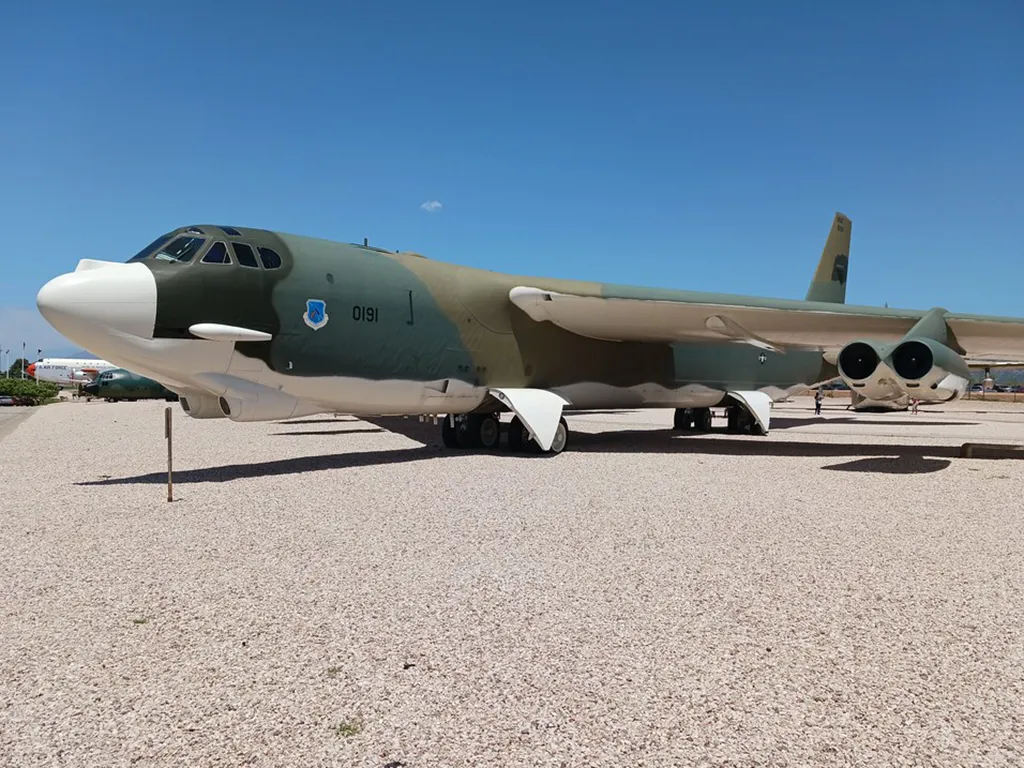
The story of the Palomares Incident begins half a world away in the east coast state of North Carolina in the United States of America.
The Mission
On Sunday the 16th of January 1966, two United States Air Force B-52G Stratofortress bombers, codenamed 'Tea 12' and 'Tea 16' took off from the Seymour Johnson Air Force Base in North Carolina in the United States. Their mission was to cross the Atlantic Ocean, refuel over the Pyrenees mountains, and then continue to the Adriatic Sea. They were to fly a figure of eight pattern over the Adriatic Sea, within easy range of the south western part of the Soviet Union. Their return journey involved a transit of the Mediterranean Sea and across the Atlantic Ocean back to base.
On board each of the aircraft were the seven crew members and a weapons load that included four B28FI Mod 2 Y1 hydrogen bombs. Tea 16 was piloted by Major Larry Messinger, co-pilot Lieutenant Michael Rooney, instructor pilot Captain Charles Wendorf, the radar navigator Captain Ivans Buchanan, navigator Lieutenant Stephen Montanus and the gunner, Sergeant Ronald Snyder.
In Air Refuelling
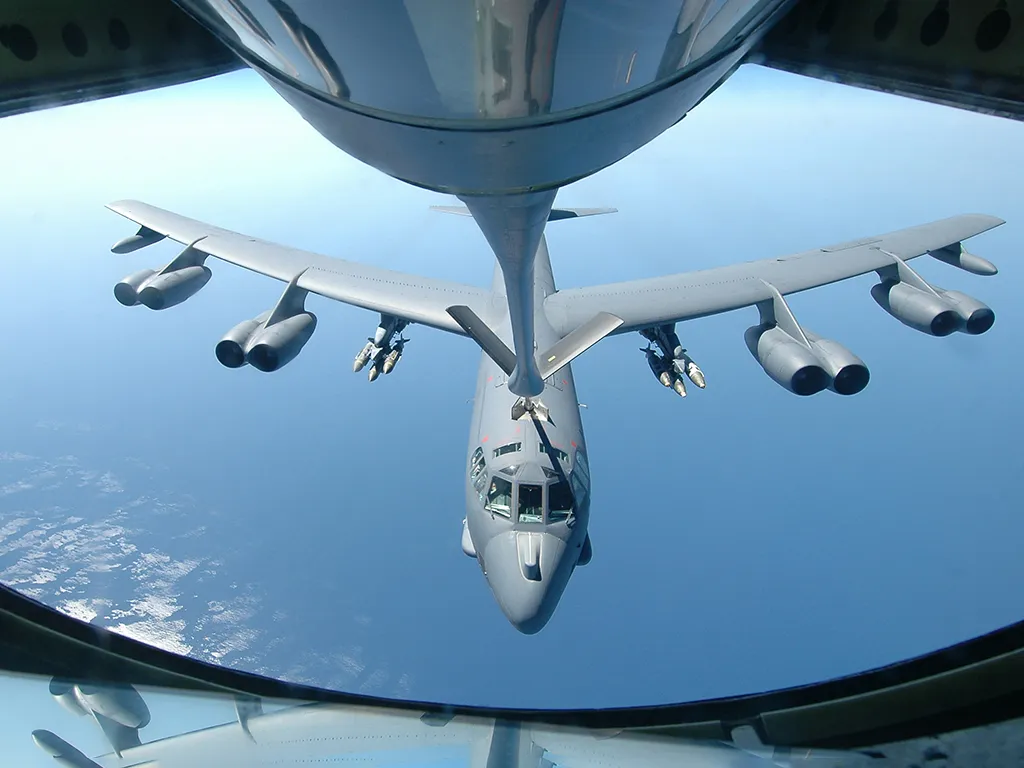
In order to carry out their long-distance mission, the bombers had to be refuelled twice in the air, once on the way out and again on the way back. The B52-G had an effective range of 11,400 kilometres. Air refueling operations were supported by the Sixteenth Air Force with headquarters at Torrejon Air Base near Madrid. The Commanding Officer was Major General Delmar Wilson. Refuelling was accomplished by tanker aircraft stationed at Torrejon airbase and Moron airbase, further to the south. Each refuelling operation involved the transfer of between 100,000 and 150,000 lbs of fuel from the tanker to the bomber.
The refuelling aircraft on this occasion were KC-135 Stratotankers, codenamed 'Troubadour 12' and 'Troubadour 14', flying out of Moron Air Base in southern Spain. Moron is situated about 55 kilometres southeast of Seville, less than one hour's flight time from Almeria city. Troubadour 14 was crewed by the pilot, Major Emil Chapla, the co-pilot Captain Paul Lane, the boom operator Master Sergeant Lloyd Potolicchio and the navigator, Captain Leo Simmons.
Refuelling at Saddle Rock
At 10.30 am on Monday 17th January 1966, at 31,000 feet, Tea 12 and Tea 16, rendezvoused with their Stratotankers on schedule in the refuelling area code named 'Saddle Rock' just off the Mediterranean coast of Almeria in south eastern Spain. The aircraft had already completed their mission, flying a figure eight pattern over the Adriatic Sea and were now due to take on 110,000 lbs of fuel to get them home.
The refuelling operation at Saddle Rock should have been routine. Spanish villagers and fishermen living on the coast of Almeria were accustomed to the sight of these hook ups but this one was to prove anything but normal. Some saw the collision; others looked up only when they heard the explosion.
How the Collission Occurred
The B-52 pilot, Major Larry G. Messinger, later recalled, 'We came in behind the tanker, and we were a little bit fast, and we started to overrun him a little bit. There is a procedure they have in refueling where if the boom operator feels that you're getting too close and it's a dangerous situation, he will call, "Break away, break away, break away." There was no call for a break away, so we didn't see anything dangerous about the situation. But all of a sudden, all hell seemed to break loose.'
'Tea-16, Tea-16. Watch your enclosure,' Master Sergeant Potolicchio called over his radio in a normal, unworried tone of voice. He had meant that the bomber was closing the distance between the two planes too quickly. Captain Wendorf, who was piloting the B-52, slowed the plane as had been requested. However, the veteran pilot, Major Messinger, noticed from his cockpit jump seat that the bomber was still traveling too fast.
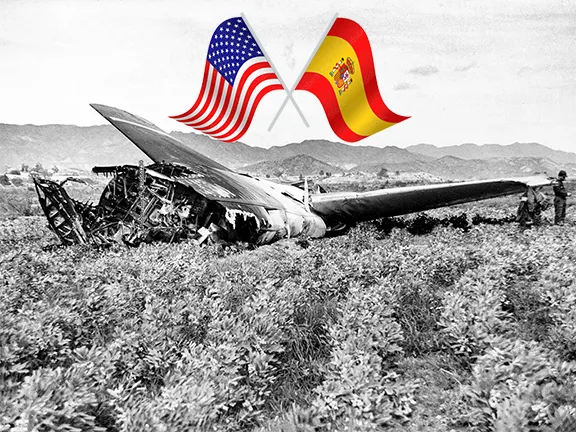
Less than a minute later there was an explosion and the sound of screeching metal as the frame of the B-52 broke apart. The boom had missed its designated opening and instead hit the bomber's longeron, which was the spine of the plane, creating force sufficient to snap off the B-52's left wing. Fire spread up the boom to the KC-135's tanks full of 30,103 gallons of kerosene jet fuel.
Mid Air Collision
What all saw was the burning aircraft wreckage falling about their village and farm plots. The B-52 had exploded and broken apart at high altitude. The KC-135, however, remaining fairly intact as it plummeted to earth, apparently exploding at about 1600 feet just before ground contact and again when it struck the earth, killing all its crew. Engines, wing sections, gear and other smaller pieces fell about the countryside, in back yards and open fields. The debris pattern on land was spread over several square miles. Father Serraro, a circuit priest from Cuevas del Almanzora who tended to Palomares parishioners, suggested that "the hand of God" had protected the village. Aside from being frightened, no person or animal was injured nor was any structure damaged, apart from a few broken windows.
The boom operator on Troubador 12 witnessed the collision whilst the tanker was refuelling Tea 12. He reported a fireball and what looked like a centre wing section in a flat spin. Refuelling completed, Troubadour 12 returned to the area of the collision to provide reconnaissance. From 4,000 feet, the crew of Troubadour 12 spotted burning wreckage and what looked like the tail section of a B-52. Other reports reached the Command Post at Moron air base from passing Spanish ships, a British ship, and a civil air liner. The Spanish Guardia Civil began reporting parachute sightings and the status of survivors. When these reports were radioed to Mor�n air base and passed to Torrej�n, the full impact of the accident became apparent.
The Survivors
Only four of the bomber crew parachuted to safety. Three ended up in the sea whilst the fourth landed near Palomares. Captain Buchanan was the only one of the four survivors from the B-52 crew to come down on land and was also the most seriously injured of the survivors. He was helped by Spanish residents and taken to the Clinic Jacinto Gonzales in Vera, about 7 kilometres distant, in a rackety old pickup truck driven by Manuel Gonzales Navarro.
Captain Wendorf and Lieutenant Rooney were picked up by the fishing boat, Dorita, skippered by Bartolome Roldan Martinez.
Major Messinger was recovered by the fishing boat, Agustiny Rosar owned by Alfonso Orts.
Both boats put into the nearby port of Aquilas, where the three survivors were treated at the local hospital. Later that afternoon, they were transferred to San Javier, a Spanish Air Force base about 117 miles up the coast, and from San Javier were evacuated to Torrejon.
The Dead
All four members of the tanker crew were killed in the accident: Major Emil Chapla, Captain Paul Lane, Master Sergeant Lloyd Potolicchio and Captain Leo Simmons. Two members of the bomber crew did not survive the collision: Lieutenant Stephen Montanus and Sergeant Ronald Snyder.
Members of the Guardia Civil under command of Captain Isidore Calin took charge at the accident site. The remains of the dead aircrews were recovered and placed in caskets.
On the evening of the accident the remains of the victims were brought to the Town Hall of Cuevas del Almanzora, northeast of Palomares. There, among burning candles, Commendation of the Dying services were held by a Spanish priest. Major General Wilson received the remains, and they were transported to San Javier and from there, to Torrejon. By the afternoon of the 18th of January, all the bodies had been identified with the help of dental and other records. The remains were returned to the United States on 20 January.
The Bombs

The four hydrogen bombs carried by the bomber each had a yield of 1.45 megatons, more than 90 times the destructive power of the atomic bomb dropped on Hiroshima during World War II. The hydrogen bombs plummeted to earth beneath partially deployed parachutes. Three landed near Palomares, two of those exploded on impact. Fortunately, only the initiator charges exploded.
The high-explosive components of two of the bombs detonated upon impact with the ground, igniting the plutonium core and releasing radioactive materials into the surrounding area in a noxious cloud of smoke. The radioactive contamination, americium that has a half-life of 432 years and plutonium 239 that has a half-life of 24,000 years spread across an estimated 2.5 square kilometres of farmland, causing immediate concerns for public health and the environment.
The fourth bomb, which became known as the "Mediterranean bomb," plunged into the sea somewhere off the coast of southern Spain.
Paco el de la bomba
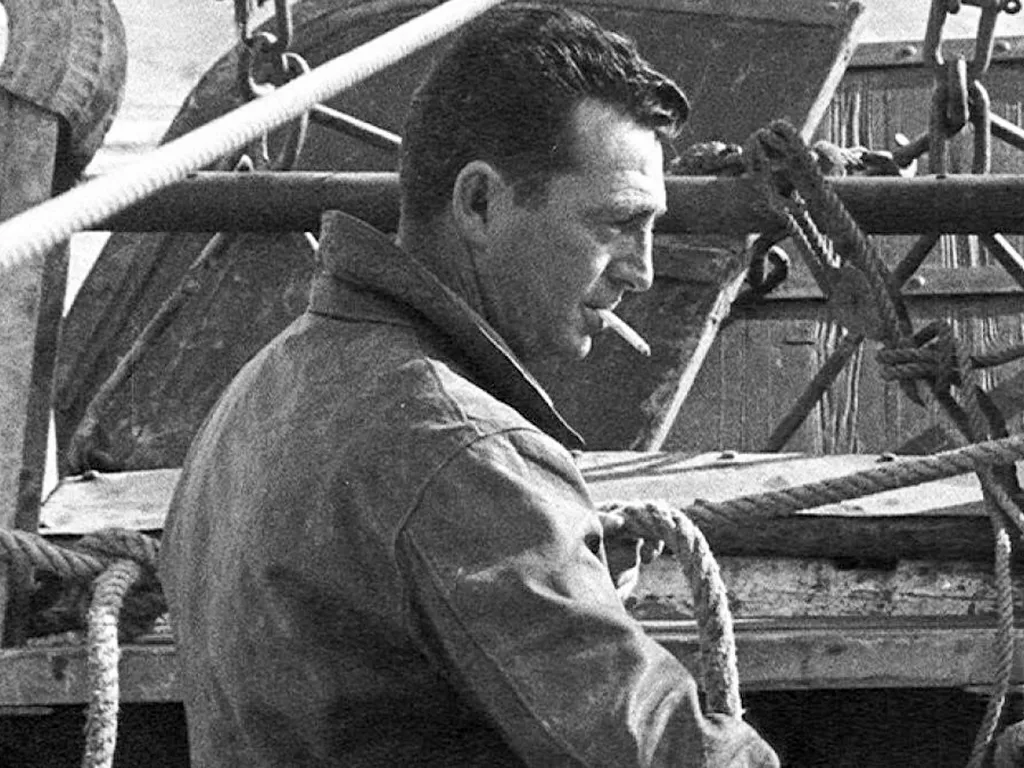
Francisco Simo Orts (a relative of Alfonso Orts), a shrimp fisherman from Serrallo, the fishing district of Tarragona, witnessed the collision and subsequently saw the bomb plunge into the sea from the decks of his fishing boat, Manuela, then about eight kilometres off the coast. He had at first thought he was witnessing a crew member parachuting out of the aircraft. It was only after both crews had been accounted for that the authorities realised that what Orts saw was a hydrogen bomb with a partially deployed parachute canopy entering the water. Orts was able to assist in pinpointing where it came down, hence the nickname awarded to him by the national and international press, "Paco el de la bomba".
Broken Arrow Response System
The term "Broken Arrow" was established in the early years of the U.S. nuclear weapons program to serve as a code word to indicate such events without revealing the true nature of the incident. It was part of the Atomic Energy Commission's (AEC) Emergency Capability for Immediate Response (ECIR) system, designed to handle nuclear accidents with maximum security and minimal public panic.
As a result of the first reports back to the Commander of 16 Air Force, Major General Delmar Wilson at Torrejon, the "Broken Arrow" response system in motion.
References
1. Air and Spave Forces Magazine - 1st August 2011 - The Perils of Chrome Dome
2. Palomares Summary Report - Field Command Defense Nuclear Agency Technology And Analysis Directorate Kirtland Air Force Base, New Mexico - 15th January 1975
3. Wikipedia - 1966 Palomares B-52 crash
4. Wikipedia - Palomares Incident
5. Remembering Operation Chrome Dome
6. Megara J. (2006). Dropping Nuclear Bombs On Spain. The Palomares Accident Of 1966 And The U.S. Airborne Alert
2. Palomares Summary Report - Field Command Defense Nuclear Agency Technology And Analysis Directorate Kirtland Air Force Base, New Mexico - 15th January 1975
3. Wikipedia - 1966 Palomares B-52 crash
4. Wikipedia - Palomares Incident
5. Remembering Operation Chrome Dome
6. Megara J. (2006). Dropping Nuclear Bombs On Spain. The Palomares Accident Of 1966 And The U.S. Airborne Alert