Contents
The Strategic Location of Oiniades
Early Shipyards (5th century BC)
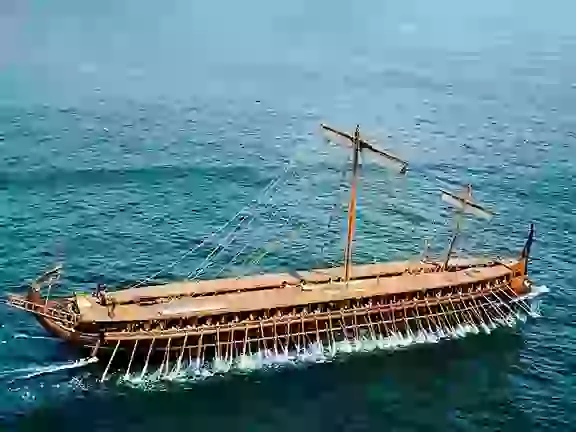
When Athens compelled Oiniades to join its alliance in 424 BC, commanders utilised the city's naturally protected harbour and its existing maritime facilities as a strategic forward-operating base. During the Peloponnesian War, Greek naval bases largely relied on temporary timber slips or natural mudbanks to haul up and maintain their triremes.
Building the Neoria (4th century BC)
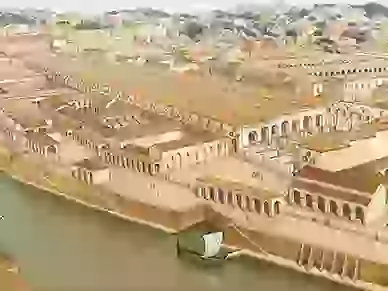
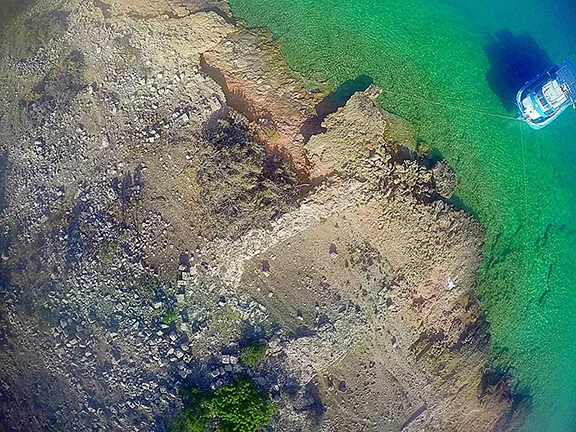
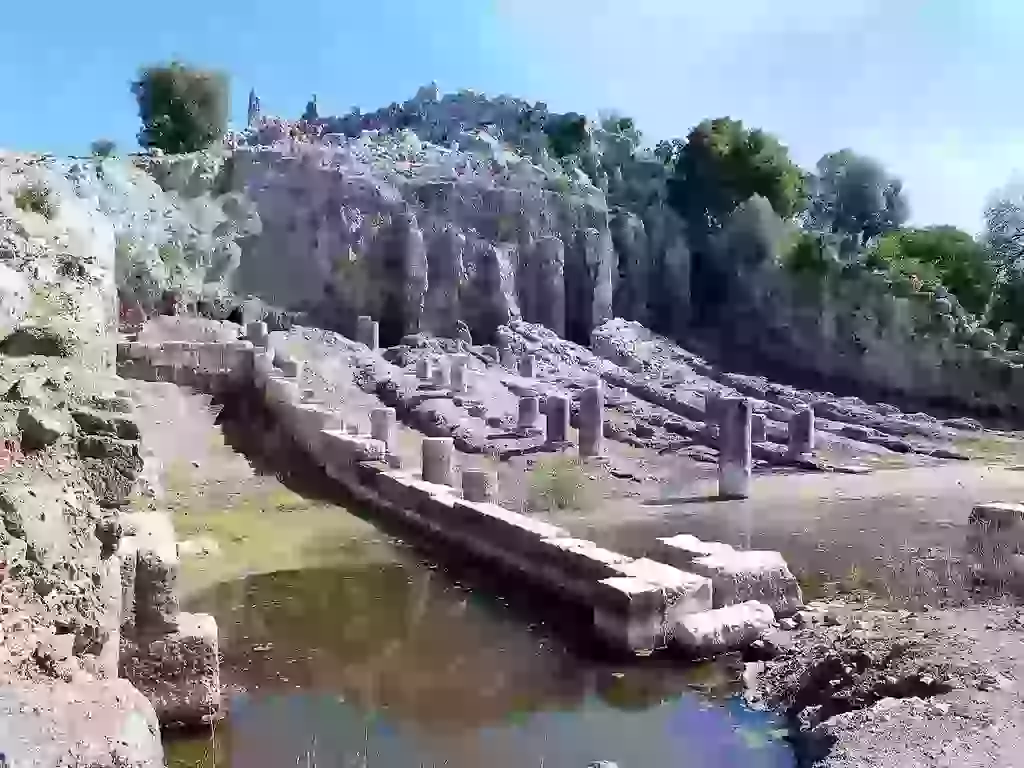
To support the massive structure, architects divided the interior space symmetrically using five rows of seventeen columns. These colonnades supported an undulating, gabled roof covered with laconic clay tiles, which protected the vessels from the elements. Along the eastern side of the complex, builders carved eleven rectangular, column-shaped projections into the rock, creating twelve small chambers that helped anchor and waterproof the roof system. Between the colonnades, engineers designed six distinct aisles with upward-sloping, boat-shaped stone floors. These served as slipways or hauling ramps, allowing crews to drag large vessels out of the water with relative ease.
Today, archaeological research regards the shipyards as a masterclass in ancient Greek coastal engineering of the classical and Hellenistic periods.
Expansion and Naval Operations
The strategic capability provided by these shipyards made the city a highly sought-after prize among rival powers. The capacity to safely overwinter and repair a substantial fleet allowed Oiniades to exert military and economic influence far beyond its immediate territory.
Decline and Abandonment
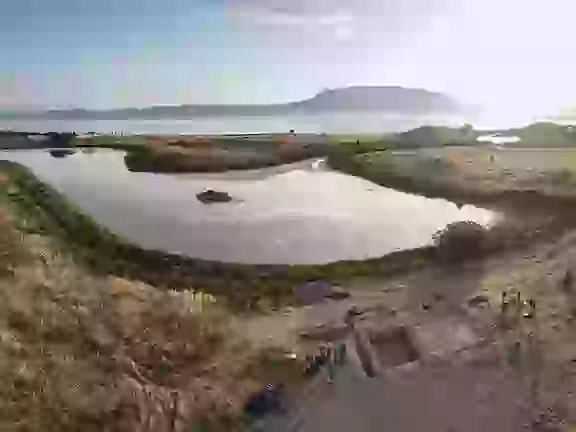
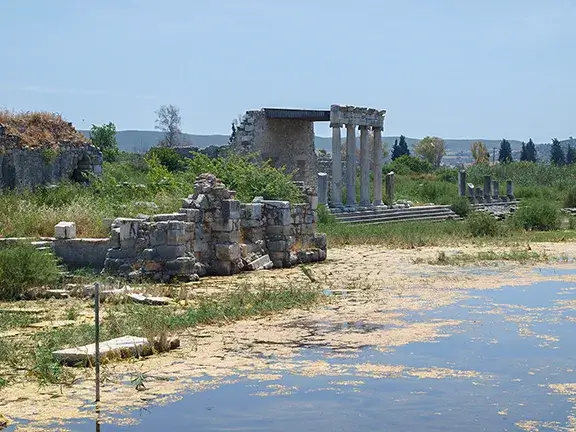
Continuous geological changes sealed the fate of the wider port. Over subsequent centuries, the progressive silting of the Achelous River completely altered the local topography. This silting transformed the once-bustling harbour into a marshland and severed the city's direct access to the sea, leading the local population to gradually abandon the area.
Academic Sources and Further Reading:
Hellenic Ministry of Culture and Sports / 6th Ephorate of Prehistoric and Classical Antiquities. Archaeological Reports on Aetolia-Acarnania. (Contains modern survey data and conservation records pertaining to the rock-cut slipways and colonnades of the Oiniades shipyard).
Powell, B. B. (1904). "Excavations at Oeniadae." American Journal of Archaeology, 8(2), 137-173. (Provides the foundational early archaeological reports regarding the broader site of Oiniades, including the theatre and fortifications).