Contents
Dana Island: Turkey’s Iron Age shipyard 800 BC – 700 AD
When was the Dana Island shipyard discovered?
Where is Dana Island?
Description of the Dana Island shipyard
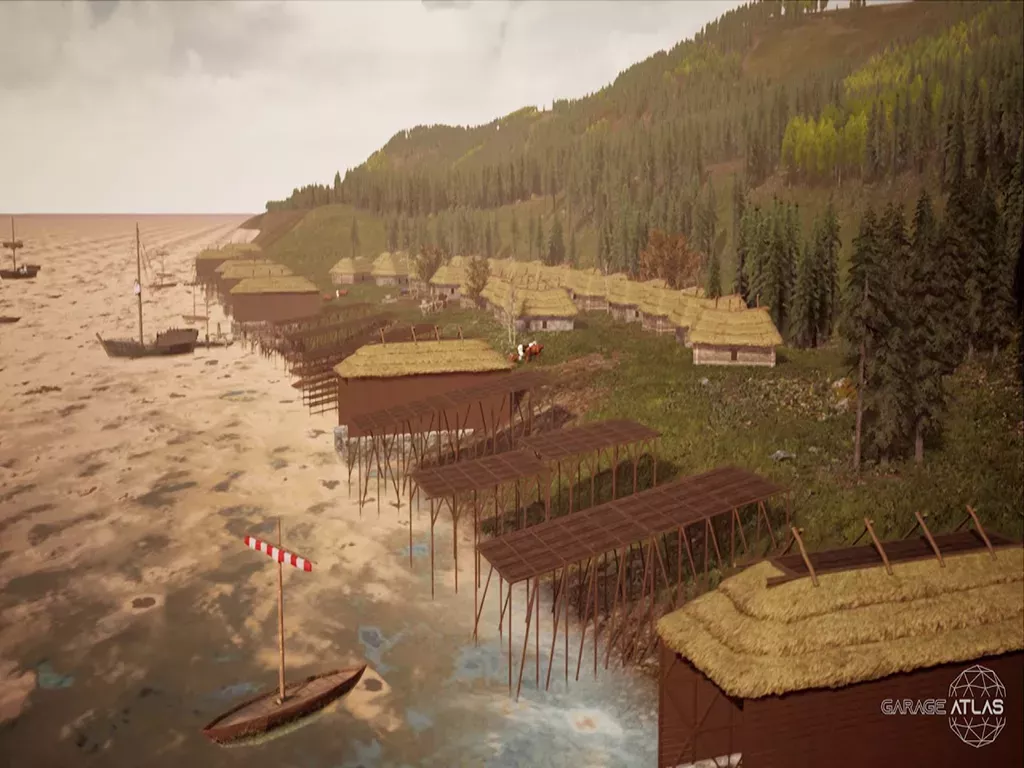
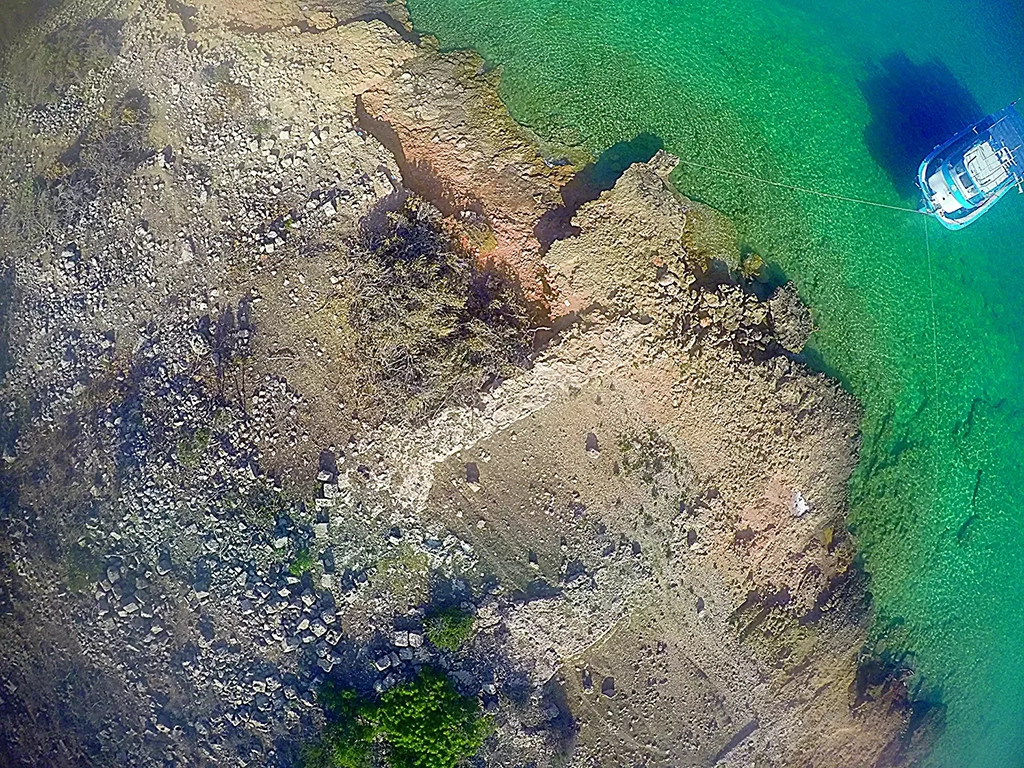
Behind the slipways, archaeologists have identified various structures interpreted as workshops used in shipbuilding, as well as living spaces, military and religious buildings, managerial facilities, and cisterns for water supply. This indicates a comprehensive naval base and shipyard complex, not just simple slipways.
Capacity for Various Vessel Sizes
The shipyard could accommodate the construction and maintenance of a wide range of vessels. Researchers estimate that users could construct ships up to 40 metres in length.
- There are 27 small boat ramps for 4–7 metre boats.
- 133 small-sized slipways (4–5 metres wide, 8–13 metres long).
- 86 medium-sized slipways (5–7 metres wide, 14–20 metres long).
- 48 large-sized slipways (7–12 metres wide, 21–34 metres long).
Diverse Hauling and Launching Techniques
Observations from Dana Island suggest that almost all known hauling techniques in the Mediterranean may have been employed here. Evidence includes:
Slipping and Launching Cradles: Ships were positioned on cradles (Vazo-Vazia) at sea and then hauled along rock-cut channels (two runners per cradle) inside the slipway. Some slipways have grooves to secure the cradle and ship, while others feature two or even three channels (one keel slot and two cradle runners). Animal power, such as oxen, may have been used for hauling, as indicated by structures interpreted as animal shelters.
Fixed Timber Constructions: A method where ships in cradles were slid through a fixed timber structure built on the slipway, a practice that continued into the early twentieth century on the Anatolian coast.
Direct Hauling on Greased Slipways: Many slipways show no keel slot or cradle runners, suggesting ships could be hauled directly over the greased slipway surface. Some of these still featured grooves for the forward end of the cradle and the ship's bow.
Sliding on Own Keels: Vessels could be slid on their own keels over a dedicated keel slot (central runner).
Cylindrical Logs: Smaller ships may have been hauled over cylindrical logs, a quicker but more labour-intensive process still in use today in the Eastern Mediterranean.
Specialised Small Rock-Cut Structures: Unique structures, often found between or behind larger slipways, are believed to be for smaller boats, possibly tenders to mother ships. These structures imply that maintenance of both the ship and tender could be carried out simultaneously. They typically had a rock-cut structure for the front of the boat and relied on wooden posts for support of the lower middle and rear parts.
Associated Infrastructure
Beyond the slipways, the shipyard included extensive support facilities such as workshops, mills, barracks, produce barns, five churches, a bath, and 221 cisterns, predominantly dated from the 5th Century BC to the 6th Century AD. The construction leveraged the soft, workable eolianite (grès dunaire) limestone, which was ideal for large-scale cuttings.
Continuing Research
When was the Dana Island shipyard in operation?
Dana Island's location in Rough Cilicia, with access to cedar trees in the Taurus Mountains (essential for shipbuilding) and iron ore deposits, made it a strategic location for maritime activities and trade from the Bronze Age onwards.
Significance of the Dana Island Shipyard
The shipyard on Dana Island is considered remarkably well-preserved and untouched, offering a unique opportunity to study ancient shipbuilding technology and naval organization.
The Iron Age shipyards discovered on Dana Island represent a groundbreaking discovery in maritime archaeology. Their scale, potential age, and associated infrastructure provide invaluable insights into the naval capabilities and maritime history of the Iron Age Mediterranean, a period that was previously less understood. The site underscores the importance of naval power in the ancient world and the sophisticated logistical operations required to build and maintain large fleets.
The continuous occupation of Dana Island from the 8th Century BC to the 7th Century AD highlights the ongoing need for ship construction and maintenance. The threat from wood-boring worms like Teredo navalis in the Mediterranean necessitated frequent hauling out of wooden vessels for servicing.
Update 6th April 2026: Recent Discoveries and Advanced Research on Dana Island
"Piggyback" Boat Construction
Recent studies have expanded upon the discovery of specialized structures located directly behind the main slipways. Archaeologists have revealed that the shipyard utilized a "piggyback" construction layout. In these designated areas, smaller boats, dinghies, and tender vessels were constructed and maintained simultaneously alongside the larger warships. This highlights a highly efficient use of space and sophisticated logistical planning within the shipyard complex.
A Manufacturing Hub for Legendary Fleets
Historical cross-referencing combined with recent archaeological evidence strongly suggests that Dana Island served as the primary manufacturing hub for several of history's most prominent fleets. Because the Persian Empire was primarily land-based, they relied heavily on seafaring Cilicians; researchers now believe the majority of Persian ships were constructed at the Dana Island shipyard.
Furthermore, the facility was likely the base of operations for the formidable Cilician pirates who dominated the Mediterranean, as well as the naval shipyard for General Antigonus during the Hellenistic period. There is also strong historical speculation that vessels utilized by Mark Antony and Cleopatra may have been built or maintained in this strategic region.
Prehistoric Discoveries Pre-dating the Shipyard
While the island is globally recognized for its Iron Age to Byzantine maritime activity, recent surface surveys have yielded unexpected prehistoric artifacts. Archaeologists have unearthed stone tools on Dana Island dating back 10,000 to 12,000 years (8,000–10,000 BC). While the island did not function as a shipyard during the Paleolithic or Neolithic eras, these findings indicate that human populations transitioning from hunter-gatherer to agricultural societies were utilizing the island thousands of years before the first maritime vessels were constructed there.
Advanced Geoarchaeology and 3D Modeling
The investigative teams, coordinated by Dr. Hakan Oniz, have increasingly employed advanced technology, utilizing aerial drones, side-scanning sonar, and computer-generated photogrammetry to map the island's topography. Researchers have created comprehensive 3D models to run digital simulations testing how the island’s ships would have been deployed in major ancient conflicts, such as the Sea Battle of Lade (495 BC).
Geological surveys have also led to the site being identified as a unique geoarchaeological heritage site. The ancient builders masterfully carved the 294 slipways into a specific type of biogenic limestone (eolianite) interbedded with rare cemented slope debris. This material proved soft enough for rapid, large-scale carving yet durable enough to withstand centuries of heavy industrial use.
A Fully Functioning Naval City
Excavations have officially mapped out a massive support infrastructure, proving that Dana Island was not merely a collection of slipways, but a highly secure, self-sustaining military-industrial complex. Expanding upon previous discoveries of workshops and cisterns, newly detailed infrastructure includes a defensive castle structure, security watchtowers, and dedicated prayer areas.
Additionally, newly identified animal shelters further support the theory that oxen or other beasts of burden were used to haul ships up the ramps. The presence of over 220 water cisterns ensured that the massive workforce required to operate the shipyard could survive and operate on the island year-round.
First iron ram
Professor Oniz remarked that they had determined the existence of archaeological wreckages in the region. "But the most exciting for us was an iron spur that we found at a depth of 35 meters and that was used as the weapon of warships in ancient ages. Such an iron spur has been found for the first time in the world," Oniz said.
References
Hakan Öniz, ed. Dana Island: The Greatest Shipyard of the Ancient Mediterranean. Archaeopress Publishing, 2021.
This is a comprehensive volume that details the archaeological discoveries, analysis of the slipways, their use, dating, and the associated structures on the island. It is considered the definitive work on the subject and includes contributions from other scholars.
Öniz, Hakan. "Dana Island Ancient Shipyard, Rough Cilicia: Archaeological Observations."
Denker, A., and H. Öniz. "Ancient Shipyard on Turkey's Dana Island: Its 3D Modelling with Photogrammetry and Computer Graphics." The International Archives of the Photogrammetry, Remote Sensing and Spatial Information Sciences XLII-2, 2018, pp. 289–296.
Höckmann, O., and H. Öniz. "Ancient Shipsheds on Dana Island: Some Preliminary Observations."
Öniz and Büyükkol, "Rock-Cut Slipways and Slipping Techniques at Dana Island Shipyard," Journal of Maritime Archaeology 2024