Recent archaeological investigations, spearheaded by the Zea Harbour Project (ZHP), have altered our understanding of this site. The research reveals a dynamic, constantly evolving facility that reflects the rising and falling fortunes of the Athenian state.
Contents
Zea Shipyards: The Heart of the Ancient Athenian Navy
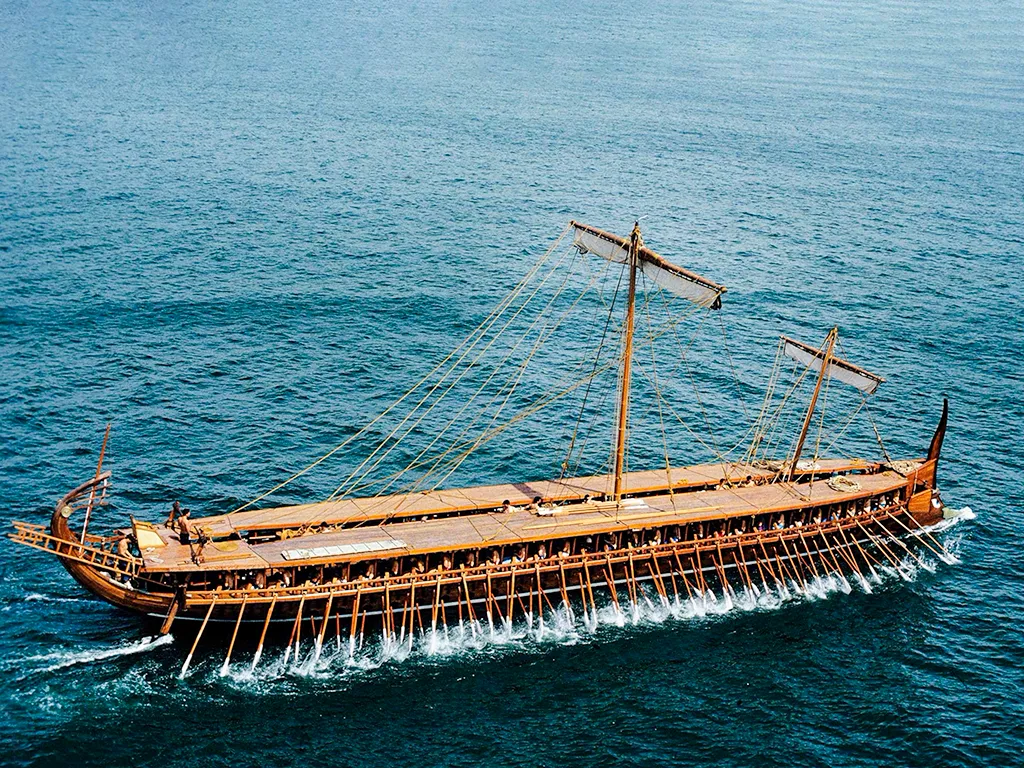
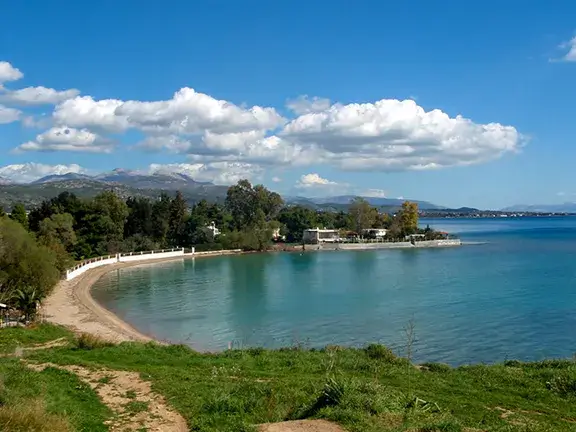
During the Classical period, Athens dominated the Mediterranean world. This thalassocracy, or maritime supremacy, relied entirely on the city’s fleet of triremes. These fast, agile warships formed the backbone of Athenian military strategy, but they demanded extraordinary logistical support. To house and maintain this vast armada, the Athenians transformed the Bay of Zea in Piraeus into the largest and most complex naval base in antiquity.
The Foundation: Themistocles and the Early Slipways (Early 5th Century BC)
The story of the Zea shipyards begins with the Athenian statesman Themistocles. Recognising the looming Persian threat in the early 5th century BC, he convinced the Athenian assembly to invest their silver wealth into building a massive fleet and fortifying the Piraeus peninsula.
Zea, the largest of the three Piraean natural harbours (alongside Mounichia and Kantharos), became the primary naval hub. The Zea Harbour Project has identified the earliest naval installations from this period, designating them as 'Phase 1'. During this initial construction programme, workers carved simple, unroofed slipways directly into the coastal bedrock. These sloping ramps allowed crews to haul ships out of the water, marking the first centralised effort to maintain the fleet ashore. However, these early structures left the valuable warships exposed to the intense Mediterranean sun and winter storms.
Expansion: The Rise of the Shipsheds (Late 5th to 4th Century BC)
As Athenian wealth and imperial ambition grew, particularly following the Persian Wars, military planners realised that unroofed slipways could not adequately protect their most vital military assets. In 'Phase 2' (the later 5th century BC), the Athenians initiated a monumental building programme. They constructed massive roofed shipsheds (neosoikoi) directly over the earlier rock-cut slipways.
These structures were marvels of ancient engineering. Builders erected long, parallel stone colonnades that supported heavy terracotta-tiled roofs. This superstructure provided shade for the slipways, protecting the ships' delicate timber from both rain and sun-induced warping.
The Zenith of Power and Extent (Late 4th Century BC)
Following the devastation of the Peloponnesian War (431 – 404 BC), a resurgent Athens rebuilt and upgraded its naval facilities. Archaeologists refer to this as 'Phase 3'. During this period, engineers redesigned the port to maximise space, constructing double-unit shipsheds capable of accommodating two triremes end-to-end. By the 330s BC, historical records and archaeological surveys suggest the harbours of Piraeus housed almost 400 shipsheds, with Zea alone holding the vast majority. The Zea complex covered an astonishing 55,000 square metres, making it one of the largest building projects in the ancient world, rivalling even the Acropolis in scale and expense.
At its height, the Athenian fleet was manned by between 50,000 and 80,000 men of various nationalities. A further 50,000 worked as shipwrights, carpenters, shipbuilders, and rope and sail makers.
Operation and Maintenance: The Lifeline of the Fleet
The Athenians did not build the Zea shipyards just for storage. They were fully functional dockyards.
A trireme was a highly specialised machine built for speed and ramming power. Shipwrights constructed the hulls from lightweight softwoods, such as pine and fir. However, this lightweight construction presented a severe operational flaw: the wood rapidly absorbed water. A waterlogged trireme became sluggish and practically useless in battle. Furthermore, leaving a ship moored in the warm Mediterranean waters invited infestations of Teredo navalis (marine shipworms), which could quickly bore through and destroy a hull.
The slipways solved both problems. The rock-cut gradients allowed crews to haul the vessels completely out of the water using winches and ropes. Once inside the shaded shipshed, the timber could dry out, regaining its buoyancy and speed. Here, thousands of skilled artisans—carpenters, pitch-boilers, and riggers—worked continuously to repair battle damage, scrape away marine growth, and re-pitch the hulls to ensure the fleet remained combat-ready.
End of an Era
The immense Zea naval complex operated for centuries, but it eventually fell victim to shifting geopolitical powers. In 86 BC, the Roman general Sulla besieged Athens and Piraeus, ruthlessly sacking the city and setting fire to the great shipsheds. The Romans, who relied on different naval strategies and had little use for the massive Athenian infrastructure, left the shipyards to ruin. Over millennia, rising sea levels and modern urban development obscured the remains.
Today, thanks to exhaustive underwater and terrestrial archaeology, the Zea shipyards are stepping back into the light. They stand as the ultimate physical manifestation of Athenian naval doctrine, proving that the city's ancient power rested not just on the valour of its rowers, but on the unparalleled logistical engineering of its shipyards.
Hellenic Maritime Museum
Today, the ancient harbours lay largely hidden beneath the urban sprawl of modern Piraeus, though scattered foundations of the ship sheds can still be glimpsed in excavated plots and modern basements. However, the Hellenic Maritime Museum, on the site of the Zea slipways, is a small museum of Greek nautical and naval history that covers the period discussed in this article.
Academic Sources and Further Reading
Lovén, B. (2011). The Ancient Harbours of the Piraeus: The Zea Shipsheds and Slipways (Monographs of the Danish Institute at Athens). Focuses on the definitive findings of the Zea Harbour Project.
Blackman, D., Rankov, B., Baika, K., Gerding, H., & Pakkanen, J. (2013). Shipsheds of the Ancient Mediterranean. Cambridge University Press. Provides a comprehensive overview of ancient naval architecture, placing Zea in the wider context of Mediterranean seafaring.
Hale, J. R. (2009). Lords of the Sea: The Epic Story of the Athenian Navy and the Birth of Democracy. Viking. Offers historical context regarding how the logistics of the shipyards directly influenced Athenian political and military history.
Lovén, B., & Schaldemose, M. (2011). The Ancient Harbours of the Piraeus: The Zea Shipsheds and Slipways. Architecture and Topography. Athens: Danish Institute at Athens. Details the specific architectural phases and the transition from unroofed slipways to monumental sheds.