The Bronze Age Harbour of Hala Sultan Tekke, Cyprus
By Nick Nutter |
Published: 2026-05-18 |
Updated: 2026-07-17
Visited 1,004 times
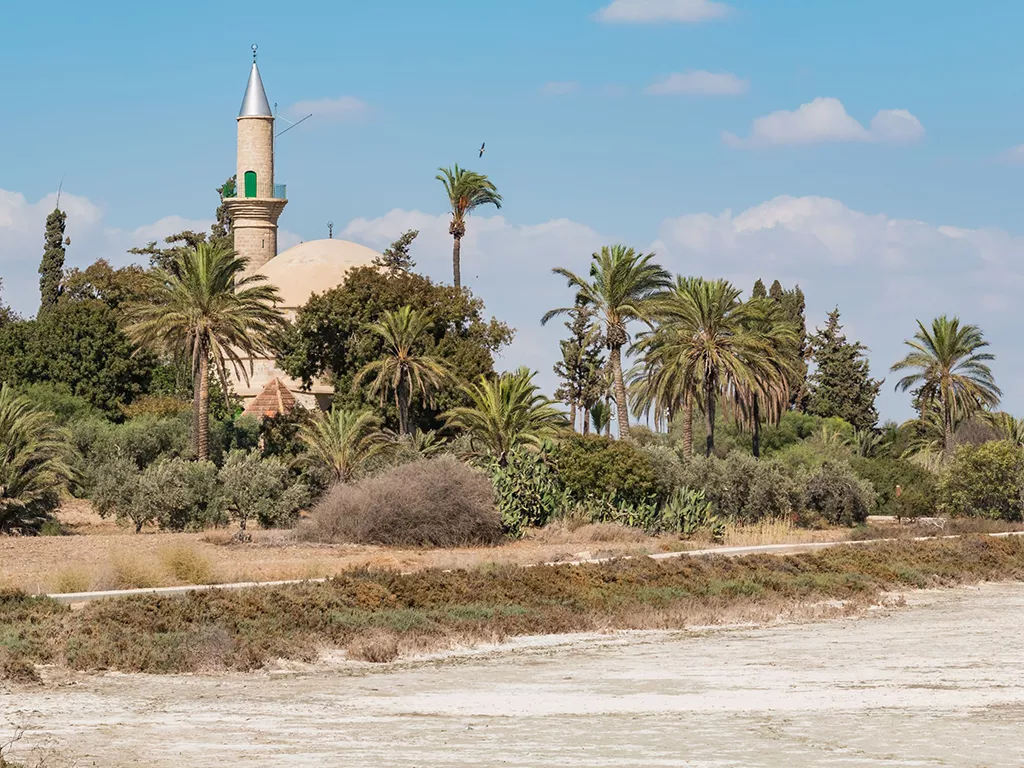
The Late Bronze Age settlement of Hala Sultan Tekke, near the modern Larnaca Salt Lake on Cyprus’s south-eastern coast, was one of antiquity’s foremost maritime hubs, rivalling Ugarit.
Contents
Urban Development
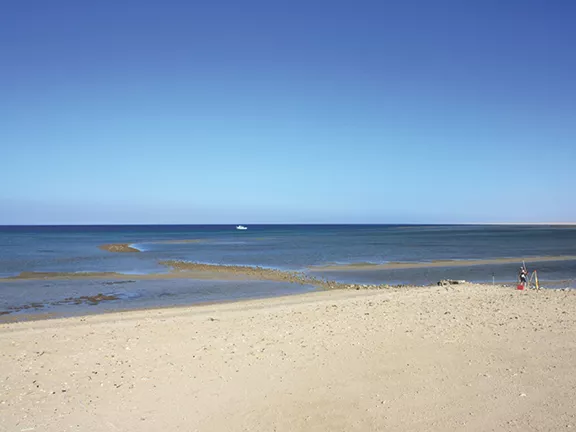
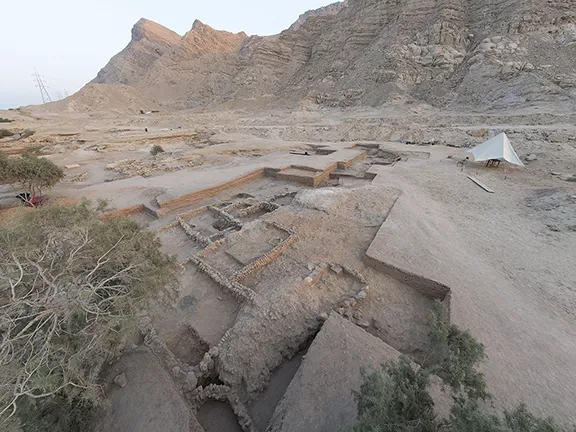
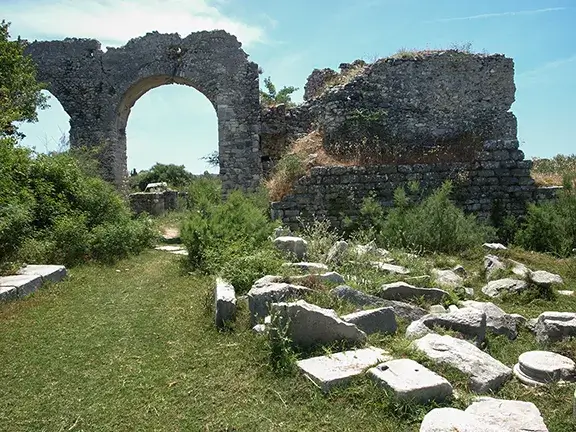
The site of Hala Sultan Tekke, Cyprus
Recent surveys and excavations show that Hala Sultan Tekke was founded earlier than once believed, around 1650–1630 BC, during the transition from the Middle to the Late Cypriot period (Fischer, 2016).
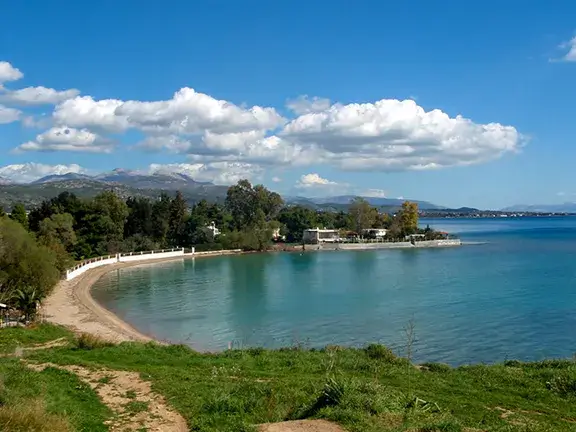
Over the following centuries, the settlement expanded into a densely populated urban centre of about 25 hectares. A naturally sheltered harbour drove this growth: in the Bronze Age, the sea cut deep into the coastline to form a protected bay that offered safe anchorage for merchant vessels navigating the eastern Mediterranean (Fischer, 2023). For nearly five centuries, the city thrived as a cosmopolitan metropolis before regional upheaval and the ‘Sea Peoples’ migrations ended its dominance around 1150 BC (Fischer and Bürge, 2024).
Development and Economy
Cyprus possessed immense geological wealth, especially the copper deposits of the Troodos Mountains. Hala Sultan Tekke capitalised on this resource, and copper production drove the city’s rise.
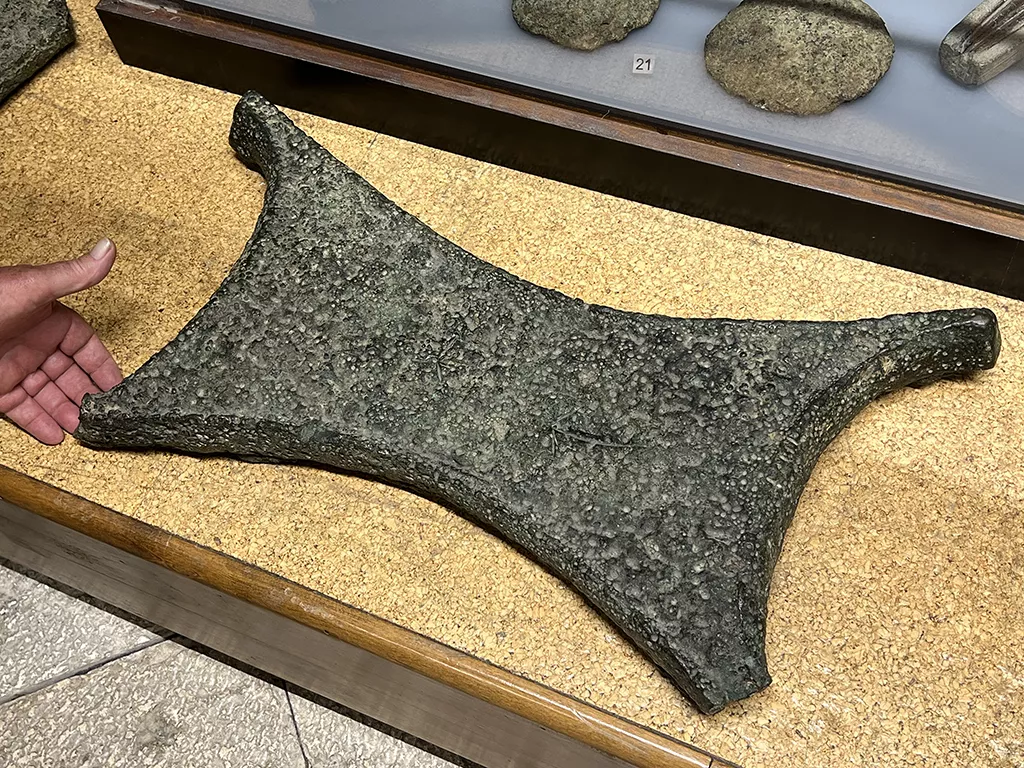
Excavators have found more than a tonne of copper slag across the settlement, alongside furnaces, crucibles, and ore fragments (Fischer, 2019). Miners brought raw copper from the nearby Troodos Mountains to the coast for smelting, and artisans cast the refined metal into oxhide ingots for export.
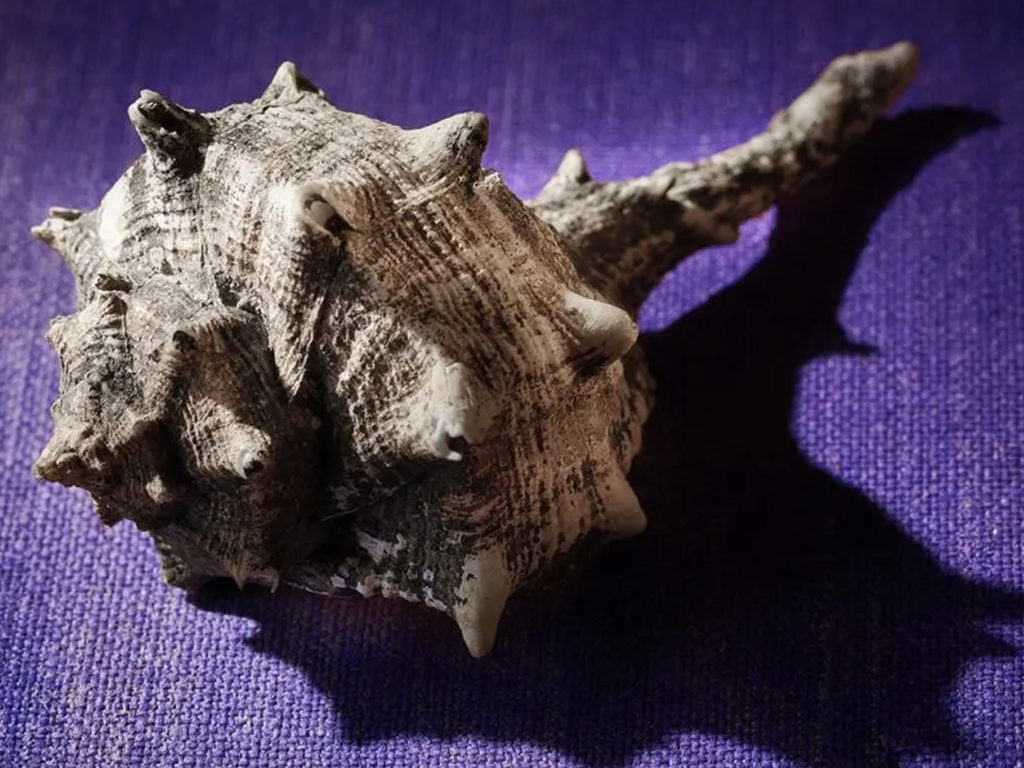
Metallurgy was not the city’s only economic strength. It also profited from luxury textile production, in which workers dyed woven fabrics using secretions from the hexaplex sea snail.
Archaeologists have found twenty-five kilograms of murex shells at the site, confirming the scale of this lucrative purple-dye industry (Fischer, 2019). Agricultural surplus and sophisticated painted pottery further strengthened the city’s trading power.
The Copper Cottage Industry
Cypriot Oxhide ingot found in Sardinia - Cagliari Museum
Earlier overviews noted copper slag, but recent excavations reveal the true scale of the industry.
In a residential zone dating between 1400 and 1175 BC, excavators found clear evidence of intensive, large-scale metallurgy, including intact melting furnaces and about 300 kilograms of raw copper ore and smelting slag within the living quarters (Fischer and Bürge, 2018).
Purple Dye and Textiles at Hala Sultan Tekke
The Murax shell, essential for purple dye manufacture
Although Hala Sultan Tekke was founded around 1650 BC, the evidence for industrial-scale purple-dye production belongs mainly to its later, most prosperous phases. Excavators date this activity chiefly to the 13th and 12th centuries BC, corresponding to the Late Cypriot IIC and IIIA periods (Fischer, 2019).
In this period, the city reached its greatest extent and economic peak, with luxury textile production operating alongside a massive copper-smelting industry.
Archaeological Proof and Production Zones
Archaeologists have identified the industrial zones where this activity took place. In the northern city quarters, especially Area 6 West and City Quarter 4, recent excavations uncovered substantial textile-manufacturing installations (Fischer and Bürge, 2018).
Within Stratum 2 (circa 1200 BC) and Stratum 1 (the early 12th century BC, shortly before the city’s final abandonment), excavators discovered enormous heaps of crushed murex shells. To produce the dye, workers had to crack open thousands of these predatory sea snails to extract tiny amounts of the glandular secretion.
Alongside these shell middens, the Swedish archaeological expedition found specialised dyeing basins whose mud-brick structures and surrounding soil still bore distinct purple stains after more than three thousand years (Fischer, 2019).
Surrounded by loom weights, spindle whorls, and lumps of red ochre, these basins form a clear picture of an integrated, large-scale textile workshop.
Economic Impact
By the 13th century BC, Hala Sultan Tekke was producing purple-dyed garments far beyond local demand. Across the eastern Mediterranean, elites prized them because their production was labour-intensive and costly.
By dominating this market during the Late Cypriot IIC and IIIA periods (c. 1340–1125 BC), the city gained immense trading power, exchanging these fabrics for exotic imports from Egypt, the Levant, and the Aegean (Fischer, 2023).
Although it is tempting to imagine merchants shipping purple dye or dyed fabrics in clay amphorae, the evidence suggests otherwise. Luxury textiles were more likely transported in perishable linen bales or wooden chests, which leave little trace in the archaeological record.
In 2002, archaeologists excavating the Bronze Age palace at Qatna (Tell Mishrife) in inland Syria discovered a royal tomb complex containing fragments of woven fabrics that still retained traces of murex purple dye (Sotiropoulou et al., 2021).
Because inland Syrian communities had no access to live marine snails, these textiles strongly suggest a trade network that carried finished purple garments from coastal Levantine or Cypriot centres into the interior.
The Impossibility of Transporting Liquid Dye
There is no archaeological or textual evidence for the Bronze Age export or import of raw liquid purple dye. The chemistry of the murex process made such transport impractical.
Artisans extracted the glandular secretion from marine snails and processed it immediately in large, stationary vats. This pungent fermentation process created a reduction vat that removed oxygen and made the dye temporarily water-soluble (Stubbs, 2019).
Had merchants sealed this unstable liquid in transport amphorae, it would have oxidised, precipitated out of the water, and become useless before reaching a foreign port. Dye vats therefore had to operate at coastal extraction sites, and merchants traded finished textiles rather than raw liquid dye (Edmondson, 1987).
At Hala Sultan Tekke, inhabitants used large coarse-ware vats and basins, up to 80 centimetres in diameter, within industrial workshops to ferment murex extract and dye wool locally (Fischer and Bürge, 2018).
The Exception: Solid Pigment Trade
Although merchants did not ship liquid textile dye, they sometimes traded the colour in a solid, powdered form for artists. At Akrotiri on Thera (Santorini), excavators found ceramic bowls containing dried lumps of true molluscan purple pigment (Sotiropoulou et al., 2021).
Artisans mixed fresh snail extract with inorganic binders to create a stable paint rather than a textile dye. The find shows that, while liquid dye did not cross the sea, concentrated solid murex pigment did circulate among elite artisans across the Mediterranean.
Maritime Connections of Hala Sultan Tekke
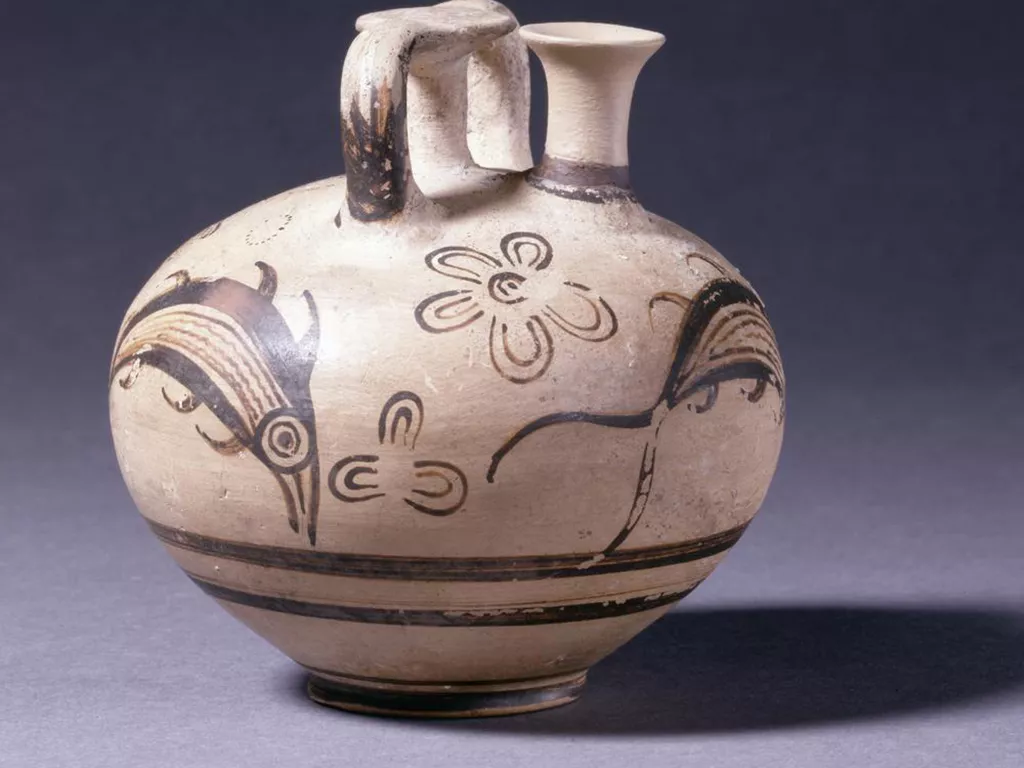
Minoan Stirrup Jar
Trade made Hala Sultan Tekke a major maritime centre. Evidence from industrial quarters and extramural chamber tombs—especially imported prestige goods buried with elite families—helps map the routes that linked the eastern Mediterranean economy.
Ships carried Cypriot copper westward to the Aegean and the central Mediterranean. In return, merchants brought finely painted Mycenaean and Minoan ceramics back to the island (Waiman-Barak, Bürge and Fischer, 2023).
This commercial network extended far beyond the Mediterranean basin. Excavations in the city’s cemetery have revealed exotic materials that travelled thousands of miles through indirect exchange networks.
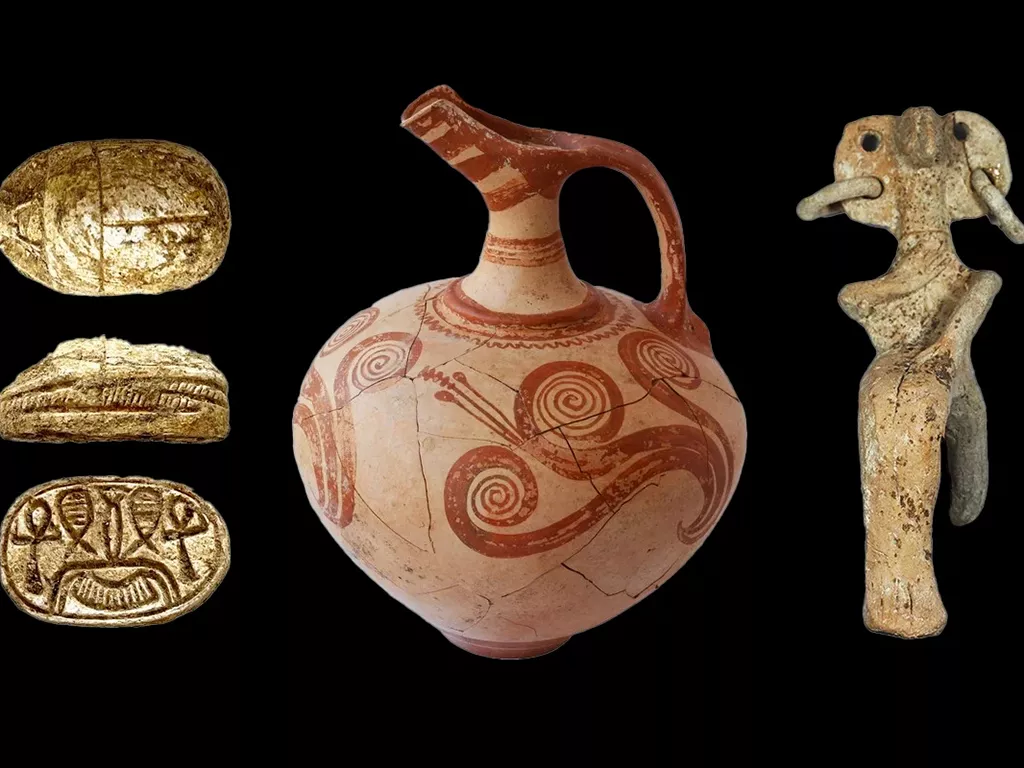
Graves contained lapis lazuli from Afghanistan, carnelian from western India, and Baltic amber carved into protective scarabs (Fischer and Bürge, 2024). Calcite vessels and ivory from Egypt further attest to strong diplomatic and economic ties with the pharaonic state (Fischer, 2023).
Western Mediterranean contacts also feature prominently in the archaeological record, including Nuragic pottery from Sardinia found in the city’s strata.
Together with Cypriot oxhide ingots found at Sardinian sites, this evidence points to reciprocal trade in which metal flowed west and ceramics east (Waiman-Barak, Bürge and Fischer, 2023). The volume and variety of these imports show that the city functioned as a node, or port of trade, within an interregional Bronze Age network.
Luxury Artefacts and Chronological Markers
Luxury trade goods found in elite tombs
Wealth from copper exports created a highly stratified society that consumed luxury goods at a remarkable rate. Sealed chamber tombs and ritual offering pits provide securely dated contexts for tracing these exchanges.
1500–1300 BC Offering Pits
Archaeologists recently exposed several circular offering pits containing rich deposits of Base-Ring pottery. These pits yielded finely burnished juglets and tankards, confirming a thriving, skilled local ceramics industry during the early phases of the city's expansion (Fischer and Bürge, 2017).
14th-Century BC Chamber Tombs
In Area A, excavators discovered two chamber tombs whose collapsed roofs sealed them against looting. Inside were exotic materials acquired through long-distance exchange, including lapis lazuli from the Sar-i-Sang mines in Afghanistan, carnelian from Gujarat, and Baltic amber carved into beads and protective scarabs (Department of Antiquities, 2026).
1400–1175 BC Imports
Within the industrial quarters, excavations revealed a decorated Egyptian faience bowl, faience cylinder seals depicting warriors and hunters, and a complete bronze brooch imported from northern Italy or central Europe. Dated to around 1200 BC, this rare artefact underscores the reach of exchange networks into the European continent (Fischer and Bürge, 2018).
Taken together, these finds show that Hala Sultan Tekke was part of a wider, highly connected Bronze Age economy.
Moving the Goods
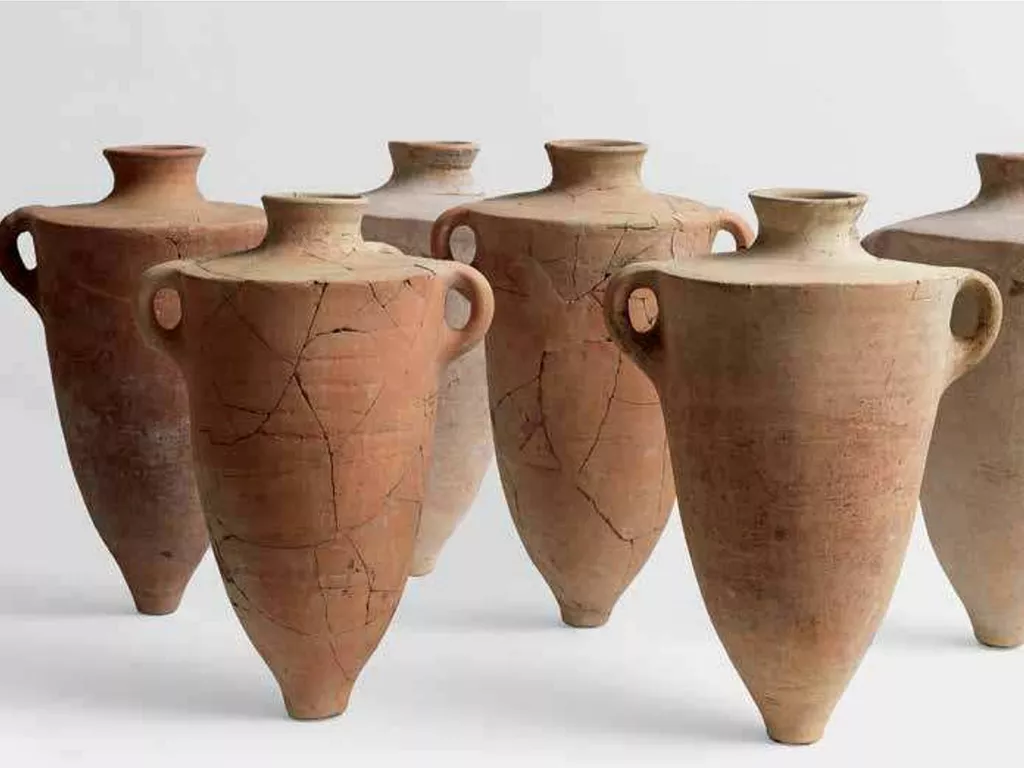
Levantine Commercial Amphorae: The 'Canaanite Jar'
Maritime trade depended on specialised ceramic containers for moving bulk goods and raw materials. Thousands of sherds from Maritime Transport Containers (MTCs) help trace the flow of commodities into the Cypriot harbour.
Levantine Commercial Amphorae: The 'Canaanite Jar'
The Canaanite jar was the quintessential transport container of Late Bronze Age Mediterranean commerce. Between the 15th and 12th centuries BC, ships from the Syro-Palestinian coast brought these robust amphorae to Cyprus in great numbers.
Their pointed bases let sailors stack them securely in curved hulls, maximising space and limiting movement at sea. Residue analyses show that Levantine merchants used them to supply Hala Sultan Tekke with olive oil, wine, and terebinth resin for preservation and perfume production (Georgiou et al., 2024).
Aegean Speciality Transport: Minoan Stirrup Jars
While Mycenaean Greeks mainly exported decorated tableware to Cyprus, the Minoans of Crete specialised in premium organic goods carried in transport ceramics.
In the 13th century BC, merchants brought many coarse-ware Minoan stirrup jars to Hala Sultan Tekke. Their false neck, stirrup-shaped handles, and off-centre spout allowed controlled pouring of valuable liquids. Archaeologists link them to the trade in perfumed olive oil and specialty wines, showing that the city supplemented local diet and ritual with high-end Aegean imports (Waiman-Barak, Bürge and Fischer, 2023).
Western Mediterranean Utilitarian Wares
The transport network occasionally extended far beyond the familiar Eastern Mediterranean routes, bringing unusual storage vessels to the Cypriot coast.
Recent excavations in the city’s later strata (13th and 12th centuries BC) uncovered unpainted handmade storage jars from Sardinia. Unlike standardised Canaanite jars, these Nuragic vessels reflect a different ceramic tradition. Sardinian sailors likely brought them filled with local goods for the voyage to Cyprus and left them behind in the harbour city (Fischer, 2023).
Local Storage: Cypriot Pithoi
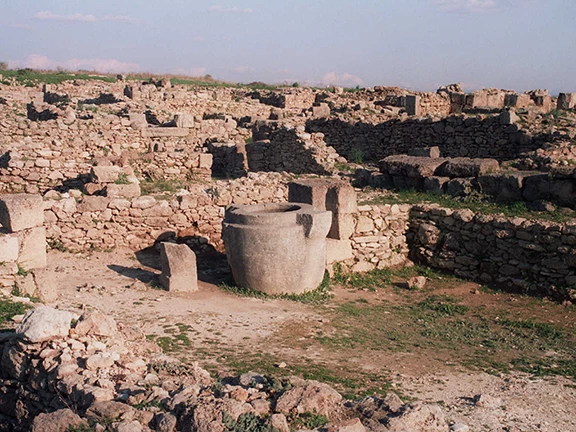
Between the 14th and 12th centuries BC, local potters made enormous clay pithoi, some over two metres tall. These vessels lined storerooms and workshops, storing grain, water, and olive oil; smaller examples were sometimes fixed into merchant ships to supply crews with fresh water on long-distance voyages (Fischer and Bürge, 2018).
The Final Collapse: Environmental Stress and Systemic Decline
In the late 13th and early 12th centuries BC, Hala Sultan Tekke’s golden age ended abruptly. The transition from the Late Cypriot IIC to IIIA period coincided with a wider regional breakdown that shattered the interconnected Bronze Age world.
Stratigraphic records reveal two destruction events separated by only a few decades (Fischer and Bürge, 2018). Although historians long blamed the enigmatic ‘Sea Peoples’, archaeological and environmental evidence suggests a more complex picture.
Evidence Supporting an External Invasion
Supporters of a violent maritime invasion point to the destruction layers at Hala Sultan Tekke. Excavators found clear evidence of intense conflagrations in Stratum 2 (circa 1200 BC) and Stratum 1 (circa 1150 BC).
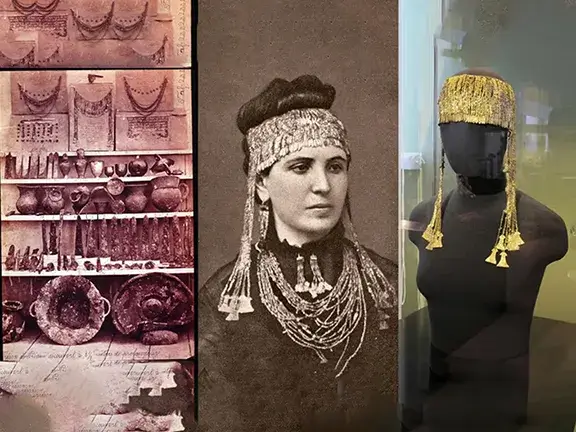
In wealthy manufacturing districts, fires reached around 1000°C, melting silver jewellery but not gold (silver melts at 962°C; gold at 1,064°C) (Fischer, 2019). The inhabitants appear to have fled suddenly, leaving behind luxury goods, raw copper, and active smelting furnaces.
Foreign material culture appearing immediately after these crises also supports migration theory. Archaeologists identified ‘Barbarian Ware’, a coarse handmade pottery unlike refined Cypriot ceramics, in the city’s final occupational layers.
Researchers associate this pottery with migrants from Italy or the Balkans, suggesting that foreign groups reached the island during this instability (Fischer, 2017).
Evidence Against a Single ‘Sea Peoples’ Invasion
Yet attributing the city’s fall solely to a unified fleet of ‘Sea Peoples’ oversimplifies what was probably a multi-generational crisis. The chronology of the destruction layers is a major challenge to the traditional invasion narrative.
Across Cyprus and the wider eastern Mediterranean, destruction events occurred sporadically over roughly half a century (Manning, Kearns and Lorentzen, 2017). A single wave of raids cannot easily explain such a prolonged, staggered collapse.
Other evidence suggests that environmental degradation destabilised the city before any fires broke out. Sediment cores from the Larnaca Salt Lake, the city’s ancient harbour, provide the clearest indication.
Pollen analysis shows a sharp reduction in forest cover and a rise in dry-steppe vegetation in the late 13th century BC (Kaniewski, Guiot and Van Campo, 2013), pointing to a prolonged drought that would have severely damaged agriculture.
A Long Slow Decline
As famine spread and trade networks weakened, Bronze Age economies came under severe strain. Hala Sultan Tekke’s destruction was likely caused by interacting pressures: systemic collapse, unrest among populations whose elites could no longer guarantee food security, and opportunistic raids by displaced groups seeking survival.
References
Department of Antiquities (2026) New Chamber Tomb Discoveries at Hala Sultan Tekke. Nicosia: Department of Antiquities, Cyprus.
Edmondson, J.C. (1987) Two Industries in Roman Lusitania: Mining and Garum Production. Oxford: BAR International Series.
Fischer, P.M. (2016) ‘New Perspectives on the Foundation and Early Development of Hala Sultan Tekke’, Opuscula, 9, pp. 123–140.
Fischer, P.M. (2017) ‘The Collapse of Bronze Age Societies in the Eastern Mediterranean: Sea Peoples in Cyprus?’, in Fischer, P.M. and Bürge, T. (eds.) “Sea Peoples” Up-to-Date: New Research on Transformations in the Eastern Mediterranean in the 13th–11th Centuries BCE. Vienna: Austrian Academy of Sciences Press, pp. 253–276.
Fischer, P.M. and Bürge, T. (2017) ‘Offering Pits and Ceremonial Deposits at Hala Sultan Tekke’, Opuscula, 10, pp. 201–219.
Fischer, P.M. and Bürge, T. (2018) Two Late Cypriot City Quarters at Hala Sultan Tekke: The Söderberg Expedition 2010–2017. Uppsala: Astrom Editions.
Fischer, P.M. (2019) ‘Hala Sultan Tekke, Cyprus: A Late Bronze Age Trade Metropolis’, Near Eastern Archaeology, 82(4), pp. 210–221.
Fischer, P.M. (2023) ‘Interregional trade at Hala Sultan Tekke, Cyprus: Analysis and chronology of imports’, Journal of Archaeological Science: Reports, 47, p. 103722.
Fischer, P.M. and Bürge, T. (2024) ‘Long-Distance Exchange and Mortuary Wealth at Hala Sultan Tekke’, Journal of Eastern Mediterranean Archaeology and Heritage Studies, 12(1), pp. 45–68.
Georgiou, A., Georgiadou, A., Donnelly, C.M. and Fourrier, S. (2024) ‘Maritime Transport Containers from Late Bronze Age–Early Iron Age Cyprus: Preliminary Results from the Excavations at Kition-Bamboula’, in Pedrazzi, T. and Botto, M. (eds.) Levantine and Phoenician Commercial Amphorae between East and West: Patterns of Innovation (16th–7th Centuries BCE). Rome: CNR, pp. 55–72.
Kaniewski, D., Guiot, J. and Van Campo, E. (2013) ‘Environmental Roots of the Late Bronze Age Crisis’, PLoS ONE, 8(8), p. e71004.
Manning, S.W., Kearns, C. and Lorentzen, B. (2017) ‘Dating the End of the Late Bronze Age in Cyprus: A Radiocarbon View’, in Fischer, P.M. and Bürge, T. (eds.) “Sea Peoples” Up-to-Date: New Research on Transformations in the Eastern Mediterranean in the 13th–11th Centuries BCE. Vienna: Austrian Academy of Sciences Press, pp. 115–134.
Sotiropoulou, S., Karapanagiotis, I., Valianou, L. and Chryssikopoulou, E. (2021) ‘Review and New Evidence on the Molluscan Purple Pigment Used in the Early Late Bronze Age Aegean Wall Paintings’, Heritage, 4(1), pp. 10–26.
Stubbs, D. (2019) The Purple Tide: Murex Dye and the Formation of the Minoan State. MA thesis. University of Arizona.
Waiman-Barak, P., Bürge, T. and Fischer, P.M. (2023) ‘Petrographic studies of Late Bronze Age pottery from Hala Sultan Tekke, Cyprus’, Journal of Archaeological Science: Reports, 49, p. 104038.
Location Map
Enjoying this clean, uncluttered read?
You are currently browsing the result of a massive technical overhaul. My new book, Legacy Reloaded: A dev, an AI, and the relentless pursuit of 100, chronicles the journey of transforming an aging legacy website into a modern, lightning-fast platform that hits the perfect 90+, 100, 100, 100, 3/3 Lighthouse metrics. It’s a story of collaboration between developer and AI, and the stubborn pursuit of technical perfection.