Ugarit was not a military power, yet its influence was considerable. As Marguerite Yon argues in The City of Ugarit at Tell Ras Shamra, the city sustained both its autonomy and its wealth less through military force than through the careful management of diplomacy and trade (Yon, 2006).
Ancient Mediterranean Shipyards and Harbours
The First Emporion of the Bronze Age: The Rise and Fall of Ugarit
Ugarit, the world’s first Emporion, had its own transactional law, wrote a new language, and treated women as equals.
By Nick Nutter | Published: 2026-05-20 | Updated: 2026-05-20
Visited 22 times
Diplomacy and Trade

The Emergence of a Bronze Age Emporion
Positioned on the Levantine coast, Ugarit sat at the natural terminus of overland caravan routes running west from the Euphrates. Its natural harbour faced Cyprus (ancient Alashiya), placing it directly on major maritime routes. This location made Ugarit the key link between the land empires of the Near East and the seafaring cultures of the Aegean and wider Mediterranean.
The Karum and the Mahadu
While we use the Greek word Emporion today, the Bronze Age Middle East had its own vocabulary for this concept.
The Akkadian word karum originally meant "quay" or "harbour," but it evolved to mean an international merchant colony or trading quarter with its own specific legal and commercial rights. Ugarit effectively operated as a massive, maritime karum.
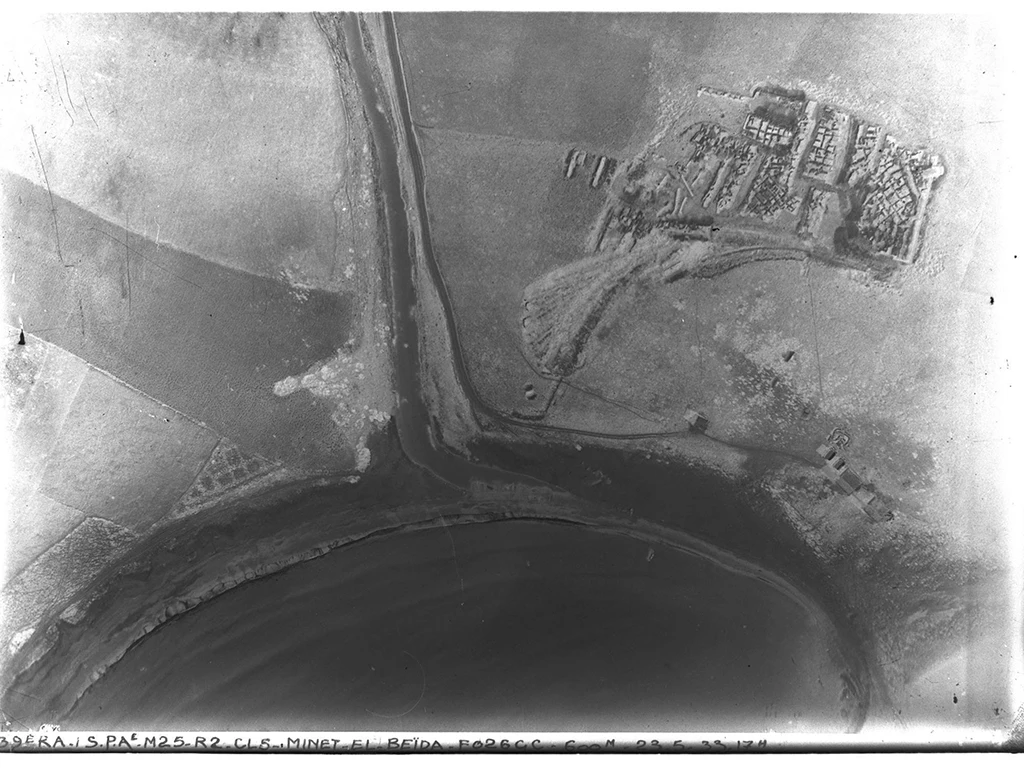
In the local Ugaritic language, the port of Minet el-Beida was called the mahadu. The texts reveal that the mahadu was administered almost as a separate entity from the royal palace at Ras Shamra. It had its own overseers, its own weigh-masters who standardised the competing measurement systems of visiting nations, and a complex legal framework to handle disputes between foreign sailors and local tradesmen. In every practical and economic sense, Ugarit was the Mediterranean's first great Emporion. It provided the blueprint for maritime trade networks that the Phoenicians would adopt after the Bronze Age collapse, which the Greeks would subsequently copy centuries later.
The Legal Framework
This system is documented in the legal and administrative tablets recovered from the city’s archives. Taken together, these texts show that commerce at Ugarit was governed by treaties, royal edicts, written contracts, and formal mechanisms of dispute resolution.
The Status of the Tamkarum
In the Bronze Age Near East, a recognised merchant was designated by the Akkadian term tamkarum (plural: tamkaru).
The tamkaru were not ordinary market traders, but elite merchants operating within official political and commercial networks. They pursued private profit, but also acted as recognised commercial agents of their respective rulers. Because they functioned as royal representatives, both their persons and their goods were protected by treaty. If a foreign tamkarum was robbed or killed within Ugarit’s territory, the king of Ugarit was obliged to compensate the merchant’s sovereign and punish those responsible.
The Hittite Treaties: Regulating the Merchants of Ura
Ugarit depended on foreign trade, but it also sought to prevent external merchants from gaining excessive control over its economy. This tension is particularly clear in the legal texts concerning the merchants of Ura, a major Hittite port in what is now southern Turkey.
As vassals of the Hittite Great King, Ugarit’s rulers were required to admit Hittite merchants into the city. At the same time, these merchants appear to have been backed by substantial Hittite capital and to have extended credit in ways that threatened to concentrate land and wealth in foreign hands.
To limit this risk, a legal edict issued by the Hittite king Hattusili III (tablet RS 17.130) established clear conditions for the activities of foreign merchants in Ugarit:
Seasonal Trading Only: The merchants of Ura were only allowed to operate in Ugarit during the summer trading season. They were legally forbidden from staying in the city during the winter ("the rainy season").
Ban on Real Estate: While they could collect on debts, the merchants of Ura were strictly prohibited from acquiring permanent real estate or houses in Ugarit.
Debt Repayment: If a citizen of Ugarit could not pay a debt, the Hittite merchant could claim the debtor, his wife, and his children as collateral (essentially debt slavery), but could not claim the debtor's land.
These provisions illustrate the broader legal balance that Ugarit sought to maintain: foreign trade was essential, but foreign commercial power was to remain limited.
Contracts and Dispute Resolution
In daily practice, merchants in the mahadu relied on a shared body of commercial law that operated across linguistic and political boundaries.
Written contracts: Major transactions, loans, and partnerships were recorded on clay tablets in Akkadian, the principal legal lingua franca of the region.
Witnessing and seals: Agreements were validated by witnesses and authenticated with cylinder seals or rings.
Activation clauses: Many texts included formulae such as “from this day forth” to specify the moment at which an agreement became legally binding.
Royal arbitration: Disputes between local and foreign merchants could be heard by the Overseer of the Port, the king of Ugarit, or, in politically sensitive cases, through diplomatic correspondence between rulers.
By combining the infrastructure of an Emporion with the protections of treaty law, Ugarit created a commercial environment that was comparatively secure, predictable, and attractive to merchants from across the eastern Mediterranean.
The White Harbour: Minet el-Beida

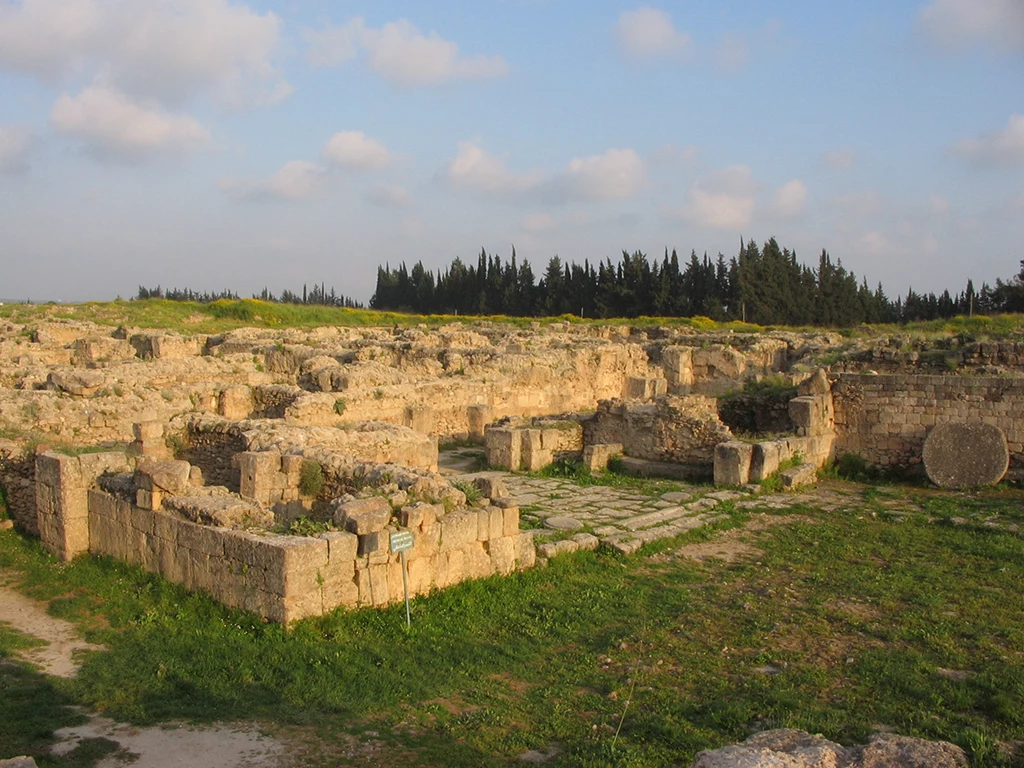
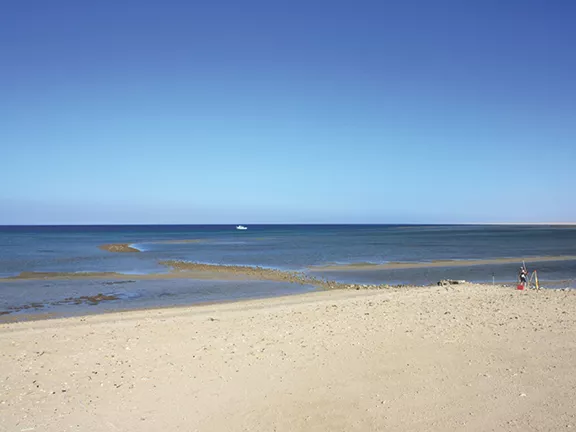
When Claude Schaeffer began excavating the site in 1929, he revealed a port settlement oriented toward international commerce. Minet el-Beida contained substantial stone warehouses, administrative buildings, and residences associated with wealthy foreign merchants (Yon, 2006).
Ships from across the Mediterranean sought shelter in the port’s naturally protected bay (Yon, 2006). Cargoes were unloaded and taxed at Minet el-Beida (Yon, 2006; Monroe, 2009). Goods were then sent either to the royal palace at Ras Shamra or onward along caravan routes toward the Euphrates and Mesopotamia (Yon, 2006; Monroe, 2009).
The Engines of Wealth: Copper and Purple
The Alashiyan Copper Trade
Bronze requires tin and copper, and in the Late Bronze Age Mediterranean, copper meant Cyprus (known in ancient texts as Alashiya). As A. Bernard Knapp has shown, Cyprus was the principal centre of copper production, but it relied on Levantine ports to distribute its metal to the empires of the Near East (Knapp, 2013).
Ships arrived from Cyprus carrying raw copper cast into heavy, four-handled "oxhide ingots" (Knapp, 2013; Monroe, 2009). These ingots were designed for easy transport by porters or by pack animals (Knapp, 2013). Ugaritic merchants bought the copper in bulk and stored it in the warehouses of Minet el-Beida (Monroe, 2009; Yon, 2006). They then sold it onward at a premium to major inland powers, including the Hittites and the Babylonians (Monroe, 2009; Knapp, 2013).
The First Masters of Purple
Although copper was principally a transit commodity, Ugarit also produced luxury goods of its own, most notably dyed textiles. Long before the Iron Age Phoenicians became associated with "Tyrian purple," Ugaritic dyers had already developed the techniques required for its production.
The purple dye came from the hypobranchial gland of the Murex marine snail (Yon, 2006). Producing it was labour-intensive and foul-smelling (Yon, 2006). Workers had to crack thousands of snails and boil the glands in lead vats for days (Yon, 2006). Even after all that work, the process yielded only a small amount of brilliant, colourfast dye (Yon, 2006).
Archaeological evidence closely corroborates the textual record: at Minet el-Beida, excavators identified substantial deposits of crushed Murex trunculus shells alongside the remains of dye vats. The resulting purple-dyed wool was sufficiently valuable to serve as diplomatic tribute to the Hittite court (Yon, 2006).
The Golden Age of the Merchant Kings
Imports: copper ingots from Cyprus, fine pottery and olive oil from Mycenaean Greece, and luxury goods from New Kingdom Egypt.
Exports: Levantine cedar timber, grain, lapis lazuli brought overland from as far away as Afghanistan, and textiles dyed with prized purple.
The archives reveal a complex mercantile network linking Ugarit to multiple regions of the eastern Mediterranean and Near East (Monroe, 2009). Its merchants employed advanced contractual practices, debt management, and standardised systems of weights and measures to facilitate exchange across multiple political and cultural spheres (Monroe, 2009).
A Linguistic Revolution

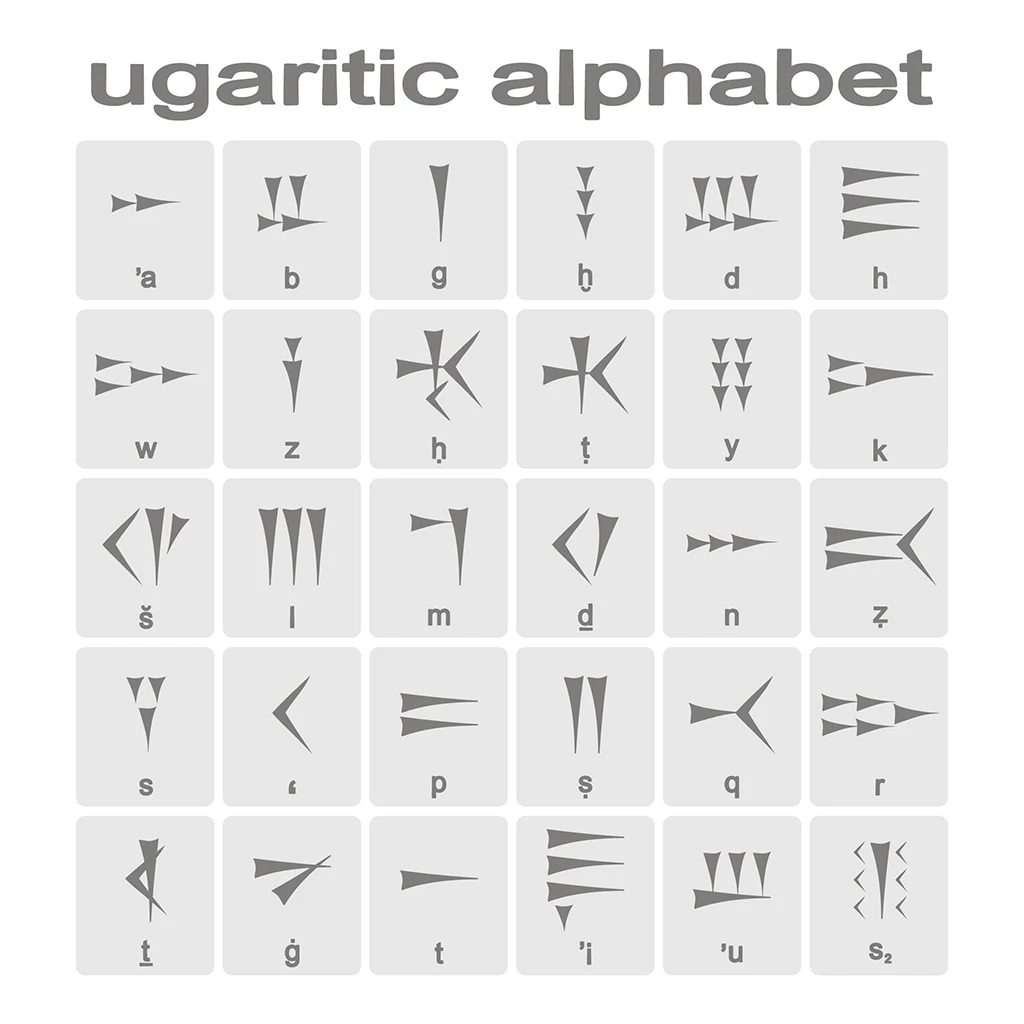
The most consequential discovery, however, was the development of a distinct script. Rather than relying on the extensive logographic repertoire characteristic of Mesopotamian cuneiform, Ugaritic scribes devised a streamlined system of 30 cuneiform characters. This was an early alphabetic script—more precisely, an abjad focused on consonants—which broadened the accessibility of writing and helped establish the conceptual basis for later alphabetic systems (Yon, 2006).
The Role of Women in Ugarit

The Power of the Dowager Queens
At the highest social level, royal women could act as important agents of dynastic and political continuity. Because kingship was structured around succession, the office of the rabitu (Great Lady or Queen Mother) carried substantial authority, particularly in periods of transition between one reign and the next (Liverani, 1962; Yon, 2006; Van Soldt, 1987).
A particularly important example is Queen Ahatmilku (fl. c. 1265 BC). Originally a princess of the neighbouring Amorite kingdom of Amurru, she married King Niqmepa of Ugarit as part of a political alliance. After his death, she appears to have acted as dowager queen during the transition to the reign of her son, Ammittamru II (Liverani, 1962; Nougayrol, 1956; Van Soldt, 1987; Feldman, 2002).
When two of her sons, Khishmi-Sharruma and Arad-Sharruma, challenged the succession, Ahatmilku referred the dispute to the Hittite court (Nougayrol, 1956; Liverani, 1962). The tablets indicate that she secured the removal of the rebels from royal status and their exile to Cyprus (Alashiya) (Nougayrol, 1956; Liverani, 1962). The same evidence suggests that she drew on her own resources to provide them with supplies, indicating control over an independent treasury (Nougayrol, 1956; Yon, 2006).
Women as Economic Drivers
Beyond the palace, women played a central role in Ugarit’s textile economy, one of the city’s most valuable sectors. Although the extraction of purple Murex dye may have involved mixed labour, spinning, weaving, and garment production appear to have been predominantly female activities (Yon, 2006; Monroe, 2009; McGeough, 2007; Marsman, 2003).
In Ugaritic mythology, the goddess Athirat (Asherah) is associated with spinning and weaving, indicating the symbolic importance of textile labour (Yon, 2006; Marsman, 2003; Watson and Wyatt, 1999). The spindle functioned as a common marker of female work, but textile production extended well beyond the household sphere.
Palaces and wealthy estates maintained large weaving workshops staffed heavily by women (Yon, 2006; Monroe, 2009). The goods produced in these workshops contributed directly to Ugarit’s wealth and to the tribute obligations through which it managed relations with the Hittite Empire (Monroe, 2009; Yon, 2006).
Furthermore, legal contracts from the city show that non-royal women could own property, inherit estates in the absence of male heirs, and act as official guarantors for financial loans (Yaron, 1969; Yon, 2006; McGeough, 2007; Marsman, 2003).
"The Enemy's Ships Have Come": The Collapse Ugarit’s prosperity depended on a highly interconnecte
The textual and archaeological records from Ugarit provide some of the clearest contemporary evidence for the Late Bronze Age collapse, although the label "Sea Peoples" derives from Egyptian usage rather than from the terminology employed at Ugarit itself (Cline, 2014; Yon, 2006).
The evidence from Ugarit suggests not a single, unified migration, but rather the activity of highly mobile maritime raiders operating within a geopolitical system already under severe strain (Cline, 2014).
The Textual Warnings
As the Hittite Empire weakened and supply lines were disrupted, Ugarit’s last king, Ammurapi, found the city deprived of its defensive capacity. Its troops and chariots had been requisitioned by Hittite authorities, while its fleet had been deployed to the Anatolian coast (Cline, 2014; Yon, 2006).
In tablet RS 18.147, one of the most important surviving documents from the period, Ammurapi addressed an urgent appeal to the king of Alashiya:
"My father, behold, the enemy's ships came; my cities were burned, and they did evil things in my country. Does not my father know that all my troops and chariots are in the Hittite country, and all my ships are in the land of Lycia? ... The country is abandoned to itself. May my father know it: the seven ships of the enemy that came here inflicted much damage upon us."
This letter is widely thought never to have been dispatched. At some point between 1190 and 1185 BC, Ugarit was violently destroyed by fire. Unlike many ancient cities, it was not subsequently rebuilt, and its remains, together with a substantial documentary archive, remained sealed until their modern excavation (Yon, 2006; Cline, 2014).
In the years immediately preceding its destruction, correspondence preserved in Ugarit’s archives conveys mounting concern. These texts indicate a polity attempting to gather intelligence on an unfamiliar and mobile enemy (Yon, 2006; Cline, 2014).
The Shikila: A letter from the Hittite Great King (likely Suppiluliuma II) to the governor of Ugarit explicitly mentions a group called the Shikila—widely equated by scholars with the Shekelesh mentioned in later Egyptian records of the Sea Peoples. The Hittite king describes them specifically as "people who live in ships" and demands that a man from Ugarit who had been captured by the Shikila be sent to him for interrogation (Yon, 2006; Cline, 2014).
The "Seven Ships": As noted in King Ammurapi’s famous letter, the damage inflicted was vastly disproportionate to the size of the attacking fleet. He notes that just "seven ships of the enemy" had caused massive devastation. This suggests these raiders operated as heavily armed, tactical strike forces targeting poorly defended coastal infrastructure, rather than a massive, slow-moving armada (Cline, 2014; Yon, 2006).
Warnings from Cyprus: The King of Alashiya (Cyprus) wrote back to Ammurapi, advising him to fortify his towns, bring his troops inside the walls, and prepare for further naval assaults. It was advice Ammurapi—whose troops and chariots had been requisitioned to fight for the Hittites—was fundamentally unable to follow (Yon, 2006; Cline, 2014).
The Archaeological Reality
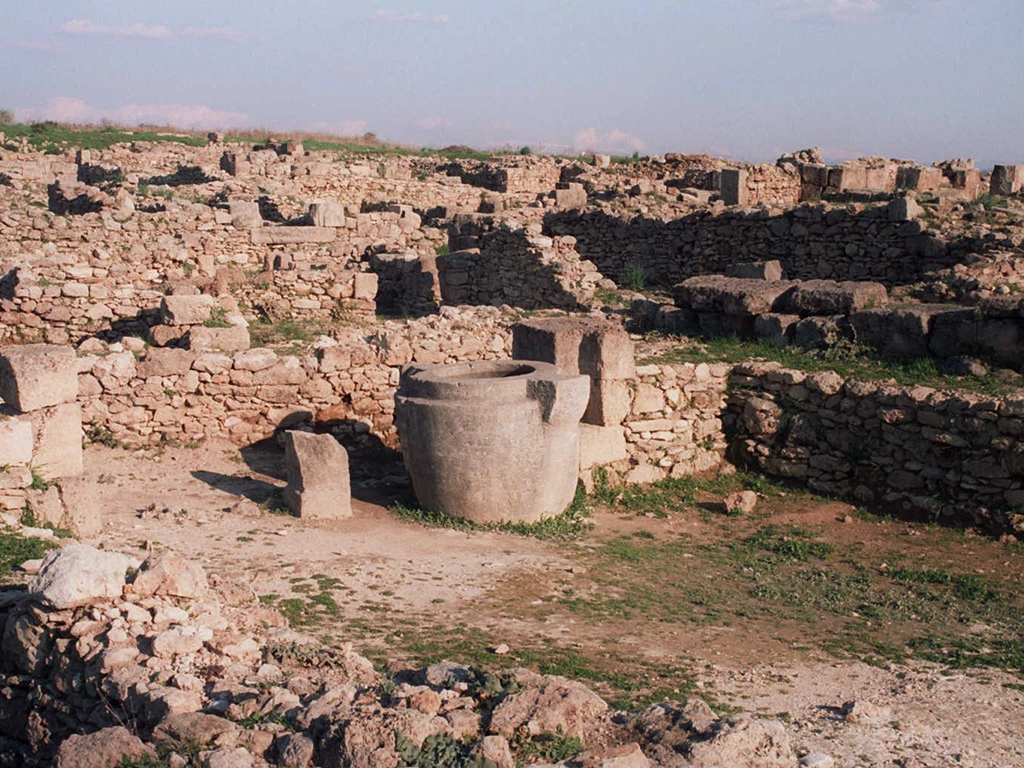
When the final attack occurred between 1190 and 1185 BC, it appears to have been sudden and destructive. Excavations at Ras Shamra and Minet el-Beida closely correspond to the picture presented in the textual record (Yon, 2006; Cline, 2014).
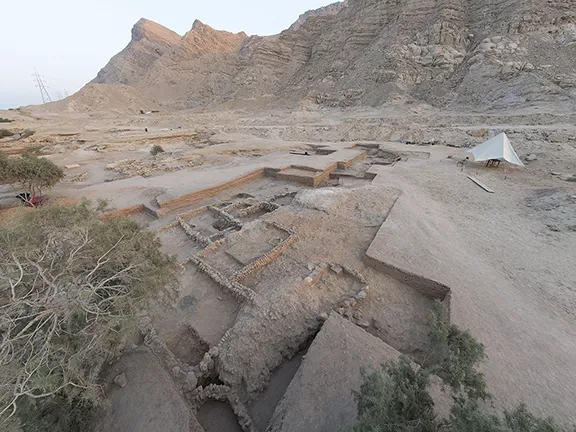
The Destruction Layer: Archaeologists have uncovered a massive destruction level (Level 7A) across the entire city. Buildings collapsed inward, and thick layers of ash cover the final occupational phase. The city was burned to the ground and, crucially, never reoccupied by its survivors (Yon, 2006; Cline, 2014).
Street-Level Combat: This was not merely a siege followed by a surrender; it was a brutal urban sack. Excavators found numerous bronze arrowheads scattered throughout the streets, courtyards, and within the ruins of houses, pointing to intense, close-quarters fighting as the defenders were overwhelmed (Yon, 2006).
Hidden Hoards: In several wealthy residences, archaeologists discovered hoards of bronze tools, weapons, and precious metals hastily buried beneath the floorboards. The owners clearly hid their wealth in a panic, intending to return once the raiders had passed. The fact that these hoards remained undisturbed for 3,000 years is a grim testament to the fate of the people who buried them (Yon, 2006; Cline, 2014).
Correcting the Kiln Myth
For decades, a widely repeated account held that the famous "enemy ships" letter had been found inside a kiln, supposedly in the process of being fired at the moment of the city’s destruction. Subsequent archaeological reassessment has corrected this interpretation: the tablet was found among the debris of a collapsed upper floor, where it had apparently been stored in a basket. Nevertheless, the volume of unfinished administrative material preserved in the ruins indicates that the city’s end was abrupt (Yon, 2006).
References
Feldman, M.H. (2002) ‘Ambiguous Identities: The “Marriage” Vase of Niqmaddu II and the Elusive Egyptian Princess’, Journal of Mediterranean Archaeology, 15(1), pp. 75–99.
Knapp, A.B. (2013) The Archaeology of Cyprus: From Earliest Prehistory through the Bronze Age. New York: Cambridge University Press.
Liverani, M. (1962) Storia di Ugarit nell'età degli archivi politici. Rome: Centro di Studi Semitici, Università di Roma.
Marsman, H.J. (2003) Women in Ugarit and Israel: Their Social and Religious Position in the Context of the Ancient Near East. Leiden and Boston: Brill.
McGeough, K.M. (2007) Exchange Relationships at Ugarit. Leuven: Peeters.
Monroe, C.M. (2009) Scales of Fate: Trade, Tradition, and Transformation in the Eastern Mediterranean ca. 1350–1175 BC. Münster: Ugarit-Verlag.
Nougayrol, J. (1956) Le Palais Royal d'Ugarit IV: Textes accadiens des archives sud (archives internationales) . Paris: Imprimerie Nationale and Klincksieck.
Van Soldt, W.H. (1987) ‘The Queens of Ugarit’, Jaarbericht Ex Oriente Lux, 29, pp. 68–73.
Watson, W.G.E. and Wyatt, N. (eds.) (1999) Handbook of Ugaritic Studies. Boston: Brill.
Yaron, R. (1969) ‘Foreign Merchants at Ugarit’, Israel Law Review, 4(1), pp. 70–79.
Yon, M. (2006) The City of Ugarit at Tell Ras Shamra. Winona Lake, IN: Eisenbrauns.
Enjoying the fast, clean reading experience?
Discover how I partnered with an AI to rescue this outdated site from technical debt and hit perfect 100/100 Lighthouse scores. Legacy Reloaded is the ultimate guide to modernising old code without losing your mind.
Location Map
You have finished reading chapter 3
More articles in the Ancient Mediterranean Shipyards and Harbours series: