TML

The Megalithic Phenomenon and the Architecture of Anxiety

Architecture of Anxiety: Megaliths of the Middle East

By Nick Nutter | Published: 2026-10-30 | Updated: 2026-11-2

Visited 384 times

At the dawn of the third millennium BCE, the Levant underwent a radical transformation as fortified citadels like Hazor and Megiddo monopolised the fertile valleys. Marginalised by this urban revolution, semi-nomadic pastoralists were pushed into the rugged highlands of the Golan and Jordan Valley. In defiant response, they constructed thousands of brutalist megalithic dolmens. This "counter-architecture" functioned as permanent stone deeds of ownership against expanding urban kings. As the Bronze Age progressed, these disenfranchised nomads militarised into the stateless Habiru, an insurgency that capitalised on the 1200 BCE climate shock and Sea Peoples' migrations to dismantle the city-states that displaced them.

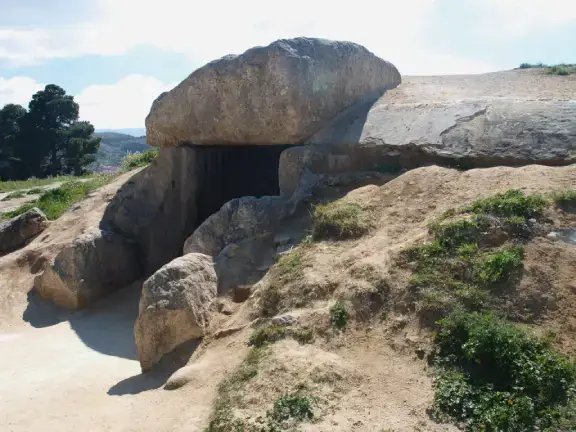
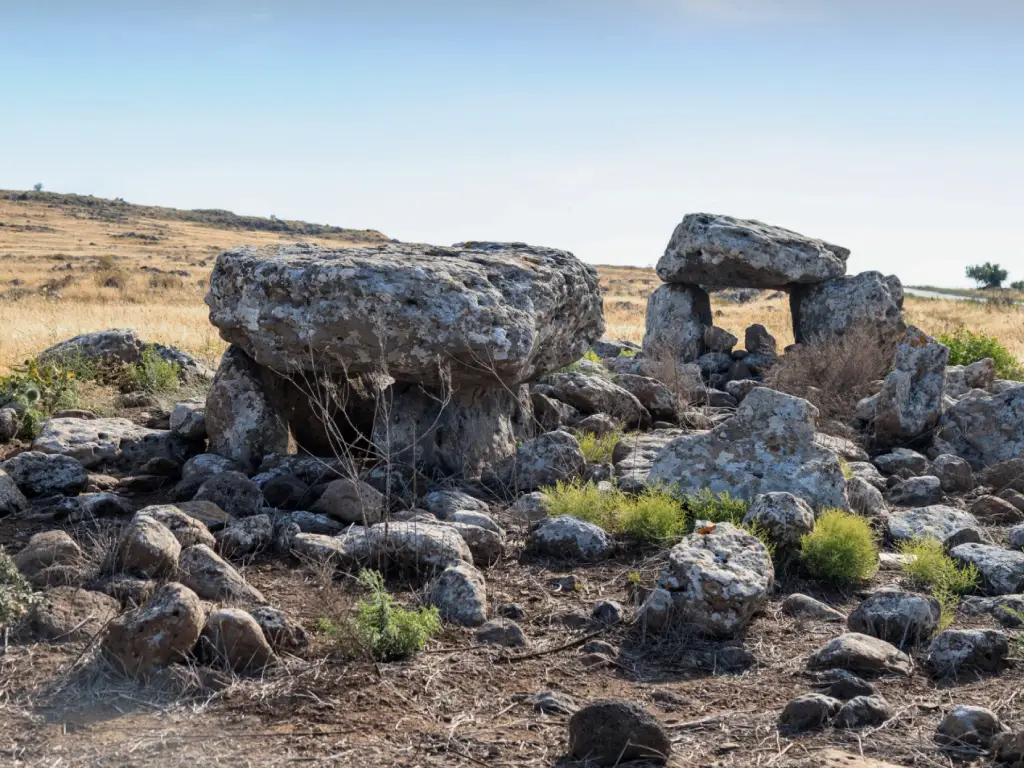
Architecture of Anxiety: Megaliths of the Middle East - Gamla Necropolis
Gamla Necropolis

The Levantine Defiance: Nomads, Kings, and the Counter-Architecture of the Middle East

As we enter the third millennium BCE, the Levant was being transformed. For thousands of years, the landscape had been a fluid mosaic of egalitarian farming villages and mobile pastoralists. Then came the urban revolution. Across the region, massive, fortified city-states began to rise from the sand. Sites like Hazor, Megiddo, and Jericho transformed from open settlements into citadels.

This was the birth of the Levantine Bronze Age. It brought with it the invention of the king, the tax collector, and the territorial border. For the urban elites, it was an era of unprecedented wealth and power. But for the semi-nomadic populations living outside the newly erected mudbrick walls, the rise of the city-state was a life changing shock.

The Jaws of the City

The new urban centres did not exist in isolation. To feed their exploding populations, kings had to control the agricultural hinterlands. They aggressively expanded their territorial claims, annexing the fertile valleys and monopolising the vital water sources.

Yet, as Raphael Greenberg argues in his seminal synthesis of the era (Greenberg, 2019), Levantine urbanism was a highly fragile "experiment." Unlike the absolute god-kings of Egypt, Levantine elites struggled to exert control beyond their immediate hinterlands. Their massive mudbrick walls were as much a symbol of deep-seated paranoia as they were of dominance. To secure their volatile borders, the urban machine expanded directly into the pastoral highlands.

The Golan Heights was not an empty refuge for fleeing nomads. As Yitzhak Paz has demonstrated, the rugged basalt plateau was actively colonised by massive Early Bronze Age fortified sites, such as the Leviah Enclosure (Mitham Leviah). For the pastoralists whose survival depended on transhumance, moving herds seasonally between the highlands and the valleys, the world was suddenly partitioned. Ancient migratory routes were blocked by garrisoned walls, and the dolmens the nomads built were often erected right on the doorsteps of these new highland enclosures. The spatial anxiety was not distant; it was immediate and claustrophobic. The nomads were being rapidly squeezed out of the economic and geographical centre, excluded by an urban machine they could not fight on equal terms.

The Counter-Architecture of the Golan and the Jordan Valley

The pastoralists could not build palaces, nor could they muster armies to lay siege to the massive bastions of Megiddo. Instead, they built dolmens.

Scattered across the basalt highlands of the Golan and the arid ridges of the Jordan Valley are thousands of megalithic tombs. Constructed from massive, unhewn boulders, some capstones weighing up to fifty tons, these structures form vast, sprawling necropolises that look directly down upon the newly urbanised valleys.

How does this tie in with our "Architecture of Anxiety" hypothesis? In the Maghreb, the anxiety was ecological; the herders were fighting a shifting climate. In the Levant, the anxiety was explicitly political.

As Kay Prag demonstrated in her seminal analysis of the Dead Sea dolmens (1995), these megaliths were not the work of urbanites. They were constructed by the very semi-nomadic groups being pushed to the periphery. The dolmens deliberately cluster along the rift margins and the rugged highlands, the remaining ecological zones left to the pastoralists once the valley floors were seized by the city-states.
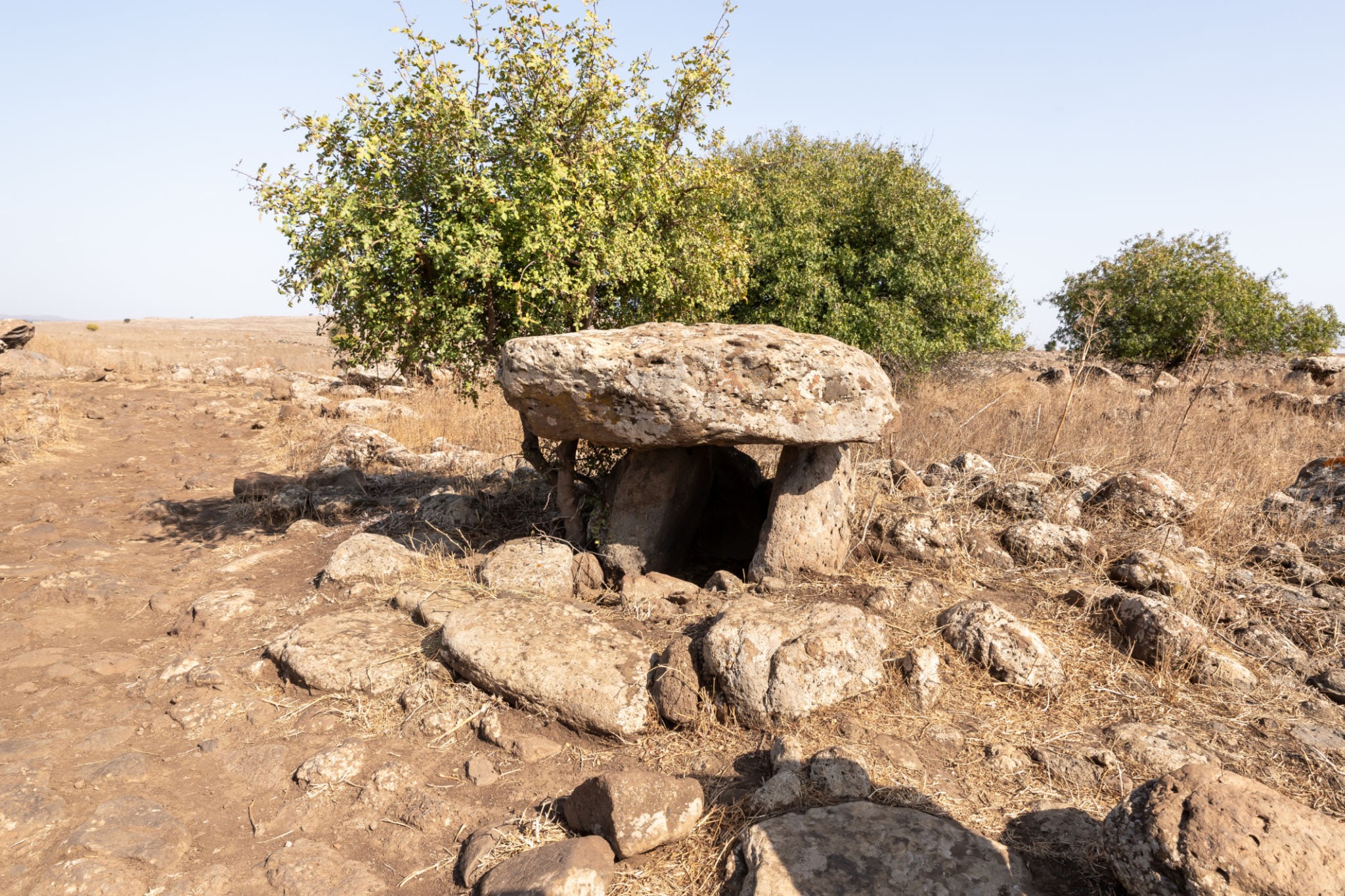
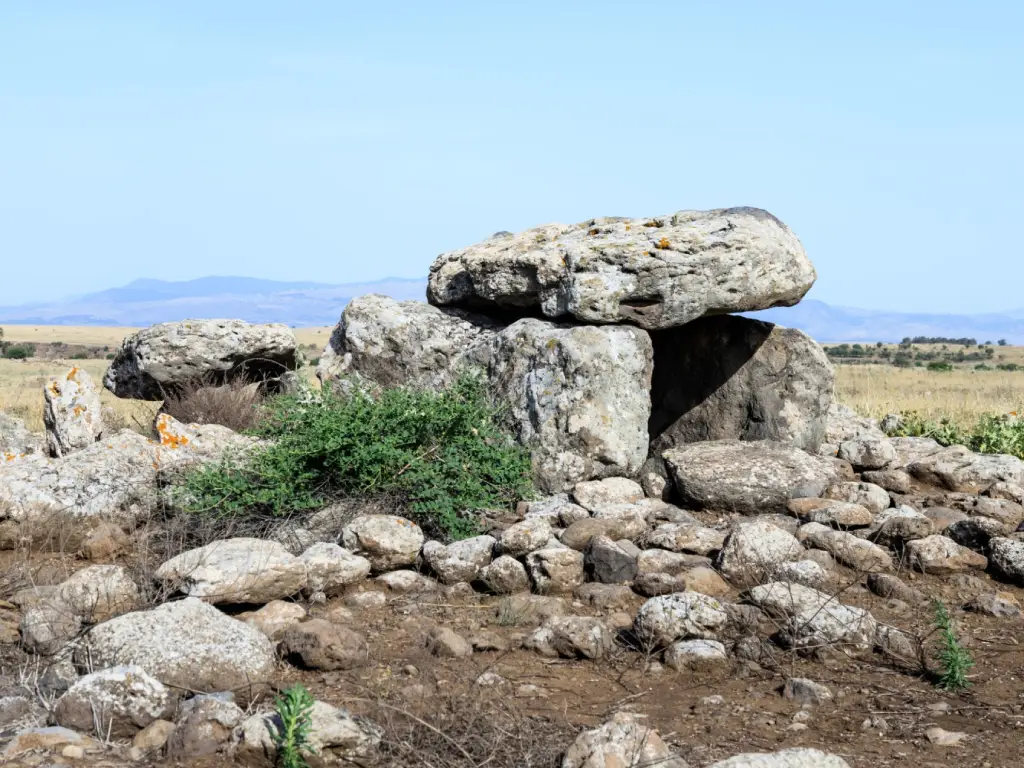
Architecture of Anxiety: Megaliths of the Middle East - Damiyah Dolmen Field
Damiyah Dolmen Field

Stone as a Deed of Ownership

These thousands of dolmens represent a "Counter-Architecture." The nomads used the permanence of stone to counteract the expanding political power of the cities.

A mudbrick city wall, no matter how thick, requires constant maintenance. It is an architecture of the present. A megalithic tomb, constructed from immovable basalt slabs, is built for eternity. By interring their dead in prominent, indestructible monuments on the high ground, the pastoralists were making a geopolitical statement. They were carving a legal deed directly into the bedrock.

A dolmen looking down on a walled city sent a message to the urban elites below: Our ancestors rest in this earth. We owned these grazing lands long before your kings were born, and we will remain here long after your mudbrick walls crumble into dust.

In the shadow of the rising city-states, the pastoralists of the Levant used the dead to defend the living, proving that the deepest anxieties of the Bronze Age were driven just as much by human ambition as by environmental collapse.

The material chasm between the new urban elites and the displaced pastoralists is preserved in the archaeological record. While the kings of the Early Bronze Age citadels were burying themselves with imported Egyptian alabaster, gold jewellery, and weapons forged from high-grade bronze, the builders of the megaliths were depositing the bare minimum required for the afterlife.

The "life-changing shock" of urbanization was not a sudden military defeat, but a gradual, generational economic strangulation. As the citadels annexed the best land, the pastoralists were cut off from the lucrative trade networks passing through the valleys. The resulting material poverty of the nomads is visible across four distinct megalithic landscapes in the Levant.

Adeimah and the Dead Sea Margins

Located near the edge of the Dead Sea, the Adeimah necropolis offers one of the clearest windows into this marginalisation. Excavated extensively in the 1930s by Moshe Stekelis, the site contains hundreds of cist graves and small dolmens built by pastoralists living on the absolute fringe of the fertile zone (Stekelis, 1935).

When Kay Prag re-examined the Dead Sea dolmens, she highlighted the extreme poverty of the grave goods (Prag, 1995). The Adeimah tombs did not yield lapis lazuli or ceremonial mace heads. They contained simple, undecorated pottery, bone tools, and flint. These were people living a subsistence lifestyle on the edge of a booming urban economy, using heavy stone to mark their presence in an increasingly hostile political landscape.

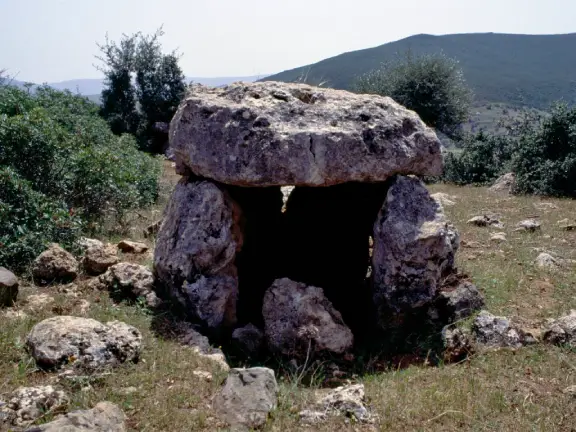
The Damiyah Dolmen Field

Further north in the Jordan Valley, the Damiyah dolmen field demonstrates the volume of labour the nomads were willing to invest in their territorial claims. Here, hundreds of dolmens are clustered on the travertine ridges overlooking the valley floor.

Recent excavations have revealed cup marks and geometric rock art carved into the capstones, indicating complex ritual behaviours. Yet, the material wealth inside the tombs remains utilitarian. The grave goods consist primarily of EBA IV (Intermediate Bronze Age) domestic jars, simple copper daggers, and basic stone beads. The builders invested thousands of hours into quarrying and erecting massive limestone blocks, yet lacked the economic capital to furnish the tombs with prestige goods. They were rich in labour and stone, but starved of urban capital.

The Gamla Necropolis

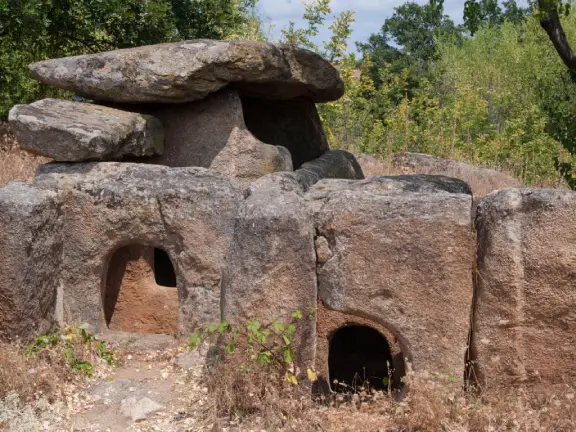
The Golan Heights provided a rugged basalt refuge for the pastoralists pushed out of the northern Levantine valleys. Near the site of Gamla, archaeologists have mapped a staggering concentration of over 700 massive dolmens spread across the plateau (Epstein, 1985).

The Gamla dolmens are brutal, heavy structures, often constructed from basalt slabs weighing up to twenty tons. They are highly visible statements of ownership overlooking the Sea of Galilee. Despite the monumental engineering required to build them, Claire Epstein's excavations revealed the same bare essentials. The tombs contained only basic copper pins, a few flint blades, and coarse local pottery. The contrast between the mass of the architecture and the poverty of the artifacts demonstrates the nomads' defiant, disenfranchised status.

Rujm el-Hiri: The Monument of the Marginalized

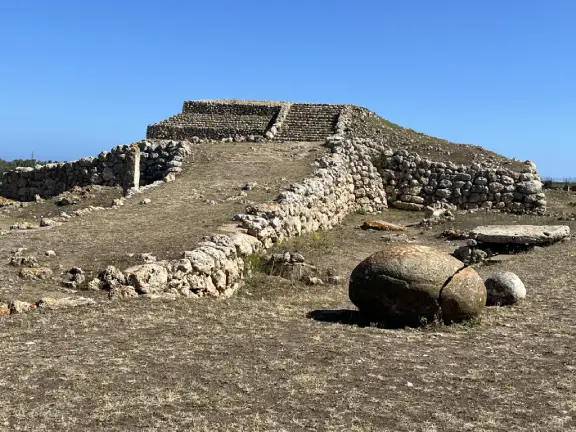
The ultimate expression of this pastoralist defiance sits in the central Golan Heights. Rujm el-Hiri (Gilgal Refaim) is not a simple dolmen, but a gargantuan megalithic complex consisting of concentric stone circles, the outermost measuring 160 metres in diameter. At its centre sits a massive burial cairn covering a central dolmen.

Constructed from over 40,000 tons of fieldstone, Rujm el-Hiri was not built by a disorganized rabble. These semi-nomadic groups possessed the social hierarchy, astronomical knowledge, and logistical capacity to build on a Pharaonic scale (Freikman, 2012). Yet, they built it on a desolate, windswept plateau, far from the walled citadels. It is a masterpiece of counter-architecture, a centralised ritual hub for a decentralised, displaced people.

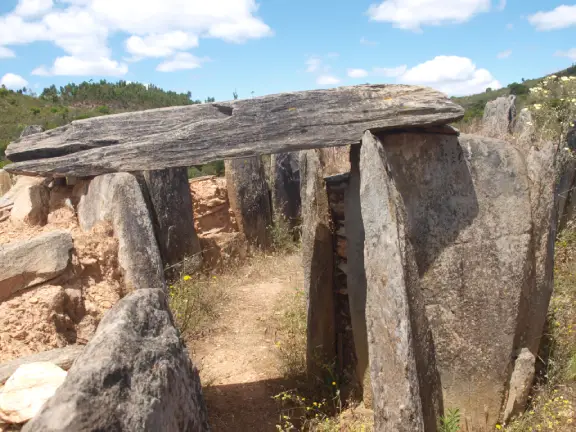
Architecture of Anxiety: Megaliths of the Middle East - Shamir dolmen field
Shamir dolmen field

The Chronology of Defiance

To understand how the pastoralists transitioned from building stone monuments to tearing down walled cities, we must examine the chronology of the dolmens. The Levantine megalithic boom was not a permanent fixture; it was a specific, time-bound reaction to the rise of urbanism.

Dating megaliths is notoriously difficult due to millennia of looting and reuse, but recent consensus, spearheaded by scholars like James A. Fraser, anchors the primary construction wave in the Jordan Valley and the Golan Heights to the period between the Early Bronze I and the Intermediate Bronze Age (roughly 3500 to 2000 BCE). Excavations by Uri Berger and Gonen Sharon at the Shamir dolmen field, home to massive fifty-ton basalt capstones, confirm that this engineering zenith directly coincided with the era when the citadels first asserted dominance over the valleys. Caught off guard and outmanoeuvred by this "life-changing shock," the marginalised populations responded with the passive, territorial defence of the megalith.

Archaeology, however, is rarely a monolithic consensus. Some scholars point to a "Deep Antiquity" origin, suggesting the dolmen tradition began in the Late Chalcolithic or Neolithic periods, long before the citadels existed. Others, such as Mattanyah Zohar, advocate for a "Sedentary Builder" hypothesis, arguing that mobile nomads lacked the social organization for megalithic architecture, and that these tombs were instead built by sedentary farming villages in the highlands.

Even if the architectural roots were older, or if highland farmers participated in their construction, the demographic reality remains unchanged. The explosion of megalithic construction during the Early and Intermediate Bronze Ages represents a deep seated spatial anxiety. The highlands were filling with stone precisely because the lowlands were filling with kings.

The Birth of the Habiru

This architectural defiance planted a slow-burning geopolitical time bomb. The gradual realization amongst the pastoralists that they were losing their birthright bred a deep resentment. They were locked out of the walled citadels, heavily taxed when they brought their flocks to the valley markets, and pushed into increasingly marginal environments.

Over the ensuing centuries, the boundary between the "city dweller" and the "stateless nomad" proved highly porous. As highlighted in The Social Archaeology of the Levant (2018), power in this era was often fluid. A heavily taxed or indebted farmer could easily flee the fragile urban core, taking to the hills to merge with the displaced pastoralists. Over time, these peripheralised nomads, runaway serfs, and disaffected outcasts coalesced into a highly mobile, anti-state demographic.

By the Late Bronze Age (c. 1550–1200 BCE), the construction of new dolmens had ceased entirely. This architectural silence was replaced by a highly vocal threat recorded in the diplomatic correspondence of the Amarna Letters: the 'Apiru or Habiru. The "Architecture of Anxiety" was an adaptive strategy for a population trying to hold onto ancestral grazing rights. Once these disenfranchised groups militarised into stateless insurgents, they no longer needed passive stone deeds of ownership. They no longer marked the landscape, they raided it.

The exact identity of the Habiru has long been a fiercely contested battleground. Michael B. Rowton championed the idea of a "dimorphic society," viewing the Habiru as the natural military evolution of the displaced nomad. Conversely, scholars like Anson Rainey argued vehemently that they were an underclass of urban refugees fleeing the crushing taxation of the citadels.

In reality, it was both. The Habiru were a volatile, Marxist-style coalition of runaway urban serfs and disenfranchised herders. The periphery had militarised against the centre. When the great systems collapse of 1200 BCE finally arrived, the walled citadels of the Levant were entirely dependent on fragile international trade. The Habiru were not. Hardened by centuries of marginalisation, these disaffected factions became instrumental in tearing down the Bronze Age urban machine, finally reclaiming the valleys their ancestors had marked with stone three thousand years earlier.

The 1200 BCE Collapse: Perfect Storms and Scavengers

This volatile geopolitical powder keg detonated around 1200 BCE, aided by a massive external catalyst. As Eric H. Cline masterfully synthesizes in his "Systems Collapse" theory, the Late Bronze Age world was felled by a perfect storm of climate change, severed international trade routes, earthquakes, and internal rebellions.

Hard empirical science supports this apocalyptic narrative. Palynological (pollen) cores taken from the Syrian coast by David Kaniewski and his team reveal that a devastating, centuries-long drought hit the Levant right at the end of the Late Bronze Age. The agricultural hinterlands failed, and the citadels starved.

Simultaneously, waves of displaced Mediterranean migrants, known to the Egyptians as the Sea Peoples, swept down the Levantine coast. The great urban centres like Ugarit were burned to the ground. However, modern scholars like A. Bernard Knapp and Sturt Manning caution against blaming the entire collapse on these seaborne refugees, suggesting the Egyptian reliefs depicting their invasion are laced with state propaganda.

In reality, the Sea Peoples were likely the opportunistic scavengers of a dying system. The coastal citadels, crippled by drought, economic fragility, and relentless internal pressure from the Habiru insurgents, were already rotting from the inside. For the highlanders, the influx of these refugees was nothing other than the final blow to the old urban order.

The chaos permanently ended any lingering megalithic traditions. In the ensuing Iron Age, the paradigm of survival shifted. The marginalised factions descended from the hills to fill the political vacuum, establishing their own fortified hilltop settlements. The world was now too fast, and too violently contested, to invest thousands of hours into dragging fifty-ton basalt capstones across the Golan. The age of the dolmen was dead. The age of the sword and the iron chariot had begun.

The Eternal Divide: Echoes of the Citadel

The tragedy of the Levantine Bronze Age is that its fundamental socio-political fracture never actually healed. The megaliths of the Golan and the Jordan Valley remain today as the earliest physical evidence of a region tearing itself apart along the fault line of the centre versus the periphery.

The citadels of Hazor and Megiddo have long since been reduced to archaeological tells, but the division they introduced, the wealthy, fortified urban core pitted against the disenfranchised populations outside the walls, was permanently baked into the DNA of the Middle East. Over the subsequent three millennia, new empires built new walls. To this ancient geographic and economic divide, the modern era has thrown competing religious sects, colonial borders, and petrochemical wealth into the mix.

The core dynamic remains eerily familiar. Today, high-tech, heavily fortified urban centres look out over impoverished, militant peripheries. Modern separation barriers of concrete and steel have replaced the mudbrick walls of the Early Bronze Age, but they serve the same function, to lock the wealth inside and keep the marginalised out. The Middle East remains a volatile region because it is still fighting the ghost of the Bronze Age, trapped in a five-thousand-year-old war between the citadel and the nomad.

References and Further Reading

  • Berger, U. and Sharon, G. (2017). 'The Shamir Dolmen Field and the Intermediate Bronze Age'. Tel Aviv, 44(2), pp. 151-174.
  • Cline, E. H. (2014). 1177 B.C.: The Year Civilization Collapsed. Princeton University Press.
  • Epstein, C. (1985). 'Dolmens Excavated in the Golan'. Atiqot, 17, pp. 20-58.
  • Finkelstein, I. (1992). 'Pastoralism in the Highlands of Canaan in the Third and Second Millennia B.C.E.' Pastoralism in the Levant: Archaeological Materials in Anthropological Perspectives, pp. 133-142.
  • Fraser, J. A. (2018). Dolmens in the Levant. Routledge.
  • Freikman, M. (2012). 'Rujm el-Hiri: The Monument in the Landscape'. Tel Aviv, 39(2), pp. 165-181.
  • Greenberg, R. (2019). The Archaeology of the Bronze Age Levant: From Urban Origins to the Demise of City-States, 3700–1000 BCE. Cambridge University Press.
  • Kaniewski, D., et al. (2013). 'Middle East coastal ecosystem response to middle-to-late Holocene climate changes'. PLoS One, 8(11).
  • Knapp, A. B. and Manning, S. W. (2016). 'Crisis in Context: The End of the Late Bronze Age in the Eastern Mediterranean'. American Journal of Archaeology, 120(1), pp. 99-149.
  • Paz, Y. (2012). 'The Leviah Enclosure: An Early Bronze Age III Fortified Site in the Golan Heights'. Israel Antiquities Authority Reports, 51.
  • Prag, K. (1995). 'The Dead Sea Dolmens: Death and the Landscape', in Campbell, S. and Green, A. (eds.) The Archaeology of Death in the Ancient Near East. Oxbow Books, pp. 75-84.
  • Rainey, A. F. (1995). 'Unruly Elements in Late Bronze Canaanite Society', in Pomegranates and Golden Bells: Studies in Biblical, Jewish, and Near Eastern Ritual, Law, and Literature in Honor of Jacob Milgrom, pp. 481-496.
  • Rowton, M. B. (1976). 'Dimorphic Structure and the Problem of the 'Apiru-Ibrim'. Journal of Near Eastern Studies, 35(1), pp. 13-20.
  • Stekelis, M. (1935). Les Monuments Mégalithiques de Palestine. Archives de l'Institut de Paléontologie Humaine.
  • Yasur-Landau, A., Cline, E. H. and Rowan, Y. M.
  • Zohar, M. (1992). 'Megalithic Cemeteries in the Levant', in Pastoralism in the Levant: Archaeological Materials in Anthropological Perspectives, pp. 43-63.
Legacy Reloaded: A dev, an AI, and the relentless pursuit of 100

Enjoying this clean, uncluttered read?

You are currently browsing the result of a massive technical overhaul. My new book, Legacy Reloaded: A dev, an AI, and the relentless pursuit of 100, chronicles the journey of transforming an aging legacy website into a modern, lightning-fast platform that hits the perfect 90+, 100, 100, 100, 3/3 Lighthouse metrics. It’s a story of collaboration between developer and AI, and the stubborn pursuit of technical perfection.

Read the Story

You have finished reading chapter 9

More articles in the The Megalithic Phenomenon and the Architecture of Anxiety series: