The Megalithic Phenomenon and the Architecture of Anxiety

The Last Stand: Thracian Dolmens & the 1200 BCE Collapse

By Nick Nutter | Published: 2026-11-19 | Updated: 2026-11-19

Visited 21 times

When the Mycenaean palace economies of the Aegean fractured around 1200 BCE, the resulting Systems Collapse triggered centuries of demographic upheaval across the Balkans. While megalithic construction died in the Levant, the highland warrior aristocracies of Thrace inverted that trajectory. Across the Sakar, Strandzha, and Eastern Rhodope mountains of Bulgaria and northern Greece, Early Iron Age tribal elites erected hundreds of massive dolmens between the twelfth and sixth centuries BCE. Far from primitive shelters, these astronomically aligned tombs functioned as immovable stone deeds of ownership, an Architecture of Anxiety defending ancestral lands against post-collapse migrations and encroaching Greek coastal colonies.

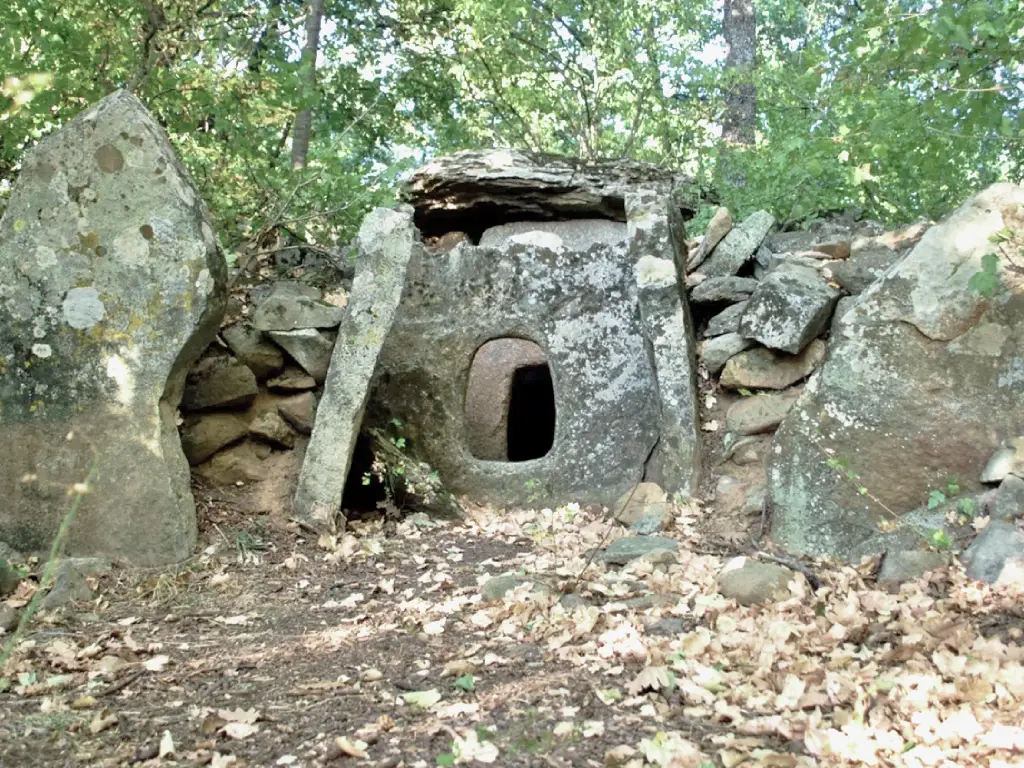
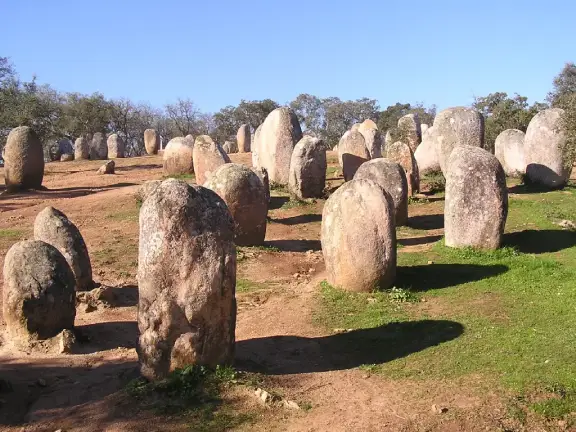
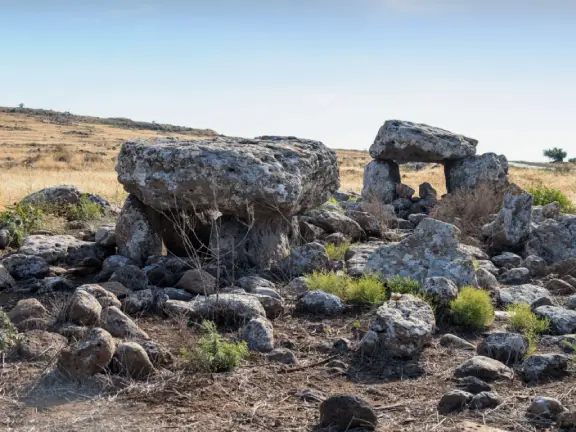
The Last Stand: Thracian Dolmens & the 1200 BCE Collapse - Nachovi Chairi twin dolmen, Hlyabovo. Source: ANCIENT BULGARIA
Nachovi Chairi twin dolmen, Hlyabovo. Source: ANCIENT BULGARIA

The Mycenaean Core and the Barbarian Periphery

At the peak of the Late Bronze Age, the Aegean world was entirely dominated by the Mycenaean palace economies. From the heavily fortified citadels of Mycenae, Tiryns, and Pylos, a bureaucratic elite ruled over a highly centralised, agrarian society (Shelmerdine, 2008). Their wealth was staggering, built on a vast network of international maritime trade that stretched from Egypt to the Baltic. To manage it all, they employed a rigid administrative system, recording every taxation of grain and every flock of sheep on clay tablets in Linear B script.

This highly ordered, urbanised core had a rugged northern frontier. Beyond the reach of the Mycenaean chariots lay the mountainous expanse of Thrace and the Rhodope Mountains. To the palatial elites of the Peloponnese, this northern periphery was a wild, untamed land of tribal pastoralists, horse-breeders, and warrior aristocracies (Fol and Fol, 2005). The Thracians did not build palaces. They did not write on clay tablets. They were fiercely independent, semi-pastoralist, decentralised tribal communities living on the margins of an organised, bureaucratic urban world.

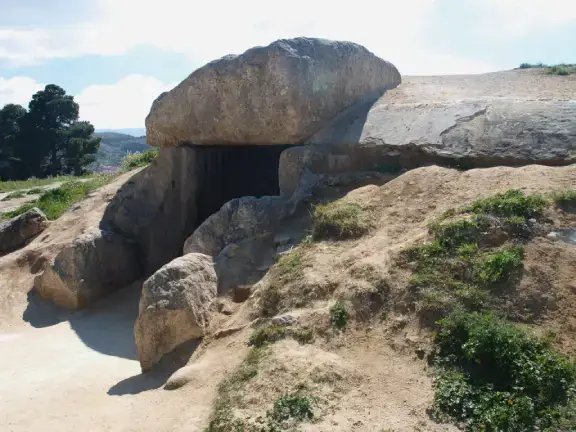
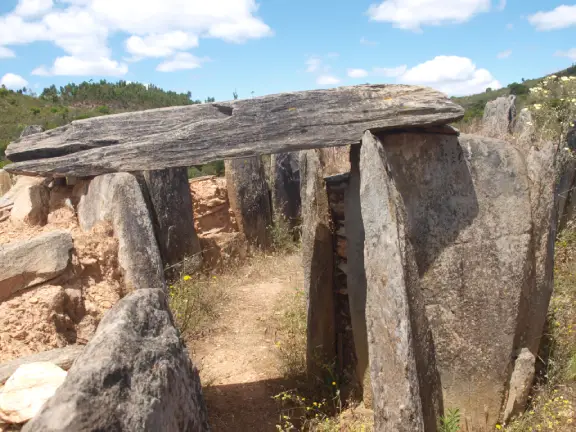
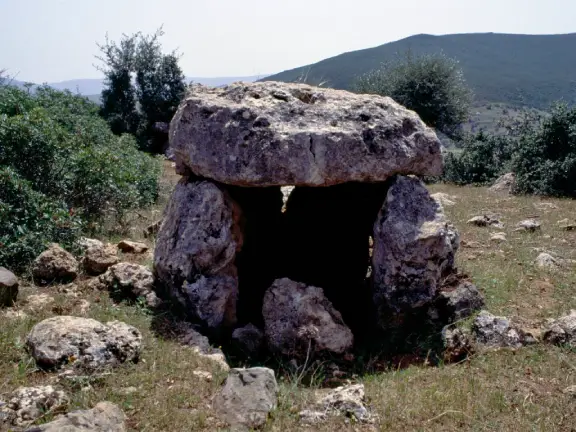
The Last Stand: Thracian Dolmens & the 1200 BCE Collapse - Roussa megalithic tomb, Evros. Source: Terrabook
Roussa megalithic tomb, Evros. Source: Terrabook

The Fall of the Palaces

Around 1200 BCE, the Aegean world suffered the same catastrophic Systems Collapse that devastated the Levant (Cline, 2014). Over several decades, a perfect storm of climate-induced droughts, severed trade routes, and internal rebellions brought the Mycenaean palatial system to its knees.

While historical drama often paints this as a sudden, fiery apocalypse where every citadel burned to the ground, the archaeological reality was far more complex. Though major palaces like Pylos were violently destroyed, regional towns such as Korakou (Blegen, 1921) and Berbati (Wells and Runnels, 1996) were gradually abandoned over time as the wider economy failed, while the citadel of Athens and the sprawling post-palatial lower town at Tiryns managed to survive and adapt (Middleton, 2010). Coastal enclaves like Lefkandi and Perati even managed to grow and prosper (Lemos, 2002; Dickinson, 2006). Nevertheless, the overarching palatial system definitively failed. The centralised economy collapsed, the Linear B script was permanently lost, and the Greek mainland plunged into a period of decentralisation, a painful socio-economic restructuring long referred to as a "Dark Age," though modern archaeology increasingly views it as a period of stubborn resilience and transition (Dickinson, 2006). This "Dark Age," now more accurately known as the Greek Early Iron Age, lasted for roughly 350 to 400 years, stretching from around 1150 BCE to the dawn of the Archaic period about 750 BCE (Dickinson, 2006).

This systemic collapse created a massive power vacuum, triggering prolonged demographic upheaval across the Balkans. For over a century, historians blamed this chaos on a sudden, violent "Dorian Invasion" sweeping down from the north. Modern archaeology, however, has largely deconstructed this narrative. The appearance of the Dorians is now widely reinterpreted not as a single, catastrophic conquest, but as a slow, gradual migration, or perhaps even an internal uprising of subjugated populations asserting themselves once the palatial elites fell (Hall, 1997; Dickinson, 2006).

For the tribal societies living on the periphery, the exact origin of the threat mattered less than the reality of the chaos. Whether the pressure came from migrating tribes, coastal raiders like the Sea Peoples, or the internal collapse of the Mycenaean borders, the known world was in violent flux and local futures were suddenly uncertain.

In the Levant, as we have seen, the chaos of 1200 BCE marked the final end of dolmen construction; the peripheral insurgents had conquered the ruins of the cities, rendering their stone deeds obsolete. But in the Balkans, the geopolitical reaction was inverted. The collapse of the Mycenaean core did not end the megalithic phenomenon in Thrace. It ignited it.

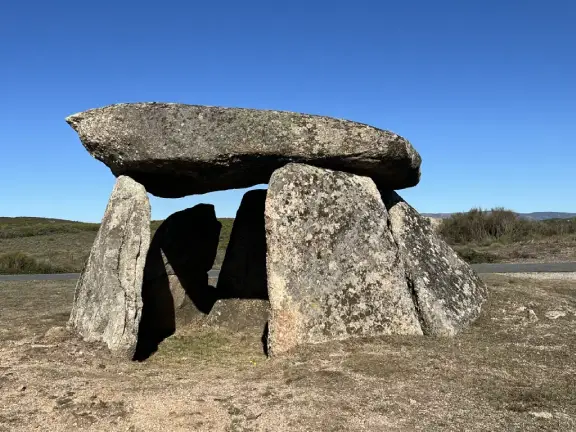
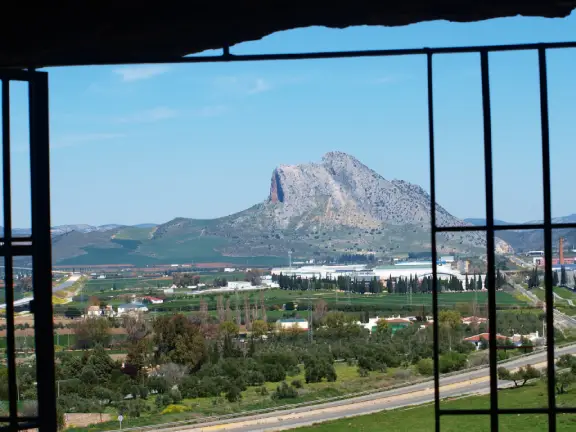
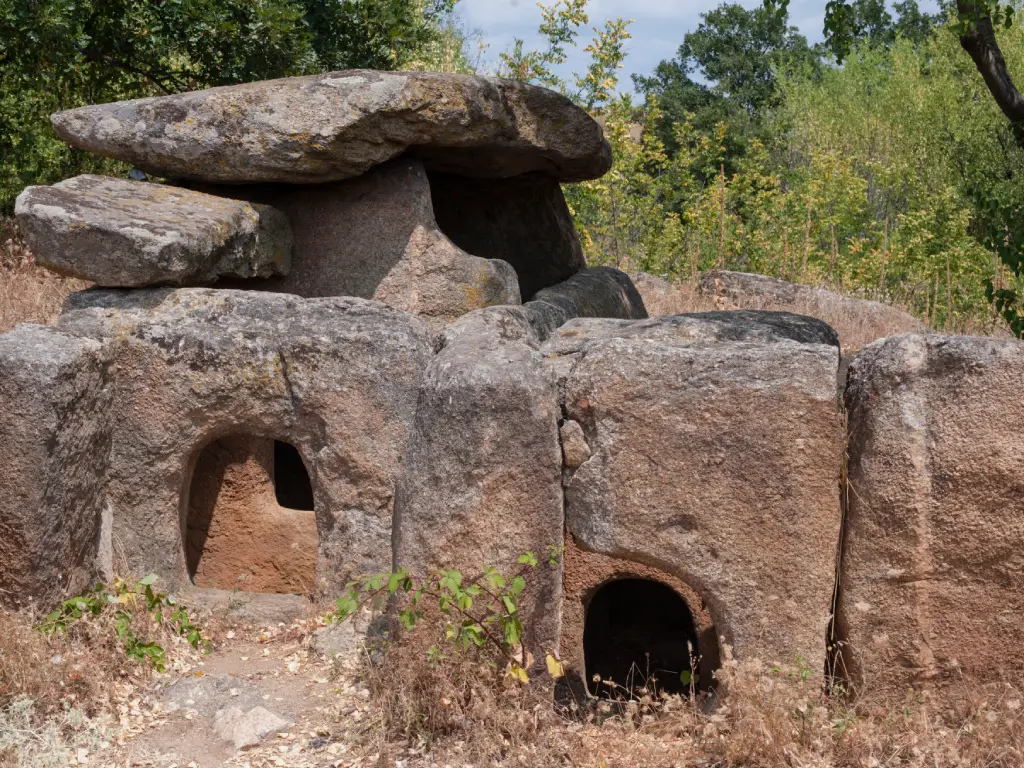
The Last Stand: Thracian Dolmens & the 1200 BCE Collapse - Belevren dolmen porthole entrance, Strandzha. Source: Travelling Buzz
Belevren dolmen porthole entrance, Strandzha. Source: Travelling Buzz

The Iron Age Megaliths of Thrace

As the Aegean world fell apart, the Strandzha, Sakar, and Eastern Rhodope mountains became the final epicentre of the Mediterranean megalithic tradition (Delev, 1984). Between the 12th and 6th centuries BCE, the middle of the Thracian Early Iron Age, the tribal communities of the region constructed hundreds of massive dolmens across the rugged highlands (Nekhrizov, 2015).

These were not the crude, opportunistic shelters of desperate refugees. They were monumental feats of engineering. The Thracian dolmens often featured carefully carved "porthole" entrances, elongated corridors (‘dromos’), and were entirely buried under massive earthen tumuli. Like the Levantine dolmens of the Golan Heights, they required enormous communal labour, utilising rough-hewn stone slabs weighing several tonnes (Delev, 1984; Nekhrizov, 2015).

Chronologically, they are an anomaly. By the time the Thracians began quarrying these stones, the great megalithic traditions of Western Europe and the Levant had been dead for over a thousand years. Thrace was the absolute last stand of the dolmen builder.

A Post-Collapse Deed of Ownership

Why would a decentralised, highland tribal society suddenly begin building megaliths in the immediate aftermath of a global systems collapse? The answer lies in the ultimate evolution of the "Architecture of Anxiety."

In the Maghreb, the anxiety was ecological. In the Levant, it was a political reaction against expanding urban city-states. In Thrace, the anxiety was driven by the demographic terror of the 1200 BCE collapse (Middleton, 2010; Cline, 2014).

The fall of the Mycenaean palaces unleashed migrating tribes and raiders across the Balkan Peninsula. The world was frighteningly volatile. Ancestral grazing lands were suddenly under threat from desperate, displaced populations moving south. The Thracian tribal aristocracy needed a way to anchor their legitimacy in a landscape that was rapidly destabilising. They turned to the oldest, most visceral language of power available, immovable stone.

By erecting massive dolmens on the prominent ridges and mountain flanks of the Sakar and Strandzha massifs, the Thracians were casting an anchor into the storm. A heavily engineered megalithic tomb, housing the remains of a deified chieftain or "hero," was the ultimate territorial marker. It was a post-collapse deed of ownership, projecting a clear, indestructible message to any migrating tribes passing through the valleys below, ‘This land belongs to our ancestors, and we are not moving.’

While the Levantine dolmens of the Early Bronze Age were often born of economic strangulation and marginalisation, the Thracian dolmens of the Early Iron Age (c. 1200–600 BCE) tell a different story. They are the stone deeds of a warrior elite asserting absolute dominance over a destabilised frontier.

Let us look at four of the most revealing dolmens built during this period.

Nachovi Chairi (Hlyabovo, Sakar Mountains): The Twin Megaliths

Located near the village of Hlyabovo in the Sakar Mountains of south-eastern Bulgaria, Nachovi Chairi is arguably the most famous and architecturally complex dolmen site in the Balkans. Unlike many Sakar dolmens that crown exposed mountain crests, Nachovi Chairi sits tucked away within a sheltered ravine, though when discovered in the 1970s it was sealed beneath an imposing 10-metre earthen tumulus, an unmistakable territorial anchor along the approach (Delev, 1984; Nekhrizov, 2015).

It is a remarkable "twin" monument: two attached two-chambered dolmens (four chambers in total) sharing a single monumental façade. Its massive covering capstones, measuring over 2.5 metres in length and weighing an estimated 15 to 20 tonnes, remain ‘in situ’.

Like the vast majority of Sakar dolmens, the entrances of Nachovi Chairi are strictly oriented toward the south/south-east (González-García et al., 2008). Archaeoastronomers have linked these southern orientations to solar cults, marking the sun's arc and the winter solstice rebirth of the deified chieftain, while wider regional surveys suggest that many Sakar dolmens were simultaneously aligned toward distant sacred mountain peaks on the horizon, such as the Gorata Ridge in the Eastern Rhodopes (Fol and Fol, 2005; Kolev et al., 2008).

Excavations at Nachovi Chairi yielded intact human remains within one of the chambers, a landmark breakthrough in Bulgarian dolmen archaeology, alongside a rich Early Iron Age assemblage including dark-burnished pottery with geometric decoration, amber beads, and bronze fibulae (clothing clasps).

Its primary construction and burial phase dates to the 9th and 8th centuries BCE (continuing into the 7th century BCE), though the site remained a venerated cult location for centuries afterwards (Nekhrizov, 2015).

The Roussa Dolmen (Evros, Greek Thrace): The Southern Frontier Marker

Situated in the Eastern Rhodopes, in the modern Greek regional unit of Evros, the Roussa dolmen forms part of the absolute southernmost frontier cluster of the entire Thracian megalithic phenomenon, a border zone where over a hundred megalithic graves have been recorded, densest around Kotronia and Koila, with scattered outliers reaching as far as Samothrace (Triandaphyllos, 1983). Sitting on a rocky, desolate slope looking south towards the Aegean transit corridors, Roussa acts as a physical border post on the fault line between the destabilised Aegean world and the tribal Thracian interior, a clear territorial warning to migrating groups moving through the Rhodope passes (Triandaphyllos, 1983; Nekhrizov, 2015).

While slightly smaller than the Sakar giants, it is impeccably engineered. It features a main burial chamber and a smaller antechamber, constructed from heavily weathered gneiss slabs weighing between 5 and 8 tonnes.

Unlike the south-eastern alignment of Nachovi Chairi, the entrance at Roussa faces directly south into the midday sun.

Roussa was systematically excavated and yielded a distinctly martial and aristocratic assemblage. Alongside finely decorated Early Iron Age ceramics, archaeologists recovered bronze jewellery and iron weapons (swords and knives). This dolmen belonged not to an impoverished pastoralist, but to the heavily armed tribal aristocracy defending the southern periphery in the post-collapse era (Triandaphyllos, 1983).

The Roussa dolmen was in use from the 10th to the 8th centuries BCE.

Belevren (Strandzha Mountains): The Porthole of the Ancestors

Located in the Strandzha Mountains near the Bulgarian-Turkish border, the Belevren dolmens echo the architectural anxiety of the earlier Levantine structures (Delev, 1984; Agre and Dichev, 2006). They sit on a rugged, forested plateau that, during the Early Iron Age, formed a heavily contested frontier zone between the Thracian interior and the Black Sea coast.

The most prominent dolmen at Belevren is a double-chamber structure with an elongated entrance corridor (‘dromos’). Its tabular capstone is nearly 3.5 metres long and weighs around 10 tonnes. The façade features a well-preserved, circularly carved "porthole" entrance (Agre and Dichev, 2006; Nekhrizov, 2015). Just like the dolmens of the Maghreb and the Jordan Valley, this small aperture was designed to be opened and closed, allowing the living to interact with the deified dead or insert secondary ancestral burials over several generations.

Its entrance is oriented to the south-east (González-García et al., 2008).

While heavily looted in antiquity, residual finds include fragments of coarse-ware burial urns, iron spearheads, and utilitarian ceramics.

The Belevren dolmens were in use from the 10th to the 7th centuries BCE.

Golyam Dervent (Dervent Heights, Strandzha): The Royal Façade

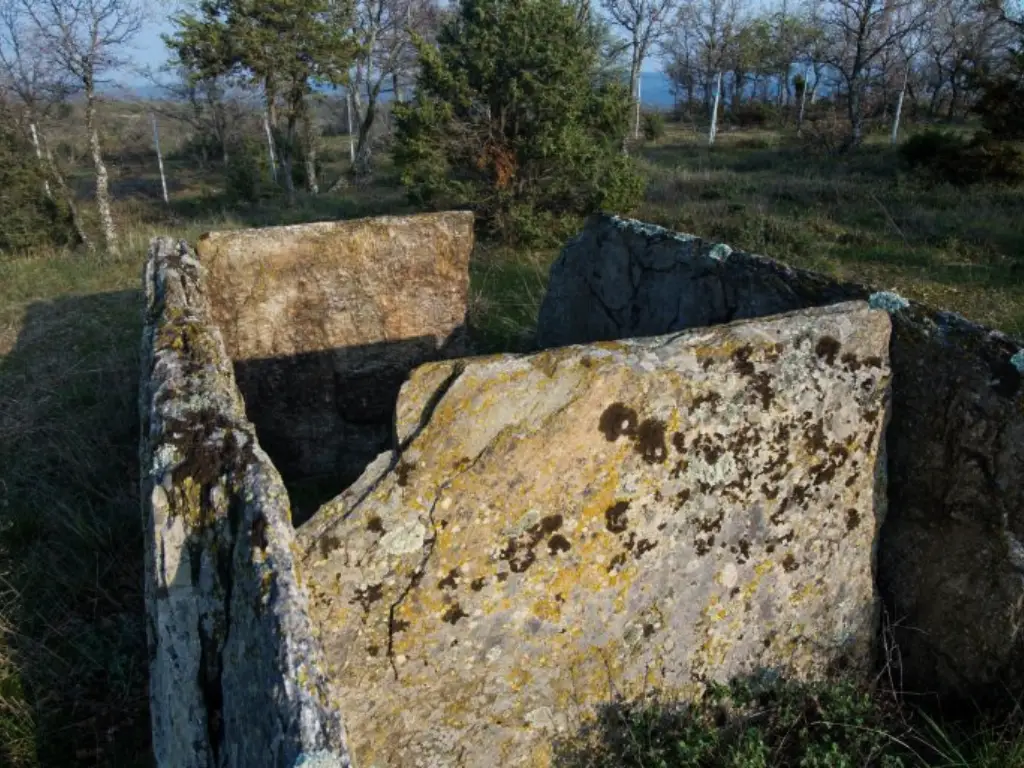
Situated in the Dervent Heights on the western flank of the Strandzha massif near the modern Bulgarian-Turkish border, the larger dolmen at Golyam Dervent (excavated in 2005 and 2007 by Daniela Agre and Deyan Dichev), represents the ideological zenith of Thracian megalithic power (Dichev, 2006; Nekhrizov, 2015).

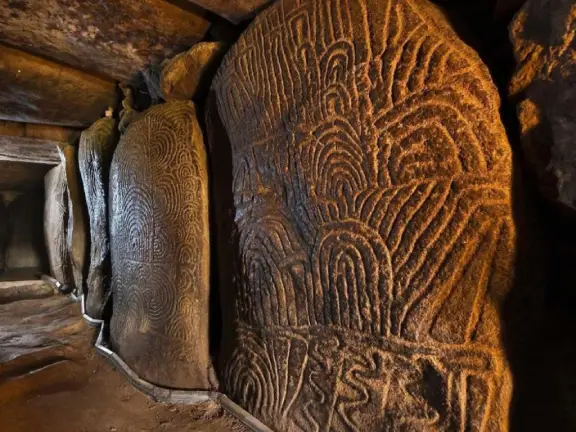
Constructed as a monumental two-chambered dolmen with an elongated ‘dromos’ originally concealed beneath an earthen tumulus, Golyam Dervent is unique in Bulgaria for its richly sculpted stone façade. Carved in relief directly into the megalithic slabs are spirals, geometric meanders, and a prominent double axe (‘labrys’), an unmistakable emblem of royal and aristocratic authority in ancient Thrace (Nekhrizov, 2015).

Oriented toward the southern solar sector (Kolev et al., 2008), Golyam Dervent also breaks from the communal family-tomb tradition seen elsewhere in Strandzha. Archaeological investigation indicates that it housed the burial of a single high-status individual, a local dynastic chieftain asserting his lineage and territorial claim directly in carved stone.

Excavation finds date the Golyam Dervent dolmen firmly to the 9th and 8th centuries BCE (with its primary phase placed in the 8th century BCE) (Dichev, 2006).

Taken together, Nachovi Chairi, Roussa, Belevren, and Golyam Dervent shatter any lingering notion of a quiet, impoverished Balkan "Dark Age." From the sheltered ravines of Sakar to the exposed Aegean frontier of Evros and the royal relief-carved portals of Strandzha, these were not the frantic monuments of dispossessed refugees. They were astronomically aligned, richly furnished stone fortresses for an iron-armed warrior aristocracy. Physical anchors bolted into the bedrock to hold ancestral territory against a volatile post-collapse world.
References and Further Reading

  • Agre, D. and Dichev, D. (2006). 'Exploration of a Dolmen and Two Tumuli near the Village of Belevren, Sredets Municipality'. Arheologicheski otkritiya i razkopki prez 2005 g. (in Bulgarian).
  • Archibald, Z. H. (1998). The Odrysian Kingdom of Thrace: Orpheus Unmasked. Oxford University Press.
  • Blegen, C. W. (1921). Korakou: A Prehistoric Settlement Near Corinth. American School of Classical Studies at Athens.
  • Cline, E. H. (2014). 1177 B.C.: The Year Civilization Collapsed. Princeton University Press.
  • Damyanov, M. (2015). 'The Greek Colonists', in Valeva, J., Nankov, E. and Graninger, D. (eds.) A Companion to Ancient Thrace. Wiley-Blackwell, pp. 293–307.
  • Delev, P. (1984). 'Megalithic Thracian Tombs in South-Eastern Bulgaria'. Anatolica, 11, pp. 17–45.
  • Dichev, D. (2006). 'Archaeological Excavations of a Dolmen in the Land of Golyam Dervent Village, Elhovo Municipality'. Arheologicheski otkritiya i razkopki prez 2005 g., pp. 110–112 (in Bulgarian).
  • Dickinson, O. (2006). The Aegean from Bronze Age to Iron Age: Continuity and Change Between the Twelfth and Eighth Centuries BC. Routledge.
  • Fol, A. and Fol, V. (2005). The Thracians. Tangra TanNakRa.
  • González-García, A. C., Koleva, V., Kolev, D. and Belmonte, J. A. (2008). 'Thracian Dolmens and their Orientations'. Archaeologia Baltica, 10, pp. 66–70.
  • Hall, J. M. (1997). Ethnic Identity in Greek Antiquity. Cambridge University Press.
  • Kolev, D., Tsonev, L., González-García, A. C. and Koleva, V. (2008). 'The Orientation of Dolmens in Bulgaria', in Kostov, R. I., Gaydarska, B. and Gurova, M. (eds.) Geoarchaeology and Archaeomineralogy: Proceedings of the International Conference, 29–30 October 2008, Sofia. Publishing House "St. Ivan Rilski", pp. 169–174.
  • Lemos, I. S. (2002). The Protogeometric Aegean: The Archaeology of the Late Eleventh and Tenth Centuries BC. Oxford University Press.
  • Middleton, G. D. (2010). The Collapse of Palatial Society in LBA Greece and the Postpalatial Period. BAR International Series 2110. Archaeopress.
  • Nekhrizov, G. (2015). 'Dolmens and Rock-Cut Monuments', in Valeva, J., Nankov, E. and Graninger, D. (eds.) A Companion to Ancient Thrace. Wiley-Blackwell, pp. 126–143.
  • Shelmerdine, C. W. (ed.) (2008). The Cambridge Companion to the Aegean Bronze Age. Cambridge University Press.
  • Stoyanova, D. (2015). 'Tomb Architecture', in Valeva, J., Nankov, E. and Graninger, D. (eds.) A Companion to Ancient Thrace. Wiley-Blackwell, pp. 158–179.
  • Triandaphyllos, D. (1983). 'Les Monuments Mégalithiques en Thrace Occidentale'. Pulpudeva, 4, pp. 145–163.
  • Valeva, J. (2015). 'The Decoration of Thracian Chamber Tombs', in Valeva, J., Nankov, E. and Graninger, D. (eds.) A Companion to Ancient Thrace. Wiley-Blackwell, pp. 180–196.
  • Wells, B. and Runnels, C. (eds.) (1996). The Berbati-Limnes Archaeological Survey 1988–1990. Swedish Institute at Athens.
Legacy Reloaded: A dev, an AI, and the relentless pursuit of 100

Enjoying this clean, uncluttered read?

You are currently browsing the result of a massive technical overhaul. My new book, Legacy Reloaded: A dev, an AI, and the relentless pursuit of 100, chronicles the journey of transforming an aging legacy website into a modern, lightning-fast platform that hits the perfect 90+, 100, 100, 100, 3/3 Lighthouse metrics. It’s a story of collaboration between developer and AI, and the stubborn pursuit of technical perfection.

Read the Story

You have finished reading chapter 10

More articles in the The Megalithic Phenomenon and the Architecture of Anxiety series: