Ancient Mediterranean Shipyards and Harbours
The Ancient Shipyards of Oiniades c 400 – 200 BC
Oiniades, famous for its rock cut docking facility, was a Greek naval base during the Classical and Hellenistic periods and played an important role during the Peloponnesian War.
By Nick Nutter on 2026-04-5 | Last Updated 2026-04-5 | Ancient Mediterranean Shipyards and Harbours
This article has been visited 23 times
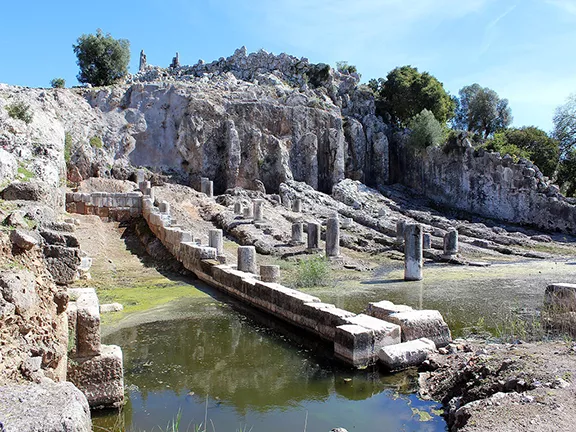
The Strategic Location of Oiniades
The ancient city of Oiniades, situated near modern day Katochi in the regional unit of Aetolia-Acarnania in western Greece, houses one of the most remarkable and best-preserved maritime monuments of antiquity, its ancient shipyards, or neoria. Positioned near the estuary of the Achelous River, Oiniades commanded a strategic location that controlled access to the Gulf of Patras. To capitalise on this geography, the city's inhabitants developed a robust maritime infrastructure.
Do you enjoy my articles? For your reading pleasure, this website does not carry third party ads. You could help me write more articles by buying me a cup of coffee.
Early Shipyards (5th century BC)
The earliest traces of sophisticated shipbuilding facilities and large timber frameworks date back to the 5th century BC.
When Athens compelled Oiniades to join its alliance in 424 BC, commanders utilised the city's naturally protected harbour and its existing maritime facilities as a strategic forward-operating base. During the Peloponnesian War, Greek naval bases largely relied on temporary timber slips or natural mudbanks to haul up and maintain their triremes.
Building the Neoria (4th century BC)
Engineers constructed the shipyards during the 4th century BC, demonstrating an extraordinary mastery of rock-cut architecture. The facility features a distinct pi-shaped (π) plan measuring approximately 41 by 47 metres. Builders carved the ships dock almost entirely out of the natural bedrock, with the vertical eastern wall reaching an impressive height of 11 metres.
To support the massive structure, architects divided the interior space symmetrically using five rows of seventeen columns. These colonnades supported an undulating, gabled roof covered with laconic clay tiles, which protected the vessels from the elements. Along the eastern side of the complex, builders carved eleven rectangular, column-shaped projections into the rock, creating twelve small chambers that helped anchor and waterproof the roof system. Between the colonnades, engineers designed six distinct aisles with upward-sloping, boat-shaped stone floors. These served as slipways or hauling ramps, allowing crews to drag large vessels out of the water with relative ease.
Today, archaeological research regards the shipyards as a masterclass in ancient Greek coastal engineering of the classical and Hellenistic periods.
Expansion and Naval Operations
The neoria transformed Oiniades into a formidable naval base. Throughout the 4th and 3rd centuries BC, shipwrights used the facility to construct, repair, and shelter both trading vessels and warships during the harsh winter months. Historical records and archaeological surveys suggest that the architectural elements closely mirror the famous neosikoi (shipsheds) of the Zea harbour in Piraeus, indicating that Oiniades rapidly adopted cutting-edge Athenian naval technology.
The strategic capability provided by these shipyards made the city a highly sought-after prize among rival powers. The capacity to safely overwinter and repair a substantial fleet allowed Oiniades to exert military and economic influence far beyond its immediate territory.
Decline and Abandonment
Despite its robust construction, the shipyard eventually succumbed to structural and environmental challenges. Archaeological evidence indicates that the facility remained in full operation until the end of the 3rd century BC. At that point, the massive roof gave way, causing the colonnades to collapse and structural debris to fill the slipways, effectively rendering the hauling ramps unusable.
Continuous geological changes sealed the fate of the wider port. Over subsequent centuries, the progressive silting of the Achelous River completely altered the local topography. This silting transformed the once-bustling harbour into a marshland and severed the city's direct access to the sea, leading the local population to gradually abandon the area.
Academic Sources and Further Reading:
Blackman, D., Rankov, B., et al. (2013). Shipsheds of the Ancient Mediterranean. Cambridge University Press. (Offers comprehensive comparative research on ancient maritime infrastructure, placing the architecture of the Oiniades neoria in context with similar structures like those at Zea).
Hellenic Ministry of Culture and Sports / 6th Ephorate of Prehistoric and Classical Antiquities. Archaeological Reports on Aetolia-Acarnania. (Contains modern survey data and conservation records pertaining to the rock-cut slipways and colonnades of the Oiniades shipyard).
Powell, B. B. (1904). "Excavations at Oeniadae." American Journal of Archaeology, 8(2), 137-173. (Provides the foundational early archaeological reports regarding the broader site of Oiniades, including the theatre and fortifications).
Do you enjoy my articles? For your reading pleasure, this website does not carry third party ads. You could help me write more articles by buying me a cup of coffee.
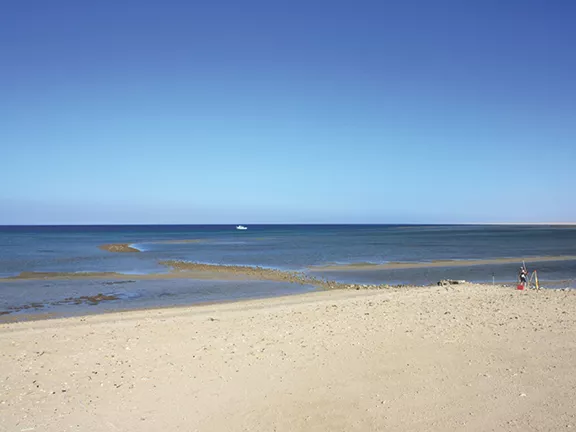 1: Egypt's Wadi al-Jarf c 2600 - 2560 BC
 2: Egypt's Ro-She Khufu 2580 - 2500 BC
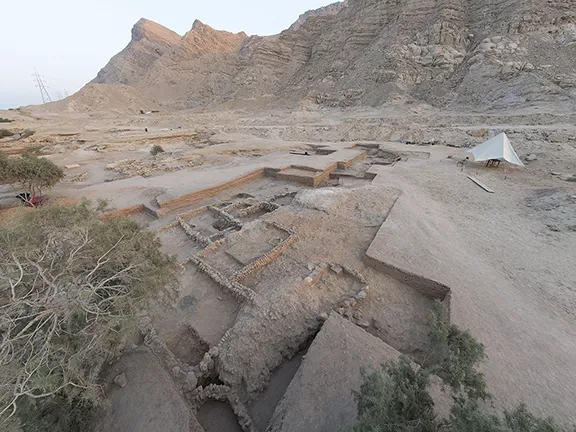 3: Egypt's Ayn Soukhna c 2500 - 1850 BC
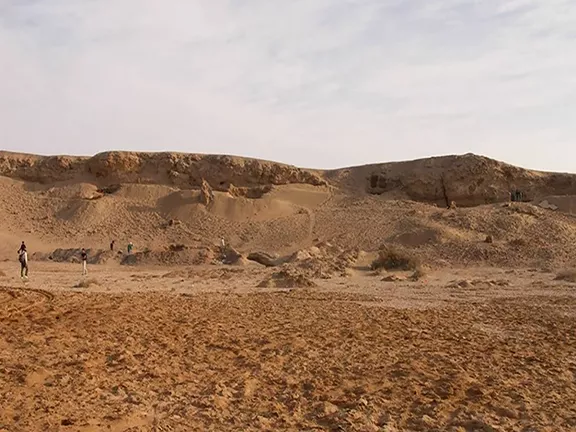 4: Egypt's Mersa/Wadi Gawasis c 2000 - 1500 BC
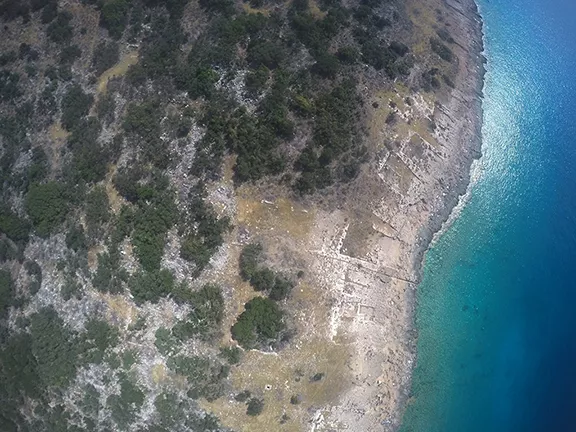 5: Dana Island, Turkey c 800 BC - 700 AD
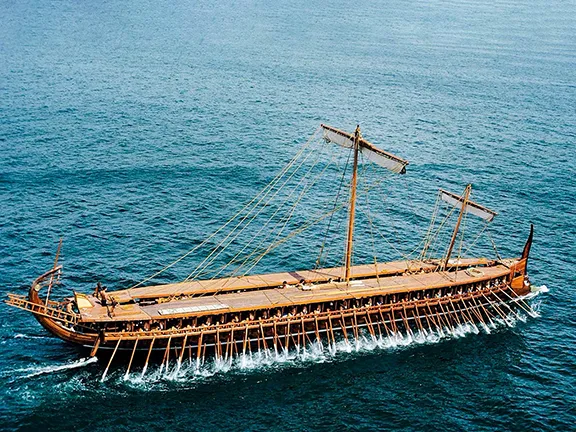 6: Zea Shipyards, Greece c 483 – 86 BC
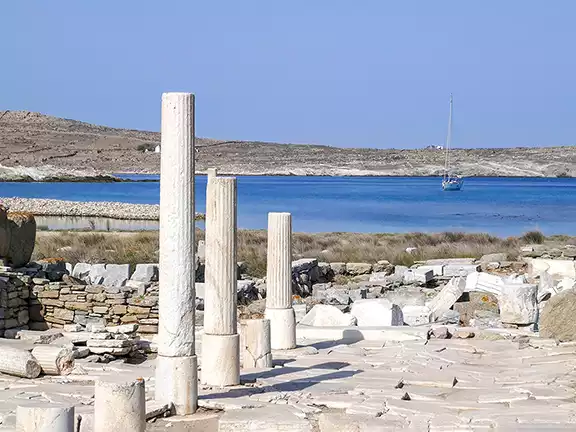 8: Delos, Greece 167 – 69 BC