Ancient Mediterranean Shipyards and Harbours
The Emporion of the Aegean: Harbour Expansion, Seamanship, and Commerce on Delos 167 BC – 69 BC
How the sacred island of Delos transformed into a bustling Hellenistic and Roman emporion. Its ancient harbours became the primary centre of maritime commerce in the Aegean.
By Nick Nutter on 2026-04-6 | Last Updated 2026-04-6 | Ancient Mediterranean Shipyards and Harbours
This article has been visited 13 times

Delos, Greece
The Sacred Origins and Commercial Transformation of Delos
For generations, the diminutive and rocky island of Delos held a unique status among the Ancient Greeks as the most sacred site in the Aegean Sea. Its mythical significance as the birthplace of Apollo and Artemis made Delos a focal point for religious pilgrimage, with devotees travelling from every corner of the Mediterranean to offer dedications and participate in sacred rites.
Despite its religious prominence, the character of Delos underwent a dramatic shift during the Hellenistic and early Roman periods. The island evolved from a revered sanctuary into a thriving centre of commerce, ultimately becoming a powerhouse of trade and maritime activity that dominated the eastern Mediterranean. This transformation positions Delos as an exceptional case study for contemporary maritime archaeologists and historians, offering invaluable insights into the development of ancient harbours, the types of ships that frequented its waters, the practices of seamanship, and the intricate web of international trade networks that converged upon the island.
Do you enjoy my articles? For your reading pleasure, this website does not carry third party ads. You could help me write more articles by buying me a cup of coffee.
The Metamorphosis of Delos: From Sacred Sanctuary to Trading Hub
In 167 BC, Delos underwent a swift transformation, shifting from its traditional role as a revered religious sanctuary to become a pivotal centre of global trade. This change followed the conclusion of the Third Macedonian War, when the Roman Republic restored control of the island to Athens and declared its principal port a duty-free zone. The Romans enacted this policy with the specific intention of undermining Rhodes, a competing maritime power in the Mediterranean.
As a result of this strategic move, established Mediterranean trade routes were quickly redirected. Merchants, bankers, slave traders, and ship-owners from regions including Italy, Greece, the Levant, and North Africa migrated to Delos. The island rapidly emerged as the pre-eminent emporion, serving as a vital trading centre that linked the eastern and western Mediterranean worlds. This abrupt commercial expansion prompted a substantial and urgent development of Delos’s maritime infrastructure, ensuring the island could support its new status as a centre of international commerce.
Engineering the Harbours and Land Reclamation
To respond to the dramatic rise in international maritime commerce, Delian engineers and builders undertook a significant expansion of the island’s port infrastructure. The principal Merchant Harbour, located along the western shoreline, was extended to almost 600 metres, reaching as far south as the Asklepieion peninsula. This expansion created a bustling waterfront that covered nearly 7,000 square metres and facilitated the constant movement of ships, goods, and people from across the Mediterranean.
The geological makeup of Delos presented immediate challenges to harbour development. A layer of solid crystalline bedrock lay just beneath the surface sediments, rendering dredging activities impossible and restricting the depth of the harbour. As a result, Delos’s main port remained relatively shallow and could not accommodate the largest seafaring vessels of the era (Desruelles and Hasenohr, 2018). In order to make the most of the available coastal area and to create additional commercial space, Delian authorities embarked on ambitious land reclamation projects. Between 167 and 125 BC, large-scale landfill operations transformed a former seaside marsh into firm ground suitable for construction. This newly reclaimed land provided the foundation for both the Agora of the Competaliasts and the Southern Mole, a crucial breakwater and quay structure. Shortly thereafter, in 126/5 BC, further reclamation enabled the establishment of the Agora of Theophrastos, creating an expansive, flat, commercial district directly adjacent to the water’s edge.
Recognising the need to safeguard these valuable commercial assets and the ships moored in the harbour, Delian engineers constructed the Great Mole. This towering breakwater, working in concert with the Southern Mole and robust ashlar quays, dramatically altered the island’s coastline. Together, these structures formed a well-protected and artificial harbour basin, providing shelter from the harsh northerly winds that frequently swept across the central Aegean.
Further evidence of the island’s ambitious expansion comes from underwater excavations conducted by Mantha Zarmakoupi (2015) in the submerged Stadion District on Delos’s north-eastern coast. These investigations reveal that the scale of development extended far beyond the primary western port. In this area, commercial buildings were constructed immediately beside an artificially created shoreline. The district featured colonnades, ovens reminiscent of the tabernae of Pompeii, and additional breakwaters, underscoring the extent to which Delian engineers reshaped the landscape to meet the demands of international trade.
Ships, Seamanship, and Harbour Zoning
The character of maritime activity at Delos was shaped by the physical limitations and deliberate engineering of its harbours. The constraints imposed by shallow waters and the presence of solid bedrock meant that only certain types of ships could access the quays directly, while targeted infrastructure projects allowed authorities to implement strict zoning laws to manage the flow of vessels and commerce.
A notable archaeological discovery near the Portico of Phillip, a stone boundary marker inscribed with "ὅρoς ὅρμου μακρῶν πλοίων" ("limit of the harbour for long ships"), reveals that port officials carefully demarcated specific zones for larger vessels, particularly galleys. The area enclosed by the quays, the Southern Mole, and its northern extension offered a broad, sandy shoreline, which provided an ideal cove for galleys. Here, crews could safely beach or haul their elongated ships onto land for essential maintenance, protected from harsh winds and separated from the activity of the main port.
Merchant shipping at Delos operated under a different set of constraints. Estimates suggest the main harbour basin could simultaneously accommodate approximately 20 medium-sized ships, 40 smaller vessels, and at least 100 very small coastal boats. Due to the shallow waters and sandy coastal strips, large Roman freighters with deep drafts were unable to dock directly at the ashlar quays. Instead, these ships anchored offshore, and their crews used smaller, shallow-draft lighters to transfer cargo, including luxury goods, wine, oil, and slaves, from the heavy freighters to the docks, enabling the efficient movement of goods in spite of the physical limitations.
Successfully reaching Delos required considerable seamanship. Sailors had to navigate challenging Cycladic winds and intricate island channels to arrive at the harbour. Upon entering the harbour network, crews relied on precise ship handling skills to manoeuvre within the crowded anchorage, avoiding collisions with the densely packed clusters of vessels that filled the port.
The Infrastructure of Urban Commerce on Delos
Beyond the busy activity of the docks, a sophisticated system of commercial architecture formed the backbone of Delos’s maritime trade. Prominent and affluent foreign guilds, such as the Poseidoniastai of Berytos (present-day Beirut), established powerful associations to advance their economic interests. These groups not only drove mercantile activity but also played a leading role in financing the development of substantial warehouses, imposing public buildings, and lavish residential quarters.
The luxurious homes, distinguished by their elaborate mosaics and vibrant frescoes, became residences for the elite merchant class. These influential individuals managed the movement of valuable goods, including luxury items from the Middle East and Asia, finely crafted Delian bronze sculptures, and slaves, facilitating their passage westward to Rome and ensuring the prosperity of the island’s commercial sector.
End of an Era
The latest archaeological and geomorphological research demonstrates that Delian authorities did not simply rely on their central location. They actively engineered their coastline through extensive landfills and mole construction to maximise trade volume. By integrating studies of harbour zoning, ship typologies, and submerged urban architecture, modern researchers continue to uncover how Delos successfully mastered ships, seamanship, and commerce to dominate the Hellenistic and early Roman Aegean.
Delos leaves us with an intact snapshot of ancient maritime economics, preserved largely because the island suffered devastating attacks by Mithridates in 88 BC and pirates in 69 BC, leading to its eventual abandonment.
Academic References
Candy, P., & Ferrándiz, E. M. (Eds.). (2022). Roman Law and Maritime Commerce. Edinburgh University Press.
Desruelles, S., & Hasenohr, C. (2018). Delos' Merchant Harbour as it would have been during the late Hellenistic Period.
Grant, D. (2024). "Mediterranean Trade Networks and the Diffusion and Syncretism of Art and Architecture Styles at Delos." Open Archaeology, 10(1).
Nakas, I. (2022). The Hellenistic and Roman Harbours of Delos and Kenchreai. BAR Publishing.
Zarmakoupi, M. (2015). "Delos: discovering a submerged Hellenistic city." The Past.
Do you enjoy my articles? For your reading pleasure, this website does not carry third party ads. You could help me write more articles by buying me a cup of coffee.
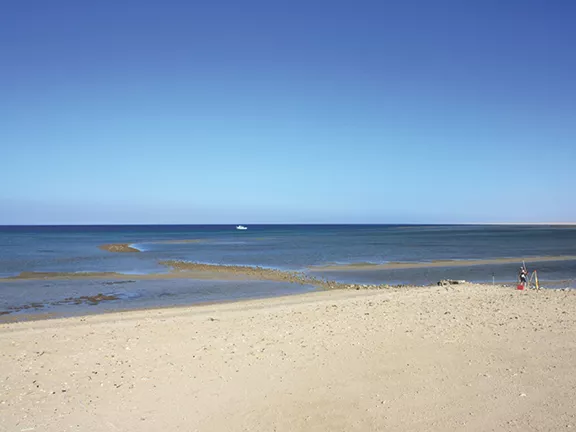 1: Egypt's Wadi al-Jarf c 2600 - 2560 BC
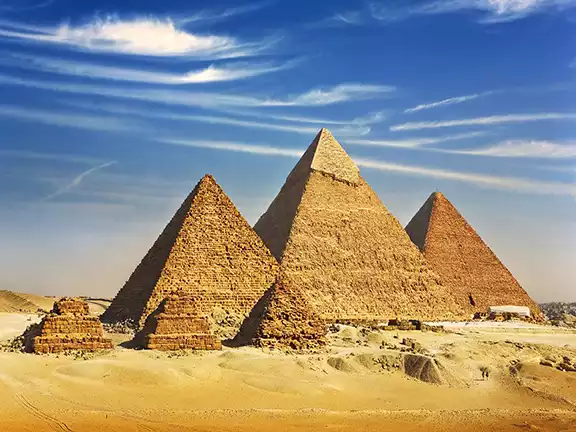 2: Egypt's Ro-She Khufu 2580 - 2500 BC
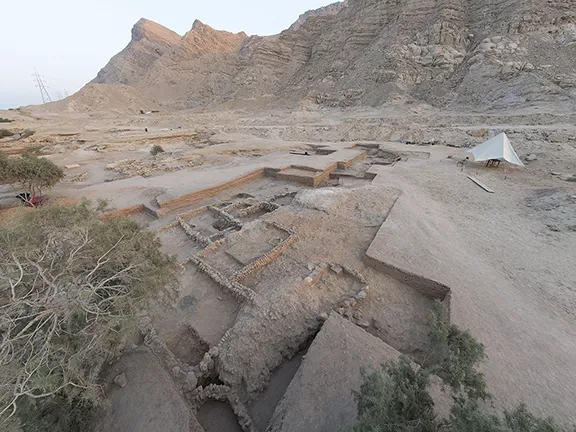 3: Egypt's Ayn Soukhna c 2500 - 1850 BC
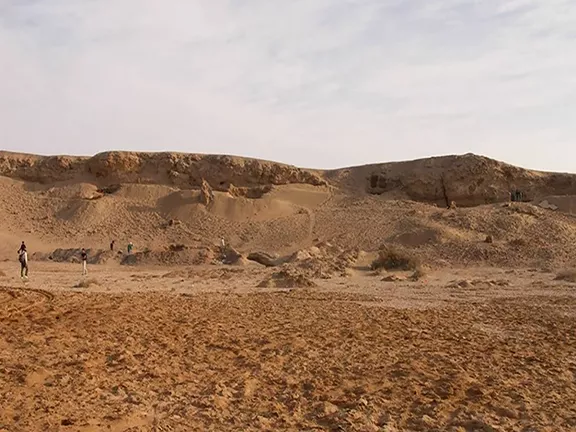 4: Egypt's Mersa/Wadi Gawasis c 2000 - 1500 BC
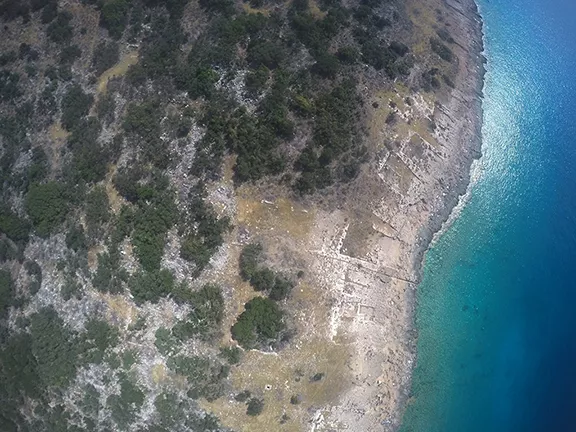 5: Dana Island, Turkey c 800 BC - 700 AD
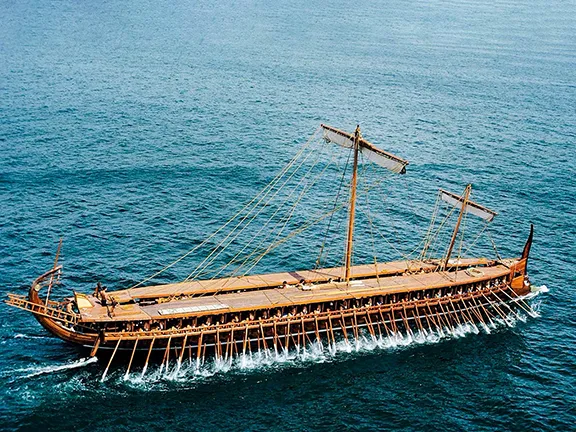 6: Zea Shipyards, Greece c 483 – 86 BC
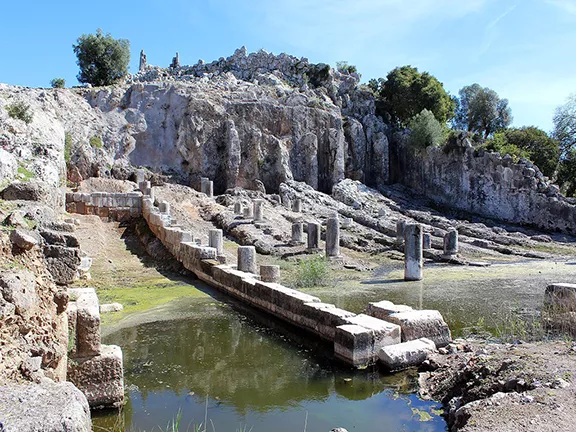 7: Oiniades, Greece c 400 – 200 BC