Survivors of the Bronze Age Collapse

How and Why Cyprus Survived the Collapse of the Bronze Age

By Nick Nutter | Published: 2026-08-18 | Updated: 2026-08-18

Visited 7 times

When the Late Bronze Age collapse devastated the Eastern Mediterranean around 1200 BCE, Cyprus uniquely thrived. While centralised mainland empires fell, Cypriot city-states survived due to their pre-existing polycentric governance and geographic insulation. Adapting swiftly to the disruption of long-distance imperial trade, Cypriot merchants pioneered short-range coastal cabotage to sustain vital maritime networks. Concurrently, faced with a tin shortage that crippled bronze production, local smiths innovated utilitarian ironworking. By integrating Aegean and Levantine migrants rather than resisting them, Cyprus transformed a regional catastrophe into an era of economic and technological expansion, effectively bridging the Bronze and Iron Ages.

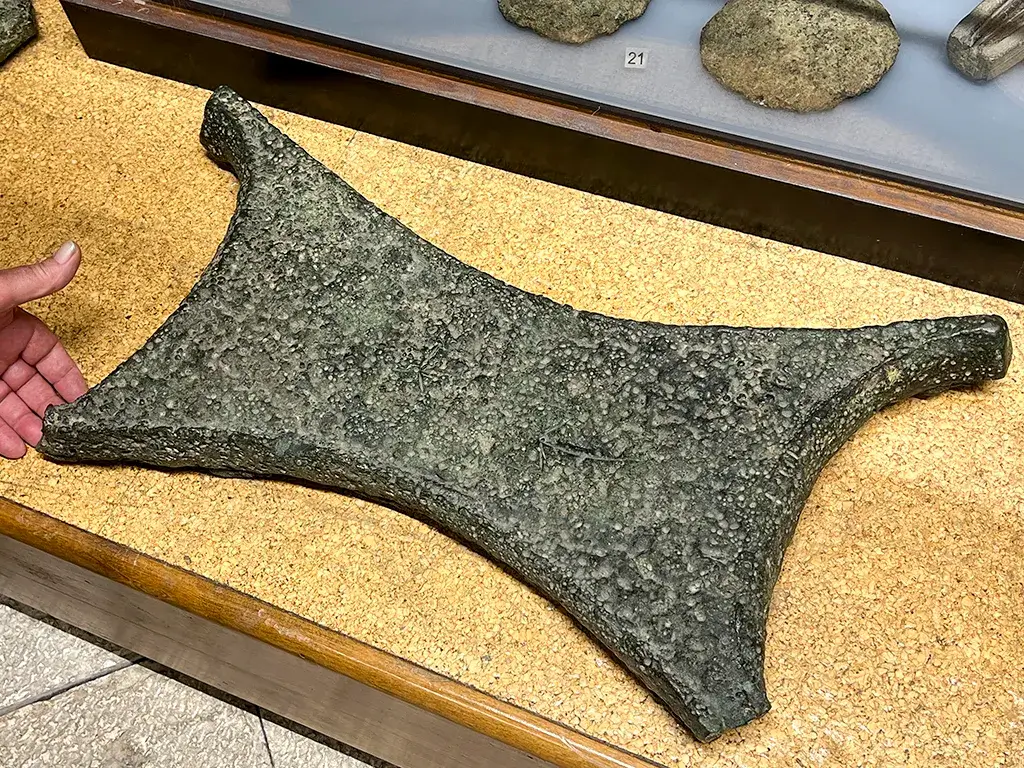
How and Why Cyprus Survived the Collapse of the Bronze Age - Copper oxhide ingot from Cyprus found on Sardinia
Copper oxhide ingot from Cyprus found on Sardinia

The 1177 BCE Paradox: Flames on the Mainland, Boom on the Island

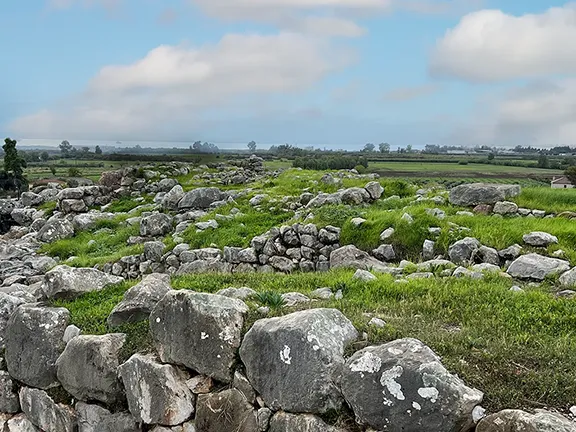
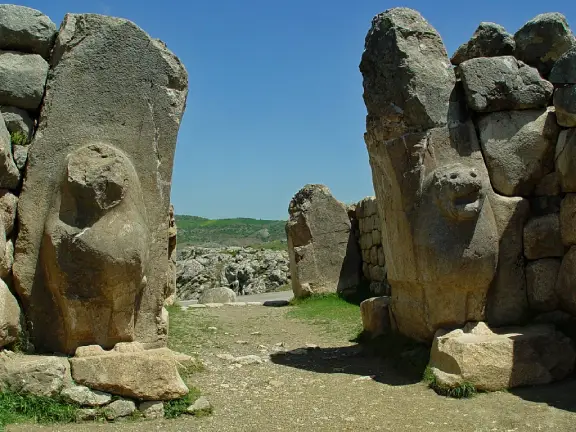
Around 1200 BCE, a sweeping catastrophe engulfed the Eastern Mediterranean as great empires collapsed in fire and ruin within a few short decades. Droughts, famines, and raiders erased many thriving urban centres across Greece, Anatolia (modern day Turkey), and the Levant. Hattusa (modern day Boğazkale), the proud Hittite capital, was completely abandoned, while the wealthy Syrian port of Ugarit (modern day Ras Shamra) burned to the ground (Cline, 2014). To the west, across the Aegean Sea, the fragile network of Mycenaean palatial seats fractured under intense regional pressure. At least, that is the common perception. Yet hundreds of kilometres to the east, geographically isolated in the open waters of the Levantine Basin, a surprising historical exception emerged. The island of Cyprus did not perish. Instead, its coastal cities entered an extraordinary era of economic growth and industrial transformation.

This dramatic contrast presents historians with a bit of a mystery. Cyprus was certainly not an isolated refuge sheltered from regional turmoil. On the contrary, its economy depended almost entirely on long-distance maritime trade. The island was the Mediterranean's primary supplier of oxhide ingots, massive, standardised thirty-kilogram slabs of raw copper shipped directly to foreign palaces (Knapp, 2014). When these royal customers vanished almost overnight, the Cypriot economy should have suffered immediate bankruptcy and total collapse.

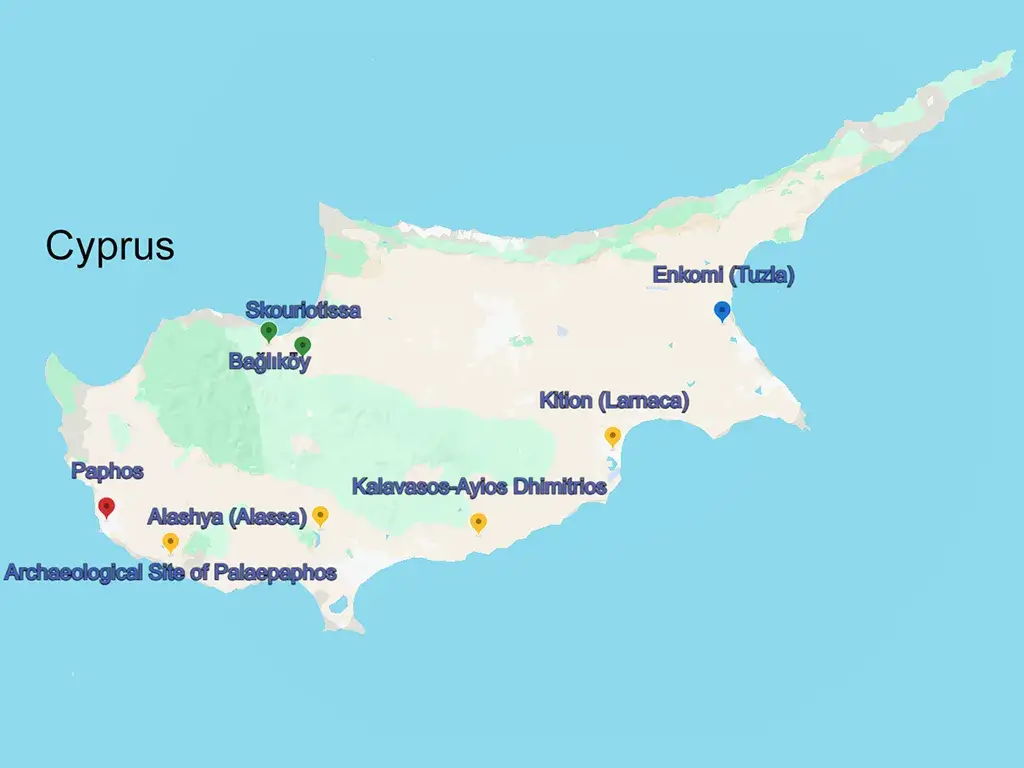
Instead, coastal centres like Enkomi (modern day Famagusta), Kition (modern day Larnaca), and Palaepaphos (modern day Kouklia) expanded rapidly throughout the Late Cypriot IIIA period (c. 1200–1100 BCE). While some sites experienced brief destruction horizons, likely caused by localised earthquakes, pirate raids, or internal factional skirmishes, these were short-lived setbacks rather than fatal conquests (Knapp, 2014). Local populations quickly cleared away the rubble, constructed grand ashlar masonry buildings, and reorganised their metalworking workshops (Karageorghis, 1992). Rather than crumbling alongside many of the mainland monarchies, Cypriot merchants adapted with remarkable speed.

How did a small, resource-dependent island flourish when much of the rest of the Bronze Age world fell apart?

Geography, Copper, and Pre-Collapse Resilience

To understand Cyprus, we have to look back far beyond the collapse. Located 320 kilometres south of Anatolia (modern day Turkey) and roughly the same distance from the Syrian coast, the island enjoyed a unique geographical position. From its earliest Neolithic settlements, this marine insulation allowed Cypriot society to chart its own distinct historical course, somewhat detached from that of the Near Eastern mainland (Steel, 2004).

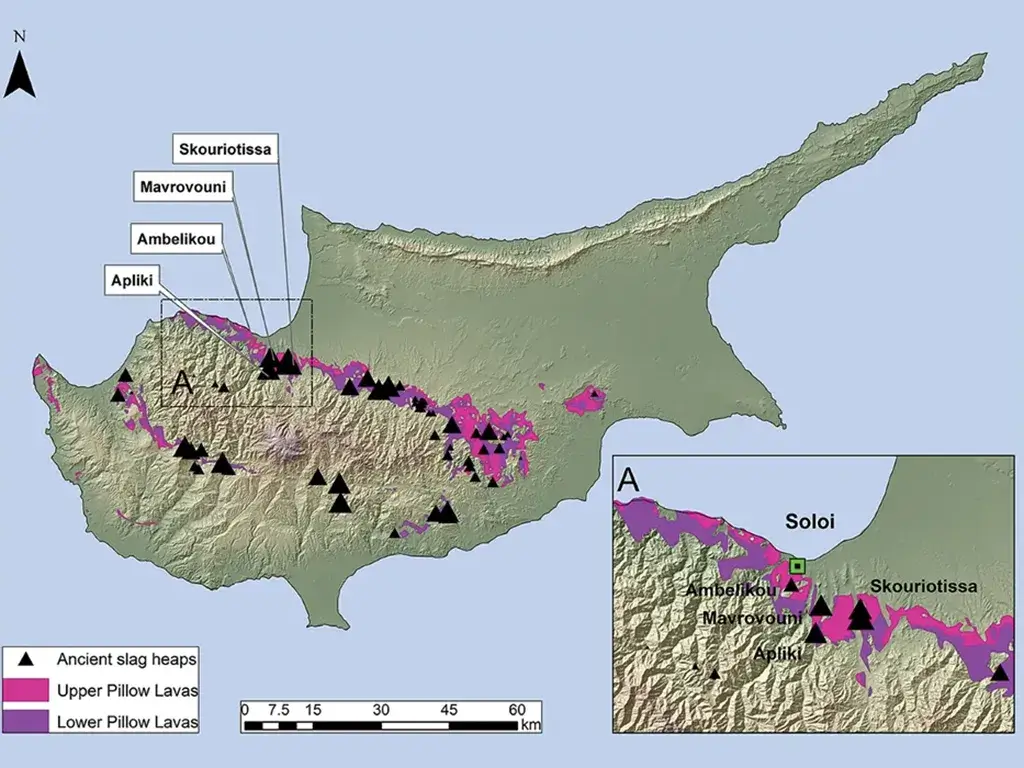
However, Cyprus possessed a natural asset that guaranteed it would not remain isolated for long: vast deposits of copper ore beneath the Troodos Mountains. Known in Near Eastern records as Alashiya (or Alasia), the island became the Bronze Age world's primary source of copper and metallurgical expertise (Knapp, 2013). By the 19th century BCE, Cypriot miners were extracting high-grade ore at sites like Ambelikou-Aletri (Kassianidou, 2012). Petrographic analysis of royal letters from Amarna (modern day Tell el-Amarna) confirms that Alashiya was supplying bulk copper to Egypt and Ugarit (modern day Ras Shamra) (Goren et al., 2003). The analysis proved that the clay physically originated from the margins of the Troodos Mountains in Cyprus. The massive 14th century BCE Uluburun shipwreck, carrying over ten tonnes of Cypriot copper ingots, serves as proof of the island's international reach (Pulak, 2008).

This vast mineral wealth shaped how Cypriot political power evolved. Rather than giving rise to a single autocratic state, the wide distribution of copper ores across the island fostered a polycentric mosaic of independent kingdoms and city-states, including Enkomi (modern day Famagusta), Kition (modern day Larnaca), Palaepaphos (modern day Kouklia), Alassa, and Kalavasos-Ayios Dhimitrios (Keswani, 2004; Knapp, 2014). While surrounding empires relied on rigid, centralised monarchies, whether the Hittite Great King, Egyptian Pharaoh, or the Mycenaean wanax (king), Cypriot regional centres competed for copper access and maritime outlets. Although some scholars argue that Enkomi briefly functioned as a paramount capital (Peltenburg, 1996), or that the Hittites claimed nominal suzerainty late in the 13th century BCE (Bryce, 1998), local rulers, such as King Kushmeshusha of Enkomi, maintained direct control over their own commercial networks.

Ironically, this pre-collapse Cypriot regime closely mirrors the political systems that mainland sites were forced to adopt after the catastrophe. When the 1200 BCE crisis destroyed the top-heavy palaces of mainland Greece, surviving centres like Tiryns, Athens, and Lefkandi only survived by "de-complexifying", shedding their rigid royal bureaucracies and reorganising into decentralised, regional networks led by local chieftains (basileis).

Post-Collapse Adaptation: Strategic Coastal Agility and Cabotage Trade

When the royal palace markets across the Mediterranean vanished around 1200 BCE, Cypriot merchants altered their operational strategy. During the peak of the Late Bronze Age, shipping had relied on state-sponsored bulk transport. Heavy merchant galleys moved massive cargoes of copper oxhide ingots directly between royal court officials (Pulak, 2008). As those imperial court orders stopped overnight, Cypriot captains abandoned this high-overhead transport system.

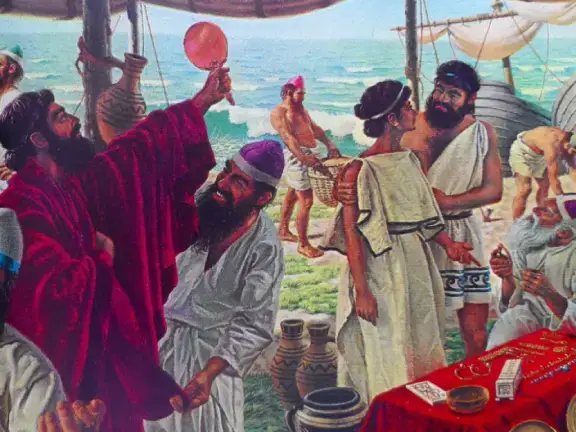
Instead, island traders adopted a maritime strategy centred on cabotage, a system of short-range coastal trade, hopping rapidly from port to port (Tartaron, 2013). Rather than risking large, expensive vessels on long open-sea voyages to single imperial ports, Cypriot sailors used smaller, versatile craft. They navigated along the shorelines of the Levant, Egypt, and the Aegean islands, docking at informal anchorages and surviving coastal towns.

These post-collapse Cypriot fleets carried a diversified array of private trade goods rather than state-controlled raw materials. Ships transported local wheel-made ceramics, luxury scented oils, fine bronze tripod stands, and recycled scrap metal (Sherratt, 2000). Physical proof of this trade comes from 12th-century BCE shipwrecks like Cape Gelidonya (modern day Gelidonya Burnu) and Point Iria (modern day Akrotirio Iria) (Bass, 1967; Lolos, 2003). While Gelidonya carried scrap bronze, tinker’s tools, and weight sets for local bartering, Point Iria held a mixed cargo of Cypriot storage jars and Cretan oil containers destined for Argolid roadsteads like Tiryns. By trading directly with emerging local warlords and chieftains across the region, Cypriot merchants fulfilled a growing demand for status items in a changing world.

Integration Over Invasion: The 'Sea Peoples' and Aegean Migrants

Older historical accounts blamed the Bronze Age Collapse on violent 'Sea Peoples' or invading Mycenaean armies. At first glance, Cyprus seemed dangerously exposed to sea-borne raiders. Yet excavations at sites like Enkomi (modern day Famagusta) and Palaepaphos (modern day Kouklia) reveal a far more nuanced reality. Enkomi dominated the eastern seaboard (facing the Levant), and Palaepaphos anchored the southwest (facing the Aegean and Egypt). Palaepaphos provides some of the strongest archaeological evidence for the peaceful integration of Aegean migrants. Destruction layers certainly exist in both locations, but they were localised and followed immediately by ambitious rebuilding projects. At Palaepaphos, for example, locals and migrants collaborated to construct the monumental ashlar Sanctuary of the Great Goddess right at the height of the regional crisis, proving that cultural mixing led to architectural triumphs rather than destruction. Instead of total destruction, the island experienced a wave of human migration and peaceful integration.

A more sinister explanation for the ‘Sea Peoples’ is that the protected bays on Cyprus served as operational bases for groups of pirates, specifically the Sherden. If so, they were perfectly positioned to attack the coastal towns of Anatolia (modern day Turkey), the Levant, and Egypt. A modern-day parallel would be the Barbary Coast of North Africa, where corsairs were given protection by the local leaders of Algiers, Tunis, and Tripoli in exchange for a portion of the spoils. This mutually beneficial arrangement allowed the Barbary pirates to scourge the Mediterranean from the 16th to the 19th centuries CE. In the 12th century BCE, Cypriot merchant princes likely struck a similar bargain, turning the era's greatest maritime threat into a lucrative, defensive asset (Sherratt, 1998).

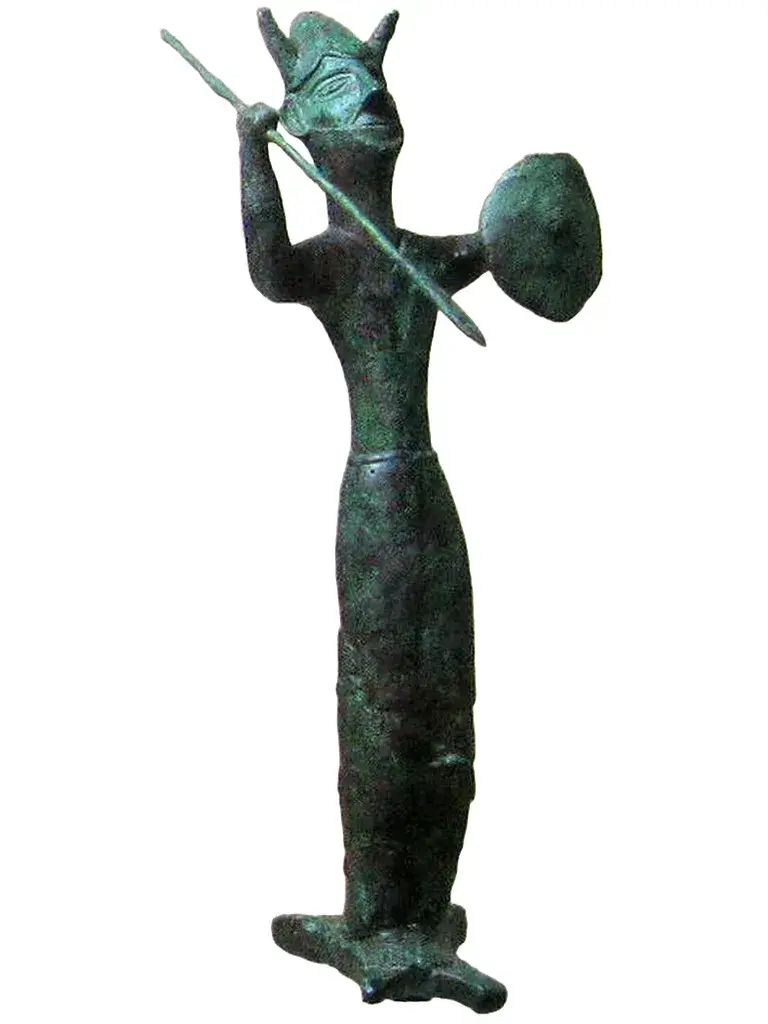
The material culture of the era strongly supports this Cypriot-pirate alliance. Egyptian reliefs from the reign of Ramesses III at Medinet Habu (modern day Luxor) famously depict the Sherden Sea Peoples wearing distinct horned helmets and carrying small, round shields (Emanuel, 2013). This exact martial iconography is mirrored almost identically in the Nuragic bronzetti statuettes of Sardinia, cementing the modern academic consensus that the Sherden and the Sardinians were either the same people or closely linked (Ugas, 2016).

Supporting this view, this same visual language appears in Cyprus. The famous 'Ingot God' of Enkomi also wears a horned helmet and wields a small, round shield, a style popularised in the Aegean by the time of the Trojan War (Sandars, 1987). It is highly probable that Sardinian mercenaries and pirates adopted this specific panoply after seeing deities like the Ingot God in the sanctuaries of their Cypriot hosts. By offering their island bays as sanctuaries to Sherden raiders, Cypriot elites integrated foreign muscle into their society, neutralizing the Sea Peoples as a destructive force and ensuring the island's survival while the rest of the Eastern Mediterranean burned.

As mainland palatial networks broke down, diverse populations from Greece, Crete, and the Levant migrated across the sea for a variety of reasons. Some were escaping localised drought and crop failures, others fled the aftermath of earthquakes or political retribution following civil uprisings, while many simply sought fresh economic opportunities in surviving coastal ports. Cypriot hubs acted as demographic sponges, absorbing these migrating groups and their families. These newcomers brought valuable industrial skills, including advanced pottery styles and fine stonemasonry. Local workshops soon produced distinct Mycenaean-style pottery crafted directly from Cypriot clay (Karageorghis, 1990). At the same time, builders adopted ashlar masonry, large, smoothly squared stone blocks, to construct grand public buildings.

Rather than fighting off foreign arrivals, Cypriot merchant elites integrated them directly into local society. Foreign warriors served as local mercenaries, while migrant craftspeople joined thriving urban workshops (Sherratt, 1998). This cultural mixing created a dynamic, multi-ethnic population capable of weathering regional chaos.

How and Why Cyprus Survived the Collapse of the Bronze Age - Enkomi 'Ingot God'
Enkomi 'Ingot God'

Revitalised Maritime Trading Routes and The ‘Ingot God’ of Enkomi

Uncovered in 1963 beneath the ash and beaten-earth floors of a 12th-century BCE sanctuary at Enkomi (modern day Famagusta), the famous "Ingot God" statuette presents a fascinating chronological and technological paradox (Courtois, 1971). While Enkomi’s smiths were increasingly forced to forge utilitarian iron tools to survive the era's severe tin shortages, this thirty-five-centimetre bronze deity stands proudly atop a thirty-kilogram copper oxhide ingot (Knapp, 1986). This apparent contradiction is resolved by understanding the dual economy of post-collapse Cyprus. Iron became the gritty metal of practical survival, but raw copper remained the foundational currency of elite wealth and international cabotage trade. Many archaeologists suggest the statuette was actually cast prior to the regional collapse and carefully curated as a sacred heirloom, a nostalgic, divine anchor to the golden age of imperial trade (Webb, 1999).

Regardless of its exact casting date, the Ingot God’s presence in a post-collapse sanctuary reveals how Cypriot elites managed the crisis. As the old Mycenaean and Hittite trade monopolies dissolved, the local commercial oligarchies of Enkomi needed to maintain control over a rapidly changing, multi-ethnic workforce of migrant craftspeople (Kassianidou, 2005). By venerating a martial deity physically fused with a copper ingot, the elites sanctified the island's primary economic resource. Even as practical iron knives replaced degrading bronze in the fields, the copper ingot remained the ideological symbol of Cypriot resilience, reassuring the populace that their metallurgical heritage would endure the collapse of the Bronze Age world.

The Atlantic Tin Trickle: Too Little, Too Late

As Cypriot merchants expanded their cabotage networks westward to Sardinia, they successfully tapped into the Atlantic Bronze Age pipeline. Through Sardinian middlemen, a trickle of tin from Brittany (modern day France) and Cornwall (modern day United Kingdom) began to flow back east into the Mediterranean, replacing the severed overland routes from Central Asia (Stos-Gale, 2011). Isotopic analysis of late-era ingots found in the Levant confirms that Western European tin did indeed reach the eastern shores. However, for the general economy of the Eastern Mediterranean, this western tin arrived too little, too late.

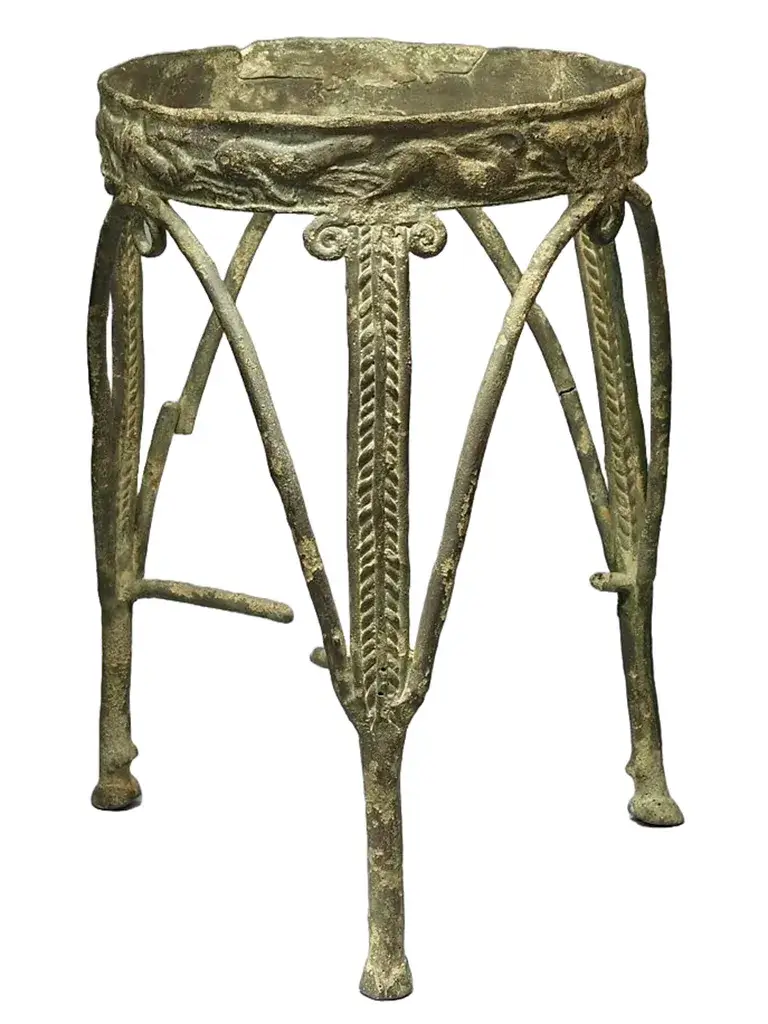
By the time this new supply chain was established, the pyrotechnological genie was already out of the bottle. Cypriot and Aegean smiths had already mastered the higher-temperature furnaces required to forge utilitarian iron. Because iron ore was abundant and locally available across the eastern mainland and islands, it freed societies from the geopolitical vulnerability of long-distance metal imports. The new influx of western tin allowed the Cypriots to resume casting luxury bronze items, such as the elaborate tripod stands and religious heirlooms revered by the elites, but it could not reverse the broader industrial revolution (Muhly, 2003). The technological threshold had been crossed. Iron was too practical, too abundant, and too strategically secure to abandon, cementing the Eastern Mediterranean's transition into the Iron Age.

Wider Connections to Sardinia

The striking resemblance between the Enkomi Ingot God and the Nuragic bronzetti (small bronze warrior figurines from Sardinia) is a major topic of discussion among Mediterranean archaeologists. Scholars frequently describe the stylistic parallels, such as the horned helmets, martial postures with raised weapons, and the use of greaves, as an "uncanny resemblance" that points to deep ideological and material connections across the Mediterranean during the Final Bronze Age.

This stylistic overlap was not a coincidence; it was carried on the backs of merchant ships. Prior to the collapse, Cyprus was exporting massive quantities of copper directly to Sardinia. Fragments of Cypriot oxhide ingots, the same shape as the one the Enkomi deity stands upon, have been found scattered across Nuragic sanctuaries and hoards. Along with this raw metal, Cypriot merchants seemingly exported their metallurgical iconography. The Sardinian elites, who were developing their own bronze-working traditions, readily adopted and localized this eastern imagery, resulting in the famous Nuragic warrior statuettes.

The earliest bronzetti date to the 12th century BCE. Their manufacture continued on Sardinia until the 9th or 8th centuries BCE. Unlike the eastern Mediterranean, the tin supplies to Sardinia, from Brittany and Cornwall had not been disrupted by the collapse of the empires in the east.

Anthropologists note a fascinating difference in how these symbols were used. In Cyprus, as embodied by the Ingot God, copper ingots were associated with the exclusive, elite control of the metallurgical industry (Blake, 2014). In Sardinia, the Cypriot ingots and the resulting bronzetti circulated much more fluidly through regional networks. Nuragic society lacked the centralised palaces of the East; instead, these figurines were deposited as votive offerings at communal holy wells and sanctuaries, reinforcing social cohesion rather than oligarchic dominance. Thus, while the visual style of the Ingot God travelled west, its political meaning was entirely adapted to fit Sardinian society.
How and Why Cyprus Survived the Collapse of the Bronze Age - Elaborate bronze tripod stand c. 1100 BCE
Elaborate bronze tripod stand c. 1100 BCE

Industrial Crisis Management: The Birth of Utilitarian Iron

While Cyprus sat atop rich copper deposits, it lacked an essential ingredient for making bronze, tin. Durable bronze required mixing nine parts copper with one part imported tin. When long-distance trade routes collapsed, foreign tin shipments vanished completely. Without tin, soft copper alone was useless for crafting reliable tools or weapons. Repeatedly remelting old scrap bronze eventually burned away the remaining tin, degrading the alloy's strength. The island's entire industrial economy faced paralysis.

Faced with this dilemma, Cypriot smiths turned to a local resource, iron ore. Rich deposits of haematite and gossan, iron-heavy minerals, lay exposed throughout the nearby Troodos Mountains. Working iron required far higher temperatures and complex forging techniques compared to smelting bronze. To overcome these obstacles, metalworkers constructed new furnaces inside urban workshops across the island (Sherratt, 1994). Rather than abandoning their trade, they adapted their pyrotechnic skills to master an unfamiliar metal.

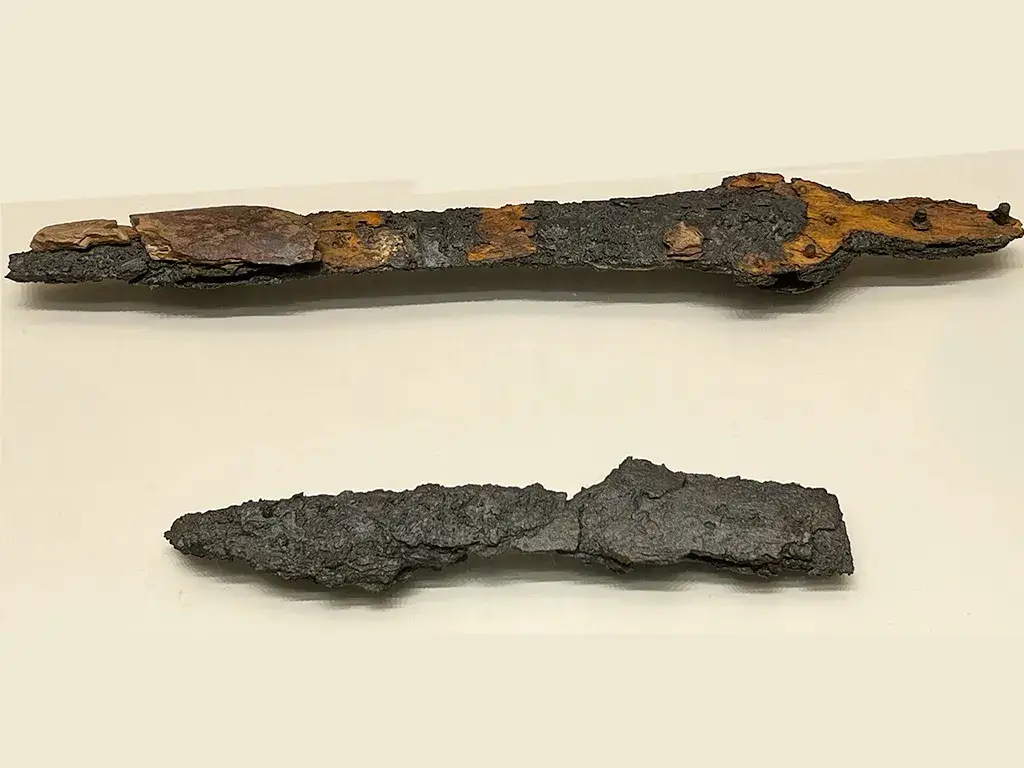
Excavations at Enkomi (modern day Famagusta) and Kition (modern day Larnaca) reveal how quickly urban centres transformed their facilities. Artisans repurposed former public buildings into busy industrial quarters. Archaeologists uncovered stone moulds, slag heaps, and clay tuyères, blowpipe nozzles used to pump air into furnace fires (Muhly, 2003). These early smiths did not forge luxury ornaments or royal status symbols. They produced functional, utilitarian tools like iron sickles, knives, and wood-cutting blades equipped with bronze rivets.

By developing iron tools to replace those manufactured from tin-starved bronze, Cyprus pioneered a major technological leap (Waldbaum, 1999). This crisis-driven ingenuity illustrated how resource scarcity sparks industrial innovation. Far from being a passive victim of trade breakdown, 12th century BCE Cyprus became the birthplace of practical iron working in the Mediterranean world.

When one looks at the eastern Mediterranean timeline for the adoption of iron technology over bronze, an interesting pattern emerges. Cypriot smiths were the first to produce iron knives and sickles, around 1200 BCE (Sherratt 1994). Functional iron tools were found at Tiryns (modern day Argolis) and Perati (modern day Porto Rafti) in the Mycenaean sphere of influence dated to barely ten years later, around 1190 BCE (Waldbaum 1999). This raises the question of technology transfer between Cyprus and the Aegean, since we have already established trading contact between the two, or simultaneous innovation.

Why Cyprus Survived the Bronze Age Collapse

The survival and expansion of Cyprus during the Bronze Age Collapse was the result of structural resilience, economic flexibility, and technological foresight. Whether the combination was pure luck, strategic planning or a combination of the two is a moot point.

Six key factors explain why the island navigated the catastrophe of 1177 BCE and maintained continuous development:

  • Pre-Adapted Political Regime: Centuries before the crisis, Cyprus had established a polycentric, regional structure, the same system that surviving mainland sites like Tiryns (modern day Argolis), Athens, and Lefkandi (modern day Euboea) were later forced to adopt. Because Cyprus was already operating at this resilient scale, it experienced no systemic crash, allowing uninterrupted urban growth while chaos reigned elsewhere.
  • Decentralised Merchant Governance: Operating through autonomous, competing coastal city-states led by pragmatic commercial oligarchies rather than a single autocratic wanax meant there was no central regime whose fall could trigger a state-wide collapse.
  • Maritime Agility: Switching from imperial bulk shipping to flexible, short-range cabotage (coastal trade) kept trade routes alive across the Eastern Mediterranean (Tartaron, 2013).
  • Industrial Innovation: Mastering local iron working in response to the tin shortage allowed Cypriot smiths to supply essential tools when bronze production failed (Sherratt, 1994).
  • Demographic Integration: Welcoming Aegean and Levantine refugees provided a steady supply of skilled craftspeople and warriors, revitalising local urban centres (Karageorghis, 1990).
  • Strategic Safe Havens: By operating as a "Barbary Coast" sanctuary for Sherden pirates, Cypriot elites successfully neutralized the era's greatest maritime threat. Transforming these fearsome Sea Peoples into allied mercenaries provided the island with formidable coastal protection and a lucrative share of the regional spoils.

Far from being an isolated victim, 12th century BCE Cyprus became a commercial epicentre of the post-collapse Mediterranean. With the benefit of hindsight, by turning a regional disaster into an opportunity for innovation, the island successfully bridged the gap between the Late Bronze Age and the emerging Iron Age.

How and Why Cyprus Survived the Collapse of the Bronze Age - Iron sword with wooden handle 1050 - 1025 BCE
Iron sword with wooden handle 1050 - 1025 BCE

References and Further Reading

  • Bass, G.F. (1967) Cape Gelidonya: A Bronze Age Shipwreck. Transactions of the American Philosophical Society, 57(8). Philadelphia: American Philosophical Society.
  • Berger, D., et al. (2025) 'Multiproxy analysis unwraps origin and fabrication biographies of Sardinian figurines: On the trail of metal-driven interaction and mixing practices in the early first millennium BCE', PLOS ONE.
  • Blake, E. (2014) Late Bronze Age Sardinia: Acephalous Cohesion. Cambridge University Press.
  • Bryce, T. (1998) The Kingdom of the Hittites. Oxford: Clarendon Press.
  • Cline, E.H. (2014) 1177 B.C.: The Year Civilization Collapsed. Princeton: Princeton University Press.
  • Emanuel, J.P. (2013) 'Sherden from the Sea: The shifting identities of the versatile conscripts of Ramesses III', in Proceedings of the 10th International Congress of Egyptologists. Peeters Publishers.
  • Goren, Y., Finkelstein, I. and Na'aman, N. (2003) 'The Location of Alashiya: New Petrographic Evidence', American Journal of Archaeology, 107(2), pp. 233–255.
  • Hitchcock, L., Gur-Arieh, S., and Pisanu, L. (2008) 'The Ingot God and the Bronzetti: Architectural and Stylistic Connections', Minerva Access.
  • Karageorghis, V. (1990) The End of the Bronze Age in Cyprus. Nicosia: Pierides Foundation.
  • Karageorghis, V. (1992) 'The Crisis Years: Cyprus', in Ward, W.A. and Joukowsky, M.S. (eds) The Crisis Years: The 12th Century B.C. Dubuque: Kendall/Hunt, pp. 79–86.
  • Kassianidou, V. (2005) Northern Exposure: Complex Copper Production and the Political Geography of Late Bronze Age Cyprus. Oxbow Books.
  • Kassianidou, V. (2012) 'Mining Archaeology in Cyprus', in Kassianidou, V. and Papasavvas, G. (eds) Eastern Mediterranean Metallurgy and Metalwork in the Second Millennium BC. Oxford: Oxbow Books, pp. 112–120.
  • Keswani, P. (2004) Mortuary Ritual and Society in Bronze Age Cyprus. London: Equinox Publishing.
  • Knapp, A.B. (1986) Copper Production and Divine Protection: Archaeology, Ideology and Social Complexity on Bronze Age Cyprus. Paul Åströms Förlag.
  • Knapp, A.B. (2013) The Archaeology of Cyprus: From Earliest Prehistory through the Bronze Age. Cambridge: Cambridge University Press.
  • Knapp, A.B. (2014) 'Prehistoric Cyprus: Complex Social Systems and Insular Identities', in Knapp, A.B. and van Dommelen, P. (eds) The Cambridge Prehistory of the Bronze and Iron Age Mediterranean. Cambridge: Cambridge University Press, pp. 158–174.
  • Lolos, Y.G. (2003) 'The Cargo of the Point Iria Wreck: The Bronze Age Country Boats of the Argolid', in Phelps, W., Lolos, Y. and Vichos, Y. (eds) The Point Iria Wreck: Interregional Aegean Traffic Around 1200 B.C. Athens: Hellenic Institute of Marine Archaeology, pp. 43–48.
  • Muhly, J.D. (2003a) Metalworking/Mining in the Levant. Eisenbrauns.
  • Muhly, J.D. (2003b) 'Mining and Metalwork in Late Bronze Age Cyprus', in Bikaki, N. et al. (eds) Cyprus in the 19th Century AD. Nicosia: Leventis Foundation, pp. 28–39.
  • Peltenburg, E. (1996) 'From Suburb to State? The Development of Bronze Age Enkomi', in Calvet, Y. and Yon, M. (eds) Ougarit, la Phoenicie et Chypre. Paris: ADPF, pp. 27–49.
  • Penhallurick, R.D. (1986) Tin in Antiquity: Its Mining and Trade Throughout the Ancient World with Particular Reference to Cornwall. Institute of Metals.
  • Pulak, C. (2008) 'The Uluburun Shipwreck and Late Bronze Age Maritime Trade', in Aruz, J. et al. (eds) Beyond Babylon: Art, Trade, and Diplomacy in the Second Millennium B.C. New York: Metropolitan Museum of Art, pp. 289–310.
  • Sandars, N.K. (1987) The Sea Peoples: Warriors of the ancient Mediterranean. Thames and Hudson.
  • Sherratt, S. (1994) 'Commerce, Iron and Ideology: Metallurgical Innovation in the 12th–11th Century Cyprus', in Karageorghis, V. (ed.) Cyprus in the 11th Century B.C. Nicosia: Leventis Foundation, pp. 59–106.
  • Sherratt, S. (1998) 'Sea Peoples and the Economic Structure of the Eastern Mediterranean', in Gitin, S., Mazar, A. and Stern, E. (eds) Mediterranean Peoples in Transition. Jerusalem: Israel Exploration Society, pp. 292–313.
  • Sherratt, S. (2000) 'Circulating Commodities: Reflections on the Economy and Society of the Late Bronze Age East Mediterranean', in Stos-Gale, Z. (ed.) Bronze Age Trade in the Mediterranean. Jonsered: Paul Åströms Förlag, pp. 82–98.
  • Steel, L. (2004) Cyprus Before History: From the Earliest Settlers to the End of the Bronze Age. London: Duckworth.
  • Stos-Gale, Z.A. (2011) Isotopic and compositional evidence for the provenance of Mediterranean copper and tin. Oxbow Books.
  • Tartaron, T.F. (2013) Maritime Networks and Material Interaction in the Aegean Bronze Age. Cambridge: Cambridge University Press.
  • Ugas, G. (2016) Shardana e Sardegna: I popoli del mare, gli alleati del Nordafrica e la fine dei Grandi Regni. Edizioni della Torre.
  • Waldbaum, J.C. (1999) 'The Coming of Iron in the Eastern Mediterranean', in Pigott, V.C. (ed.) The Archaic Metalworking Tradition. Philadelphia: University Museum, pp. 27–57.
  • Wang, C. et al. (2019) 'Isotope systematics and chemical composition of tin ingots from Mochlos (Crete) and other Late Bronze Age sites in the eastern Mediterranean', Journal of Archaeological Science.
  • Webb, J.M. (1999) Ritual Architecture, Iconography and Practice in the Late Cypriot Bronze Age. Paul Åströms Förlag.

Location Map

Legacy Reloaded: A dev, an AI, and the relentless pursuit of 100

Enjoying this clean, uncluttered read?

You are currently browsing the result of a massive technical overhaul. My new book, Legacy Reloaded: A dev, an AI, and the relentless pursuit of 100, chronicles the journey of transforming an aging legacy website into a modern, lightning-fast platform that hits the perfect 90+, 100, 100, 100, 3/3 Lighthouse metrics. It’s a story of collaboration between developer and AI, and the stubborn pursuit of technical perfection.

Read the Story

You have finished reading chapter 6

More articles in the Survivors of the Bronze Age Collapse series: