Contents
The Kyrenia Shipwreck: A Glimpse of Fourth-Century BC Maritime Trade
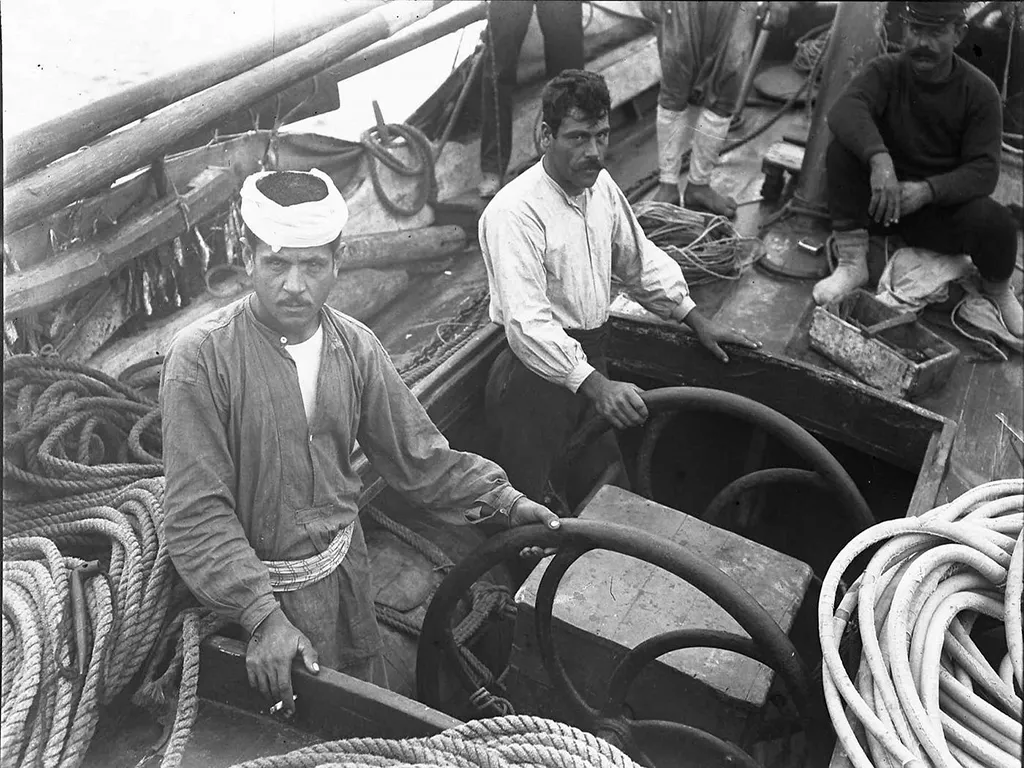
Discovery and Scientific Excavation
Ship Design and Construction
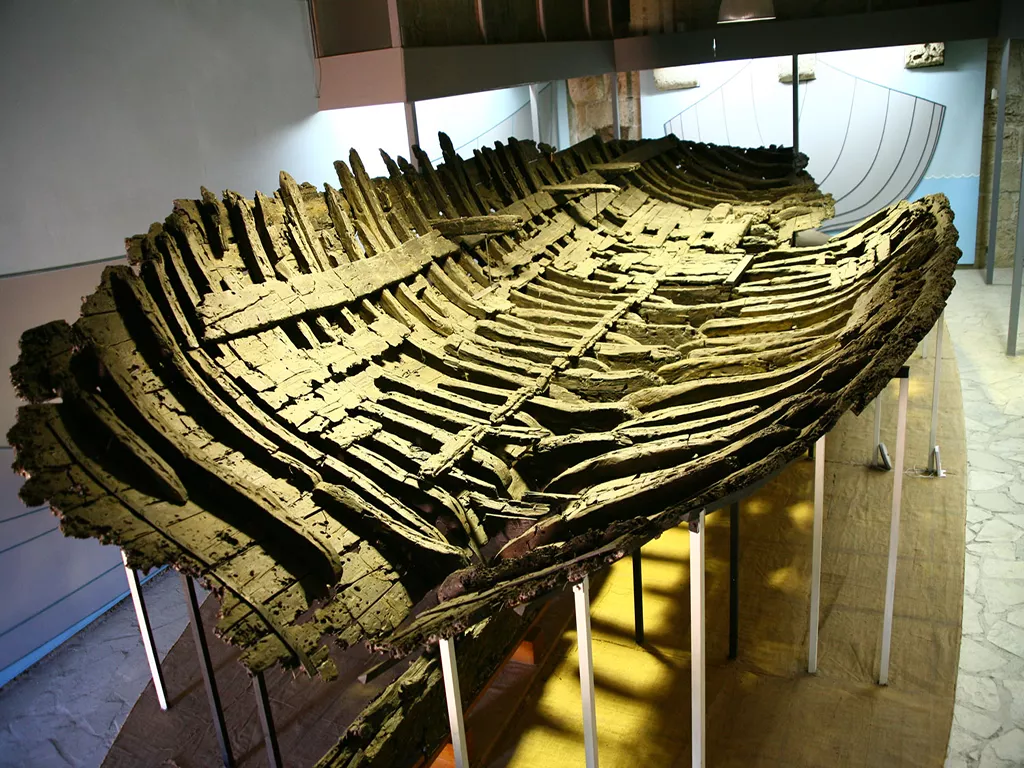
Architectural analysis identifies the ship as the prototype of the Hellenistic architectural system. Builders constructed the hull using a 'shell-first' method, employing carvel planking assembled with numerous mortise-and-tenon joints. The framing system featured alternating floor timbers and half frames, nailed to the planking for structural integrity. The vessel was designed with a wine-glass cross-section and was equipped with a single square sail and a rudder. Extensive repairs visible on the shell suggest the ship enjoyed many seaworthy years, about forty years if the date of its demise is correct, after its likely construction date of around 325 to 315 BC.
To date (2025), three Kyrenia replicas have been produced and launched, and these reconstructions have yielded considerable information on ancient ships and their sailing performance.
Cargo and Mediterranean Commerce
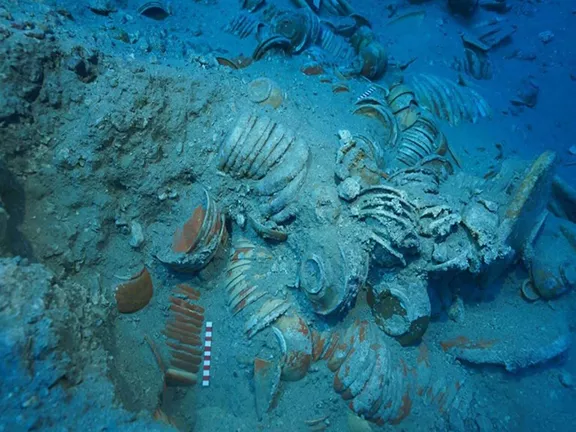
Beyond the bulk commodities, the vessel also transported a variety of other valuable artefacts:
• Dining wares from Cyprus and Greece.
• Tools and ship's rigging.
• Glassware from Syria, including high-quality core-formed bowls, jugs, and lamps, suggesting the ship participated in the lucrative trade of luxury items.
The valuable nature and volume of the amphoras lead some historians to argue that a wealthy merchant or family likely owned and operated the vessel. The mixture of trade goods and personal items suggests the crew maintained a relatively comfortable lifestyle while sailing.
Origin, Destination, and Crew
Similarly, while the ship's owners and operators remain unknown, the archaeological findings suggest a crew of Greek origin, given the ship's location near a Greek colony and the Greek provenance of the majority of the cargo. However, a mixed Greek and Cypriot crew remains a possibility, reflecting Cyprus's multicultural society during the 4th century BC.
Ultimately, the Kyrenia shipwreck provides a tangible record of the maritime trade that defined the ancient Hellenistic world.
Where to see the Kyrenia wreck and artefacts
In addition to the ship's hull, the museum also exhibits numerous artifacts recovered from the wreck, such as amphorae, almonds, millstones, and other provisions.
References
The Kyrenia Ship: An Introductory Guide, by the Cyprus Museum (Cyprus Museum, 2008).
"The Kyrenia Shipwreck: A Brief History," by the Institute of Nautical Archaeology (INA, 2019).
Katzev, M. L., and D. B. Harden. 1982. The Kyrenia Ship: Final Excavation Report, Volume I. Oxford: Oxbow Books.
Katzev, M. L., and H. W. Swiny. 2008. The Kyrenia Ship: An Introductory Guide. Nicosia: Cyprus Museum.
Manning, Sturt & Lorentzen, Brita & Bridge, M. & Dee, Michael & Southon, John & Wenger, Madeleine. (2024). A revised radiocarbon calibration curve 350–250 BCE impacts high-precision dating of the Kyrenia Ship. PLOS ONE. 19. 10.1371/journal.pone.0302645.
Steffy, J. R. 1985. The Kyrenia Ship: An Interim Report on the Conservation and Reconstruction of a 4th Century B.C.E. Greek Merchant Vessel. College Station: Texas A&M University Press.
Swiny, H. W. 1984. "The Cargo of the Kyrenia Ship: A Preliminary Report." In The Seaborne Commerce of Ancient Rome: Studies in Archaeology and History, edited by J. H. D'Arms and E. C. Kopff, 115-134. Rome: American Academy in Rome.
Williams, D. 1983. "The Kyrenia Ship: The Cargo." The International Journal of Nautical Archaeology 12 (2): 117-137.
"The Maritime Trade of Ancient Greece," by John Boardman (Thames and Hudson, 1971).
"The Ancient Mediterranean Economy," by Peter Garnsey, Keith Hopkins, and C. R. Whittaker (Routledge, 1983).