Contents
The Komiža Shipwreck (400 – 300 BC)

Discovery and Confirmation
Dating
The artifacts found, particularly the pottery and a coin still undergoing analysis, strongly indicate a 4th-century BC origin. This period is crucial as it coincides with the establishment of Greek colonies like Issa (modern-day Vis) and Pharos (on Hvar) in the Adriatic.
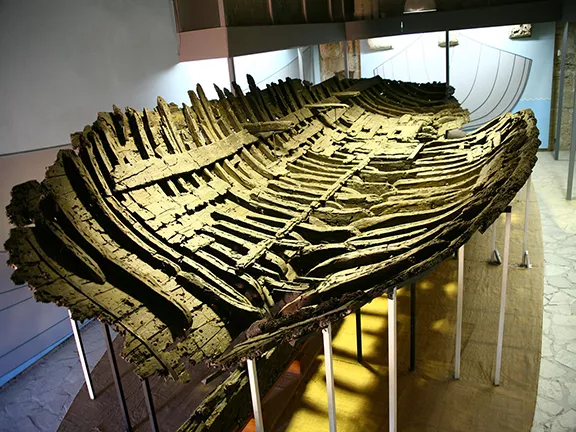
Construction of the Komiža Shipwreck
Cargo
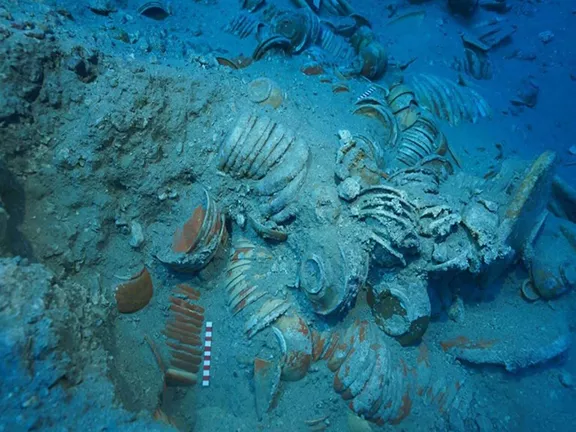
Amphorae: A large number of Chian amphorae, likely containing wine, formed a significant part of the cargo. Over 500 Chian amphorae were visible during the initial survey.
Fine ceramics: Exquisite Hellenistic pottery was also found.
Containers: Fine pottery, olive oil, spices, and preserved food containers were also aboard.
A bronze coin: One side depicts a human head, the other side is an impression of a goat.
These findings provide invaluable insights into the daily life, trade practices, and maritime networks of early Greek settlers in the Adriatic.
Significance of the Komiža shipwreck
The archaeologists working on the wreck hope to eventually pinpoint its demise to within fifty to one hundred years which would provide them with insights into the colonisation and trade networks between Syracuse and its colony,Vis as well as between Paros and Hvar Island.
Ongoing Research
The Croatian Conservation Institute leads the ongoing work with local diving clubs and the Vis Heritage Museum helping them.
Future Display: Many of the recovered artifacts, once restored, will be displayed in the Vis Island museum, thus benefitting the local community. Updating this Article: It is too early to expect any peer reviewed research papers about this wreck. As more information comes to light this article will be updated.