The Plastic Revolution in Almeria
The plastic greenhouses in the Campo de Dalias in Almeria are one of only three man made structures visible from space. They cover an area of over 46,000 hectares and have revolutionised the economy in the area. Of the eight Andalucian provinces, Almeria exports the most horticultural products. The province accounts for a 28.1% share of Andalusia's fruit and vegetable exports and 6% of the Spanish total. Some people complain about the 'blot on the landscape', some about the accumulated plastic rubbish, some about the living and working conditions of the migrant workers essential to keep the 'Almeria Model' working.
Introductory Video
Video by: Julie Evans
1: Before the Revolution
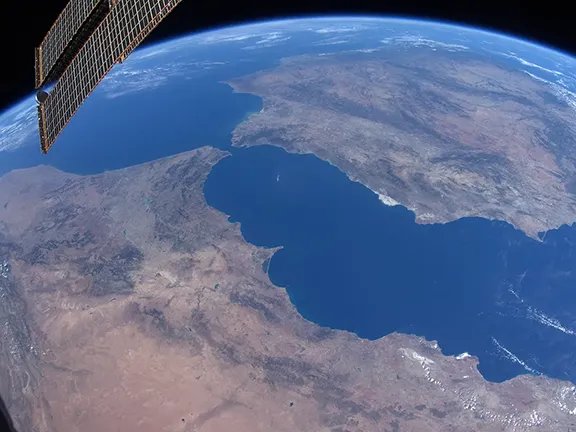
From the earliest days of agriculture, the semi arid land in Almeria province has proved a challenge. Methods of sowing,...
Read the article »2: Subsistence Agriculture
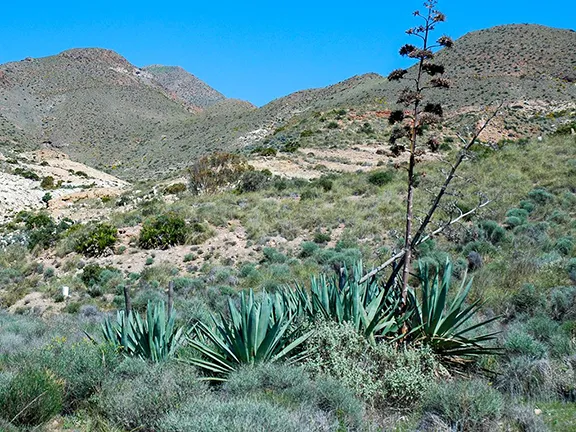
During the Franco regime, lack of water, harsh conditions and an oppressive economic climate made any advances in agricu...
Read the article »3: The Almeria Model
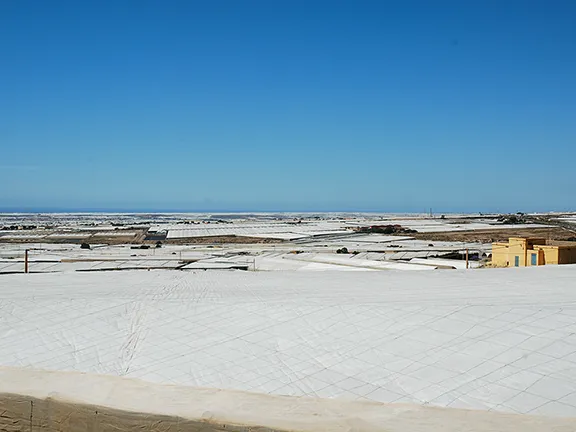
The 'Almeria Model' developed as a series of improvements to growing technigues, a better understanding of environmental...
Read the article »4: Migrant Workers
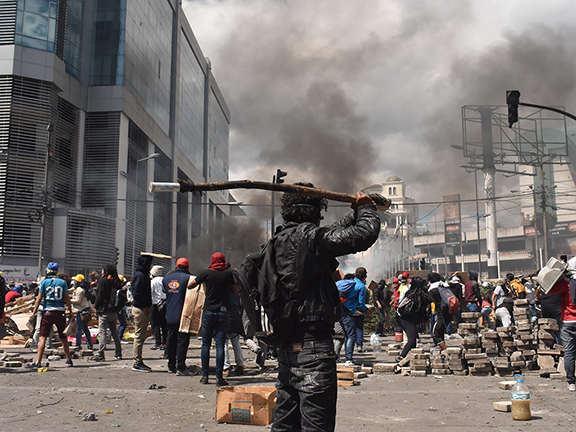
Migrant workers in the agricultural sector have long been exploited by employers who offer low wages, sometimes refusing...
Read the article »5: The Future

Although it has created problems as well as solved some, the Almeria Model is seen as a way to help feed a burgeoning po...
Read the article »Project Objectives
Look at how things were prior to 1965
Plot the development of the industry in Almeria
Investigate the advantages and disadvantages of the plastic revolution
Answer the question - What is the 'Almeria Model'
Look into the future