Bronze Age Shipbuilding in the Mediterranean
During the Bronze Age, maritime activity in the Mediterranean Sea burgeoned as the emerging elites and powerful states demanded more resources from outside the boundaries of their empires.
Not surprisingly, ships carrying those resources increased in size, carrying capacity and seaworthiness.
The preservation of organic materials, such as wood, in the marine environment presents significant challenges for archaeologists. Consequently, the survival of substantial portions of ancient ship hulls is often limited. With few wrecks to examine, we have to turn to other ways of discovering how ship designs evolved and how shipbuilding techniques improved.
This project looks at shipwrecks from the Bronze Age, contemporaneous art on frescoes, ceramics and inscriptions, and clay, lead and bronze models of ships created by ancient artisans to chart the course of naval architecture in the Mediterranean Sea from the Early Bronze Age to the Roman Empire period.
1: Dawn of Naval Architecture
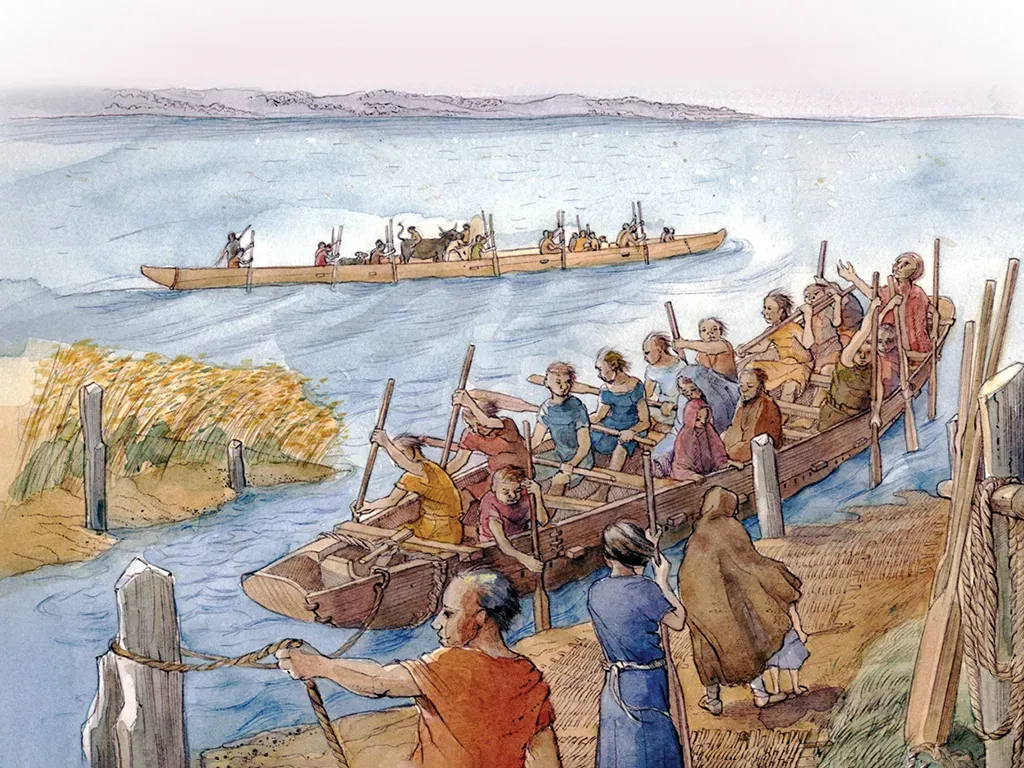
Shipbuilding in the Mediterranean (3000 - 1200 BC). Analysis of hull construction methods, ship design evolution, and in...
Read the article »2: Early Bronze Age c 3000 - 2000 BC
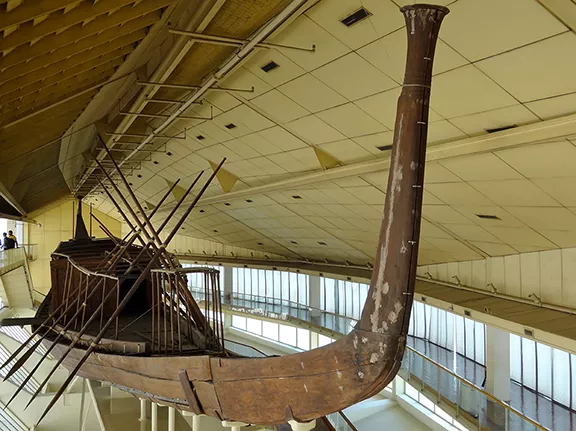
Early Bronze Age ship depictions and construction in the Aegean (Cycladic frying pans, Minoan models, Dokos shipwreck) a...
Read the article »3: Middle Bronze Age c 2000 - 1600 BC
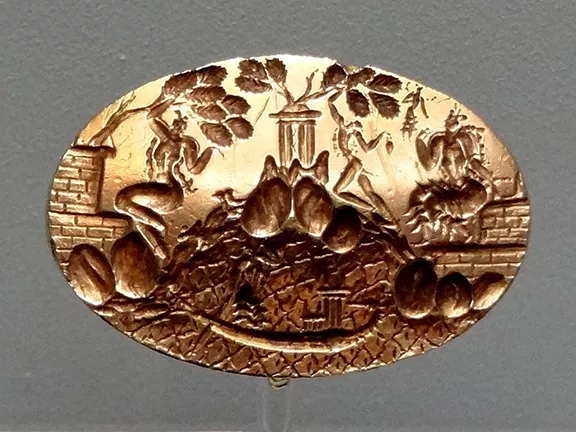
Middle Bronze Age ship evolution in the Aegean, Minoan Crete alongside Egyptian royal boats and Red Sea harbour evidence...
Read the article »4: Late Bronze Age c 1600 - 1200 BC
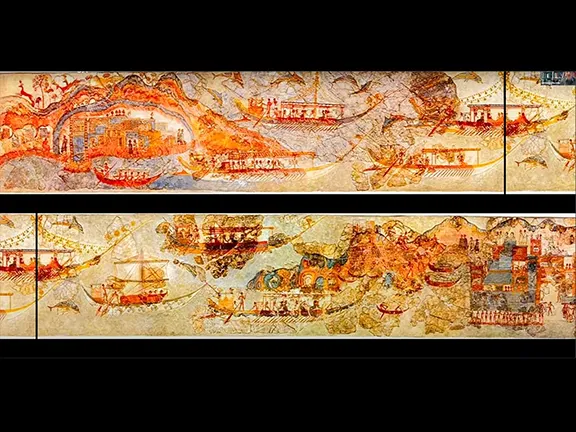
The Late Bronze Age was a period of heightened international trade, diplomatic exchange, and, at times, conflict in the ...
Read the article »